Rizhao · Mountains & Scenic Wonders
Heshan Scenic Area
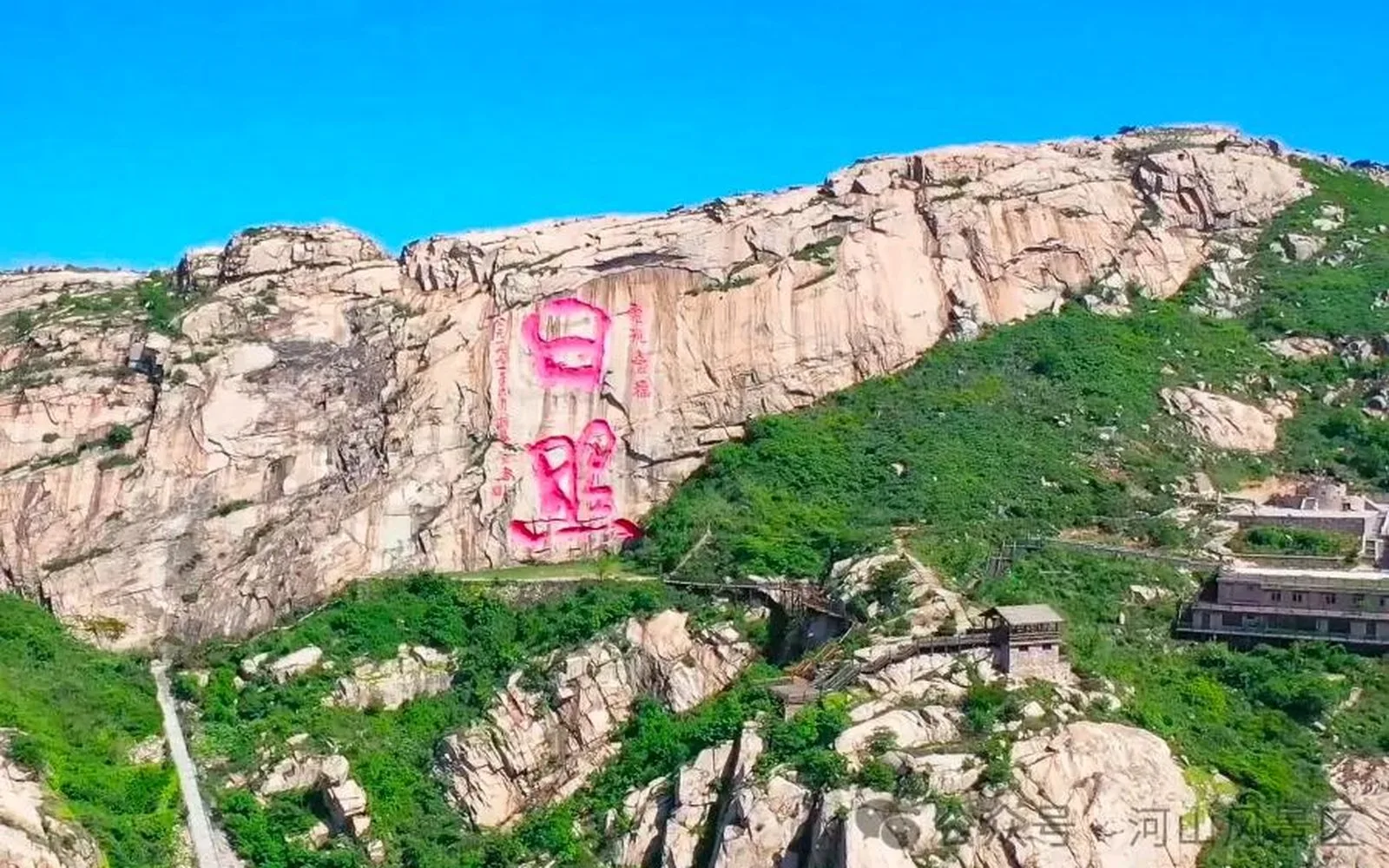
Driving north from downtown Rizhao, Heshan comes into view from a distance. Its silhouette stretches across the horizon, and carved boldly into the cliffs of the main peak are the words “Rizhao.” The red characters against the white rock are recognizable from miles away. It is only when you stand at the foot of the mountain and look up that you realize the entire mountain has been treated like a sheet of rice paper—each character is as tall as a building, making a person standing beneath them look as small as a punctuation mark. As the mountain breeze carries the scent of pine down from the cliffs, I tighten my laces and begin the ascent. There is no rush on this trip; the goal is simply the pure exhilaration of climbing high to gaze upon the sea.
1. Location Overview: The Heshan Scenic Area is located about 10 kilometers north of downtown Rizhao, situated in the Heshan mountain range on the west side of Heshan Town. It is currently a National 3A-level tourist attraction. The main peak reaches an altitude of 628.9 meters, the highest in the eastern peaks of Rizhao, standing majestically as a natural shield for the region. The entire mountain system is composed of granite, with a silhouette resembling a reclining Buddha or a seated statue of the Sun God facing south, embracing the Eastern Sun City below. The scenic area connects to the city center to the south and neighbors Rizhao’s Golden Coast to the east. It is adjacent to the Shenhai Expressway (Tongsan Expressway) and National Highway 204, located about 6 kilometers from the Liancun exit, making it very convenient to reach by car. It is linked via tourist roads to Wanpingkou and the Seaside National Forest Park, serving as the “mountain” pole of Rizhao’s “Mountain-Sea Linkage” layout: one can climb the mountains in the morning and hit the beach in the afternoon, all within a single day in this city, with mountain delicacies and seafood separated by a mere dozen kilometers. Looking north from the high-rises in the city center on a clear day, the giant calligraphy is faintly visible. Heshan is like an old man sitting north of the city, guarding this land of mountains and sea day and night.
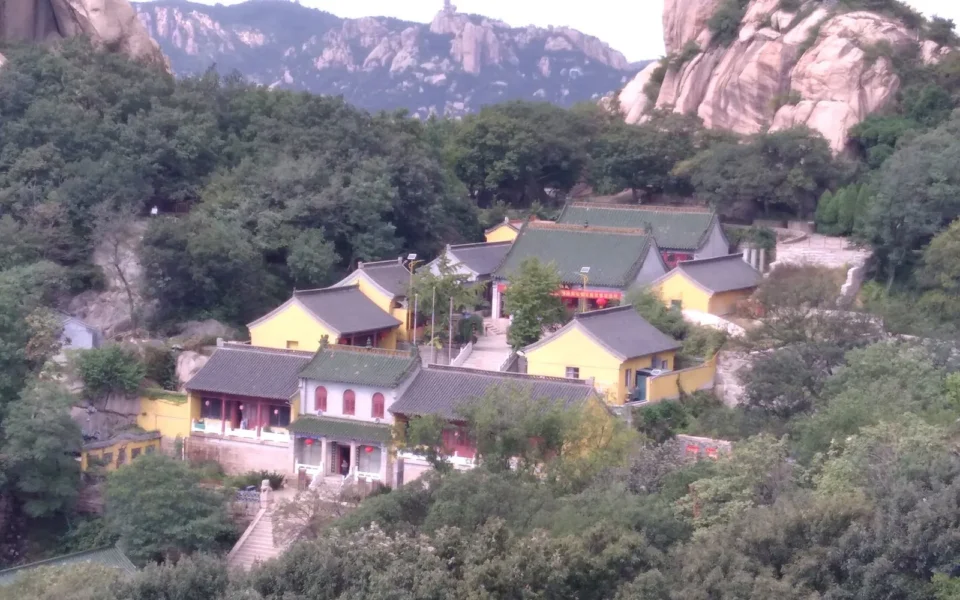
2. Cultural Context: Heshan derives its name from being the “Source of Many Rivers”—multiple rivers in this area originate here. The mountains are brought to life by the water, and the water gathers because of the mountains; since ancient times, it has been the “Mother Mountain” for the people of Heshan Town. Seen from afar, it resembles a reclining Buddha and is also described as a statue of the Eastern Sun God (188 meters high and 160 meters wide), echoing Rizhao’s long-standing solar culture. The development of the scenic area is themed around this solar culture, with over a hundred sights scattered across the mountains. The mountain preserves cultural relics such as the ruins of Huilong Nunnery, Puzhao Temple, ancient fortress gates, and ancient wells. Inscriptions and old stone tablets are frequently encountered along the hiking trails. Below the mountain, Heshan Town is famous for its “Heshan Yipinhong” apples and has hosted apple cultural festivals. In 2016, it was rated as a National 3A-level tourist attraction. For the people of Rizhao, it is not just a tourist spot, but the city’s northern gate and a spiritual landmark—the logo of Rizhao TV Station uses the image of the giant calligraphy on the mountain. Those driving into the city know they are home the moment they spot it. Whether it is children returning from far-off travels or elders gazing at the mountain upon waking, this peak is always there. For the people of Rizhao, the meaning of Heshan is half in its scenery and half in its sense of home.
3. Highlights: The most stunning feature of Heshan is the giant calligraphy “Rizhao” on the cliffs of Guanri Peak. Written by calligrapher Sun Xin, the character “Ri” is 20 meters high and 17.5 meters wide, while “Zhao” is 25 meters high and 25.5 meters wide. This is the world’s largest cliff-carved Chinese character and is listed in the Guinness World Records. The full view is visible from the road below, and the red characters are particularly striking in the sunlight after a rain. The strange rocks are another highlight: opposite the giant calligraphy, the boulders at the summit of Qifeng Ridge resemble a phoenix spreading its wings. Along the way, there are anthropomorphic rock formations such as the Sea Eye, Couple Stones, Official-Worshipping Stone, Jade Rabbit Stone, Heaven’s Ladder Stone, and Ancient Ape Stone, all resembling their names—a natural gallery formed by the weathering of granite along joints. The East Slope features a “sea of stones” formed by fault collapse, where massive boulders pile up in a spectacular display. The mountain also hosts Wolong Lake, Fenglai Pavilion, Lovers’ Valley, and the Hulu Tao Primeval Forest, with expansive locust groves in the Huaihua Valley area. Upon reaching the summit and looking back, the city, the coast, and the port are all captured in one frame, offering a panoramic view of the “City of Mountain and Sea.”
4. Visitor Information: The Heshan Scenic Area is generally open from 08:00 to 17:00. Please note that entry stops before the closing time, and hours may be adjusted during seasonal transitions; please refer to official announcements. Ticket prices are subject to official rates; it is recommended to confirm current pricing and discount policies through official channels or reputable platforms rather than relying on outdated low prices from unofficial sources. Driving is the most convenient option: travel north along National Highway 204 and turn onto the Tongjing Tourist Avenue following signs for Heshan Town and the Heshan Scenic Area. Travelers using the Shenhai Expressway can arrive about 6 kilometers after exiting at Liancun. For public transport, take a rural bus or shuttle toward Heshan Town, then walk or take a local vehicle into the area. Check schedules in advance, as mountain routes are relatively infrequent; do not miss the last bus. There are currently no cable cars in the area; the trails consist mainly of stone steps, so please wear non-slip shoes. Mobile signal is generally available, though weaker in some valleys; hiking in groups is safer. Please allow extra time for seniors and children, as some sections of the path are steep. In rain or snow, it is advised to reschedule rather than force the climb.
5. Travel Tips: The entire journey relies on your own two feet, with the round trip to the summit taking about two to three hours. Please bring enough drinking water. In summer, be sure to start early; the morning light also perfectly illuminates the giant calligraphy, making it the best time for photography. Recommended itinerary: First, view and photograph the giant calligraphy from a distance along the Tourist Avenue at the foot of the mountain—this is the only spot where both characters fit entirely in the frame. After entering the mountain, follow the main path upward, visiting the strange rock clusters, Wolong Lake, and Fenglai Pavilion in sequence. Look up at the calligraphy from a close distance at Guanri Peak; up close you see the sharp texture of the stone, while from afar you see the momentum of the characters—both perspectives are a must. If you have the stamina, detour to Qifeng Ridge to see the Phoenix Stone and the East Slope stone sea. On the way down, if it is locust flower or apple season, the farmstays in Heshan Town are worth a stop to taste freshly picked “Heshan Yipinhong” apples. For those accompanying seniors, it is suggested to only go as far as the mid-mountain pavilions to rest and enjoy the view; know your limits. On the way back, look back from National Highway 204; the giant calligraphy gradually turning into a silhouette in the sunset is the perfect end to the trip. There are no shops for supplies along the way; pavilions are the only resting points. Pace yourself reasonably; do not push too hard in the first half, as the steps in the second half are the real test.
6. Best Time to Visit: Heshan offers distinct scenery across the four seasons. Spring is the most enchanting; from late April to May, the locust flowers in Huaihua Valley fill the mountain with fragrance, and mountain peaches and wild apricots bloom in succession, making it a classic spring outing spot for Rizhao locals. Summer brings lush green forests and cool valleys, but the sun is intense; it is best to climb in the early morning and descend by noon to avoid the heat. Occasionally, a sea of clouds wraps around the peaks after rain. Autumn is the best overall season: the sky is high and clear, providing the best visibility for viewing the sea from the summit. In October, the apple orchards below are fragrant, and red leaves dot the cliffs, making it the ideal time for high-altitude trekking. Winter brings biting mountain winds and few tourists; the giant calligraphy against a silver coat of snow has a rugged beauty, but stone steps can be icy, so climbing in snow is not recommended without professional gear. During the dry winter and spring seasons, please adhere to forest fire prevention regulations. Generally, the period from around the Qingming Festival to the Double Ninth Festival is most suitable. For visitors coming specifically for the calligraphy and the views, prioritize days immediately after rain when the air is transparent, and the red characters, green mountains, and blue sea create the most shocking contrast. Checking the air quality and visibility forecast before departing is a “secret tip” shared among local outdoor enthusiasts.