Nantong · Mountains & Scenic Wonders
Langshan Scenic Area
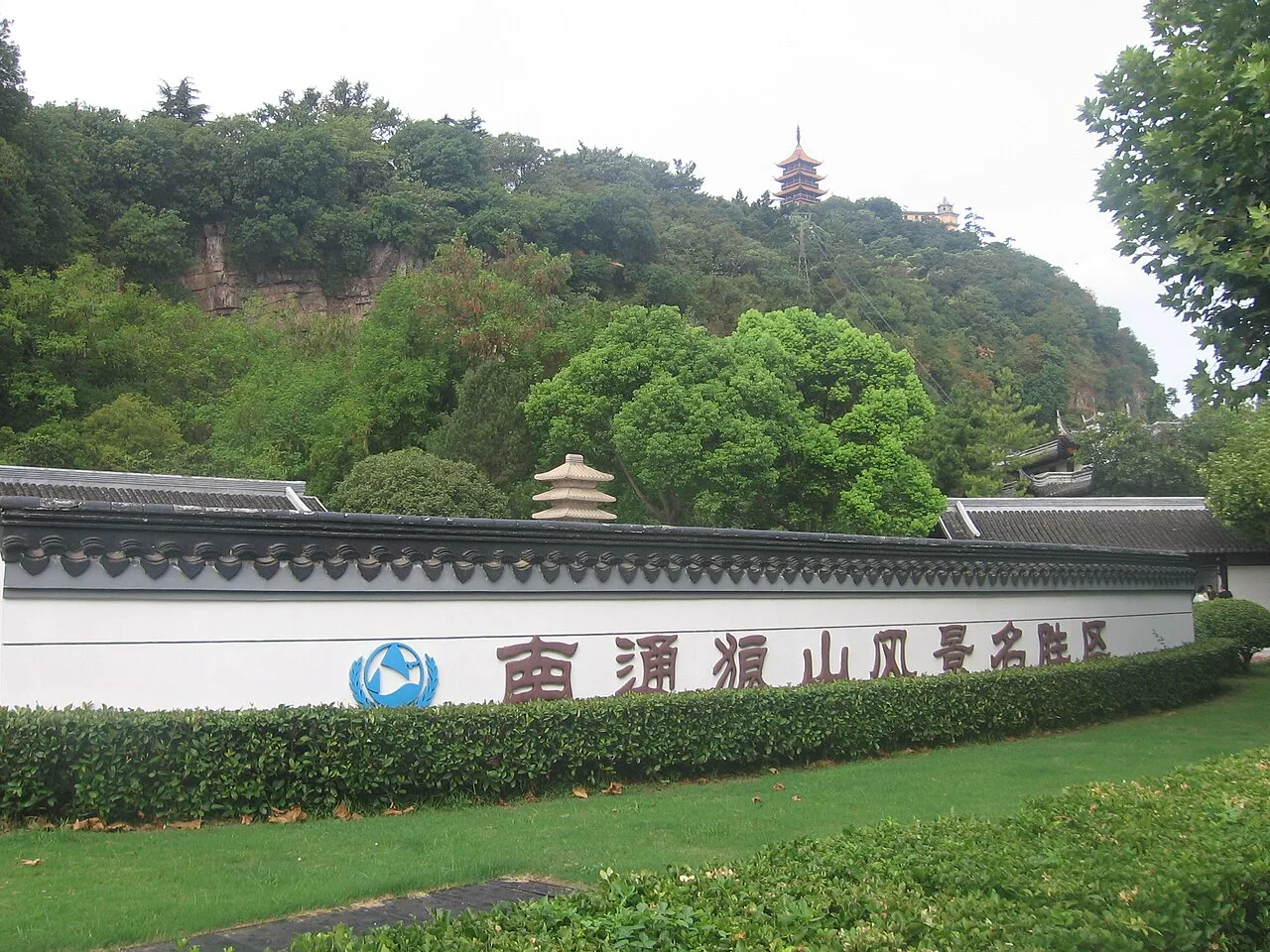
Langshan may not be towering, but it is hailed as the “Number One Mountain of Rivers and Seas” because it stands on the north bank of the Yangtze River estuary. The moment you reach the summit, you can see the river and sea converge beneath your feet, opening up a vast horizon. I came for the panoramic views, but I found myself captivated by Guangjiao Temple and Zhiyun Pagoda—a small mountain that harbors a profound sense of Zen.
1. Location Overview:The Langshan Scenic Area is located in Langshan Town, Chongchuan District, Nantong City, Jiangsu Province. Situated on the north bank of the Yangtze River about six kilometers south of downtown Nantong, the mountain reaches an altitude of over 100 meters. It is known as one of the “Five Mountains of Langshan,” alongside Junshan, Jianshan, Maanshan, and Huangnishan, covering a total area of approximately 11.27 square kilometers. A provincial-level scenic spot and a National 4A-level tourist attraction, it is also a renowned Buddhist mountain in the Yangtze River basin. The five mountains stretch in a line along the river, with Binjiang Park and the Horticultural Expo Park unfolding at their feet, creating a seamless connection between the city, the mountains, and the river. In Nantong’s cultural landscape, Langshan, together with the Haohe Scenic Area and the Nantong Museum, forms the “Cultural Golden Triangle” (one mountain, one river, one museum) of the main urban area. It is both a daily retreat for locals to exercise and pray, and the primary gateway for visitors to get to know Nantong as a portal city of rivers and seas. Looking south from the peak, the Yangtze River stretches like a ribbon, with Changshu in Suzhou visible on the opposite bank, offering a magnificent view of the river-sea confluence. For many Nantong locals, climbing Langshan is not “tourism,” but a habit woven into daily life.
2. Cultural Heritage:Also known as Zilang Mountain, the origin of its name is debated, though folk legends tell of a white wolf carrying earth in its mouth to form the mountain. During the Tang Dynasty, Langshan was an island in the river mouth; only later did the north bank silt up, connecting it to the mainland—making the mountain a living history of Nantong’s land formation. Guangjiao Temple, founded in 669 AD (the second year of the Zongzhang era of the Tang Dynasty), has seen periods of decline and revival over a millennium and is one of the key Buddhist temples in the Han Chinese regions. During the Taiping Xingguo era of the Northern Song Dynasty, the abbot Zhihuan built the Zhiyun Pagoda, which became the mountain’s most prominent landmark. The temple possesses a unique feature: it houses two separate shrines—one for Mahasthamaprapta Bodhisattva and one for Sangha Mahasattva—within a single complex. The Yuantong Treasure Hall and the Dasheng Hall stand on the same mountain, allowing believers to pay respects to both Bodhisattvas in one visit, a rarity among famous ancient temples in China. Langshan is honored as the foremost of the “Eight Minor Buddhist Mountains” and is the incarnation site of Mahasthamaprapta Bodhisattva, with incense burning here for over a thousand years. The mountain also hosts cultural relics such as the Tomb of Luo Binwang and the Tomb of Martyr Bai Yayu. Luo Binwang, one of the “Four Greats of the Early Tang,” is said to be buried here, adding a literary grace to the riverside peak. Renowned scholars like Wang Anshi and Mi Fu also visited and left poems here. In modern times, Zhang Jian refurbished the mountain’s roads and pavilions during his administration of Nantong, further enriching its cultural depth and making Langshan a dual symbol of the city’s ecology and culture.
3. Highlights:First, Guangjiao Temple and Zhiyun Pagoda. The temple is built into the mountainside, with halls progressing along a central axis—the Mahavira Hall, Yuantong Treasure Hall, and Dasheng Hall follow in sequence. The plaque at the mountain gate reading “Number One Mountain of Rivers and Seas” perfectly captures the site’s spirit. The 35-meter-tall Zhiyun Pagoda stands at the summit; the characters “Zhiyun” on the pagoda’s forehead are said to have been written by Mi Fu. Climbing it offers a bird’s-eye view of the great river, making it the mountain’s most visible landmark. Second, Daguan Terrace and Wangjiang Pavilion. Standing at the peak with the powerful river breeze, the water glitters like molten gold at sunset, making this the consensus best spot for sightseeing and photography. Third, the Tomb of Luo Binwang and the Three Immortals Shrine. The cemetery is quiet and serene, with weathered steles carrying the poetic soul of the early Tang Dynasty; the Three Immortals Shrine honors sages related to Nantong, rich with local storytelling. Fourth, cliff carvings and ancient trees. Langshan is lush with greenery, featuring ancient ginkgo and wisteria trees that cycle through the seasons. The area around Kuizhu Mountain House is a tranquil garden that blends perfectly with the sounds of Buddhist chanting and bells. Fifth, the Five Mountain Trail. Today, Langshan is connected to Junshan, Jianshan, Maanshan, and Huangnishan via ecological trails. After forest restoration, the Five Mountains Forest Park has become a continuous woodland within the city, ideal for a full hike at dawn or dusk. By linking these five highlights, you can complete a circuit in half a day without rushing.
4. Visitor Information:Opening hours are approximately 8:30 AM to 4:30 PM year-round, though times may vary slightly by entrance and may be extended on holidays; please refer to the daily notices at the site. Ticket prices: Full price is 70 RMB; discounts for children, students, and seniors are subject to site policy. The round-trip cable car is 60 RMB. Since the mountain is not very high, the walk up and down takes about two hours; walking is recommended if physical health permits. Transportation: The main entrance is on Chengshan Road to the east. Bus Route 5 goes directly to the Langshan Visitor Center, and Route 41 runs from Nantong Railway Station to Langshan. For those driving, navigate to “Langshan Scenic Area”; parking is available on both the north and south sides of the mountain. Sightseeing shuttles (approx. 10 RMB/person) are available inside. A visit of two to three hours is suggested. The paths are gentle, and major attractions have accessibility ramps. Audio guides and human guides are available. Drinking water stations are limited; visitors are encouraged to bring their own water during peak season. Steps can be slippery on rainy days, so non-slip shoes are recommended. Bring a light jacket as it can be windy at the summit. To avoid crowds, visit on weekday mornings. Early morning is also when locals exercise, and following their lead up the steps is the best way to experience how this mountain is integrated into daily life.
5. Travel Tips:For a half-day trip, we recommend entering via the main East Entrance or the North Gate. Follow the hiking trail to visit Guangjiao Temple, Zhiyun Pagoda, and the Tomb of Luo Binwang in order, ending at Wangjiang Pavilion for a view of the Yangtze before returning or taking the cable car down. Those with more energy can link Langshan with the neighboring Junshan and Jianshan to walk the Five Mountains Forest Park ecological loop, which takes most of a day. The best photo spots are Wangjiang Pavilion and the square in front of Zhiyun Pagoda; early morning mist and sunset glows are the most photogenic. Climb to the top an hour before sunset to watch the river change from gold to deep indigo as the city lights flicker on—the most moving time of the day. In autumn, red maples and ginkgoes turn colors, with the best layers visible along the northern slope. Focus your guide’s explanation on the Buddhist origins of Guangjiao Temple, the architecture of Zhiyun Pagoda, and the life of Luo Binwang. Families with children should slow down and enjoy nature observations; seniors can use the sightseeing shuttles and cable cars to reduce walking; and study groups should focus on the theme of “Buddhist Mountains of Rivers and Seas.” During the first and fifteenth of the lunar month, or on Bodhisattva birth anniversaries, Guangjiao Temple is bustling with worshippers, offering a glimpse into the vibrancy of local folk beliefs.
6. Best Time to Visit:Langshan is beautiful in every season: spring brings blooming mountain flowers and fresh greenery; summer offers cool river breezes and shaded retreats; autumn sees the forests change color with the best visibility for hiking; and winter, after a snowfall, transforms the mountain into a silver-clad Zen landscape. After descending, you can visit the Se Garden, the resting place of the modern industrialist Zhang Jian. The garden is open and airy with evergreen pines, providing a quiet contrast to the Buddhist chants of Langshan. You can further extend your trip into the city for a night tour of the Haohe Scenic Area and a visit to the Nantong Museum to learn about Zhang Jian’s life, completing a one-day cultural itinerary. For local delicacies, don’t miss Nantong “Tiao Mian” (jumping noodles), Xiting Crispy Cakes, Shigang Fermented Bean Curd, and fresh Yangtze River fish. In spring, the “Leng Zheng” (cold-steamed cake) made from new wheat is sweet and soft; the time-honored shops at the foot of the mountain and along the Haohe River are the best places to satisfy your appetite. Before traveling, please check the scenic area’s official WeChat account for temporary closures or event notices.