Nantong
Nantong Agricultural and Side Products Logistics Center
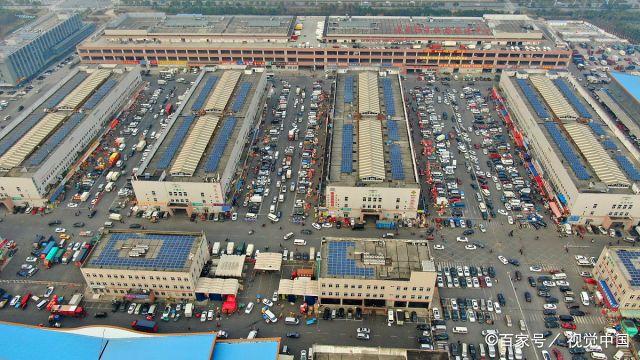
The Nantong Agricultural and Side Products Logistics Center is a down-to-earth destination—in the early morning wholesale market, trucks of fresh vegetables, fruits, and seafood are unloaded and traded amidst a symphony of haggling. There are no tourists here, yet you can witness the most authentic “smoke and fire” (the hustle and bustle of daily life) and the abundance of produce of a city.
1. Location Overview: The Nantong Agricultural and Side Products Logistics Center (commonly known as Tongnong Logistics) is located at No. 777 Chongchuan Road, Guanyinshan Street, Chongchuan District, Nantong City, Jiangsu Province. It is a large-scale modern agricultural wholesale market integrating vegetables, fruits, aquatic products, meat, grains, oils, and frozen goods. The market is adjacent to the highway network and is close to the Sutong Yangtze River Bridge, Nantong Railway Station, and Nantong Xingdong International Airport, serving as the eastern gateway for fast exits from the city with significant locational and transportation advantages. In Nantong’s urban functional layout, it is not a paid tourist attraction in the traditional sense, but a livelihood hub that sustains the “vegetable baskets” of millions of citizens and the most authentic window for observing a city’s daily vitality and supply chain operations. For travelers, it is an alternative “check-in” spot known for its street-level atmosphere, freshness, and affordability: come here for a stroll to understand exactly where a city’s dining table begins.
2. Cultural Context: Established in 2009, Tongnong Logistics was jointly funded by the Nantong Motor Transport Industry Group, the Nantong Supply and Marketing Cooperative, and the China Agricultural Development Key Construction Fund. According to public records, the project involved a total investment of approximately 2.3 billion yuan and covers about 920 mu of land. Over a decade, it has grown from a vacant lot in the east of the city into an important agricultural product distribution hub for the northern wing of the Yangtze River Delta and a key leading enterprise in Nantong’s agricultural industrialization, fulfilling the public welfare function of stabilizing prices and ensuring supply. In a broader context, it is a practical example of the national “Vegetable Basket” project: gathering scattered production sites, transport capacity, and merchants into one massive market to exchange scale for efficiency and cold-chain logistics for freshness—connecting the fields directly to the tables of thousands of households. Its daily routine is an invisible history of urban operation: at 3 or 4 AM, farmers and traders enter the market, cold-chain trucks load and unload, electronic settlement screens scroll through the day’s market prices, and food safety testing rooms screen samples. Fluctuations in vegetable prices on Nantong’s streets can often be predicted by the trading volume in this area; in emergencies, it can quickly activate supply guarantees to send affordable vegetables into communities, serving as a “reassurance pill” for the citizens.
3. Highlights: First, all-category trading zones. The market is divided into specialized areas for vegetables, fruits, aquatic products, meat/poultry/eggs, grains/oils, frozen goods, tea, and dried goods/seasonings; the sheer variety is eye-opening. Second, a modern distribution system. Equipped with cold-chain logistics, electronic settlement, and food safety testing, the market publishes daily price trends for major varieties, serving as both a reference for merchants and a barometer for city-wide prices; QR codes allow for traceability of wholesale sources, reflecting the leap from a traditional bazaar to modern logistics. Third, affordability and freshness. As a primary wholesale node, prices are often lower than retail; the window from midnight to early morning is when goods are most complete and fresh. Fourth, seasonal shopping. Taste the first spring bamboo shoots and strawberries in spring, see mountains of watermelons and grapes in summer, enjoy plump crabs and red persimmons in autumn, and explore the world of cured meats and nuts in winter. Fifth, a hub for Nantong specialties. Haimen mutton, Rudong clams, Qidong broad beans, and Rugao dried radishes circulate here, with gift box areas brimming with options during holidays. The surrounding area is also home to snack bars and restaurants that cook with the day’s fresh vegetables—a bowl of noodles or a steamer of buns here is affordable and offers the most authentic local taste.
4. Visitor Information: There is no admission fee; purchases are settled by product. Trading is primarily wholesale: various zones open sequentially starting from the early hours of the morning, with wholesale trading continuing until evening. The earlier you arrive, the more vibrant it is; those wishing to see the market at its peak should come early, as many vendors pack up after noon. Specific operating hours are subject to the market’s daily announcements. Transportation Guide: The address is No. 777 Chongchuan Road (Guanyinshan Street). For public transport, take a bus to the Zhongnan Century Flower City or Shibawan Village area and walk from there; please check the real-time Nantong Bus query for specific lines. For driving, navigate to No. 777 Chongchuan Road. The market has parking, but spaces are tight during wholesale peaks; arriving early or off-peak is recommended. While primarily wholesale, the market is open to citizens for retail; you can buy small quantities of seasonal produce and seafood, though bargaining room is small and the pace is “fast in, fast out.” Please note that this is a place of business: please follow the order, be mindful of forklifts and trucks for safety, avoid blocking paths for long photography sessions, and respect the merchants’ business.
5. Exploration Tips: It is recommended to spend half a day here between 6 AM and 9 AM: wander from the vegetable area to the fruit area, then to the aquatic and meat/poultry sections, and finally finish at the dried goods and seasonings area to experience the complete chain from field to table. Photography enthusiasts can capture candid shots of vendors organizing goods, mountains of baskets in the morning light, and steaming breakfast stalls. Families can use this as a vivid nature and business lesson to introduce children to crops and seafood. Study groups may focus on supply chains and food safety, observing how cold chains preserve freshness and how electronic settlements enable traceability. Seniors are advised to walk slowly, wear comfortable shoes, and bring a folding trolley or shopping bag for ease. Before leaving, consider picking up some seasonal fresh fruit or cold-chain packaged Nantong specialties; you can ask merchants to simply process or repack fresh produce for easier transport. Some merchants provide courier services and vacuum packaging to reduce the burden of luggage. For the most bustling scene, come during the wholesale peak; for a more leisurely selection, avoid the peak and come mid-morning. Before buying, walk a lap to check the electronic price screens and the quality of various stalls. Wholesale is about buying in bulk for better prices, while retail involves asking a few vendors to compare freshness—this old-school market wisdom still works here.
6. Best Time to Visit: Tongnong Logistics can be visited in all four seasons—summer brings abundant melons and peaches, winter smells of cured meats, and spring and autumn offer the most colorful variety of fruits and vegetables. You can combine this with visits to the Nantong Museum and the Haohe Scenic Area—exploring the market in the morning and culture in the afternoon for a balance of energy and tranquility. If you still have energy in the evening, the night views of the Haohe River and the sunset over the riverbank toward Langshan are perfect endings to a day of “smoke and fire.” Regarding local flavors, you can find snacks like Tiao Mian (jump noodles), Huo Jiao (fried dumplings), and You Duan Zi (oil drops) around the market and throughout Nantong. If you wish to buy specialties, Haimen mutton, Rudong clams, Qidong broad beans, and Rugao dried radishes are all worth getting; just ask about the origin and season, as “seasonal” is the most valuable word in a wholesale market. Ultimately, Tongnong Logistics is Nantong’s least “Instagrammable” but most indispensable stop: it has no tickets or grand arches, yet it silently supports the city’s dining tables through its massive daily turnover. There is no need to rush your itinerary here; simply slow your pace, observe the people, the goods, and the hustle, and you will understand the most simple yet resilient foundation of this city.