Dalian · Museums & Academia
Museum of Mysteries of Life
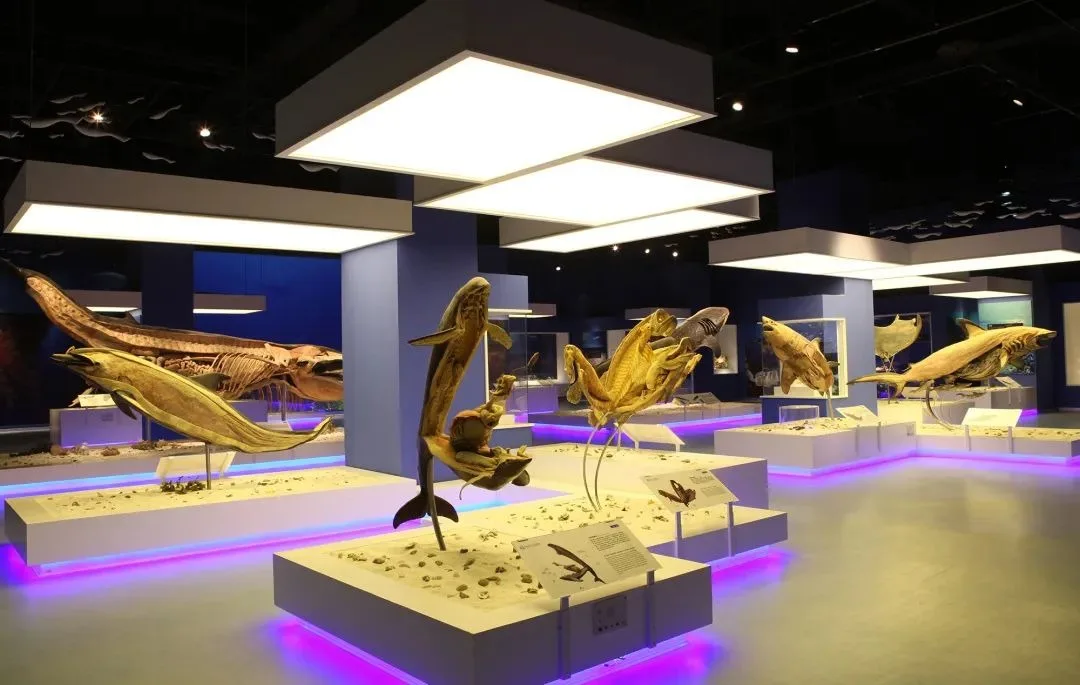
Standing before a plastinated minke whale, a sudden silence falls over you. Its muscles, blood vessels, and internal organs are preserved in their entirety, like a sculpture frozen in time—authentic, yet transcending the typical impression of a “specimen.” Located in Dalian Golden Pebble Beach, the Museum of Mysteries of Life is the world’s first natural history museum dedicated to plastinated biological specimens. With over 2,000 real specimens detailing the evolution of vertebrates and the structure of the human body, it is one of Dalian’s most distinctive science museums.
1. Location Overview: The Museum of Mysteries of Life is situated in the Culture Expo Plaza within the Golden Pebble Beach National Tourist Resort in the Jinpu New Area of Dalian, neighboring the Golden Pebble Wax Museum and the Huaxia Culture Museum. Entry to the resort itself is free, while tickets for individual venues are sold separately; this museum is the most prominent among the cluster of cultural venues in the area. The facility covers approximately 6,000 square meters across three floors: “Soul of the Ocean” on the first, “Kingdom of Vertebrates” on the second, and “World of the Human Body” on the third. The visitor flow is designed as an evolutionary journey, moving from the ocean to land and finally to the human self. It is about a one-hour drive from downtown Dalian, and Metro Line 3 provides direct access to the resort. It is ideal to pair this with a full-day itinerary of the Golden Pebble Beach coastline and Geological Park: explore the marine erosion landforms outdoors in the morning, and retreat into the museum in the afternoon for a perfect balance of activity and reflection. The resort offers comprehensive hotel and dining options, with many visitors choosing to stay overnight. The museum faces the bustling Discoveryland theme park across the plaza, representing the two contrasting temperaments of Golden Pebble Beach—one serene, one energetic.
2. Cultural Context: The foundation of this museum lies in a specific technology: plastination. By replacing water and fat in biological tissues with polymer materials like silicone rubber, specimens become dry, odorless, touchable, and permanently preserved, revealing even the finest blood vessels and nerves. Originating in Germany, this technology was introduced to China and developed locally by Professor Sui Hongjin’s team from Dalian Medical University, who subsequently founded the museum. Starting as a small-scale exhibition in Lushun, it later moved to Golden Pebble Beach to become the flagship venue, with branches now established in several Chinese cities; the Dalian and Suzhou museums have been rated as national-level science popularization bases. As the world’s first natural history museum specializing in plastination, it brings anatomy out of textbooks and laboratories and transforms it into public knowledge that anyone can see and understand. Beyond medical students, every visitor has the chance to truly see what the “inside of the body” looks like, which is why it stands out among science museums in China. Notably, the plastination industry has taken root in Dalian, making the city a major hub for the field; this museum serves as a public window into that industrial history.
3. Highlights: Each of the three floors has a different focus. The first floor, “Soul of the Ocean,” features marine life, with the plastinated minke whale and sperm whale as the absolute stars. The complete preservation and dissected display of giant whales using plastination is a global first; standing between the whale’s skeleton and organs, one can intuitively feel the sheer scale of these marine giants and observe the shared body structures between whales and land mammals. The second floor, “Kingdom of Vertebrates,” gathers terrestrial vertebrates. From predatory beasts in mid-stride to birds with wings spread, the muscle alignment and skeletal structures are crystal clear. Some specimens are half-fur and half-muscle, providing two layers of information on a single body—a vivid textbook for understanding animal movement and evolution. The third floor, “World of the Human Body,” is the most stunning: whole-body plastinations, organ specimens, and slices systematically present the human skeleton, muscles, nerves, and circulatory system. The side-by-side display of a smoker’s lung and a healthy lung provides a level of scientific persuasion that words cannot match. The museum houses over 2,000 exhibits, dozens of which hold world records; it is well worth joining one of the scheduled guided tours. The human section also features whole-body specimens in athletic poses (running, throwing) and thin-slice specimens. The red and blue casted blood vessels look like precision maps, leaving visitors in awe of the complexity and ingenuity of the human body.
4. Visitor Information: Opening hours vary by season: Peak season (approx. May to September) is roughly 8:00 to 17:00, and off-peak is roughly 8:30 to 16:30. Last entry is relatively early; please refer to official announcements for specifics. Tickets are 80 RMB per person (official Golden Pebble Beach rate), though discounts are often available on various platforms; preferential policies for children and seniors are posted at the ticket office. Golden Pebble Beach also offers a Culture Expo Combo Ticket (approx. 240 RMB), including the Wax Museum and Huaxia Culture Museum; those planning to visit multiple venues should compare prices. Paid human guides are also available. Transport: Take Metro Line 3 to the terminal Golden Pebble Beach Station, then transfer to the resort sightseeing bus (approx. 20 RMB/person, hop-on hop-off) or walk to the Culture Expo Plaza. For those driving, navigate to “Museum of Mysteries of Life” or “Golden Pebble Beach Culture Expo Plaza”; parking is available within the resort. A visit takes approximately 1.5 to 2 hours. Special Reminder: The third floor contains real human specimens; families with very young children are advised to communicate beforehand and decide based on the child’s comfort level. Please do not touch the specimens and follow photography rules. Some areas have dim lighting; do not use flash. It is strongly recommended to join a scheduled tour or rent an audio guide, as simply reading the labels can lead to a superficial experience, missing the stories behind the specimens.
5. Travel Tips: Upon entering, it is recommended to follow the sequence from the first to the third floor without skipping—the path is the narrative. The logic of evolution builds layer by layer from marine life to land vertebrates to humans; skipping floors removes much of the fascination. In terms of time allocation, allow 30 minutes each for the whales on the first floor and the animals on the second, and at least 40 minutes for the dense content of the Human Body world on the third. If you can catch a scheduled tour, take it; the structural stories told by guides are far more vivid than the labels. Educational families should also look for science courses and interactive activities. For an ideal itinerary: visit the Coastal National Geological Park in the morning to see the marine erosion landforms (outdoor activities are better while it’s cool), enter the indoor Museum of Mysteries of Life in the afternoon, and head to the Golden Coast to walk on the sand in the evening. For those purely interested in science, use the combo ticket to bundle this museum with the Wax Museum and Huaxia Culture Museum and finish the Culture Expo Plaza in half a day. Compared to the neighboring Discoveryland, this place is quiet and mentally stimulating rather than physically taxing, making it a great choice for the latter half of your trip. If traveling with medical students or life science enthusiasts, spend an extra hour on the third floor; the information density here is higher than in most similar venues, and reading carefully is highly rewarding.
6. Best Time to Visit: As an indoor venue, it is suitable for all seasons. Rainy days, harsh winters, and scorching summers are its “home turf,” making it the most reliable weather insurance for a Golden Pebble Beach trip. In summer, when the beach is most crowded, schedule the museum for the sunniest midday hours to stay cool and avoid the crowds; by the time you leave, the seaside heat will have subsided. In spring and autumn, tourist numbers are moderate, making both the beach and the museum pleasant to visit. The marine erosion landforms of the Geological Park look best under the low-angle sunlight of these seasons, providing the best overall experience of the year. Winter sees the fewest visitors, offering the quietest environment for academic study or family visits, with the added bonus of the bleak, beautiful winter seascape. Educational groups are common during winter and summer breaks and holidays; for a quiet visit, weekdays or early morning entry are recommended. Regardless of the season, reserve a “no-rush” mindset for this museum—its wealth of information deserves slow digestion. After visiting, seeing the ocean again will give you a different perspective on the word “Life.” On peak summer weekends, while the resort is crowded, this museum remains a relatively tranquil sanctuary, perfect for escaping the crowds in the afternoon until the sun begins to set.