Xi'an · Ancient Towns & Old Streets
Muslim Quarter
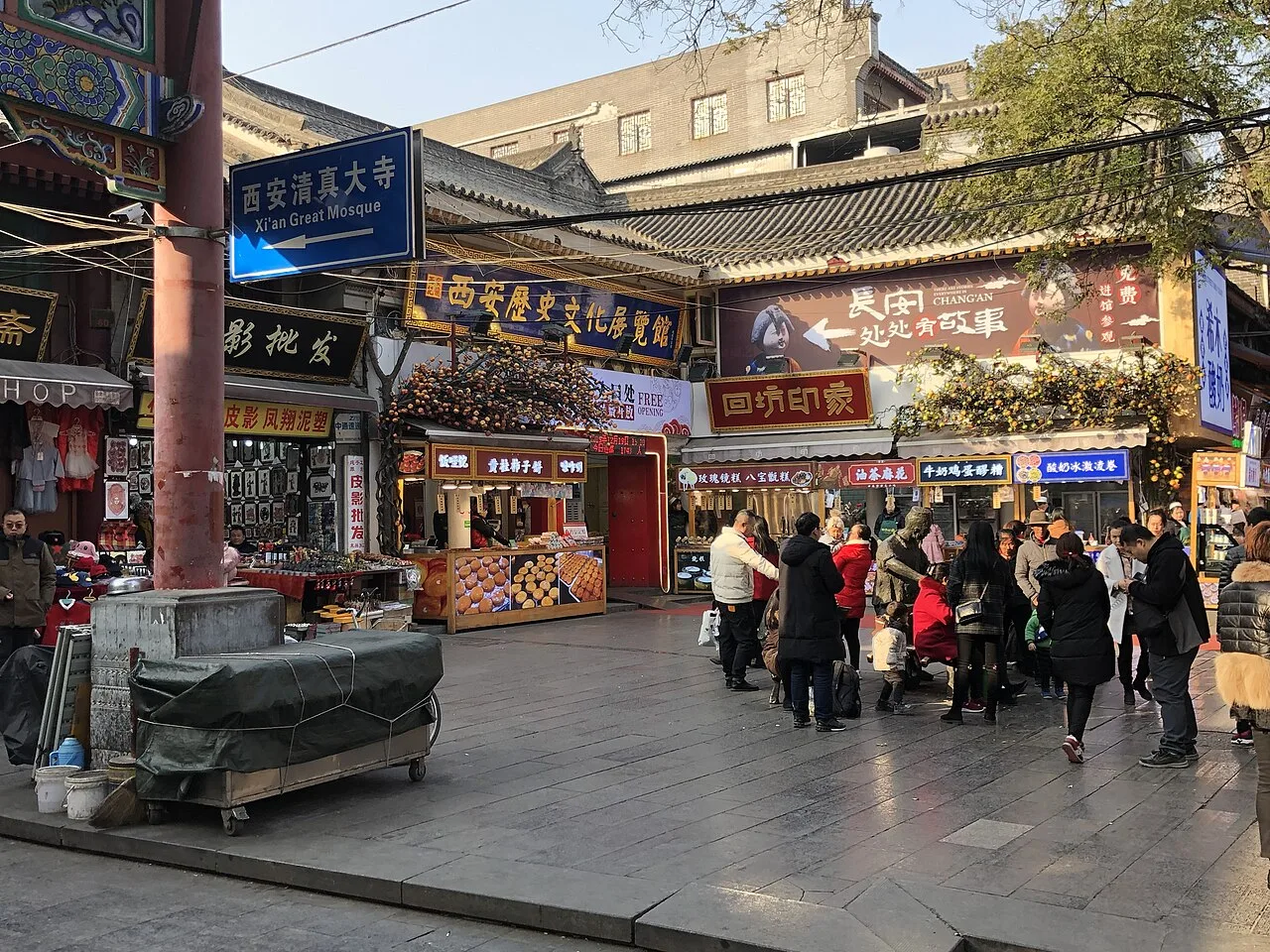
The Muslim Quarter is the “culinary heart” of Xi’an. The moment you step into Beiyuanmen, you are enveloped by the charcoal aroma of grilled skewers, the rich scent of Mutton Paomo, and the sweet fragrance of Zenggao (steamed sticky rice cake). A bustling marketplace by day and a brilliantly lit night market by evening, it is the ultimate “carb feast” that no visitor to Xi’an can miss.
1. Location Overview: The Muslim Quarter is not a single street, but a collective term for several alleys and streets in the Lianhu District, including Beiyuanmen, Beiguangji Street, Xiyang Market, Dapiyuan, Sajinqiao, Mai’xian Street, and Miaohou Street. It serves as the core of Xi’an’s Muslim residential area and historic district, located just a few hundred meters from the Bell and Drum Towers with a history spanning several centuries. It extends from Hongbu Street in the north to Xidajie in the south, connecting Qiaozikou in the west and Luomashi in the east, situated right in the heart of the ancient city’s “Huifang” (Muslim quarter). In Xi’an’s tourism layout, the Muslim Quarter, together with the Bell and Drum Tower Square, the City Wall, and Shuyuanmen, forms the central old city tour route. It is the first stop for experiencing Xi’an’s flavors, street life, and Muslim culture, and the most popular landmark for domestic and international tourists to feel the vibrant “smoke and fire” (lively atmosphere) of old Chang’an. The area is crowded from dawn until midnight. The term “Fang” refers to the basic unit of urban management during the Tang and Song dynasties; thus, “Huifang” is the quarter where Muslims resided. Today’s Muslim Quarter is actually a culinary culture circle centered around Beiyuanmen, far larger than a single street—the deeper you explore, the more authentic the flavors you’ll find.
2. Cultural Background: The formation of Xi’an’s Huifang dates back to the Tang Dynasty, when Uyghur, Persian, and Arabic merchants traveled east along the Silk Road and settled primarily in the western part of the city. After the Yuan Dynasty, many Central Asian and Persian soldiers and civilians remained in Chang’an, gradually forming a stable Muslim community. From the Ming and Qing Dynasties onward, the Beiyuanmen area flourished due to its proximity to the Shaanxi Governor’s Office (commonly known as the “North Yard”), leading to a dense concentration of mosques, markets, and residences that formed a unique alley layout. The Great Mosque of Huajue Alley is said to have been founded during the Tianbao era of the Tang Dynasty, though most existing structures were rebuilt during the Ming and Qing Dynasties; it is a prime example of Chinese-style mosque architecture, with its ancient steles, moon platforms, and the Shengxin Tower witnessing the fusion of faiths along the Silk Road. Daxuexi Alley is said to be where Uyghurs studied Han culture during the Tang Dynasty, a name that persists today. By the Qing Dynasty, the Huifang had become an important commercial and religious center in Xi’an, with many time-honored workshops passed down through generations. To this day, residents maintain their religious life with daily prayers and Friday congregational prayers, while Eid al-Fitr and Eid al-Adha remain grand celebrations for the entire quarter. Consequently, the Huifang is both a religious community and a living museum of multiculturalism, where every plaque and call to prayer connects to a millennium of civilization.
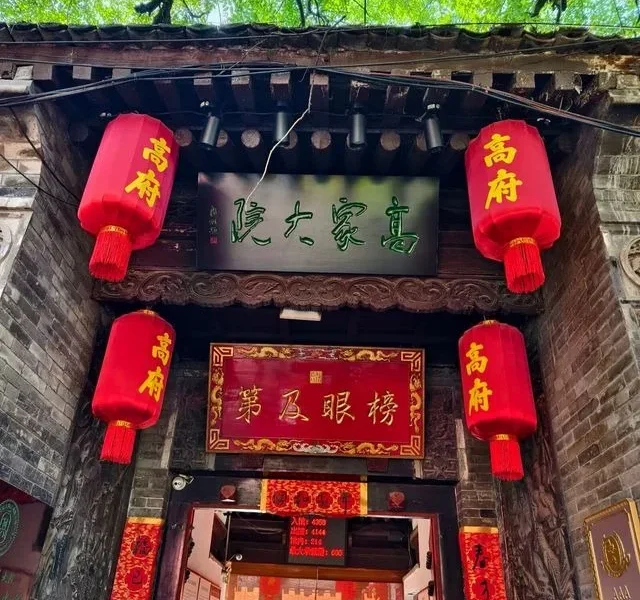
3. Highlights: The charm of the Muslim Quarter lies in the dual exploration of taste and architecture. First is the concentration of Halal delicacies: Beiyuanmen main street features Jia San Soup Dumplings and Shanshisan Ice Cream; Xiyang Market hides Lao Mi Jia Paomo and Southeast Asian Zenggao; Dapiyuan offers Ding Jia Crispy Pork, Sheng Zhiwang Sesame Sauce Liangpi, and Grandma Hua’s Sour Plum Soup; Sajinqiao is a breakfast paradise for locals, where Fatty’s Zenggao and Liu Laohu Meatball Hulathang (spicy soup) are served steaming hot; the Mai’xian and Miaohou Street areas are known for Cured Beef Burgers and Huanggui Persimmon Cakes. Different alleys have different vibes—Beiyuanmen is bustling, Dapiyuan is hearty, Sajinqiao is authentic, and Miaohou Street is hidden; the best way to explore is by following a “flavor map.” Second are the historical sites: Gao’s Grand Courtyard in Beiyuanmen is a well-preserved Ming and Qing residence where you can enjoy shadow puppetry and Qinqiang opera; the Great Mosque of Huajue Alley is solemn and dignified; and Daxuexi Alley retains the style of old Xi’an residences, with slow time hiding between blue bricks and grey tiles. Third is the street atmosphere: red lanterns, vendors’ cries, and the sizzle of grilled meat make the evening and night the most vibrant time, capturing the most vivid image of Chang’an. Beyond eating, the craftsmanship of the Huifang is worth a stop: the calls for mirror cakes and sour plum soup, the steam from copper pot hot pot, and the dried fruits, preserves, and Chinese pastries lining the streets form a long, edible, and visual market scroll. Many shops hang Halal signs alongside traditional Chinese shop signs, silently telling the story of a community that has lived here comfortably for hundreds of years.
4. Visitor Information: The Muslim Quarter is an open district, open 24 hours a day with free admission. Some individual courtyards and performances, such as the visit and shadow puppet show at Gao’s Grand Courtyard, require a separate fee. Shop hours vary; breakfast shops open as early as 6:00 or 7:00 AM, and most shops operate until around 10:00 PM, with the night market peaking after 6:00 PM. Transportation: Take Metro Line 2 or 6 to Bell Tower Station; the Beiyuanmen main entrance is a 5-to-10-minute walk from the exit. Take Metro Line 6 to Qiaozikou Station or Line 1 to Sajinqiao Station for direct access to the Sajinqiao food area. Various bus lines stop at Bell Tower West or Guangji Street. Parking is limited, so driving is not recommended; if you do, use the parking lots around Bell and Drum Tower Square. Most snacks cost between a few yuan and 30 yuan and are quite filling; two or three stalls are often enough to make you half-full, so avoid overeating too early. Important notes: Please respect Halal dietary restrictions; do not bring pork products or alcoholic beverages into the restaurants within the quarter. When visiting mosques, please dress modestly, remain quiet, and do not photograph worshippers during prayer without permission. It is recommended to come on an empty stomach, wear comfortable shoes, and allow two to three hours for your visit.
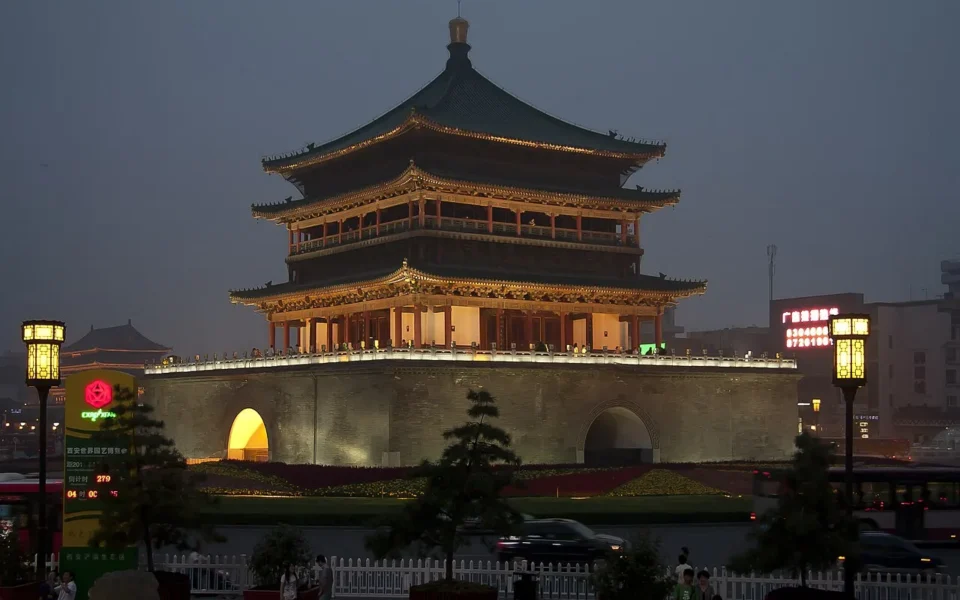
5. Travel Tips: Recommended Route: Enter via Bell and Drum Tower Square, walk down Beiyuanmen main street tasting snacks, turn into Xiyang Market, pass through Dapiyuan, explore Sajinqiao, and exit at Lianhu Road. The total trip takes about two to three hours. Along the way, you can stop at Gao’s Grand Courtyard for a shadow play or the Great Mosque for a moment of tranquility amidst the hustle. The best photo spots are the night view of the Drum Tower and the red lantern corridor of Beiyuanmen, which are most photogenic as the lights come on. Photography enthusiasts may also visit in the early morning to capture empty alleys and the steam from the first pot of Hulathang. For a deeper experience, focus on the formation of the Huifang, Halal dietary etiquette, and the intangible cultural heritage of shadow puppetry and Qinqiang opera. The stories passed down by old Xi’an residents about a secret Paomo recipe or the origin of a plaque often have more flavor than the signs themselves. Families can enjoy the shadow plays; foodies should dive into Dapiyuan and Sajinqiao to avoid the long lines at “internet-famous” shops on the main street; senior travelers are advised to visit in the morning or evening to avoid peak crowds. Be sure to eat in moderation and try a little bit from many different stalls.
6. Best Time to Visit: The Muslim Quarter is suitable for all seasons: enjoy grilled meat in the cool summer nights, or a bowl of hot Hulathang to warm the soul in winter. During the Spring Festival, the lantern fairs and the lighting of the Drum Tower create a strong festive atmosphere. If visiting during Eid al-Fitr, the quarter is decorated with lights and people exchange “Youxiang” (fried pastries), making it an excellent time to experience Muslim culture (note that some restaurant hours may change during festivals). Because it is adjacent to the Bell and Drum Towers, it can be combined into a half-day tour of the old city center. This can be further linked with the City Wall (South Gate), Shuyuanmen, the Stele Forest, and the Small Wild Goose Pagoda for a full-day ancient city cultural tour. Other famous Xi’an dishes to try nearby include Beef/Mutton Paomo, Roujiamo (meat burger), Biangbiang Noodles, Liangpi (cold noodles), and Hulu-tou (tripe soup). For souvenirs, consider cured beef, persimmon cakes, Qiong-guo sugar, and various Huifang pastries. From the first pot of Hulathang at dawn to the last skewer of grilled meat at midnight, the Huifang turns a single day into an endless marketplace, writing the inclusive spirit of Chang’an into every bowl of soup and every piece of bread.