Yangzhou · Lakes & Waterfront
Slender West Lake
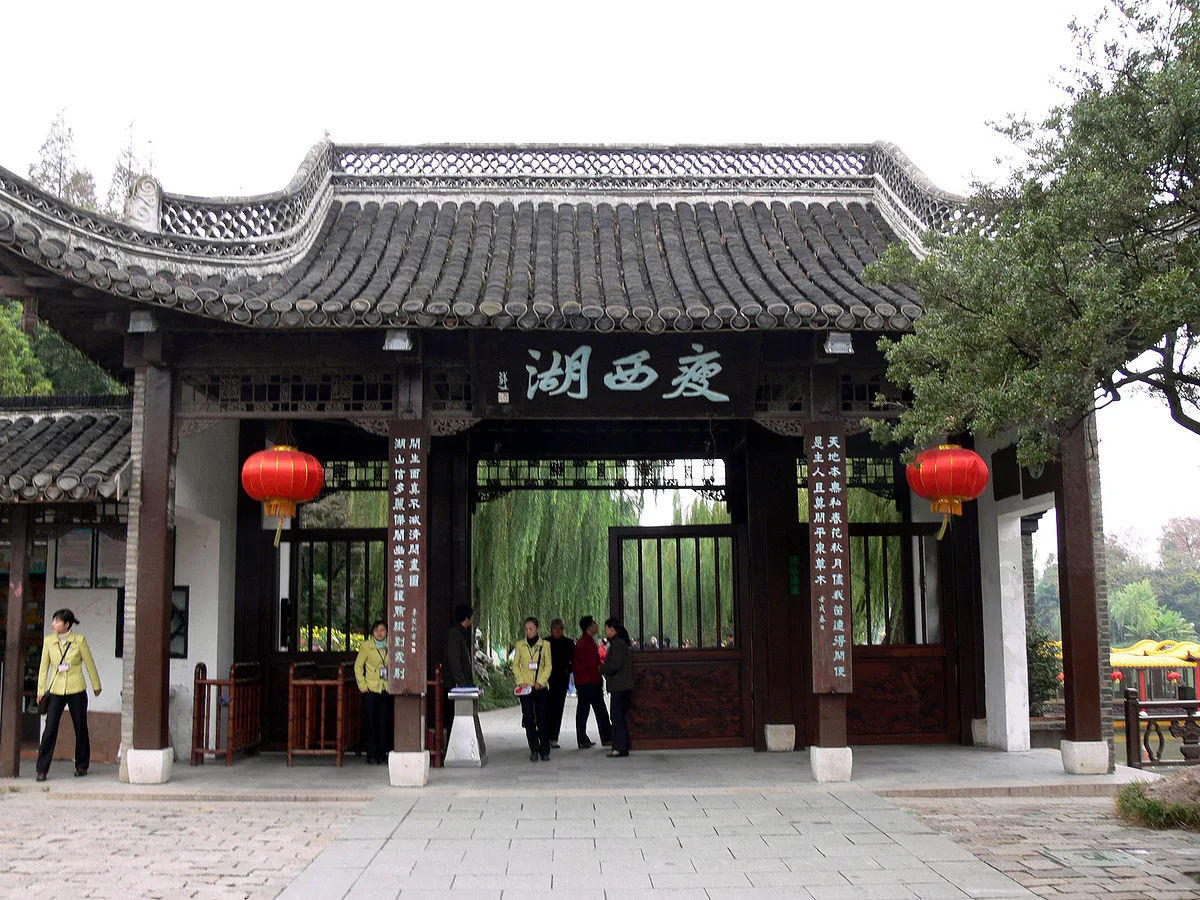
The word “slender” is used perfectly to describe Slender West Lake—it is not a vast expanse of water, but a winding ribbon of emerald, flanked by a rhythmic arrangement of gardens, weeping willows, and pavilions. I took a sculling boat for a while, listening to the boatwoman sing folk songs as she rowed past the Five Pavilion Bridge and the Twenty-Four Bridges. In that moment, I truly felt the poetic essence of “visiting Yangzhou in the third lunar month,” when the spring blossoms are in full glory.
1. Location Overview: Slender West Lake is located at No. 28 Dahongqiao Road, Hanjiang District, Yangzhou, Jiangsu Province. It is the core of the Shugang-Slender West Lake Scenic Area and the most iconic landmark of Yangzhou. The lake is narrow and winding, stretching from Shugang in the north to the ancient city in the south, flowing through a low-lying water vein that connects the city’s elegance. As a National 5A Tourist Attraction and a component of the Grand Canal of China (a UNESCO World Heritage site), it forms a golden map of Yangzhou’s gardens and history alongside Daming Temple, Ge Garden, and He Garden. Since the Sui and Tang dynasties, Yangzhou flourished due to the canal and the salt trade; Slender West Lake is the most delicate brushstroke left by that prosperity on the water. It is not a lake you can see across in a single glance; rather, its narrow, long, and curving form unfolds like a landscape scroll, integrating gardens, poetry, and local life. It is an indispensable destination for anyone seeking the “spring of Yangzhou” and the physical embodiment of the Jiangnan region in countless dreams.
2. Cultural Heritage: Slender West Lake originated as the moats of Luocheng in the Tang Dynasty, Dacheng in the Song Dynasty, and the Baozhang River in the Ming and Qing Dynasties. The Qing poet Wang Hang, while boating on the Baozhang River, wrote: “Weeping willows stretch endlessly to meet the withered grass, the rainbow bridge with its jagged teeth looks like a painting. A place where gold is spent like water; thus, it is called Slender West Lake.” The name “Slender” was coined to distinguish it from the West Lake in Hangzhou, a single word that captures the different temperaments of Northern and Southern gardens. During the Ming and Qing dynasties, salt merchants dredged the river, stacked decorative rocks, and built gardens. The Kangxi and Qianlong emperors toured the south multiple times, with Qianlong visiting Yangzhou six times. Salt merchants competed to build gardens to welcome the imperial entourage, leading to the creation of famous sites like the Five Pavilion Bridge, White Pagoda, Little Golden Hill, and the Twenty-Four Bridges, as well as relics like the Imperial Wharf and the Meandering Stream of the West Garden. The entire landscape still carries the warmth of a golden age. The fame of Slender West Lake is inseparable from the salt merchants: the wealth of the salt industry, the ingenuity of scholars, and the travels of emperors conspired to carve a protective moat into a flowing art gallery. To read the lake is to read history. In 2014, Slender West Lake was officially inscribed on the World Heritage List as part of the Grand Canal.
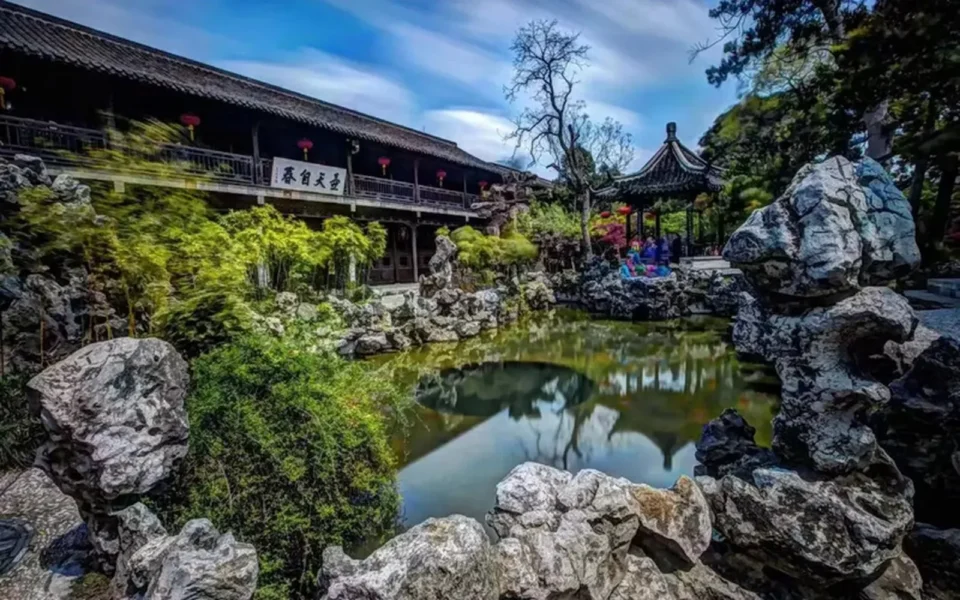
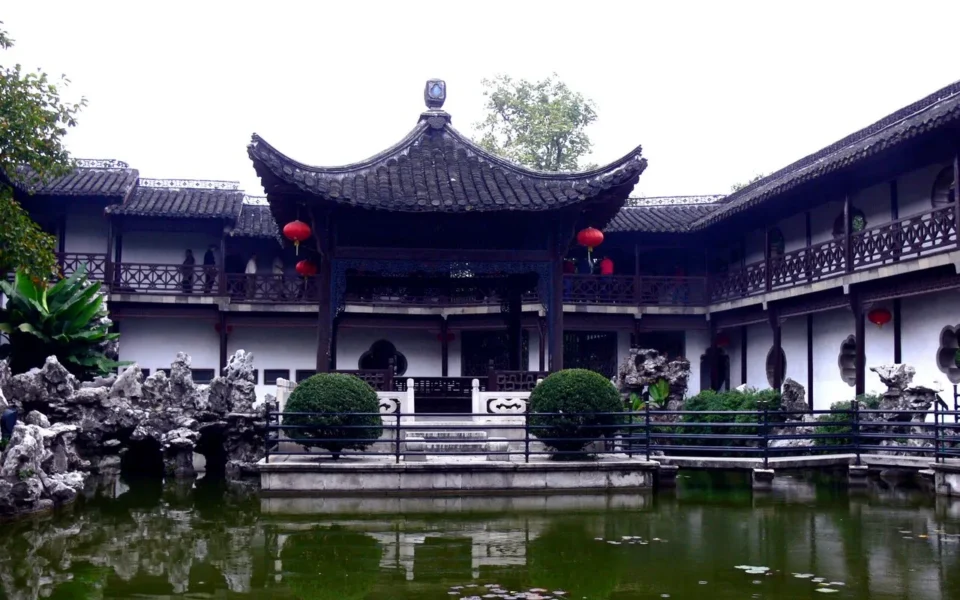
3. Highlights: Slender West Lake uses two flower-lined embankments and a winding stream to connect various pavilions and terraces. The Five Pavilion Bridge, built in 1757 (the 22nd year of Emperor Qianlong’s reign), is the symbolic landmark of Yangzhou—featuring five pavilions on the bridge and fifteen arches below, it blends the architectural beauty of both northern and southern styles; it is most enchanting at dusk when the moon is reflected in each arch. The White Pagoda was modeled after the Beihai White Pagoda in Beijing; legend says salt merchants built it overnight to welcome Emperor Qianlong, showcasing their immense wealth and resourcefulness. Little Golden Hill is the highest point in the lake, offering a panoramic view of the spring willows along the long embankment. The Fishing Terrace provides a “framed view” where the White Pagoda and Five Pavilion Bridge appear together like a painting, serving as a textbook example of Chinese garden framing. The Twenty-Four Bridges became famous through Du Mu’s poem: “On the twenty-four bridges under the bright moon, where is the jade-like lady playing the flute?” While the original Qing bridge is gone, the current one was rebuilt in 1986, preserving its elegant jade railings and poetic atmosphere. Additionally, the elegance of Xu Garden, the waterside beauty of Xichun Terrace, and the blooms of the Ten Thousand Flower Garden, along with the spring willows and lotus breezes, each show meticulous design, blending poetry, painting, and gardening into one scroll. There were once “Twenty-Four Views” in the Qing Dynasty, each with its own poem; though some have changed, the skeletal structure of the gardens remains. If time is limited, prioritize a boat trip combined with the “triangle route” of the Five Pavilion Bridge and Twenty-Four Bridges to capture the soul of the lake.
4. Visitor Information: Opening Hours: Daytime approx. 6:30–17:30. Night tours are available seasonally; entry stops shortly before closing. Please check the daily official notices. Ticket Prices: Daytime prices vary by season. Peak season (March–May, September–November) is 100 RMB; shoulder season is 60 RMB; deep winter (December, January) is 30 RMB. Night tours (March–November) are approx. 120 RMB, typically from 18:30 to 21:30, offering a different atmosphere with light shows and performances. Discounts: Students and seniors aged 60–64 receive half price. Seniors 65+ and children under 6 (or under 1.4m) are free with valid ID (subject to official policy). Transportation: The scenic area has several entrances (South, West, North). You can take buses such as You 1, You 2, Route 5, 11, or 39 to the West or South Gate stops. Painting boats, sculling boats, and sightseeing shuttles inside the park require separate fees. The terrain is flat with accessible paths and multilingual guides. Main piers and service facilities are well-equipped. It is recommended to reserve half a day to a full day to slow down and savor the “slender” essence.
5. Travel Tips: A combination of water and land travel is recommended. Take a painting boat from the Imperial Wharf area northward, passing through the Rock Cave, Rainbow Bridge, Spring Willows Embankment, Xu Garden, Little Golden Hill, and the Five Pavilion Bridge to the Twenty-Four Bridges. For a land route, enter through the South Gate, walk past the White Pagoda and Xichun Terrace to the Twenty-Four Bridges, and then return. Boat options include: painting boats (classic), electric boats near the Twenty-Four Bridges (easy), and sculling boats (private). If you only want photos and not a full tour, just take a boat for the highlight section. The best photo spots are the shot framing both the Five Pavilion Bridge and the White Pagoda, the Twenty-Four Bridges at dawn or dusk, and the morning mist over the Spring Willows Embankment. Local Yangzhou residents often visit at dawn or dusk to avoid tour groups; overseas travelers who enter right at opening will find a serene, misty atmosphere that is impossible to find at noon during peak season. Families with children can take the easy lakeside path and a short boat ride. Seniors are advised to use painting boats to minimize walking. For those interested in history, combine the visit with the Grand Canal heritage to learn about the salt merchants’ gardens and the Emperor’s southern tours. The lake breeze can be strong; please dress warmly, especially for children and the elderly, as it feels cooler on the water.
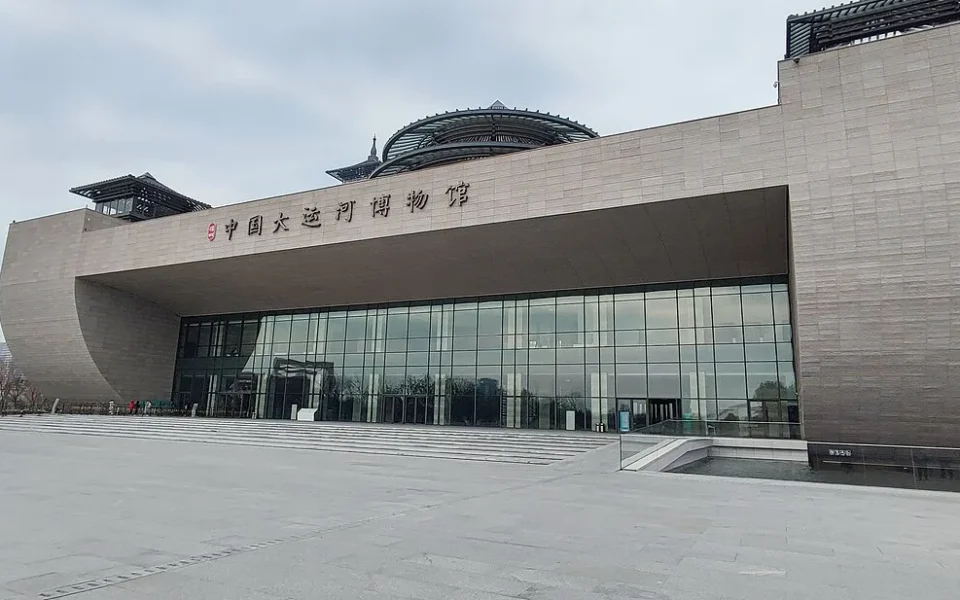
6. Best Time to Visit: Spring (the “Third Lunar Month”) is the undisputed best time, with peach blossoms and willows lining the banks and qionghua flowers in bloom; this is also the busiest travel season. Summer brings lotus ponds and cooling breezes, with night tours offering a stunning view of the illuminated Five Pavilion Bridge and White Pagoda. Autumn brings the scent of osmanthus and clear skies, especially around the Twenty-Four Bridges. Winter after a snowfall makes the lake look like a white silk ribbon—quiet, secluded, and possessing a unique, lean beauty. You can link this visit with Daming Temple (Shugang views), Ge Garden and He Garden (the two gems of salt merchant gardens), Dongguan Street (historic market street), and the Yangzhou China Grand Canal Museum (Sanwan) for a classic 2-3 day itinerary. For food, do not miss the morning tea (zaocha)—the Crab Roe Soup Dumplings, Thousand-Layer Oil Cake, and Emerald Shumai from Fuchun or Yechun tea houses are essential prerequisites for the lake visit. Pair these with Lion’s Head meatballs, Shredded Tofu in Broth, and Yangzhou Fried Rice, accompanied by a cup of “Green Willow Spring” tea to truly experience the leisure and composure of this historic city. The beauty of Slender West Lake lies in its slenderness, its curves, and its subtlety; every boat trip and every small bridge is a piece of “white space” in the art of Chinese gardening. When you come to Yangzhou, always save a full day to slowly read this poem written on the water.