Hangzhou · Lakes & Waterfront
West Lake
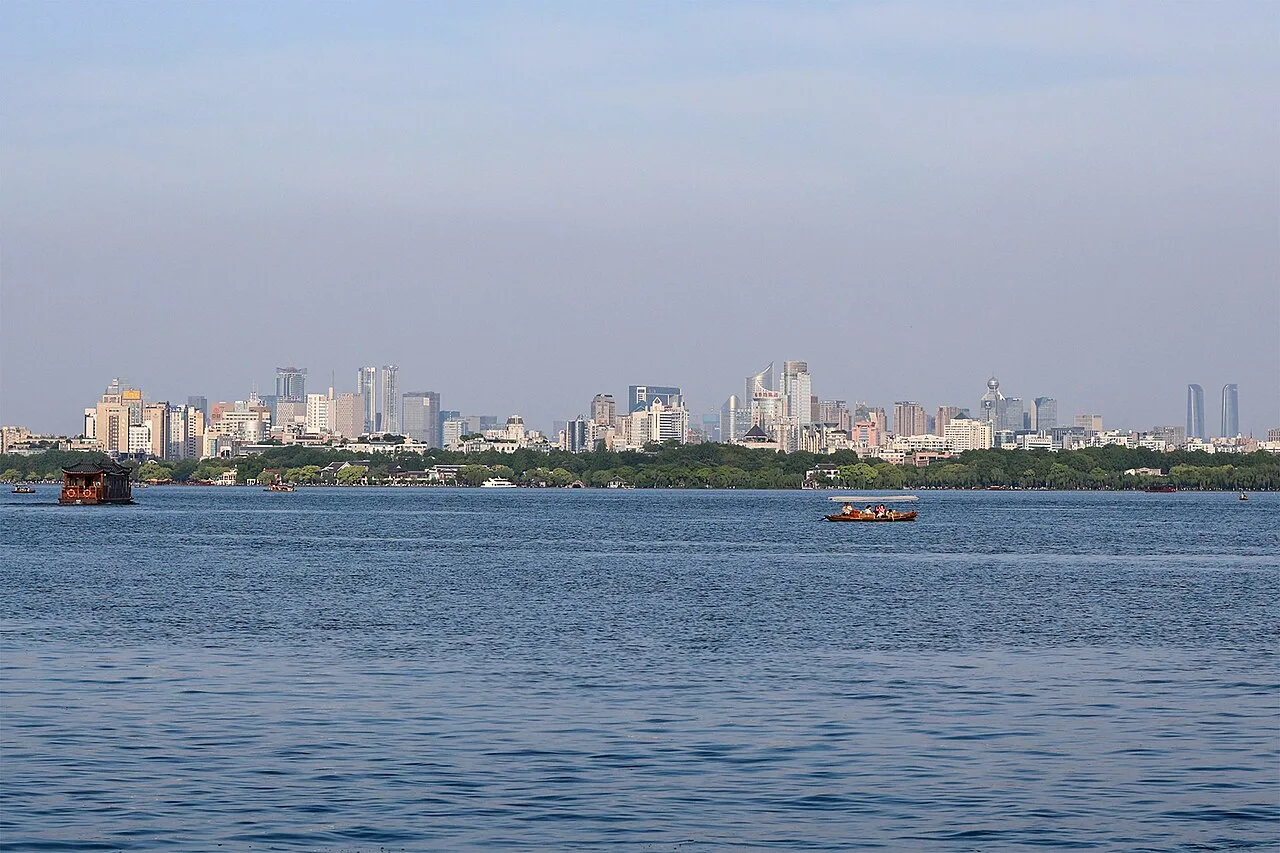
The beauty of West Lake is discovered through wandering, not through “checking in.” I spent an entire afternoon strolling along Su Causeway, watching the water ripple beneath my feet and the distant Leifeng Pagoda emerge and fade in the mist. Suddenly, I understood the verse: “If West Lake were compared to the beauty Xi Shi, she would be stunning in both light and heavy makeup.” This place doesn’t want you to rush; it asks you to slow down.
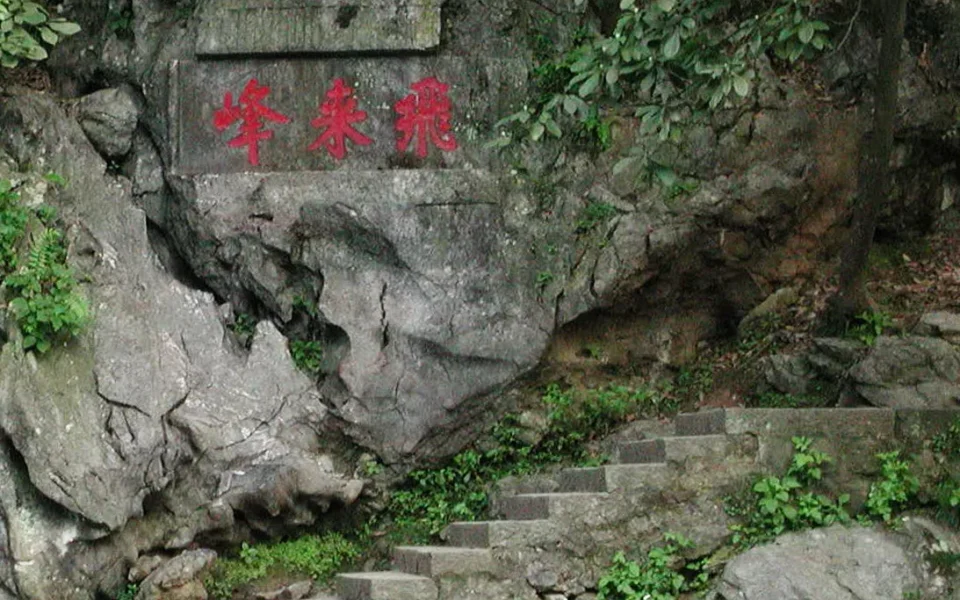
1. Location Overview: West Lake is located in the western part of Hangzhou, Zhejiang Province, spanning the border between Xihu District and Shangcheng District. Its geography is characterized by being surrounded by mountains on three sides and bordering the city on one. To the north, west, and south, it is sheltered by peaks such as Beigaofeng, Feilaifeng, Nangaofeng, Yuhuang Mountain, and Wu Mountain, while its eastern side sits adjacent to the Hubin commercial district and the old city. The lake covers a water area of approximately 6.39 square kilometers. Together with the surrounding mountains, long causeways, and islands, it forms the classic vista of “three sides of cloudy mountains and one side of city.” As the core of the West Lake Cultural Landscape, its World Heritage value is reflected in the integration of six elements: the natural scenery, the urban-lake spatial characteristics, the layout of the two causeways and three islands, the designated “Ten Scenes of West Lake,” cultural historical sites, and characteristic plant landscapes. Hangzhou owes its fame and prosperity to the lake; West Lake is the undisputed calling card of the city, forming a cultural tourism framework alongside Lingyin Temple, Xixi Wetland, and the Hangzhou section of the Grand Canal.
2. Cultural Context: Originally a coastal lagoon, West Lake was formed through long-term sedimentation of silt. Since the Tang Dynasty, it has undergone a millennium of dredging and construction. Bai Juyi, while serving as the governor of Hangzhou during the Tang Dynasty, dredged the lake and built embankments to store water for irrigation. It is important to note that today’s Bai Causeway was originally called Baisha Causeway and already existed in the Tang Dynasty; Bai Juyi’s poem “Baisha Causeway under the shade of green willows” referred to it. Later generations renamed it Bai Causeway in admiration of the poet; the Bai Gong Causeway he personally built outside the Qiantang Gate has long since vanished. During the Northern Song Dynasty, Su Dongpo served in Hangzhou twice, conducting large-scale dredging and using the silt and weeds to build a long causeway, which was later named Su Causeway in his honor. The famous line “If West Lake were compared to the beauty Xi Shi” also comes from him. During the Zhengde era of the Ming Dynasty, Prefect Yang Mengying overcame opposition to dredge the lake once more, creating Yang Gong Causeway. When the Southern Song Dynasty established its capital in Lin’an, the “Ten Scenes of West Lake” first appeared in Zhu Mu’s “Fangyu Shenglan.” The layout of these ten scenes was finalized during the Southern Tours of the Kangxi and Qianlong Emperors of the Qing Dynasty, who left imperial inscriptions and steles. In 1982, West Lake was selected as one of the first national-level scenic spots; in 2007, it was rated a National 5A Tourist Attraction; and in 2011, it was inscribed on the UNESCO World Heritage List as a “cultural landscape.” Its value lies in the harmonious, thousand-year interaction between humanity and nature.
3. Highlights: The basic framework of West Lake consists of one mountain, two pagodas, three islands, and three causeways. The “one mountain” is Gu Shan (Solitary Hill), the largest natural island in the lake, home to Wenlan Pavilion, Xiling Seal Art Society, Zhongshan Park, and the Gu Shan branch of the Zhejiang Provincial Museum, making it a center of scholarly elegance. The “two pagodas” are Leifeng Pagoda at the foot of Nanping Mountain and Baochu Pagoda on Baoshi Mountain; the “Sunset Glow at Leifeng Pagoda” is one of the ten classic scenes. The “three islands” are Xiao Yingzhou, Huxin Pavilion, and Ruan Gong Dun. Among them, “Three Pools Mirroring the Moon” on Xiao Yingzhou is famous for the sight of “one moon in the sky and three reflections in the lake,” and it is the motif featured on the back of the Chinese one-yuan banknote. Among the “three causeways,” the willow-lined Six Bridges of Su Causeway, the lingering snow of Bai Causeway, and the bridges of Yang Gong Causeway are all iconic. The lakeshore is also dotted with sites such as the Yue Fei Temple, Jingci Temple (and its “Evening Bell at Nanping”), Liuhe Pagoda, Hupao Spring, and the tea plantations of Longjing. The lake views, mountain colors, pagoda shadows, causeways, temples, and gardens intertwine to create a painting-like experience at every turn. Literary figures throughout history have used West Lake as a motif in countless poems and essays, transforming the lake from mere scenery into a spiritual homeland for the Chinese people. Folklore suggests that West Lake was formed from a pearl carved by a jade dragon and a golden phoenix that fell to earth; while fictional, it reflects the deep affection Hangzhou locals have for these waters. Its 2011 World Heritage bid focused on the “cultural landscape” category, emphasizing the product of long-term human-nature interaction. Its free admission for the public and “living” conservation have since become global models.
4. Visitor Information: Opening Hours: Most areas around the lake, such as Su Causeway, Bai Causeway, Broken Bridge, Hubin Park, and Changqiao Park, are open 24/7 for free. Paid attractions have specific hours—Leifeng Pagoda: March 16 to April 30 (8:00–19:00), May 1 to October 31 (8:00–20:00), November 1 to March 15 (8:00–17:30); Yue Fei Temple: approximately 7:30–17:30. Ticket Prices: Leifeng Pagoda is 40 RMB (half price for students; free for seniors over 70 with ID); Yue Fei Temple is approximately 25 RMB; Three Pools Mirroring the Moon requires a boat trip, with a combined boat and island ticket costing approximately 55 RMB. Boat schedules vary by season; please refer to official announcements. Transportation: The Hubin area is accessible via a short walk from Longxiangqiao and Fengqi Road stations (Metro Line 1) or Wushan Square station (Metro Line 7). There are numerous bus lines around the lake and “hop-on, hop-off” electric sightseeing carts with segmented pricing; a full loop is about 40 RMB. Parking is limited and expensive; public transport is highly recommended. For paid attractions, it is advised to book tickets in advance via the “West Lake Tourism” WeChat official account, especially during holidays. Recommended visit duration: half a day to a full day.
5. Travel Tips: A “Classic Half-Day Route” includes Hubin, Broken Bridge, Bai Causeway, Gu Shan, and Autumn Moon over the Calm Lake, then heading south along Su Causeway to Leifeng Pagoda. An “In-Depth One-Day Route” adds a boat trip to Three Pools Mirroring the Moon, a visit to Yue Fei Temple, and a climb up Baoshi Mountain for a view of Baochu Pagoda. Top photography spots include Broken Bridge in the early morning mist, the willows of Su Causeway, and the sunset at Leifeng Pagoda. The top floor of the City God Pavilion offers a panoramic view of the lake and city together. Photographers also love the plane-tree-lined Broken Bridge on Beishan Street and the rustic reed embankments of Maojiabu. The golden hour for an ethereal, crowd-free lake is before 6:00 AM at the Hubin area. For guides, focus on the thousand-year history of dredging and the culture of the Ten Scenes, tracing the relationship between the lake and figures from Bai Juyi to Su Dongpo and Yang Mengying. Families with children can visit the water-friendly spaces like Flower Harbor Viewing Fish; for educational trips, visit the West Lake Museum first for context before exploring the lake. Seniors are recommended to take the electric carts for a slow tour to minimize walking. You can also rent a rowing boat; looking back at the banks from the center of the lake offers a unique perspective. In summer, the Hubin musical fountain is free in the evenings. In winter, “Lingering Snow on the Broken Bridge” is a rare and exquisite sight, representing the ultimate imagination of the Jiangnan region for many.
6. Best Time to Visit: West Lake has four distinct seasons, each with its own charm. In spring, peach blossoms and willows brush the water on Su Causeway, while tulips and cherry blossoms bloom at Prince Bay. Summer brings the lush lotus fields of the Curved Yard and Fragrant Lotus, where leaves stretch across the water like celadon porcelain. Autumn is the season of fragrant osmanthus at Manlong and the peak beauty of Autumn Moon over the Calm Lake. Winter’s lingering snow on the Broken Bridge is rare but represents the pinnacle of the Jiangnan aesthetic. Surrounding routes are plentiful: the North Route connects Lingyin Temple, Feilaifeng, and Beigaofeng; the West Route explores Longjing Village, Nine Creeks and Eighteen Gullies, and Yunqi Bamboo Path; the South Route connects Hupao Spring and Liuhe Pagoda. You can also take a water bus along the Hangzhou section of the Grand Canal or visit the reeds of Xixi Wetland. Local delicacies not to be missed include West Lake Vinegar Fish, Longjing Shrimp, Dongpo Pork, Dingsheng Cake, and Congbaohui. Representative lakeside restaurants include Lou Wai Lou and Zhi Wei Guan. In Longjing Village or Mei J gia Wu, you can experience farmhouse tea sessions with freshly picked and fried tea. True West Lake Vinegar Fish must use fresh grass carp, and Longjing Shrimp requires “Pre-Qingming” tea for the best flavor. Pairing these with a cup of Pre-Qingming Longjing tea perfectly captures the leisurely spirit of Jiangnan, providing a gentle and lingering conclusion to a day of exploration.