Huai'an · Theme Parks
Journey to the West Theme Park
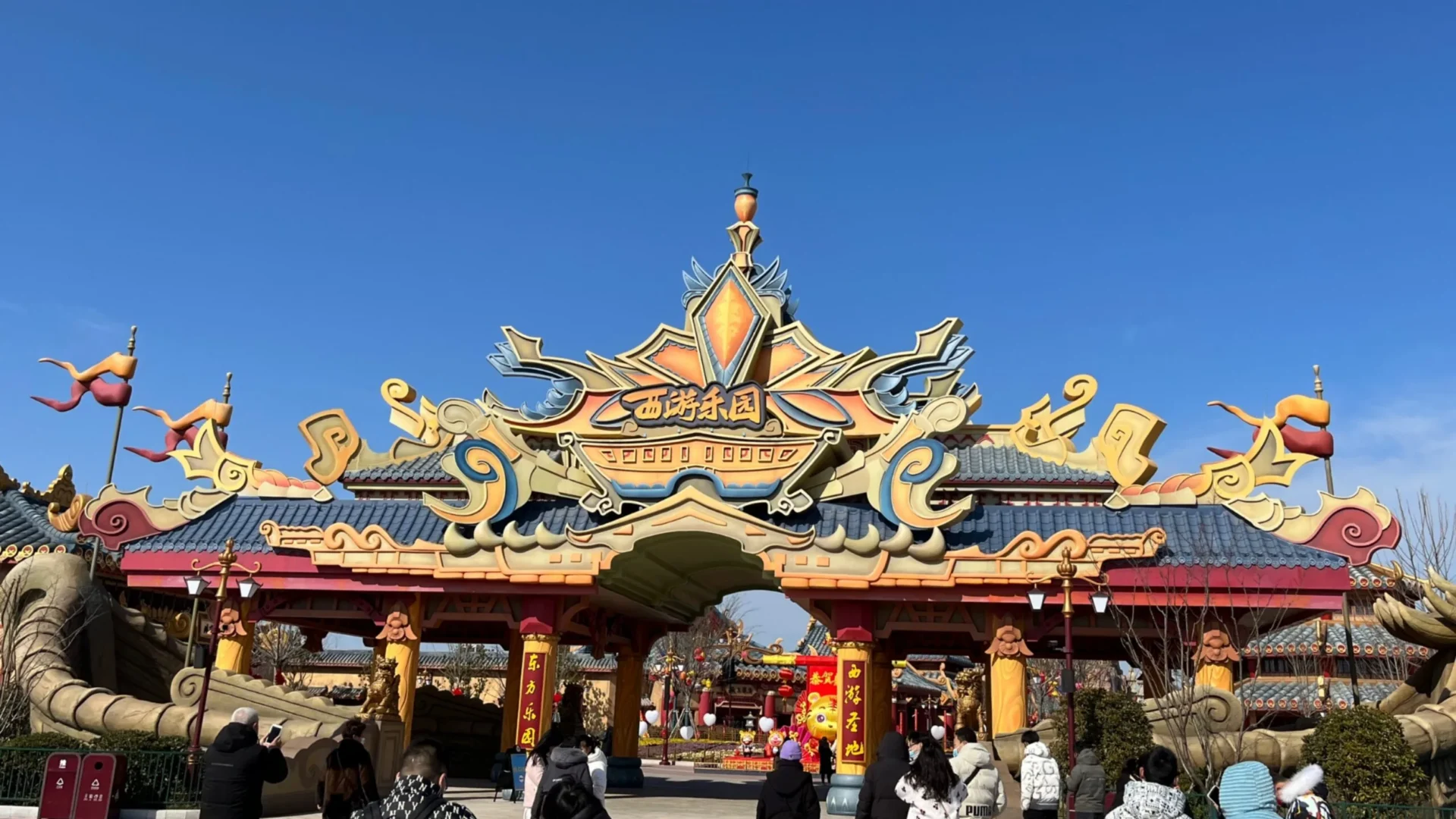
Flower Fruit Mountain, Water Curtain Cave, the Havoc in Heaven—these names, read countless times in the pages of a book, have been transformed into a walkable paradise in Huai’an. Following the pilgrimage route of Tang Sanzang and his disciples, the day is filled with rides, live performances, and parades, culminating in drones and fireworks lighting up the night sky. As I watched children gaze upward, unwilling to leave, I finally understood: in the hometown of Wu Cheng’en, the “Journey to the West” has truly come to life.
1. Location Overview:Huai’an Journey to the West Theme Park is located at No. 6 Xiyou Avenue, Economic and Technological Development Zone, Huai’an, Jiangsu Province. Situated in the southeast of the main urban area, it is about ten kilometers from Huai’an East High-Speed Railway Station, roughly a 30-minute taxi ride. As the first comprehensive theme park based on “Journey to the West” both in China and abroad, it opened on July 10, 2021, covering approximately 560 mu (about 92 acres) with a total investment of 2.2 billion yuan. Huai’an is the birthplace of Wu Cheng’en, the author of the novel; the park translates the city’s literary heritage into a real-life immersive world, filling a gap for large-scale mythological theme parks in Northern Jiangsu. Within Huai’an’s cultural tourism map, it complements other sites such as the Former Residence of Zhou Enlai, Hexia Ancient Town, the Former Residence of Wu Cheng’en, and the China Grand Canal Museum. Together with the adjacent Dragon Palace Beluga Polar Ocean World, it forms a leisure and vacation hub, making it a popular destination for families and fans of the novel. Several cultural tourism projects are clustered along Xiangyu Avenue, making it an easy stop whether coming from the city center or the railway station. It is the perfect “home base” for a trip to Huai’an, where you can spend an entire day without needing to move frequently.
2. Cultural Context:The Ming Dynasty novelist Wu Cheng’en was born and raised in Huai’an. It was in this land of intersecting waterways that he wrote “Journey to the West,” leading Huai’an to be regarded as one of the birthplaces of the “Journey” culture. A native of Shanyang County in Huai’an Prefecture, Wu was famous in his youth for his stories of ghosts and immortals. In his later years, after resigning from office and returning home, he devoted himself to writing, weaving the scenery, local customs, and dialects of the Huai’an water towns into the pilgrimage story. The theme park uses this classic masterpiece as its blueprint for spatial storytelling: the park is divided into nine themed areas, corresponding to the author Wu Cheng’en, the four protagonists of the pilgrimage, and the four great continents: the Eastern Victory Divine Continent, the Western Bull-Hegemony Continent, the Southern Jambudvipa, and the Northern Kulgulu Continent. The visitor’s route through the park is effectively a miniature version of the pilgrimage journey. Classic scenes such as Flower Fruit Mountain, Gao Village, and Thunderclap Temple are meticulously recreated, and even the catering, creative merchandise, and street performances are developed around the original characters, turning the experience from “having read Journey to the West” to “stepping into Journey to the West.” Rather than just a collection of amusement rides, the park aims to let visitors of all ages reconnect with this national classic through play, upgrading Huai’an from a celebrity’s hometown to an immersive destination for “Journey” culture.
3. Highlights:First, the immersive rides are the crown jewels of the park—attractions like “Havoc in Heaven,” “Three Hits on the White Bone Demon,” and “Braving the Spider Cave” combine physical sensations with special effects to recreate the novel’s most iconic moments. Second, the scale of offerings is impressive, with over 40 rides and dozens of atmospheric performances, ranging from roller coasters and river rapids to indoor theaters, ensuring there is something for both children and adults. Third, the water-based activities are a hit; the Flower Fruit Mountain rafting combines natural scenery with plot-driven segments, making it the most popular way to cool off in summer. Fourth, performances and parades run throughout the day, featuring float parades and street interactions, with limited-edition shows on holidays. Fifth, the night session is a major highlight: as night falls, the lights illuminate the park, and the evening concludes with a drone show and fireworks (around 20:00 in summer), creating a peak moment of joy for families. Sixth, family facilities are comprehensive, with nursing rooms, stroller rentals, and family-friendly restaurants, allowing parents to enjoy the day worry-free.
4. Visitor Information:Opening hours vary by season and date—typically 10:00–17:00 on weekdays and 10:00–21:00 on weekends and holidays. In summer, it is usually 9:30–21:00 with night sessions available (entry for night sessions starts at 16:00 and ends around 20:00). Please refer to the official WeChat public account “Journey to the West Theme Park” for daily announcements. Ticket Prices: Full-day tickets are approximately 160 yuan (discounts are often available for online booking). Concession tickets for children (1.2–1.5m), seniors over 60, and students are approximately 110 yuan. Night session tickets are cheaper, and children under 1.2m enter for free (must be accompanied by an adult). Please check official channels for accurate pricing. Transportation: The address is No. 6 Xiyou Avenue, Economic and Technological Development Zone. You can take bus lines You 7, 30, or 91 to the “Xiyou Leyuan” stop. From Huai’an East Station, it is about a 30-minute taxi ride costing around 30 yuan. For those driving, navigate to “Huai’an Journey to the West Theme Park”; parking outside the park costs about 10–20 yuan per day. It is recommended to reserve a full day, wear comfortable shoes, and visit popular rides during off-peak hours.
5. Travel Tips:For a one-day trip, it is recommended to enter as soon as the park opens and head straight for popular rides like “Havoc in Heaven,” “Braving the Spider Cave,” and “Three Hits on the White Bone Demon,” as queues are shortest in the morning. During midday, seek shelter from the heat in indoor attractions or theaters and catch a performance. In the afternoon, follow the float parade for a while and visit any rides you missed in the morning. Don’t leave too early in the evening; staying for the lights, drones, and fireworks is the best way to end the day. The best photo spots are the entrance architecture of the nine themed areas, along the parade route, and the firework viewing points. Families should leave more time for interactions and shows; for children whose height is close to the 1.2m or 1.5m threshold, check the eligible rides via official channels first. Couples will appreciate the romantic lighting of the night session. Fans of the novel can split their trip over two days: one day of immersive fun at the park and the next visiting the Former Residence of Wu Cheng’en in Hexia Ancient Town, creating a dialogue between the modern and the ancient. During holidays, crowds are large; be sure to buy tickets in advance and check the show schedule. The park’s mini-program provides a map, real-time queue status, and show times—open it upon entry to plan your route and save time. For those in a hurry, consider the paid “Fast Pass” for popular rides.
6. Best Time to Visit:Spring and autumn offer the most comfortable weather and full operation of all attractions, making them the best times for a complete experience. Summer night sessions are the most vibrant, with frequent drone and firework shows, though sunscreen and hydration are essential, and water rides are highly recommended. Winter has fewer crowds and shorter queues, although some outdoor and water attractions may be closed and performances may be scaled back. You can combine your visit with the Dragon Palace Beluga Polar Ocean World for more aquatic themes. For a deeper dive into the city, head to the old town to visit Hexia Ancient Town, the Former Residence of Wu Cheng’en, the China Grand Canal Museum, and the Former Residence of Zhou Enlai, forming a 2-to-3-day Huai’an itinerary. Do not miss local delicacies such as Huai’an Soft-shell Eel, Pingqiao Tofu, Wenlou Soup Dumplings, and Cha-zhao; the time-honored shops in Hexia Ancient Town are the most authentic. If visiting during a “Journey” themed festival, there will be limited-edition parades and markets, making the atmosphere even more festive. Some outdoor rides may close on rainy days, so check the forecast before leaving. Finally, always check the official public account for the latest opening hours, prices, and night session arrangements to ensure your “pilgrimage” is perfectly planned and fully enjoyable.