Xi'an · Historical Sites
Huaqing Palace
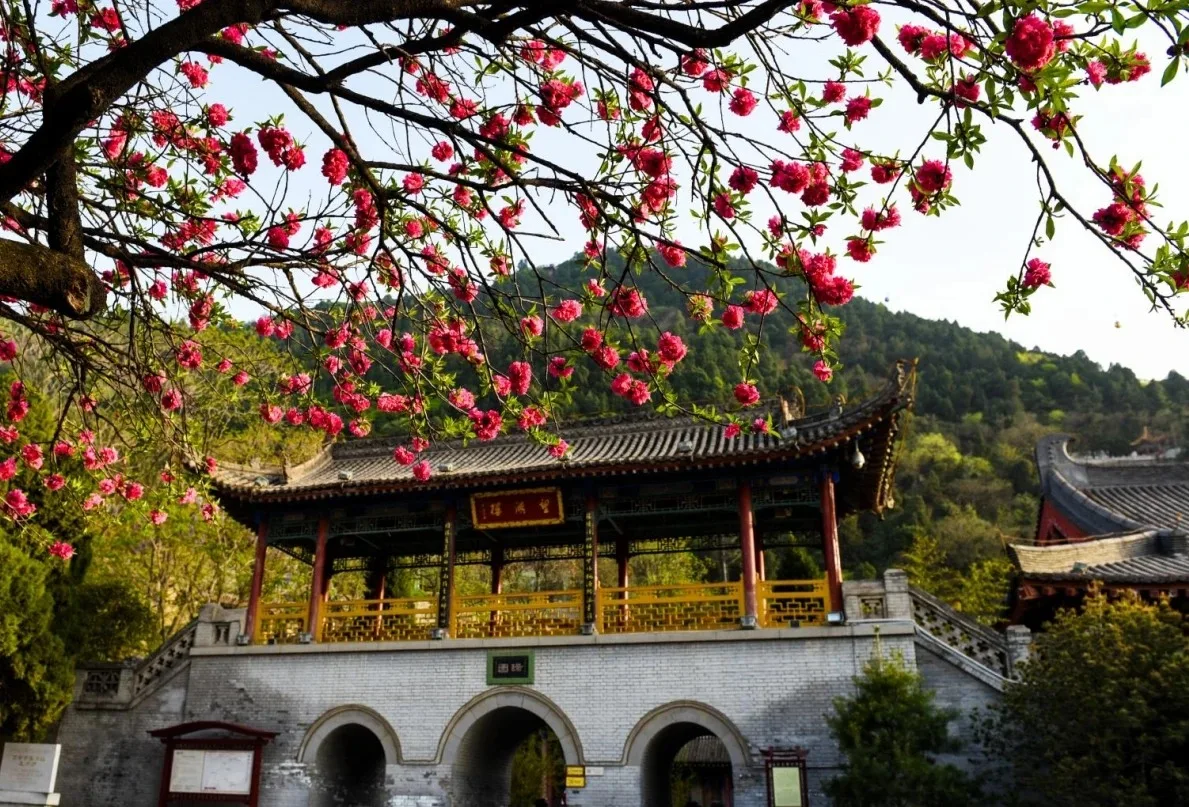
Standing by the shores of Nine Dragon Lake, I gaze up at Mount Li as the evening lights flicker on one by one, climbing toward the beacon tower at the summit. During the day, I strolled slowly through the ruins of the Imperial Hot Springs—the Begonia Spring of the Imperial Concubine and the Starry Sky Spring of Emperor Xuanzong remain, and the steam from these 1,300-year-old springs seems to have never dissipated. As night falls, I take my seat for “The Song of Everlasting Regret.” The stage slowly rises from the waters of Nine Dragon Lake, reenacting the story of Emperor Minghuang and Consort Yang exactly where it first unfolded.
1. Location Overview: Huaqing Palace is located at No. 38 Huaqing Road, Lintong District, Xi’an. Nestled at the northern foot of Mount Li and south of the Wei River, it is approximately 30 kilometers from downtown Xi’an. The scenic area is divided into two main parts: the Huaqing Hot Springs and Mount Li. At the base of the mountain lie the Imperial Hot Spring ruins, Lotus Lake, Nine Dragon Lake, and the palace complex; atop the mountain are the Beacon Tower, Laomu Hall, and the Bingjian Pavilion, all connected by a cable car. It shares the Lintong tourism belt with the Emperor Qinshihuang’s Mausoleum Site Museum (Terracotta Army), located just a few kilometers away. Frequent buses and tourist shuttles run between the two, naturally forming a popular one-day itinerary: “Terracotta Army in the morning, Huaqing Palace in the afternoon, and The Song of Everlasting Regret at night.” The site is one of China’s first 5A-level tourist attractions and a Major Historical and Cultural Site Protected at the National Level, serving as the gateway for tourism on Xi’an’s eastern route.
2. Cultural Context: The development of the Mount Li hot springs has evolved alongside Chinese civilization. During the Western Zhou Dynasty, King You built the Li Palace here, giving rise to the legend of “playing the feudal lords with beacon fires.” In the Qin Dynasty, stone basins were constructed for the “Li Mountain Baths,” which were expanded into a detached palace during the Han Dynasty. By the Tang Dynasty, the Hot Spring Palace was built during the Zhenguan era and renamed the Hot Spring Palace during the Xianheng era. In the Tianbao era, Emperor Xuanzong undertook massive construction projects and officially named it Huaqing Palace. Every October, he would reside here with Consort Yang. The sprawling palace and the forbidden gardens of Mount Li are vividly described in the poem: “Looking back toward Chang’an, the embroidery blooms in heaps; a thousand gates open in sequence upon the peak.” Bai Juyi’s “The Song of Everlasting Regret” turned the Concubine’s Pool and the Hall of Eternal Life into the epicenter of this romantic tragedy. Over a millennium later, in 1936, the Xi’an Incident left bullet holes in the Five-Room Hall and the Bingjian Pavilion on Mount Li. These ruins were rediscovered in the 20th century: in 1982, the foundations of the Tang royal bathing pools were accidentally found during construction. Archaeologists unearthed five sets of Tang pools, and in 1990, the Imperial Hot Spring Ruins Museum opened, allowing the Lotus and Begonia Springs to be viewed in their original state. In 1996, the site was listed as a Major Historical and Cultural Site Protected at the National Level. Another site often missed by tourists is the Tang Liyuan (Pear Garden) ruins. Emperor Xuanzong taught music and dance to his musicians here; consequently, “Liyuan” became a generic term for the opera profession. The museum on-site is dedicated specifically to this history of music and dance. A single pool of hot spring water has witnessed the rise and fall of the Zhou, Qin, Han, and Tang dynasties, as well as the turning points of modern China, giving Huaqing Palace a unique weight among China’s many ancient relics.
3. Highlights: The Imperial Hot Spring Ruins Museum is the essential core of the visit. The Lotus Spring was the emperor’s bath, the Begonia Spring was for Consort Yang, and the Starry Sky, Shangshi, and Crown Prince Springs had their own respective owners. The Starry Sky Spring was used by Emperor Taizong (Li Shimin); legend has it that because the hall above was open, one could gaze at the stars while bathing at night. The stone-lined bottoms and inlets/outlets of several pools are well-preserved, offering a direct look at the luxury of Tang court springs. The glass of the Five-Room Hall still bears bullet marks from the Xi’an Incident, and the Bingjian Pavilion halfway up Mount Li is where figures once hid in the rocky crevices—history textbook footnotes brought to life. “The Song of Everlasting Regret” is another crown jewel: a massive outdoor historical dance drama based on Bai Juyi’s poem. With Mount Li as the backdrop and Nine Dragon Lake as the stage, the starlight on the mountain and the lake’s surface merge into the performance. Those with more energy can take the cable car up Mount Li to the Beacon Tower for a panoramic view of the Wei River Plain, then walk toward Laomu Hall and Yuxian Bridge. If you look closely, the shapes of the pools are intentional: the Lotus Spring is carved like a lotus, and the Begonia Spring follows the curves of begonia petals. Looking down at the excavated edges, these floral outlines remain distinct, proving that the Tang craftsmen’s attention to detail speaks louder than any reconstruction model.
4. Travel Information: Opening hours vary by season. The official current hours are 7:30–17:30 (ticket sales and entry stop at 17:00), though they are generally extended to around 19:00 during peak season; please check official announcements. Ticket Prices: Full price is 120 RMB; half price for students is 60 RMB. Children under 1.2m, seniors over 65, military personnel, and people with disabilities are free with valid ID. The ticket includes the Imperial Hot Spring ruins, Lotus Lake, Feishuang Hall, and Bingjian Pavilion, but does not include the Mount Li cable car or tickets for “The Song of Everlasting Regret.” Tickets for the performance are sold separately, ranging from approximately 199 to 988 RMB depending on the show and seat grade. Performance dates and times fluctuate by season; the 2026 Winter Edition resumes on December 25th. Please refer to official notifications. You do not need a separate scenic area ticket if you are only attending the performance. Transportation: Take Metro Line 9 to Huaqingchi Station and walk to the entrance. From the Xi’an Railway Station East Square, direct buses include You 5 (Route 306), 914, and 915.
5. Travel Tips: The most classic itinerary is to pair Huaqing Palace with the Terracotta Army on the same day: visit the Terracotta Army in the morning, then head to Huaqing Palace in the afternoon. The suggested walking route is Imperial Hot Spring Ruins → Lotus Lake → Nine Dragon Lake → Five-Room Hall (approx. 2 hours). If you have extra energy, take the cable car up Mount Li to the Bingjian Pavilion and Beacon Tower. Return to Nine Dragon Lake in the evening for “The Song of Everlasting Regret”; the metro and buses are still running after the first show, so you can return to downtown Xi’an without worry. If you only have a half-day for Huaqing Palace, we suggest entering in the afternoon and staying for the night show to avoid the peak tour groups during the day. Middle-section seats for “The Song of Everlasting Regret” offer the best views; be sure to book several days in advance during peak season and weekends. As it is an outdoor show, the mountain wind can be biting in winter—bring an extra layer. Some channels sell two-day tickets; visitors staying in Lintong may want to split the visit. For photography enthusiasts, there are two prime spots: first, the area around Wanxia Pavilion halfway up Mount Li. “The Evening Glow of Mount Li” is one of the Eight Sights of Guanzhong; at sunset, the glaze tiles of the pavilion and the entire mountainside are dyed gold and red. It is the most colorful moment of the day; we suggest heading up the mountain one hour before sunset. Second, the long embankment of Nine Dragon Lake in the early morning. When the water is still, you can capture a perfect reflection of Mount Li and the palace complex. The earlier you arrive, the fewer the crowds. For those traveling with parents, we suggest a “simplified” version of Mount Li: take the cable car to the Beacon Tower and walk slowly down to the Bingjian Pavilion. Avoid steep steps if mobility is an issue. The Imperial Hot Spring ruins and the Five-Room Hall at the base are usually the parts that resonate most with older generations.
6. Best Time to Visit: Spring and autumn are the most comfortable seasons. The vegetation on Mount Li is vibrant, and hiking is effortless, providing the peak overall experience. Winter is the most atmospheric season for a hot spring theme; there are fewer tourists during the day, and the ruins feel more serene. Starting in late December, the Winter Edition of “The Song of Everlasting Regret” is performed with snow and fire effects, creating a desolate yet magnificent beauty—though you must dress warmly for the cold nights. In summer, we suggest entering early to beat the heat, visiting Mount Li in the early morning, and choosing a later show time to enjoy the pleasant evening breeze. Holidays and summer break are peak periods; tickets for popular shows of “The Song of Everlasting Regret” are hard to get, so book early. Visiting on a weekday will make the pace of the entire Lintong route much more relaxed.