Huai'an · Museums & Academia
China Grand Canal Museum
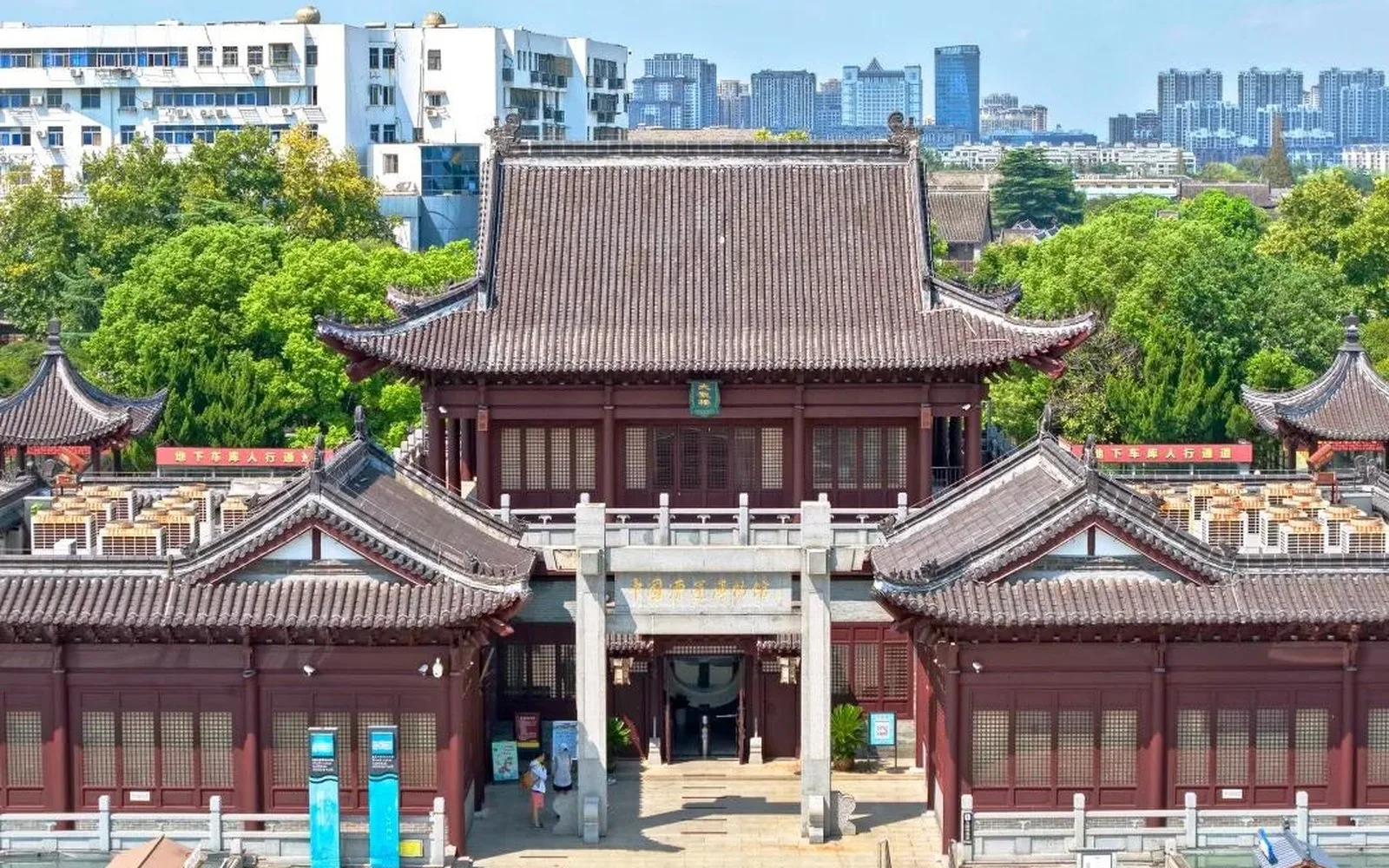
The Grain Tribute System (Caoyun) was the economic artery of Ming and Qing dynasty China, and Huai’an was the heart of this artery. Built on the site of the former Governor-General of Grain Transport’s Office, the China Grand Canal Museum brings the grain ships, tributes, and waterways of centuries ago back to life through sand tables, models, and multimedia displays. During the Ming and Qing dynasties, more than half of the empire’s grain was weighed, transferred, and shipped north through this very spot. To understand why Huai’an is called the “Capital of the Canal,” this is the most direct place to start.
1. Location Overview: The China Grand Canal Museum is located within Caoyun Square in the Huai’an District of Huai’an City, situated on the ruins of the Governor-General of Grain Transport’s Office and adjacent to the Huai’an Prefecture Office and Hexia Ancient Town. Designed by the School of Architecture at Southeast University with the museum’s name inscribed by Xu Jialu, construction began in 2008 and the museum opened on May 1, 2011. It is China’s first museum themed around the grain tribute system and was rated as a National 4A-level tourist attraction in 2012. The total construction area is approximately 8,680 square meters, featuring a layout in the shape of the Chinese character “品” (pǐn). The exhibition area covers about 6,000 square meters, with the primary displays located in the underground galleries. Under the theme “Transporting Grain by Water, A Millennium of Transit,” the museum is divided into an introductory hall and specialized zones for history, the canal, Huai’an, and cultural relics. To the south of the museum is the Governor-General of Grain Transport’s Office Ruins Park, which is open to the public for free; the layouts of the walls and column bases are still visible and can be visited alongside the museum. Huai’an is located at the confluence of the Beijing-Hangzhou Grand Canal and the Huai River. Because the Governor-General’s Office was established here during the Ming and Qing dynasties, Huai’an became a logistics hub and the “Capital of the Canal.” The ruins of the office span over 100 meters east-to-west and 300 meters north-to-south; though only the foundations remain, its former scale is still imaginable—this was once the nerve center of the empire’s grain logistics, where a single official document could mobilize thousands of ships.
2. Cultural Context: The grain tribute system was the nation’s lifeline, transporting southern grain to the northern capital via the canal—one canal connecting half of China. During the Ming and Qing dynasties, approximately four million shi (a traditional unit of volume) of grain departed from the Jiangnan region annually. The Governor-General of Grain Transport stationed in Huai’an managed the entire operation. Together, the tribute ships, granaries, and waterways formed a massive state logistics system: rice from the south was transferred and tallied here, fleets were organized to pass through locks heading north, and commercial goods converged, fueling the growth of towns and docks along the Huai’an and Qingjiangpu line. Even the refined nature of Huaiyang cuisine is inextricably linked to the wealth brought by this convergence of north and south. The exhibition halls use artifacts, sand tables, and multimedia to reconstruct this history: how the ships were built, how grain was requisitioned, how the rivers were dredged, and how the dams and locks operated, as well as how the system sustained riverside towns and markets. With the rise of sea transport and the expansion of railways in the late Qing dynasty, the grain tribute system came to an end, marking the curtain call for an era of logistics. Viewing Huai’an through the lens of the grain tribute system reveals how a canal can shape the destiny of a city. The system also stimulated shipbuilding, warehousing, and the escort (biaoju) industries. It wasn’t just Huai’an that the canal supported; when the imperial court ordered the conversion of grain tributes to silver and the shift to sea transport during the reign of Emperor Guangxu, a thousand-year-old system collapsed, and Huai’an’s golden age transitioned into a new era.
3. Highlights: The centerpiece of the museum is a full-scale reconstruction of a giant grain tribute ship. Only by standing beside it can one appreciate the sheer scale of ancient transport—a single ship was essentially a floating granary, and the entire family of the boatman once lived squeezed together on its deck. The underground galleries use immersive displays to recreate the prosperity of the Ming and Qing dynasties, tracing the complete chain from grain requisition and fleet departure to arrival in Tongzhou. Walking through this via sand tables and visuals is more intuitive than reading ten pages of history books. The ancient transport tools, grain containers, measuring vessels, and official government documents on display serve as the most authentic footnotes to this grand narrative. The ruins of the Governor-General’s Office are themselves part of the exhibit: upon exiting the museum into Caoyun Square, you are standing on the original foundations of the office, allowing the museum and the ruins to provide context for one another. The exhibition flows according to the logistics process—from ships and rivers to administration. Regular guided tours are available, and following a guide is the most direct way to learn about ancient Chinese logistics. The introductory hall opens with the giant ship and a panorama of the canal, instantly impressing visitors with the scale of the waterway. Guides often turn the technical details of ship capacity, boatmen’s lives, and grain loss during transit into engaging stories that captivate even children.
4. Travel Tips: Adult tickets are approximately 60 RMB. Online bookings often offer a discounted price of around 50 RMB. Please refer to official announcements for student discounts or free entry policies, and note price differences across booking channels. Opening hours are 8:30 to 17:30 (last entry at 17:00), open Tuesday to Sunday, and closed on Mondays. Opening arrangements for public holidays follow official museum announcements. A visit typically takes 1.5 to 2.5 hours; given the high density of information, those short on time should allow at least one hour to see the grain ship and core galleries. Transportation: The venue is located at Caoyun Square in the heart of the old city of Huai’an District. It takes about 30 to 60 minutes by taxi from Huai’an East Station or Huai’an Station. Several city buses reach the Caoyun Square and Huai’an Prefecture Office area. For those driving, navigate to “China Grand Canal Museum” or “Caoyun Square”; parking is available around the square. Nearby attractions are clustered together—the Huai’an Prefecture Office, Hexia Ancient Town, and the Former Residence of Zhou Enlai are all within a short drive, making it easy to plan a linear itinerary. Most galleries are underground, so please be mindful of the steps. Please keep noise levels down and follow museum regulations regarding photography. To protect artifacts, lighting in the galleries is dim; please do not use flash. As most galleries are underground, mobile signals may be weak, so please arrange any important communications in advance.
5. Visiting Strategy: The recommended route is to start with the giant grain ship in the introductory hall, then follow the gallery sequence to experience the full process—from the origins of the tribute system and the digging of the canal to the Huai’an hub and remaining relics. Finally, save time for the multimedia videos and sand table demonstrations to synthesize everything you’ve learned. After exiting, remember to spend a few moments in the Ruins Park to correlate the physical foundations with the exhibits you saw inside. You can combine this with the Huai’an Prefecture Office and Hexia Ancient Town for a half-day to full-day trip: explore the old streets and salt merchant residences of Hexia Ancient Town in the morning, visit the museum for a systematic exhibition in the afternoon, and take a stroll along the Inner Canal in the evening. If you have more time, extend the trip to the Former Residences of Zhou Enlai and Wu Cheng’en for a mix of history and culture. The best photo spots are in front of the grain ship and the exhibition sand tables. The museum is ideal for history buffs and family educational trips; for children, it is recommended to tell them a short story about “grain taking a boat to Beijing” before entering, which will make the exhibits more relatable. If you only have half a day, we suggest two hours at the museum and two hours at Hexia Ancient Town, leaving the Huai’an Prefecture Office for your next visit—it is better to appreciate this museum slowly than to rush through too many sites.
6. Best Time to Visit: The museum is suitable for visits year-round as the indoor facilities are unaffected by weather; rainy days and the height of summer are perfect times to escape into the galleries. Spring and autumn offer pleasant weather, making it the golden season to combine the museum with a visit to Hexia Ancient Town and a night tour of the Inner Canal, where the cobblestone streets and canal breezes are just right. In summer, the cool galleries are best visited during the midday heat, leaving the mornings and evenings for the ancient town and riverside. Winter sees fewer tourists, allowing for a more leisurely experience. The best way to experience a museum themed on “transportation” is to place it within the context of a Grand Canal journey: the Huai’an section is a vital part of the Grand Canal World Heritage site (listed in 2014). After the exhibition, walking the Inner Canal and visiting Hexia Ancient Town allows the grain ships from history books to align with the waterways before your eyes. Local cuisine is dominated by Huaiyang dishes; in the Hexia Ancient Town area, be sure to try authentic snacks such as Wenlou soup dumplings, Qingong meatballs, and Pingqiao tofu. During canal-themed festivals or study seasons, the museum and ancient town often hold joint events; check the local tourism bureau’s announcements before your trip.