Rizhao · Mountains & Scenic Wonders
Tiantai Mountain Scenic Area
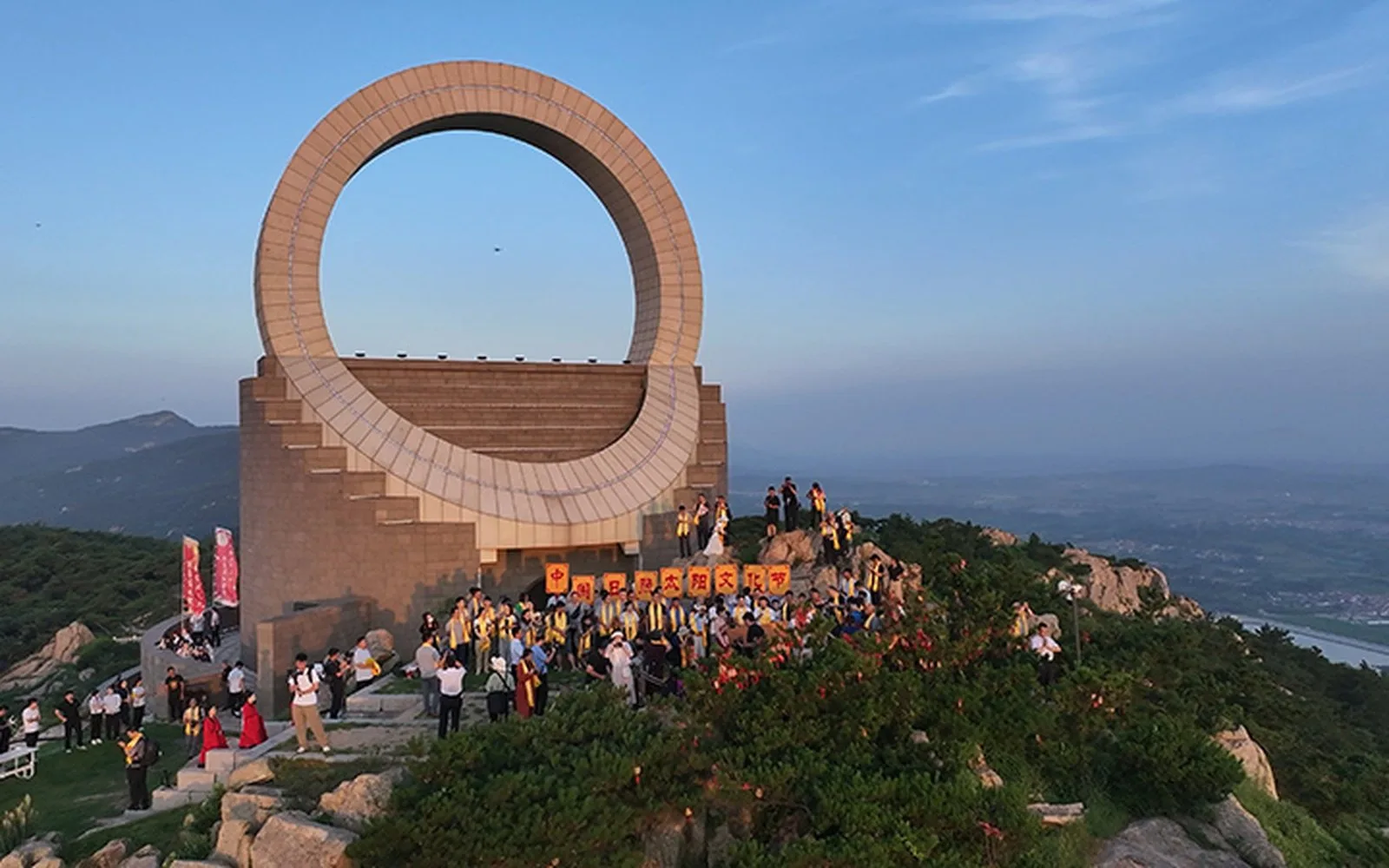
On the day I visited Tiantai Mountain, I made a point of waking up very early. As the car passed through Taoluo Town, the horizon was just beginning to turn pale; five peaks lay nestled in the morning mist, and the breakfast stalls in town were puffing out plumes of white steam. As I reached the main peak, the sun leaped from the sea, casting golden light across the ridges and onto the rugged surface of the Sun God Stone. An elderly man accompanying me mentioned that 4,000 years ago, the ancestors of the Dongyi people stood right here to worship the sun. In that moment, the sound of the wind and the crashing waves seemed to slow down, and I suddenly understood the meaning of “Tanggu”—the place where the sun rises.
1. Location Overview: The Tiantai Mountain Scenic Area is located on the south side of Xiayuanyicun in Taoluo Town, Donggang District, Rizhao City. Known as the “Tanggu Solar Culture Source” scenic area, it is currently a national 3A-level tourist attraction. Taoluo is a thousand-year-old ancient town in southern Rizhao; it is also the hometown of Nobel laureate Ding Zhaozhong, whose former residence is located not far from the scenic area. The area consists of five connected peaks: Tiantai Mountain, Pingding Mountain, Jiku-lou Mountain, Shipen Mountain, and Cai Mountain. The main peak reaches an altitude of 258 meters, facing the sea to the south and east; from the summit, visitors can see the silhouette of Rizhao Port and the cargo ships passing by. It is approximately 10 kilometers from both Rizhao Port and Lanshan Port, and Taoluo Town is accessible via the Shenhai Expressway, National Highway 204, and the Binhai Avenue. Compared to the bustling beaches of Rizhao’s main urban area, this place feels like a corner where time has stood still: the mountains are not high, the sea is near, and the village is quiet. It is perfect for slowing your pace, spending half a day exploring, and then heading into town for a seafood lunch. The entrance is modest, lacking the grandiosity of major tourist sites; the mountain gate, parking lot, and small shops possess the simplicity of a rural attraction. This lack of pretense, however, makes it feel closer to the legends themselves.
2. Cultural Context: Tiantai Mountain is one of the birthplaces of Eastern solar culture. The “Classic of Mountains and Seas” (Shanhaijing) records: “Beyond the southeastern sea, among the sweet waters, lies the kingdom of Xihe. There is a woman named Xihe, who bathes the sun in the sweet abyss.” Legend has it that this is the location of Tanggu, where Xihe offered sacrifices to the sun and bathed the ten suns. As early as the Dawenkou and Longshan cultures, the Dongyi ancestors lived and flourished here, regarding it as a sacred place for ancestral worship, leaving behind cultural layers such as the Xihe Tribe ruins. Sun worship is etched into the very bones of this mountain: from the myths of Hou Yi shooting the suns and Xihe bathing the sun, to the ancestral customs of solar sacrifice passed down through generations, Tiantai Mountain carries some of the oldest celestial memories of the Chinese people. Today, the area is developed under the theme of “Tanggu Solar Culture Source” and has been frequently referred to since 2009 as one of the world’s five great birthplaces of solar culture, alongside sacred solar sites in Egypt and India, telling the primal story of humanity looking up at the sun to measure time. Because of this antiquity, Tiantai Mountain has a unique aura among Rizhao’s attractions: while other sites are about scenery, this site is about the starting point from which our ancestors looked toward the heavens.
3. Highlights: Almost every highlight of Tiantai Mountain is related to solar mythology. The Sun God Stone and the Sun God Tomb stand among the mountains, said to be sacred relics left by the Dongyi ancestors; the stone surfaces glow with a bronze hue in the morning light. The Tomb of Dayi corresponds to the legend of Hou Yi shooting the suns, while the Old Mother Cave and Nuwa Patching the Sky Platform place the story of Nuwa repairing the heavens within this landscape, with incense still burning at the cave entrance. A 100-meter-long “Oriental Divine Dragon” landscape coils across the mountain, and other sights such as the Divine Turtle Bearing the Mountain, Taigong Platform, Wangxian Gorge, and the Sundial are scattered along the hiking trails. Every step reveals a new view and a new legend, making it particularly suitable for those traveling with children to tell stories along the way. Although the main peak is only 258 meters, the visibility is surprisingly excellent: to the east lie the sea and the port, and to the west are the fields and villages of the Taoluo Plain. Watching the sunrise over the sea from the summit in the early morning is the most rewarding moment of the trip. The mountain forests are lush, and most trails are shaded by trees, featuring wildflowers in spring and red leaves in autumn, ensuring it is not unbearably hot even in midsummer. Several ancient steles and inscriptions are scattered throughout the mountain; though weathered by wind and rain, the texts related to solar sacrifice and blessings are still legible and worth a close look.
4. Travel Tips: Opening hours for Tiantai Mountain Scenic Area vary by season: peak season (approx. May to early October) is generally 08:30 to 17:30, and off-peak season is 08:30 to 17:00, subject to official announcements. Ticket prices are based on official rates; please confirm current pricing and discounts through official scenic area channels or legitimate platforms, and do not rely on outdated prices from unofficial sources. Driving is the most convenient mode of transport: follow the Shenhai Expressway, National Highway 204, or Binhai Avenue to Taoluo Town, then follow signs to the mountain gate on the south side of Xiayuanyicun. You can search for “Tiantai Mountain Scenic Area” or “Tanggu Solar Culture Source” in your navigation app; parking is available at the base. For public transport, take a rural bus to Taoluo Town and then transfer to a local vehicle or walk. The roads entering the town are standard rural roads; please be cautious of slippery roads during rainy weather and check bus schedules and walking distances in advance. Dining options around the scenic area are limited, so it is recommended to bring your own water and light snacks. Please take all trash with you and do not leave it on the mountain. The hiking trails consist mainly of stone steps and take about one to two hours to complete. There are no shops on the mountain, so ensure you have plenty of water before ascending. In summer, remember to bring a sun hat and sunscreen.
5. Itinerary Suggestion: Tiantai Mountain is best enjoyed as a half-day slow trip, centered around the “cultural line.” Starting from the mountain gate, first visit the solar culture exhibitions and the Xihe Tribe ruins to get a general impression of the mountain’s history. Then, follow the hiking trail to visit the Sun God Stone, the Sun God Tomb, and the Tomb of Dayi in sequence. Stop briefly at the Sundial and Taigong Platform; from the platform, gaze out over the sea and imagine the legend of Jiang Ziya fishing. Once you reach the summit, don’t rush down; find a flat rock to sit on and take in the view of the port, the sea, and the plains. If you are visiting specifically for the sunrise, check the sunrise time in advance, allow 40 minutes for the climb, and confirm early morning access with the scenic area. The platform on the east side of the main peak is the best spot for the sunrise. After descending, you can link your trip with the former residence of Ding Zhaozhong and the Liujiawan Shell-collecting Garden, both in Taoluo Town: visit the residence and then go to the garden to dig for clams on the tidal flats. It is a perfect day that moves from solar culture to coastal foraging. The climb is not strenuous and is suitable for all ages, but the stone steps can be slippery after rain, so please wear non-slip shoes.
6. Best Time to Visit: Spring and autumn are the most comfortable times to visit Tiantai Mountain, with moderate temperatures, high visibility, easy hiking, and the clearest sunrises. In spring, the mountain flowers bloom and the Taoluo Plain is a vibrant green, creating a rare pastoral seaside vista. Autumn offers wide-open skies and seas, providing the best window for watching the sunrise and viewing the port. Early mornings in summer are also great for sunrises and can be paired with a trip to Liujiawan for shell-collecting, but please check the tide tables, as foraging must follow the ebb tide. When the sun is strong, it is recommended to descend the mountain before 10:00 AM and use sun protection. Winter brings stronger mountain winds and the fewest tourists, making it ideal for those seeking tranquility; the sunrise occurs later, so there is no need to wake up as early. Please note that a seaside sunrise is highly dependent on the weather; be sure to check for clear skies and low cloud cover before departing. On rainy or cloudy days, switch to the “cultural line” and take your time exploring the ruins and legends. Overall, this is not a place for crowds; it is for those willing to dedicate half a day to an ancient myth. If you have to choose between the two, the early morning sunrise route takes priority over the afternoon cultural route—after all, most people come to Tanggu for that one rising sun.