Rizhao · Mountains & Scenic Wonders
Fulai Mountain Scenic Area
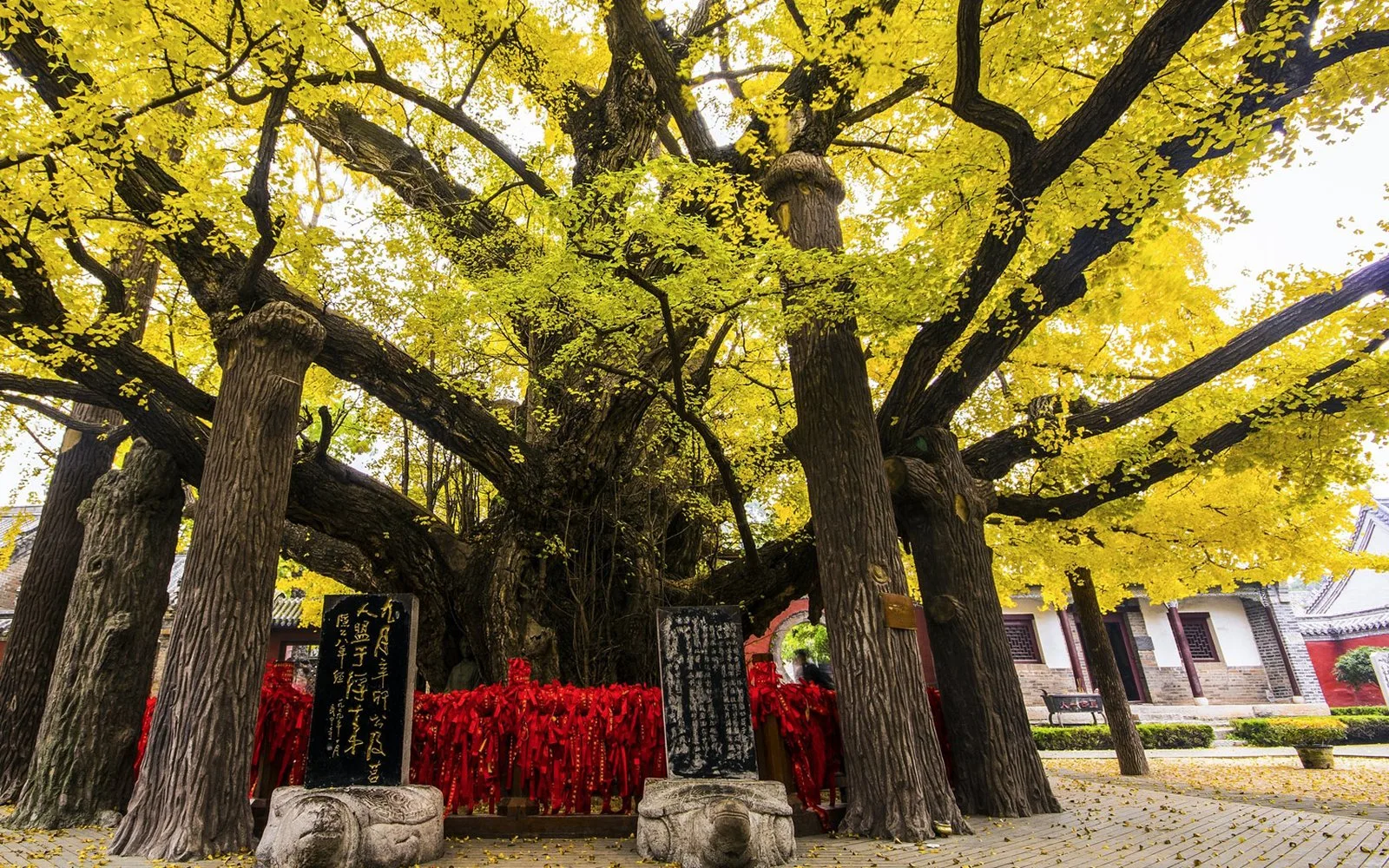
The most famous attraction at Fulai Mountain in Ju County is the nearly 4,000-year-old ginkgo tree in Dinglin Temple. Standing beneath it and looking up, the brilliant gold foliage overshadows the sweeping eaves of the ancient temple, revealing why it is hailed as “The Number One Ginkgo Tree Under Heaven.”
1. Location Overview: Fulai Mountain is located approximately 8 kilometers west of the center of Ju County, Rizhao City. The scenic area is located at No. 1001 Fulai West Road, Fulai Mountain Street, and is a National 4A-level tourist attraction. Three peaks—Fulai Peak, Folai Peak, and Feilai Peak—stand side-by-side in a protective arc. With an elevation of less than 300 meters, the terrain is gentle and the forests are lush, making it a natural “oxygen bar” tucked away on the edge of the county seat. While the mountain is not high, its cultural depth is immense: the thousand-year-old Dinglin Temple, the ancient ginkgo tree, the Xiaojing Pavilion where Liu Xie revised scriptures, and various cliff carvings are all gathered here. It is the landmark attraction of Ju County and a must-visit for those on a cultural journey through Rizhao. The sites are concentrated; the mountain gate, ancient temple, ginkgo tree, Arhat array, and root carving museum are all easily connected by foot. It is a relaxed visit for seniors and children, and the highlights can be seen in half a day. As Ju County is an ancient seat of the former State of Ju, Fulai Mountain serves as the town’s “back garden,” just a ten-minute drive from the city center. With comprehensive entrance facilities, visitor services, and parking, the logistics are seamless. The hiking trails are gentle, making it ideal for a leisurely stroll with elders or an educational walk with children. By bringing the mountains, temples, trees, and carvings together in one compact area, it is a destination that is easy to navigate even without extensive planning.
2. Cultural Heritage: The cultural weight of Fulai Mountain stems from one tree, one temple, and one man. Legend has it that during the Spring and Autumn period, Duke Yin of Lu and the Ruler of Ju formed an alliance beneath the ginkgo tree, intertwining the tree with the history of the region and making it a living witness to pre-Qin diplomacy. Dinglin Temple, founded during the Northern and Southern Dynasties over 1,500 years ago, is one of the oldest existing temples in Shandong. Its flying eaves, ornate carvings, and painted beams embody the classic architectural charm of Northern China. In his later years, the Southern Dynasty literary theorist Liu Xie came here to revise scriptures; the Xiaojing Pavilion is said to be the place where he edited his masterpiece, *The Literary Mind and the Carving of Dragon*. In 1962, the renowned scholar Guo Moruo personally inscribed the plaque for the “Xiaojing Pavilion.” Today, the building houses a memorial hall for Liu Xie, displaying various editions of his work and historical research documents—a collection so rich it has earned the praise of historians. Cliff carvings throughout the mountain record the visits of scholars across generations. The layering of the ginkgo, the temple, and the literary legacy makes Fulai Mountain a symbol of Ju County’s cultural lineage and a unique gem among Rizhao’s landscapes. With its roots in the capital of the ancient State of Ju, the mountain offers more than just legends; the steles and inscriptions embedded along the paths act like an open-air local gazetteer, allowing visitors to read history while they hike.
3. Highlights: The ancient ginkgo tree in the front courtyard of Dinglin Temple is the soul of the mountain. Standing 26.7 meters tall with an average canopy width of 34 meters, its trunk requires eight or nine people holding hands to encircle it. Estimated to be nearly 4,000 years old, it is a precious living fossil. In late autumn, the tree turns a brilliant gold and the fallen leaves carpet the ground, creating the most atmospheric autumn scene in Southern Shandong. Dinglin Temple’s architecture is spacious and elegant, surrounded by ancient cypresses, and the *Literary Mind and the Carving of Dragon* exhibit in the Xiaojing Pavilion is a must-see for literature lovers. The mountain also features one of the largest outdoor groups of 500 Arhat painted sculptures in China. These 500 figures, each with a distinct and lifelike expression, are spread across the hillside, creating a spectacular sight. In the Chinese Root-Seeking Hall, over 50 large root carvings are displayed, including the “King of Sandalwood Roots,” a Guinness World Record holder known for its weathered texture and staggering size. This interior treasure echoes the thousand-year-old ginkgo outside. Other small attractions, such as the Zodiac Garden, keep the walk engaging. The interplay between the cypresses, ginkgoes, and temple halls is best experienced in the quiet of early morning or evening. A popular activity for children is counting the Arhats or finding the one that looks most like them, while the Root Carving Hall offers a quieter space to admire natural patterns.
4. Visitor Information: Opening hours are approximately 8:00 AM to 6:00 PM (last entry at 5:30 PM; closing time may be earlier during the off-season). Ticket prices follow official rates and can be booked via official platforms or travel websites, often with online discounts. Concessions for seniors over 60 and minors are applied per scenic area regulations. For transportation: within Ju County, take Bus 1 or 6 directly to the East Gate (approx. 2 RMB). For those driving, exit the Rilan Expressway at Ju County and head west for about 10 minutes; parking is available at the East and South Gates (approx. 10 RMB per entry). From Ju County North Railway Station, it is a 10-minute taxi ride. From downtown Rizhao, take Bus C202 to Ju County and transfer to a local bus. The paths are gentle and suitable for all ages, with a recommended visit time of 2–3 hours. During the ginkgo season, weekends are crowded; weekdays or early mornings are preferred. Please do not break branches or leaves. As there are few supply points inside, bringing your own water is recommended. Dinglin Temple is a religious site, so please remain quiet. During peak autumn weekends, queues at the East Gate are common; online booking is advised to avoid the 10 AM to 2 PM peak. Be cautious of slippery leaves on the steps. For accommodation, Ju County offers many options, though a day trip from downtown Rizhao is also feasible.
5. Travel Guide: It is recommended to enter through the East Gate. Start at Dinglin Temple to see the ginkgo tree and learn about Liu Xie at the Xiaojing Pavilion, then visit the Root-Seeking Hall. Afterward, follow the trails to see the 500 Arhats and cliff carvings. If you have the energy, climb Fulai Peak for a panoramic view of the three peaks and Ju County. For the best autumn photos, arrive between 8 AM and 10 AM when the light is soft and the golden leaves are most translucent. During the peak season, arrive around opening time to ensure easier parking. On quieter days, take your time reading the steles and resting under the cypresses. The area is small, so there is no need to rush; a half-day visit is sufficient. End your trip with a bowl of traditional Ju County Mutton Soup in town. For those with more time, spend more time with the Arhats and carvings; the emotions on the figures’ faces and the depth of the inscriptions are evidence of the mountain’s cultural richness. Photographers should focus on three spots: the temple gate, the ginkgo tree, and the Xiaojing Pavilion. If visiting specifically for the ginkgo, consider staying one night in the county and entering the mountain early the next morning before the tour groups arrive to experience the serene, golden paths.
6. Best Time to Visit: Late autumn is the peak of Fulai Mountain’s beauty. From late October to mid-November, the ginkgoes turn gold, peaking in early November. Ju County also hosts the Ginkgo Season and Fortune and Longevity Culture Month during this time. In spring, mountain flowers and new greenery create a fresh, serene atmosphere. Summer offers cool shade, making it a great escape from the heat. Winter, with its stark cypresses and few crowds, offers a quiet solitude perfect for studying the steles and architecture. You can combine this with a visit to the Ju Zhou Ancient City for a one-day trip to Ju County, or extend it into a two-day Southern Shandong tour including the Yimeng Mountains to experience both culture and nature. By season: March and April are perfect for spring outings; summer is a local sanctuary for cooling off; autumn is a countdown that begins with the first yellow leaf in late October, culminating in mid-November when the stone steps are covered in gold; winter, with snow on the ancient temple and the skeletal branches of the ginkgoes, is a favorite for photographers. Regardless of the season, it is recommended to pair a visit to Fulai Mountain with the old street snacks of Ju County, as the mountain and the town are intrinsically linked.