Linyi · Historical Sites
Former Residence of Wang Xizhi
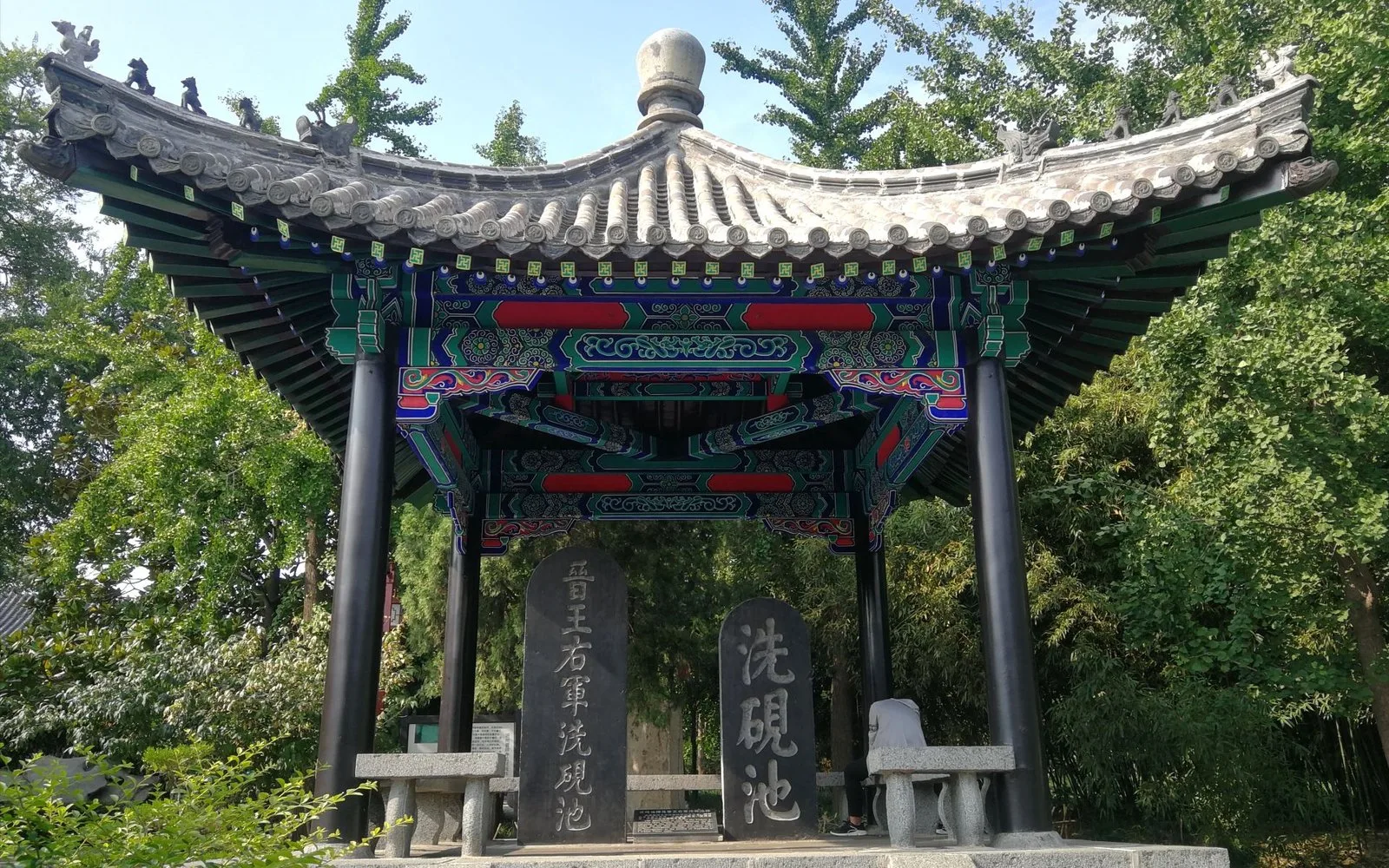
Located on Xiyanzhi Street in the Lanshan District, the Former Residence of Wang Xizhi features the legendary Ink-Washing Pond. It is said that Wang Xizhi washed his brushes here so frequently that the water turned pitch black. Standing by the pond today, one can almost envision the “Lanting Xu” (Preface to the Orchid Pavilion) being composed right before their eyes.
1. Location Overview:The Former Residence of Wang Xizhi is located at No. 21 Xiyanzhi Street, Lanshan District, Linyi City. Situated in the heart of Linyi’s old city, it is the birthplace and childhood home of the “Sage of Calligraphy,” Wang Xizhi, and serves as the origin of Linyi’s calligraphic culture. The residence is designed as a classical garden with surrounding blue walls, pavilions, and water terraces. Key landmarks include the Ink-Washing Pond (Xiyanzhi), Goose Pond, Book-Drying Terrace, Calligraphy Stele Gallery, Langya Academy, Youjun Temple, Five Worthies Temple, Puzhao Temple, and the Xiyanzhi Jin Dynasty Tomb Museum. Though the courtyard is not vast, it seamlessly blends calligraphy, garden architecture, and Jin Dynasty burials, offering a new vista with every step. It is one of the most central cultural attractions in Linyi. The sides of the old street are lined with calligraphy and painting shops and stationery stores; walking down Xiyanzhi Street, you enter the world of calligraphy even before stepping through the gates. The layout centers around the Ink-Washing Pond, with water occupying a significant area and buildings recessed behind the banks—a design that echoes the legend of “learning calligraphy by the pond.” While it may look small from above, the winding paths create a sense of depth and tranquility. Since it is located in the city center, visitors can easily walk to nearby art markets and old city alleys, making it a perfect half-day itinerary.
2. Cultural Context:Wang Xizhi (303–361) was born in Langya, Linyi, into the prestigious Wang clan of Langya. He spent his youth here practicing calligraphy, giving rise to the anecdote “learning calligraphy by the pond until the water turned black,” which gave the Ink-Washing Pond its name (also known as the Ink Pond). He later rose to the rank of General of the Right (Youjun Jiangjun). His work represented the culmination of previous eras’ styles, earning him the title “Sage of Calligraphy,” and his “Lanting Xu” is hailed as the greatest running script in the world. All of this began by this pond in Linyi’s old city. The current site was first established in 1989, with a second phase completed in 2003, restoring the Youjun Temple, Five Worthies Temple, and Puzhao Zen Temple. During the 2003 renovations, a Western Jin Dynasty noble tomb was unexpectedly discovered. It is a rare example of a medium-to-large brick-chamber tomb in Shandong that remained unlooted, yielding over 250 burial objects; the Xiyanzhi Jin Dynasty Tomb Museum was subsequently built over it. The adjacent Puzhao Temple is famous for the “Puzhao Sunset,” once ranked first among the Eight Sights of Ancient Langya. The “Hometown of the Sage of Calligraphy” city brand begins on this street, where later generations preserved the memories of his youth. For many, this is the first stop when tracing the roots of calligraphy in Linyi.
3. Highlights:The Ink-Washing Pond is the soul of the residence, featuring deep waters and weeping willows brushing the banks. Two stone bridges cross the water, and the Yanbi Pavilion to the north houses stone tablets reading “Place where the Right General of Jin Washed His Inkstone” and “Ink-Washing Pond,” written in an ancient, powerful style. To the west, a 100-meter Calligraphy Stele Gallery displays over 50 marble slabs, mostly inscribed by famous calligraphers during the site’s reconstruction, representing styles from both northern and southern China. The Goose Pond references Wang Xizhi’s love for geese, with white geese, green water, and arched bridges creating the most picturesque scene in the garden. Other must-sees include the Lanting Xu stele, the collection of historical rubbings, the Book-Drying Terrace, and the Langya Academy. The underground Jin Dynasty Tomb Museum offers the surprise of seeing the original double-chamber brick tomb structure and excavated artifacts. The garden occasionally hosts calligraphy experiences and rubbing activities; visitors should check the daily schedule to try their hand at copying a classic text. Near Puzhao Temple, ancient cypresses tower overhead, and the golden light of the sunset hitting the walls creates a profoundly ancient atmosphere. The garden also features replicas of world-famous steles, such as the Ji Liu Stele, the Qianlong Imperial Stele, the Large and Small Lanting Diagrams, and the Seventeen Poems, allowing visitors to survey the peaks of calligraphy history in one place. The Book-Drying Terrace, where Wang Xizhi is said to have dried his scrolls, is a favorite spot for photographs.
4. Visitor Information:Opening hours are 8:30–17:30 (last entry 17:00) during spring, summer, and autumn, and 8:30–17:00 (last entry 16:30) in winter. The Xiyanzhi Jin Dynasty Tomb Museum is closed on Mondays; please refer to official announcements. Admission is 20 RMB for adults and 10 RMB for students with valid ID. Free entry is provided for minors under 18, seniors over 60, active and retired military personnel, and teachers with valid ID. Tickets can be purchased on-site or via online platforms. For transportation, take public bus Route 6 or others to the “Former Residence of Wang Xizhi” stop. As the surrounding alleys are narrow with limited parking, those driving are advised to use nearby public parking lots and walk to the entrance. A visit typically takes 1.5 to 2 hours. The area is quiet and perfect for a slow-paced stroll. The surrounding neighborhood is the most authentic part of old Linyi; local delicacies like Jianbing (savory crepes) and Sa Tang (local soup) are available nearby. Families with children should allow extra time for rubbing and calligraphy activities, as queues can be long during holidays. Please be careful on stone bridges and steps, as they can be slippery when raining.
5. Travel Tips:It is recommended to enter through the South Gate, visit the Ink-Washing Pond and Goose Pond first, and then head north along the Calligraphy Stele Gallery to the Langya Academy and Book-Drying Terrace. Afterward, visit the Youjun Temple, Five Worthies Temple, and Puzhao Temple, finally descending to the Jin Dynasty Tomb Museum to avoid backtracking. The morning light is soft and creates beautiful reflections on the water, making it ideal for reading steles and photography. After exiting, take some time to explore Xiyanzhi Street and the nearby art shops—buying an inkstone or a calligraphy copy makes for a great souvenir. In the afternoon, you can combine this visit with the Linyi City Museum and the Langya Ancient City: the museum provides a historical overview of Linyi, and the Ancient City is perfect for a night tour. Calligraphy enthusiasts should follow the “Pond—Gallery—Temple—Tomb” sequence to fully appreciate the connection between Wang Xizhi and Linyi. Casual tourists can simply follow the water features. A visit to the cultural creative shop for a calligraphy book or inkstone is recommended before leaving. As the lights of the old city flicker on in the evening, it’s the perfect transition into Linyi’s nightlife.
6. Best Time to Visit:The site is suitable year-round. Spring and autumn are the most comfortable, with lush greenery and beautiful pond scenery. Summer offers deep shade and lotus flowers by the Goose Pond, making early morning or evening visits ideal. Winter is quiet and serene, perfect for a solitary study of the steles. During festivals, there are occasionally night tours and lantern fairs; calligraphy-themed events are mostly concentrated in spring and autumn. This site can be paired with the Langya Ancient City and Linyi City Museum for a one-day cultural tour. Calligraphy lovers should dedicate at least half a day here. If time permits, a second visit is rewarding: the first for the scenery, and the second for the inscriptions. Regardless of the season, the slanted light after 3:00 or 4:00 PM is the best time to photograph the Ink-Washing Pond, capturing the willow shadows and bridges. Just before closing, the crowds thin out, and the garden returns to a state of quietude—a moment reserved for the patient traveler.