Xi'an · Museums & Academia
Shaanxi History Museum
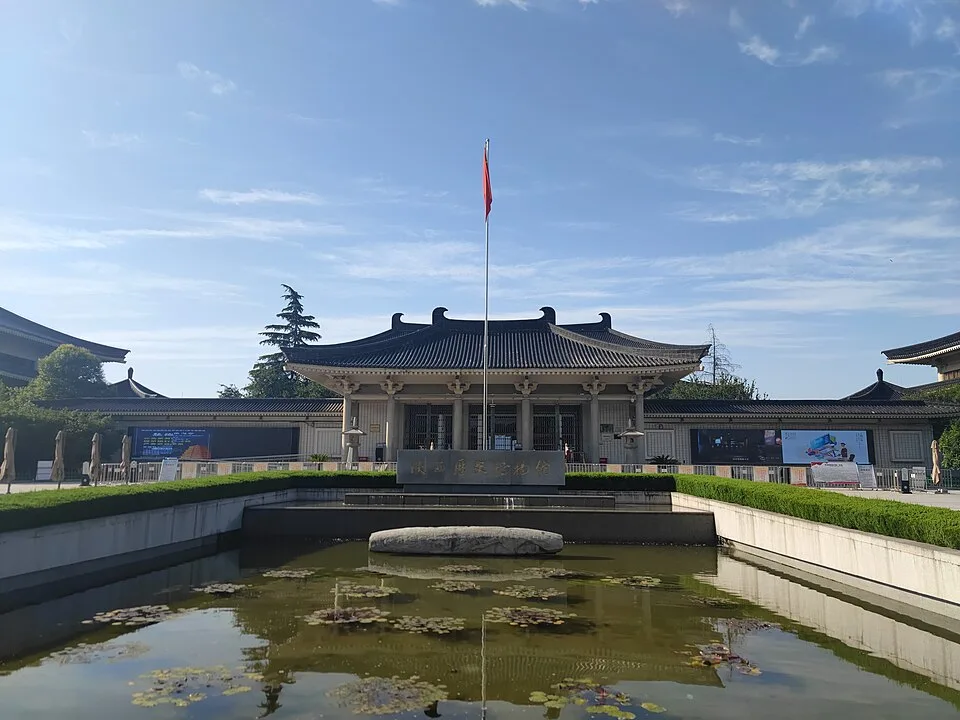
Known as the “Pearl of the Ancient Capital and Treasure House of China,” the Shaanxi History Museum truly lives up to its reputation. From Western Zhou bronzes to Tang Dynasty gold and silverware, these national treasures unfold before you, feeling like a complete reread of ancient Chinese history. It was the highlight of my trip to Xi’an.
1. Location Overview:The Shaanxi History Museum is located at No. 91 Xiaozhai East Road, Yanta District, Xi’an, Shaanxi Province, situated to the northwest of the Giant Wild Goose Pagoda. As China’s first large-scale modern national museum and a first-class national museum, it is hailed as the “Pearl of the Ancient Capital and Treasure House of China,” with its name inscribed by the renowned scholar Guo Moruo. Located on Xi’an’s southern cultural axis, it faces the Xiaozhai commercial district to the north and neighbors the Giant Wild Goose Pagoda and the Grand Tang Everbright City to the south. Together with the Stele Forest and the Xi’an Museum, it forms the backbone of Xi’an’s identity as a “City of Museums.” In addition to the main venue, the museum operates the Qin-Han Hall in the Lan Chi Third Road East Section of the Qin-Han New City, Xixian New Area, which focuses specifically on the Qin and Han civilizations. Together, these two venues provide an exceptional window into the lineages of the Zhou, Qin, Han, and Tang dynasties and the broader trajectory of Chinese civilization.
2. Cultural Context:Shaanxi served as the capital for several great dynasties, including the Zhou, Qin, Han, and Tang. Rich in both surface and underground artifacts, the region is often called a “Natural History Museum.” Opening its doors on June 20, 1991, the Shaanxi History Museum pioneered the construction of modern museums in China. The Tang-style architectural complex, designed by Academician Zhang Jinqiu, features black tiles, vermilion eaves, and symmetrical axes, blending the grandeur of the High Tang period with traditional garden aesthetics; the building itself is an architectural masterpiece and was selected as a “20th Century Architecture Heritage of China” in 2016. The museum houses over 1.7 million items, spanning more than a million years from prehistoric stone tools to artifacts from before 1840. The collections are particularly distinguished by their Shang and Zhou bronzes, pottery figurines from various eras, Han and Tang gold and silverware, and Tang tomb murals. This profound heritage makes the museum not just a treasure house, but a key to understanding Chinese history: the solemnity of Zhou rituals, the rigorous military and political organization of the Qin, the expansive spirit of the Han, and the open-mindedness of the Tang are all compressed into the space of one building. Major discoveries, such as the Hejiacun treasures and the Famen Temple underground palace artifacts, are showcased here. The museum also houses a conservation and restoration center, ensuring national treasures are meticulously cared for before public display, making the institution both a hall of exhibition and a center of academic excellence. As Xi’an is the ancient capital of thirteen dynasties, with imperial mausoleums above ground and hidden treasures below, the Shaanxi History Museum serves as the systematic curator of this legacy, safeguarding the civilizational memory of the Sanqin land.
3. Highlights:The museum’s permanent exhibition, “Ancient Shaanxi Civilization,” is divided into three halls that trace history along a timeline from prehistoric times through the Zhou, Qin, Han, Wei, Jin, Northern and Southern Dynasties, and Sui and Tang, ending with the Song, Yuan, Ming, and Qing dynasties. Masterpieces such as the Youding and Yun-ding tripods and the celadon pouring pot are distributed throughout. In the basic exhibition, Shang and Zhou bronzes showcase ritual systems through solemn taotie patterns, Qin and Han pottery figurines depict daily life with rustic expressions, and Tang gold and silverware flaunt the prosperity of a golden age with intricate chasing. The “Treasures of the Tang Dynasty” special exhibition focuses on the Hejiacun hoard discovered in 1970, featuring national treasures like the gilded silver ewer with dancing horse and cup motifs and the gold-inlaid agate cup with animal head, reflecting the luxury and openness of the Tang. These thousand-plus treasures are believed to be treasury items buried in haste during a rebellion, each serving as a footnote to the sudden fall of the High Tang. The Tang Dynasty Mural Gallery houses nearly 600 murals from over 20 Tang tombs, covering over 1,000 square meters. The “Guest Envoy Map” from Prince Zhanghuai’s Tomb and the “Gate Tower Map” from Prince Yide’s Tomb are magnificent, serving as an “encyclopedia of the Tang Dynasty on walls.” Due to preservation needs, these are displayed under low temperature and low light; please do not use flash photography. The Qin-Han Hall focuses on the two dynasties with a themed exhibition of over 1,500 items, about 90% of which are on public display for the first time. Rare items like the Du Tiger Tally, the Empress’s Jade Seal, the gilded bronze silkworm, the gilded silver bamboo-joint incense burner, and the “Silk Road No. 1” Han Dynasty ancient ship fully narrate the grandeur of the empire and the opening of the Silk Road.
4. Visitor Information:The basic exhibition is free of charge and requires real-name registration (“Free, but tickets are required”). Book 5 days in advance via the official WeChat public account “Shaanxi History Museum”. Tickets are released daily at 17:00 for specific time slots. You must arrive during your reserved slot and present your original ID for entry; entry is not permitted after your slot has passed. It is recommended to enter visitor information in advance and set an alarm to secure tickets. Opening Hours: Peak Season (March 15 to Nov 14) 8:30–18:00, with extended hours until 19:00 from May 6 to Nov 14 (entry stops at 18:00); Low Season (Nov 15 to March 14) 9:00–17:30. Closed on Mondays (except statutory holidays). Special exhibitions require separate tickets: Treasures of the Tang Dynasty (30 RMB/person), Tang Dynasty Mural Gallery (270 RMB/person). Ticket holders for these can use them for entry (refer to the booking page for details). The Qin-Han Hall is free and typically does not require a reservation on weekdays; enter with valid ID. Hours: Peak 8:30–18:00 (entry stops at 17:00), Low 9:00–17:30, closed Mondays. It is recommended to allocate a half-day for this hall separately. Transportation: Take Metro Line 2 or 3 to Xiaozhai Station and walk east along Xiaozhai East Road for about 10 minutes; or take Metro Line 3 or 4 to Giant Wild Goose Pagoda Station and walk west for about 10 minutes. Various buses stop at Cuihua Road or Shaanxi History Museum stops. A visit to the main museum typically takes 3 to 4 hours.
5. Travel Tips:Recommended route: Prologue Hall $\rightarrow$ Ancient Shaanxi Civilization Basic Exhibition (Prehistoric to Tang) $\rightarrow$ Treasures of the Tang Dynasty $\rightarrow$ Tang Dynasty Mural Gallery (separate ticket) $\rightarrow$ Gift Shop. Focus your attention on the civilizational shifts of the Zhou, Qin, Han, and Tang, the Silk Road exchanges reflected in the Hejiacun gold and silver, and the ritual imagery in the Tang murals. Guides often stop to detail specific items—for instance, how the Du Tiger Tally locked imperial orders and military power into a single bronze piece, or how the gilded bronze silkworm proves the sericulture trade on the Silk Road. These details are more vivid than textbooks and are great for sparking a child’s curiosity. For the Qin-Han Hall, follow the themed exhibition, focusing on the Du Tiger Tally, the Empress’s Jade Seal, and the “Silk Road No. 1” ship. The seven high-platform buildings are arranged like the Big Dipper and are worth observing. To avoid crowds, book the earliest morning or latest afternoon slots; for holidays, be ready exactly five days in advance. Seniors can use the museum’s accessibility facilities for a comfortable visit. Complete your reservation on the WeChat account and screenshot the order. ID checks are performed at the entrance. Storage and drinking water services are available.
6. Best Time to Visit:Spring and autumn are the best seasons to visit Xi’an. The museum is climate-controlled, making it a cool refuge in summer and a warm escape in winter—a paradise for history lovers year-round. The main museum can be combined with the Giant Wild Goose Pagoda, Grand Tang Everbright City, Tang Paradise, and Qujiang Pool for a “South City Cultural Day Trip”—explore artifacts by day and enjoy the lights and the musical fountain at the Giant Wild Goose Pagoda North Plaza by night. The Qin-Han Hall, located in the Xixian New Area, can be paired with the Xianyang Museum and the Han Yang Ling Mausoleum to experience the grandeur of the imperial tombs. Dining options are plentiful in the Xiaozhai and Yanta commercial districts, offering local specialties like Mutton Paomo, Hulu Tou (pig head meat soup), Biangbiang noodles, and Liangpi with Roujiamo. For souvenirs, look for Tang-style Sancai pottery, stone rubbings, and Guanzhong-themed creative products. If a major temporary exhibition is open, you may experience a surprising cross-civilizational dialogue, where ancient Chang’an meets the modern world.