Dalian · Ancient Towns & Old Streets
Russian Style Street
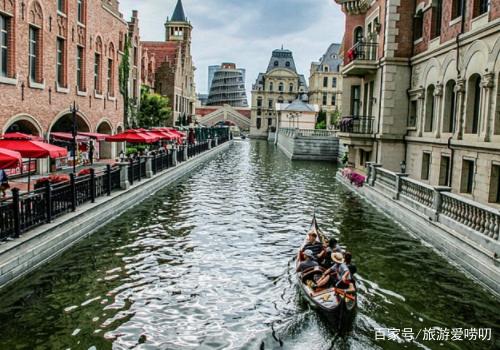
The first time I walked down Tuanjie Street was after stepping out of the Dalian Railway Station. After a ten-minute stroll, the scenery suddenly shifted: red brick walls, pointed roofs, arched windows, and reliefs stood side by side. Signs for Russian restaurants and windows of Matryoshka doll shops were squeezed beneath the gables of century-old buildings, making me feel as if I had traveled through time to Europe. This is the starting point of Dalian’s opening to foreign trade and a fantastic spot for photography.
1. Location Overview:Russian Style Street is located north of Shengli Bridge in the Xigang District of Dalian. Originally named Tuanjie Street (centered around No. 19 Tuanjie Street), it was the first administrative area and center planned during the city’s early development, and is regarded as the origin of Dalian’s urban construction. Bordered to the south by the Dalian Railway Station, Tianjin Street commercial pedestrian street, and Zhongshan Square, and extending north toward the Port of Dalian, it is situated in the heart of the old city yet remains highly accessible. It serves as a natural corridor for “citywalk” enthusiasts to wander between history and modernity. The spatial layout follows the modern “Garden City” theory, with a radial road network centered on the former City Hall. Tuanjie Street serves as the main public axis, while the surrounding fan-shaped areas were designated for official residences—a layout that is still recognizable today. Together with the modern architecture of Zhongshan Square and the tram lines, it forms a landmark district of Dalian’s modern urban landscape and is an essential “living specimen” for understanding a city born from its port and colonial history.
2. Cultural Context:The history of this street dates back to 1898, when Tsarist Russia leased Lüshun and Dalian and built the city of Dalny. The Russians constructed Dalian’s first street here, originally called Engineers’ Avenue—the predecessor to today’s Tuanjie Street and the starting point of the city’s urban story. With the City Hall at its center, the area served as the administrative hub of Dalny, lined with government offices and corporate buildings. After the Russo-Japanese War, Dalian came under Japanese rule, and the district was known as “Russia-machi,” where the old buildings served as company offices and official residences for another forty years. After Dalian’s liberation in 1945, the street was renamed Tuanjie Street. After lying dormant for over half a century, the Dalian government began a comprehensive renovation in January 2000. The 352 original resident households were relocated, and the old buildings were restored and the streetscape tidied. In May 2001, Russian Style Street officially opened. The renovated historical buildings were leased for commercial use, selling Matryoshka dolls and other Russian souvenirs, transforming the quiet old street into a shared “public living room” for citizens and tourists. Some scholars have since noted that while the renovation restored the street’s appearance, it altered some of the original historical details of the architecture, a topic that remains a point of discussion today.
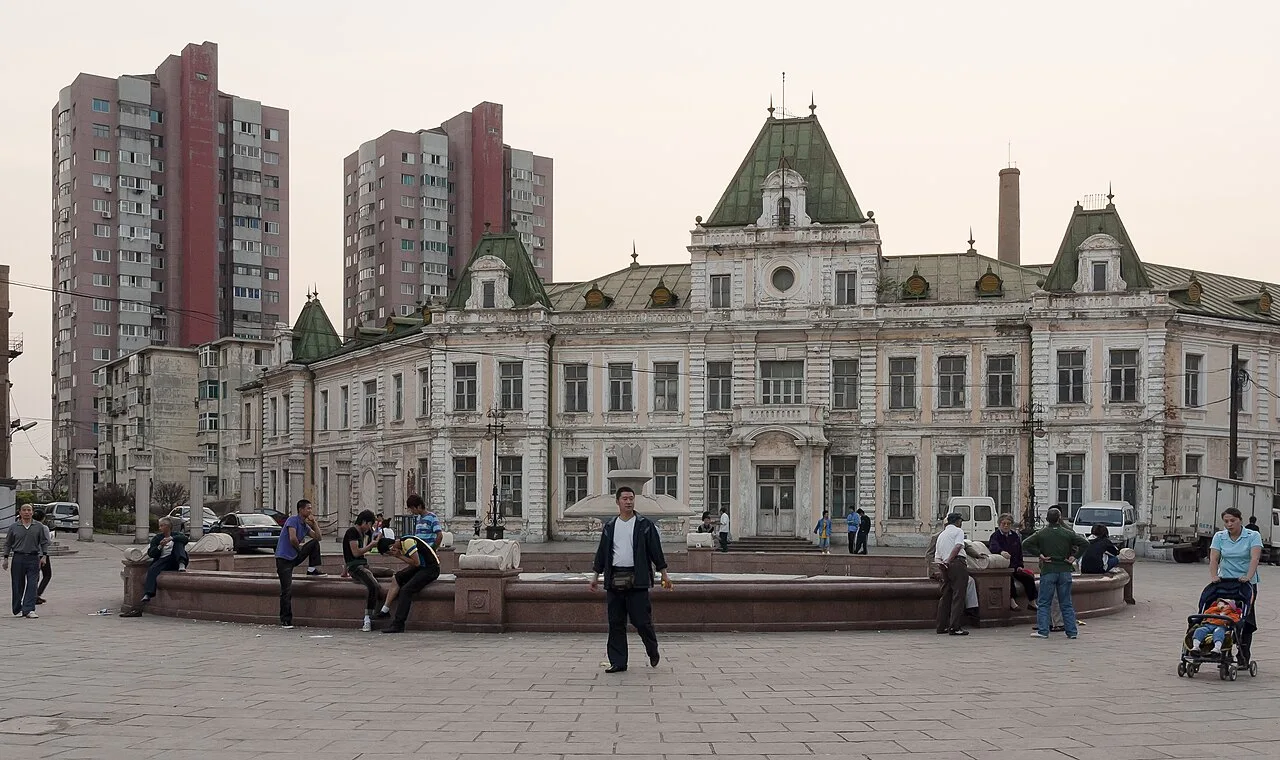
3. Highlights:Along Tuanjie Street, which is approximately 430 meters long, there were originally 38 Russian-style buildings from the turn of the 20th century. During the 2000 renovation, 18 were preserved and restored; the others are mostly new buildings constructed in the Russian style. The pointed roofs, arched windows, reliefs, and masonry colors still bear a distinct exotic mark. At the northern end (No. 1 Tuanjie Street), the former site of the Dalny City Hall, built in 1900, was once the administrative center of the Tsarist era. Now listed as a Major Historical and Cultural Site Protected at the National Level under the name “Dalian Russian Architecture,” it is the most significant building on the street. Near the southern entrance, the former site of the East Manchuria Railway Company is worth a closer look for its half-timbered structure, red brickwork, and white decorative strips. The former site of Russia-machi, a municipal protected site, now houses the Dalian Art Museum; the red-brick building and old wooden doors are exhibits in themselves, and admission to the gallery is free and peaceful. The street is also lined with Russian restaurants, cafes, and shops selling Eastern European goods such as Matryoshka dolls, amber, and telescopes (we recommend comparing prices between shops). Fun installations, such as Russian horse-drawn carriages, make the heavy history feel more approachable and interactive.
4. Visitor Information:Russian Style Street is an open district; it is free to enter and open 24 hours a day. Most shops operate from approximately 09:00 to 21:00, with extended hours during holidays. A suggested visit lasts one to two hours, allowing for a leisurely pace to take photos or shop for Eastern European trinkets. Transportation: The district is about one kilometer from Dalian Railway Station (a 10-minute walk). From Metro Line 2, exit at Zhongshan Square Station and walk for about 10 minutes. By bus, get off at Shengli Bridge Station, and the street entrance will be right in front of you. The street is flat and step-free, making it easily accessible for wheelchairs and strollers. Public restrooms are available. Parking nearby is inconvenient, so public transport is recommended. Since it is adjacent to the railway station, travelers with luggage can easily fit in a visit, turning a layover into a brief exotic stroll. For those interested in architectural details and light, the slanted sunlight of the day and the warm lamps of the evening each offer a different mood. Weekday mornings are the quietest times to admire the century-old carvings on the bricks and window lintels.
5. Travel Tips:It is recommended to enter from the north of Shengli Bridge and walk slowly from south to north along Tuanjie Street. Start by capturing the entire cluster of pointed roofs at the entrance, then turn into the side alleys to find the best-preserved old brick walls and carved window frames. Don’t forget to visit the former Dalny City Hall at the northern end before heading back to the Dalian Art Museum for an exhibition. Along the way, you can stop at a Russian restaurant to try Borscht, Borodinsky bread, and Kvass, or pick up amber and Matryoshka dolls at a craft shop. The best photo spots are the radial road network viewed from the middle of the main street, the red-brick gatehouse of the art museum, and the Russian carriages at the end of the street. Key points of interest include Dalian’s urban origin, the “Garden City” theory, and the value of the protected architecture. While walking from one end to the other takes only ten minutes, it feels like passing through a miniature modern history. For a more complete experience, combine this with the modern architecture of Zhongshan Square and take the still-operating Tram Route 201 to connect the highlights of the old city. This area is ideal for young people who love photography, students interested in modern history, and families looking for a relaxed outing.
6. Best Time to Visit:The district is liveliest in summer and autumn, with more festivals, markets, and comfortable outdoor seating at Russian restaurants. In winter, when snow settles on the pointed roofs, the street takes on a fairytale quality, and the sight of snow pressing against the Russian arched windows is particularly photogenic. This street, combined with the Zhongshan Square architecture, Tianjin Street, Dalian Railway Station, and Tram Route 201, forms the “Essence of the Old City” route. A half-day itinerary can be completed on foot or by tram, placing the exotic charm of a single street within the broader modern narrative of the city. Besides Russian cuisine, you can visit Tianjin Street to try Dalian snacks like Menzi (braised corn starch jelly) and grilled squid to experience the local hustle and bustle. If time permits, take the tram further east to explore a longer urban landscape belt and discover Dalian’s diversity and inclusivity at a slower pace.