Qingdao · Mountains & Scenic Wonders
Laoshan North Nine Waters
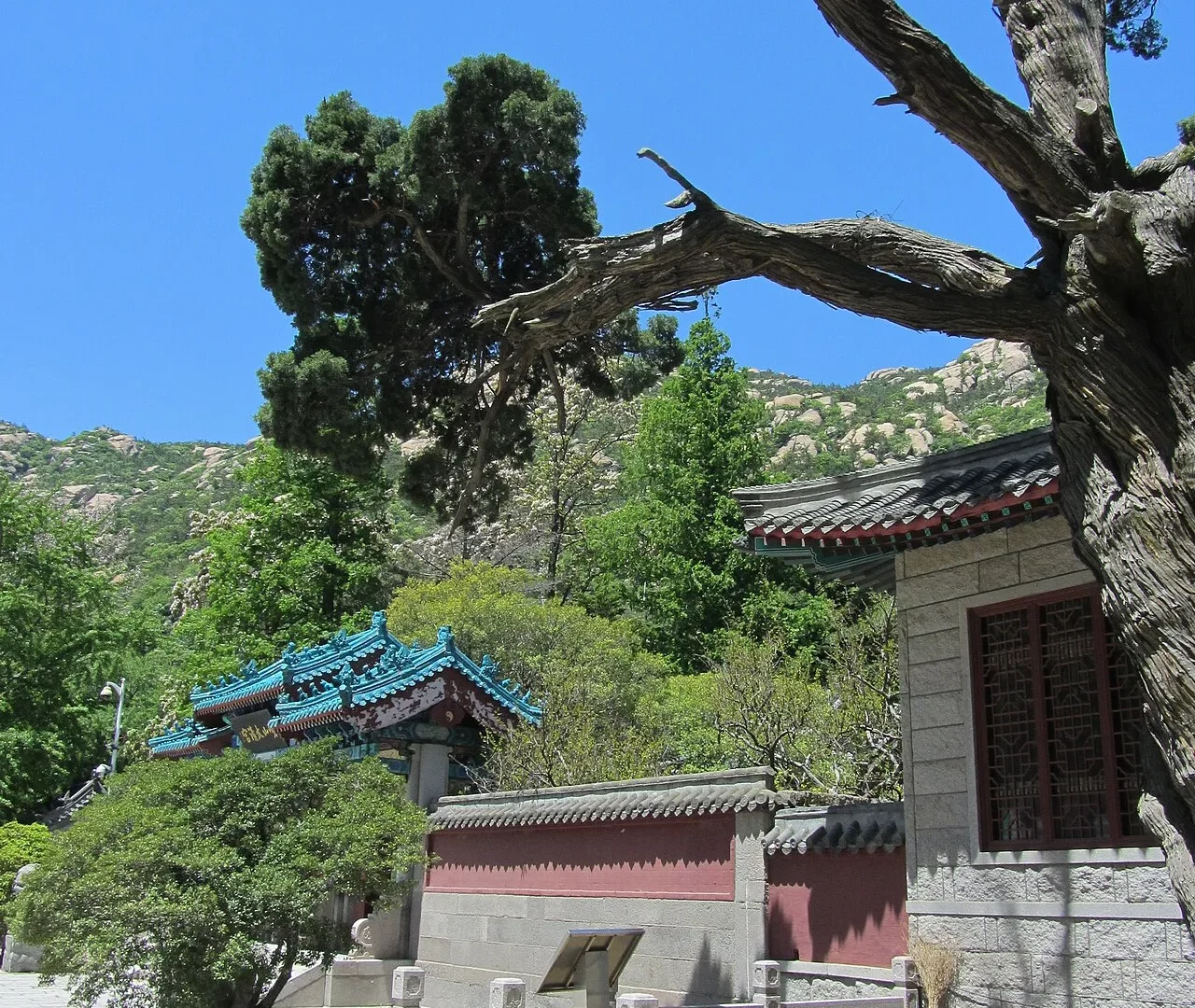
Laoshan is hailed as the “Number One Mountain by the Sea,” and its true magic lies in the harmony of peaks and ocean in a single frame. The North Nine Waters is the most gentle vein of this famous mountain. Walking along its wooden boardwalks, I was accompanied by the tinkling of springs and the unfolding sequence of the Nine Waters and Eighteen Pools. The air grew cooler with every step; in the height of midsummer, it felt like stepping into a natural air-conditioned room.
1. Location Overview: North Nine Waters is located on the upper reaches of the Baisha River near Wanggezhuang Street at the northern foot of Laoshan in the Laoshan District of Qingdao. It is a vital part of the 5A-rated Laoshan Scenic Area and the core route among various Laoshan trails renowned for its ravines, waterfalls, and crystal springs. Historically praised for its “Nine Waters of Clear Ripples,” it is Qingdao’s representative destination for waterfall viewing and water-side leisure, and the most water-centric route in the region. The trail leads travelers from the “Outer Nine Waters” deeper into the “Inner Nine Waters,” with the terrain transitioning from open vistas to secluded gorges. In the overall landscape of Laoshan, the Giant Peaks are known for their peril, Taiqing for its seclusion, Yangkou for its sea views, and Huayan for its temples; North Nine Waters complements these with a stream of purity, adding a touch of the ethereal beauty found in Jiangnan landscapes to this Taoist mountain. It serves as a natural “summer living room” for Qingdao residents to escape the heat or watch waterfalls during the rainy season. The Baisha River, which supports the area, is one of Laoshan’s primary water systems, flowing west into Jiaozhou Bay, meaning the clarity of the North Nine Waters is directly linked to the water conservation of the downstream urban areas.
2. Cultural Context: The name North Nine Waters derives from the nine winding bends of the stream in the valley. As the water rushes down from the northern foot of Laoshan, it curves multiple times, leading the ancients to name it “Nine Waters” and divide it into the Outer and Inner sections. Geologically, the area consists of granite mountains formed by magma intrusion during the Yanshanian movement of the Mesozoic era. Millions of years of water erosion have sculpted the hard granite into strange boulders and deep, secluded pools. As Laoshan is a renowned Taoist mountain, the North Nine Waters area is steeped in temple culture; the Weizhu Convent remains hidden among green bamboos deep in the valley, while cliff carvings and inscriptions along the stream preserve the footprints of visitors through the ages. While ancients wrote poetry by the springs to express their aesthetic appreciation of nature, today’s visitors continue that same intimacy with nature by listening to the falls. This place is both an open-air geology textbook and a living intersection of Qi-Lu landscapes and Taoist culture. The springs of Laoshan are crisp and sweet; in the past, the water here was the top choice for brewing tea and wine. Much of the excellence of Laoshan Green Tea is attributed to this mountain water. “Nine Waters of Clear Ripples” was listed early on as one of the “Twelve Scenes of Laoshan,” the only one among them celebrated for its streams and waterfalls, proving the long-standing affection for this valley.
3. Highlights: The soul of the scenic area is the “Nine Waters and Eighteen Pools” linked by a single clear stream. Entering the mountains from the Outer Nine Waters, visitors encounter a sequence of pools and falls such as Wuji Pool, Lengcui Gorge, and the Seven Waters Curtain. Some are deep, emerald, and still, while others spray like pearls and jade; the depth of Wuji Pool and the seclusion of Lengcui Gorge are particularly memorable. The names are elegantly poetic, and matching them to the signs along the way turns the hike into a scavenger hunt for scenery, which children find especially engaging. The climax is the Chaoyin Waterfall (Tide-Sound Waterfall), the most famous sight in North Nine Waters. Fed by the Tianyi Spring on the northern side of the Laoshan peaks, the water plunges down high cliffs with a roar like the ocean, giving the falls its name. On ordinary days, it is modest and gentle, but after rain, it transforms into a thunderous torrent. The route is lined with jagged, animal-shaped rocks and lush vegetation, making the entire valley a natural oxygen bar. Walking here is a “slow travel” experience—a dialogue between the traveler and the clear springs. Descending from the Guanlao Parking Lot, the boardwalks merge and split with the stream; the Inner Three Waters area has the widest pool surfaces, making it an ideal spot to stop, listen to the water, watch the fish, and rest. The further in you go, the narrower the valley becomes and the louder the sound of the water.
4. Visitor Information: Opening Hours: Peak season (April 1 to October 31) approx. 6:00 to 19:00; Low season (November 1 to March 31) approx. 7:00 to 17:00 (subject to official announcements). Ticket Prices: Peak season approx. 65 RMB per person; Low season approx. 40 RMB per person; half-price tickets are available per regulations. Sightseeing shuttle buses are approx. 30 RMB per person (half price for children 1.2m to 1.4m). It is recommended to book tickets in advance via official platforms during peak season. Transport Guide: Take Metro Line 11 to the North Nine Waters Station. Upon exiting, you will arrive at the North Nine Waters Customer Service Center, where you can purchase tickets and transfer to the shuttle bus—the most convenient option. For those driving, navigate to the North Nine Waters Customer Service Center; park in the outer lot and take the shuttle, as private cars are not permitted into the Inner Nine Waters area. Please wear non-slip shoes. During the rainy season, pay attention to water levels and safety warnings. Fire is strictly prohibited during forest fire prevention periods. Please carry out all trash to protect the clarity of the valley. According to Shandong provincial policies, seniors over 60, children under 6 or under 1.4m are generally exempt from entrance fees (shuttle fees still apply), and students enjoy half-price discounts; please refer to official notices for details.
5. Travel Tips: Recommended Half-Day Light Hike: Take the shuttle from the Customer Service Center to the Guanlao Parking Lot. Follow the boardwalk through the Inner Three Waters, Wuji Pool, Lengcui Gorge, and Seven Waters Curtain to the Guanpu Pavilion to see Chaoyin Waterfall, then extend the walk to Weizhu Convent. Those with moderate fitness can return from Chaoyin Waterfall (approx. 1.5 hours); those with high energy can complete the full loop (approx. 2.5 hours). The best photo spots are the framed view of Chaoyin Waterfall from Guanpu Pavilion and the emerald pools of Lengcui Gorge amidst post-rain mist. For families, this is a perfect nature classroom for identifying pools, stones, and sounds. When traveling with seniors, utilize the shuttle buses to save energy and walk slowly. The golden window for waterfall viewing is immediately after rain, when the volume is highest and clouds wrap around the green peaks; the mist creates a veil over the mountain, perfectly capturing the essence of “Nine Waters of Clear Ripples.” Flat stone surfaces and pavilions along the stream are natural resting points where many enjoy light snacks. After exiting the mountain, if it’s mealtime, the farmhouse feasts in the Wanggezhuang area are the perfect way to satisfy a “wild” appetite.
6. Best Time to Visit: Midsummer after rain is when the water volume is highest and the air coolest, making it the ultimate backyard for Qingdao locals escaping the heat. Autumn brings layers of changing foliage and crystal-clear water, with red leaves reflecting in emerald pools. Winter is quiet and desolate with few tourists, offering a different kind of beauty, though some water areas may freeze, requiring cautious walking. In terms of itinerary, North Nine Waters can be combined with other Laoshan routes: if time permits, visit Yangkou for the seamless blend of sea and sky, or Taiqing Palace to visit the famous Taoist temple, creating a comprehensive “multi-faceted” tour of the mountain. On your way back through the Laoshan villages, take a moment to sip some Laoshan Green Tea, enjoy a farmhouse meal, and perhaps take some Wanggezhuang steamed buns home. The fragrance of tea mixed with the scent of the stream is the perfect elegant coda to a day in the mountains. Spring, when mountain flowers first bloom and the water is shallow and clear, is ideal for children to explore the stream; late autumn is the photographer’s paradise, where red leaves mirrored in turquoise pools make every snapshot look like a postcard.