Yangzhou · Gardens & Ancient Architecture
Daming Temple
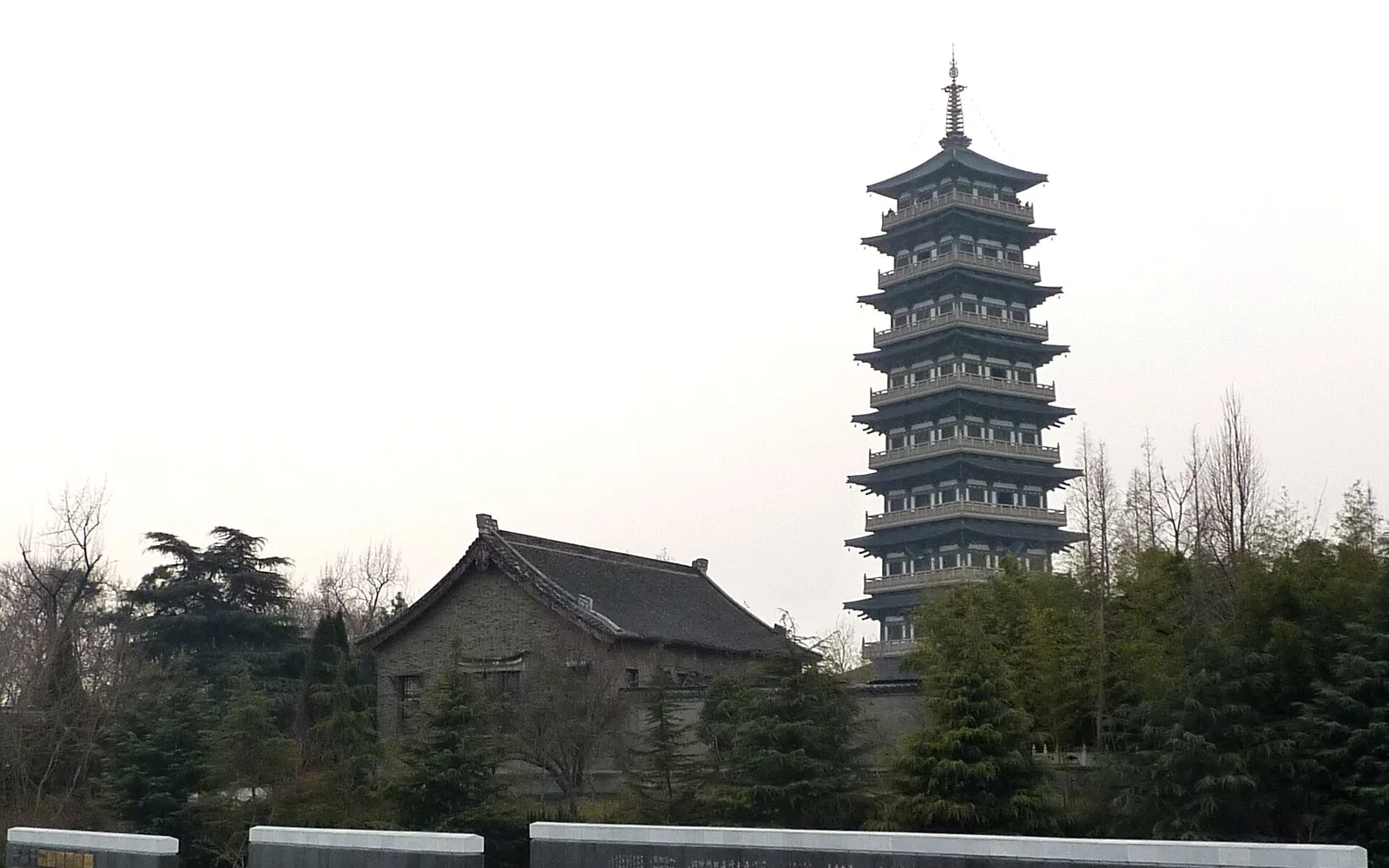
Daming Temple is a cultural sanctuary of Yangzhou—the place where Master Jianzhen once resided as abbot and taught before embarking on six perilous journeys to Japan to spread Buddhist teachings. The Jianzhen Memorial Hall and Qiling Pagoda within the temple grounds preserve this legendary history. Climbing the Qiling Pagoda, I looked out to see the Slender West Lake winding like a silk ribbon below, with both the old and new cities of Yangzhou unfolding before my eyes. Here, the Zen tranquility of a thousand-year-old temple merges seamlessly with the refined elegance of Yangzhou.
1. Location Overview: Daming Temple is located at No. 8 Pingshantang East Road, Hanjiang District, Yangzhou, Jiangsu Province, atop the central peak of Shugang. Situated northwest of the ancient city and north of the Slender West Lake, it is one of Yangzhou’s most iconic cultural landmarks. Perched high on Shugang, the temple overlooks the Jianghuai region to the east and the Slender West Lake and Yangzhou city to the south, earning it the ancient reputation as the “First Temple of East Huai.” The scenic area is divided into three parts: the central temple, the Qiling Pagoda to the east, and the West Garden to the west. Visitors can offer prayers along the central axis, ascend the clouds at the East Pagoda, and savor the famous springs in the West Garden. The site combines religious, historical, and garden landscapes, forming a cultural hub alongside Pingshantang and Guanyin Mountain. Though Shugang is not particularly high—reaching only about 20 meters above sea level—the presence of this temple and the nearby halls makes it the cultural pinnacle of Yangzhou. Standing before the temple, one can take in the essence of half the city’s scenery.
2. Cultural Heritage: Founded during the Daming era of Emperor Xiaowu of the Southern Song Dynasty (457–464 AD), the temple takes its name from that era and is over 1,500 years old. In 601 AD, Emperor Wen of the Sui Dynasty ordered the construction of the Qiling Pagoda to enshrine Buddhist relics; after its completion, renowned poets such as Li Bai, Gao Shi, Liu Yuxi, and Bai Juyi all climbed the tower to write poetry. During the Tang Dynasty, Master Jianzhen (688–763 AD) served as the abbot here, teaching the precepts before setting sail for Japan. His journey was one of incredible perseverance: the first five attempts were thwarted by storms and illness, leaving him blind, yet he remained resolute. On his sixth attempt, he finally reached Japan, where he introduced Buddhism, medicine, architecture, and sculpture, and is revered there as the founder of the Ritsu school. Consequently, Daming Temple holds a special place in the history of Sino-Japanese cultural exchange. In 1048 AD, during the Northern Song Dynasty, Ouyang Xiu built Pingshantang beside the temple while serving as the governor of Yangzhou; later, Su Shi built Gulin Hall in memory of his teacher. Pingshantang was named after a poem by colleague Liu Chang: “The river wind is swift, the crow-shaped sails are strong, the distant mountains are level with this hall.” From the hall, one can see the mountains of Jiangnan bowing in the distance. The literary legacies of Ouyang Xiu and Su Shi are tied to this mountain, giving Daming Temple a blend of Zen spirituality and scholarly refinement. In the Qing Dynasty, the Kangxi and Qianlong emperors frequently stopped here during their southern tours, and the Imperial Stele Pavilion still stands today, adding a layer of imperial history to the site.
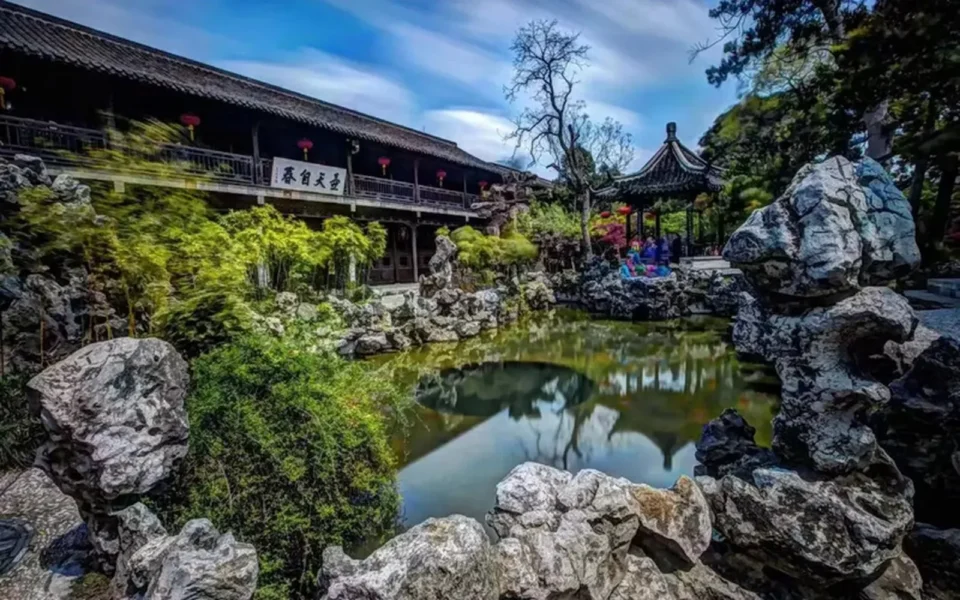
3. Highlights: Along the central axis are the Mountain Gate, the Hall of the Heavenly Kings, the Mahavira Hall, the Sutra Library, and the Reclining Buddha Hall, the latter of which houses a jade Buddha from Myanmar. The Jianzhen Memorial Hall is the spiritual core of the temple. Built in 1973 to commemorate the 1,200th anniversary of Jianzhen’s passing, it was designed by the architect Liang Sicheng based on the Golden Hall of Tōdai-ji in Nara, Japan. The Tang-style architecture features rigorous proportions and a dignified presence; it houses a seated statue of Jianzhen and is frequently visited by Japanese Buddhist delegations as a symbol of friendship. The Qiling Pagoda consists of nine stories; the current structure was rebuilt in the 1990s following the Sui Dynasty style. It enshrines Buddhist sarira and a nanmu wood pagoda. From the top, visitors can overlook the ribbon-like Slender West Lake and the blending of old and new Yangzhou. The Bell and Drum Towers stand opposite each other on the east and west sides of the pagoda, while the Reclining Buddha Hall to the north echoes the temple’s central axis. The West Garden, built in 1736 (the first year of the Qianlong era), features the “Fifth Spring in the World.” During the Tang Dynasty, Liu Bocu ranked the water of Daming Temple fifth among the best waters for tea in the empire—a ranking recorded in Zhang Youxin’s “Records of Tea-Brewing Water,” linking the spring to a millennium of tea culture. Together with Pingshantang, the Ouyang Shrine, Gulin Hall, and the Imperial Stele Pavilion, these sites create a sanctuary where temple and garden, Zen and literature, coexist in harmony.
4. Visitor Information: Opening Hours: Approximately 8:00–17:00 year-round (last entry at 16:30), subject to the daily notice at the ticket window. Admission: Varies by season; 45 RMB during peak season and 30 RMB during off-peak season. Students and seniors aged 60–64 receive half-price tickets (approx. 22 RMB peak / 15 RMB off-peak). Seniors over 65 and children under 6 years old (or under 1.4m) are free with valid ID. A separate ticket of approximately 26 RMB is required to climb the Qiling Pagoda. Transportation: Take bus lines 5, 25, You 1, or You 2 to the Daming Temple stop. For those driving, navigate to No. 8 Pingshantang East Road; there is a parking lot in the plaza before the temple (fees apply). The temple offers guides and audio tours. A human guide is recommended to bring the stories of Ouyang Xiu, Su Shi, and Master Jianzhen to life. Plan for 2 to 3 hours to explore both the temple and the gardens to fully appreciate the layers of Shugang.
5. Travel Tips: The recommended route is: enter through the Mountain Gate $\rightarrow$ visit Mahavira Hall $\rightarrow$ visit Jianzhen Memorial Hall $\rightarrow$ climb Qiling Pagoda for the view $\rightarrow$ head to the West Garden to taste the Fifth Spring and visit Pingshantang and Ouyang Shrine $\rightarrow$ end at the Reclining Buddha Hall. Top photo spots include the ancient ginkgo tree in front of Pingshantang (golden in late autumn), the view from the top of Qiling Pagoda, and the play of light and shadow in the corridors of the Jianzhen Memorial Hall. Focus your tour on the history of Jianzhen’s voyage to Japan and the literary connection of Ouyang Xiu and Su Shi to weave religion, literature, and architecture into one narrative. Families with children can take the gentler temple-garden path, feeding fish by the pond in the West Garden and identifying ancient trees at Pingshantang. For students, the site is an excellent living classroom for Sino-Japanese exchange and Tang Dynasty tea culture. For seniors, a slow morning stroll and a tea break in the West Garden are recommended, with the pagoda climb being optional. Note: Incense sold by vendors outside the temple gates cannot be brought inside; please purchase incense within the temple grounds to avoid interruptions. The temple’s vegetarian cuisine is famous—the vegetarian noodles and rice are refreshing and delicious. Brewing a pot of tea with the Fifth Spring water while watching koi swim by in a West Garden pavilion is the ultimate expression of Yangzhou’s “slow life.” As it is adjacent to the Slender West Lake, you can purchase a combined ticket to visit both: offer prayers and see the pagoda in the morning, and boat on the lake in the afternoon, combining stillness and motion to capture the essence of Shugang and the lake.
6. Best Time to Visit: Spring is wonderful for the Qionghua (the city flower of Yangzhou) and the cherry blossoms by the Qiling Pagoda. Autumn is a golden season for photography when the ginkgo trees turn yellow. Summer offers a cool escape under the green canopy of the stairs, while winter is peaceful and solitary, with the yellow walls against white snow creating a unique atmosphere. At the end of each year, the temple maintains the tradition of striking the bell to welcome the New Year; the 108 rings are a fixed year-end ritual for many locals. You can combine this with visits to the Slender West Lake, Guanyin Mountain, and the Tang City Ruins. To expand into a one- or two-day trip, add the Ge Garden, He Garden, and Dongguan Street in the city center. To truly experience the local culture, enjoy Yangzhou morning tea and Huaiyang cuisine after descending the mountain, bringing the elegance of the temple into your palate. Daming Temple is global because of Jianzhen and scholarly because of Ouyang Xiu and Su Shi. It gathers Zen, literature, springs, and pagodas on one hill, complementing the nearby Slender West Lake. Visiting both allows one to understand Yangzhou’s character—simultaneously wealthy and refined—and the weight of its title as the “Famous Capital of the Huai Region.” It is the best place in Yangzhou for slow appreciation, deserving a full half-day of your time.