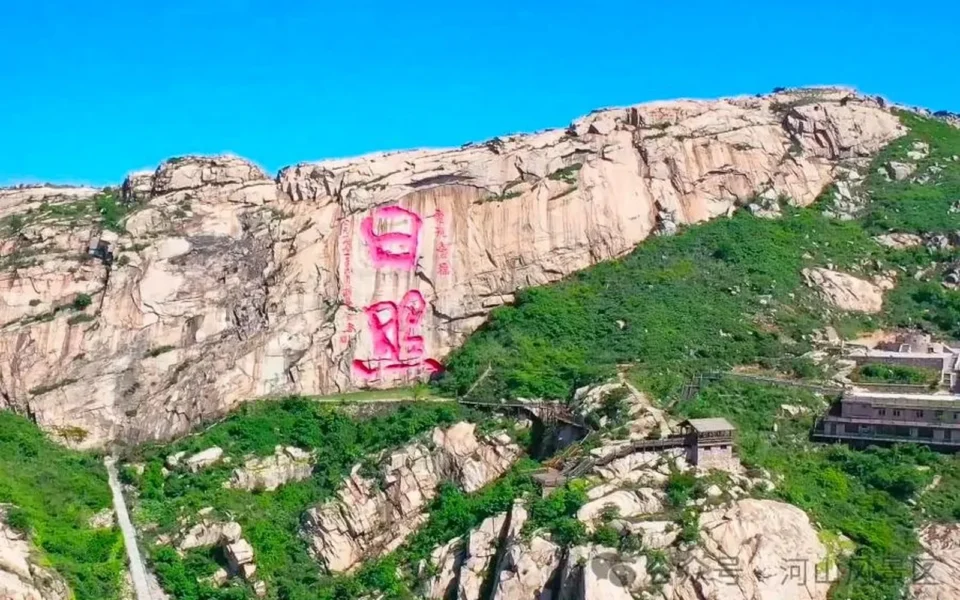
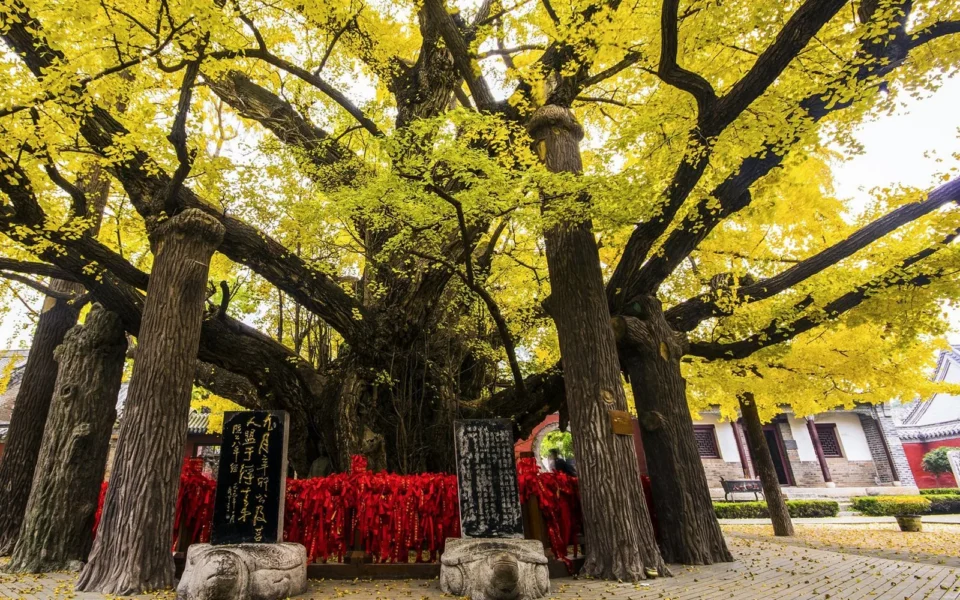
Rizhao · Mountains & Scenic Wonders
Jiuxian Mountain Scenic Area
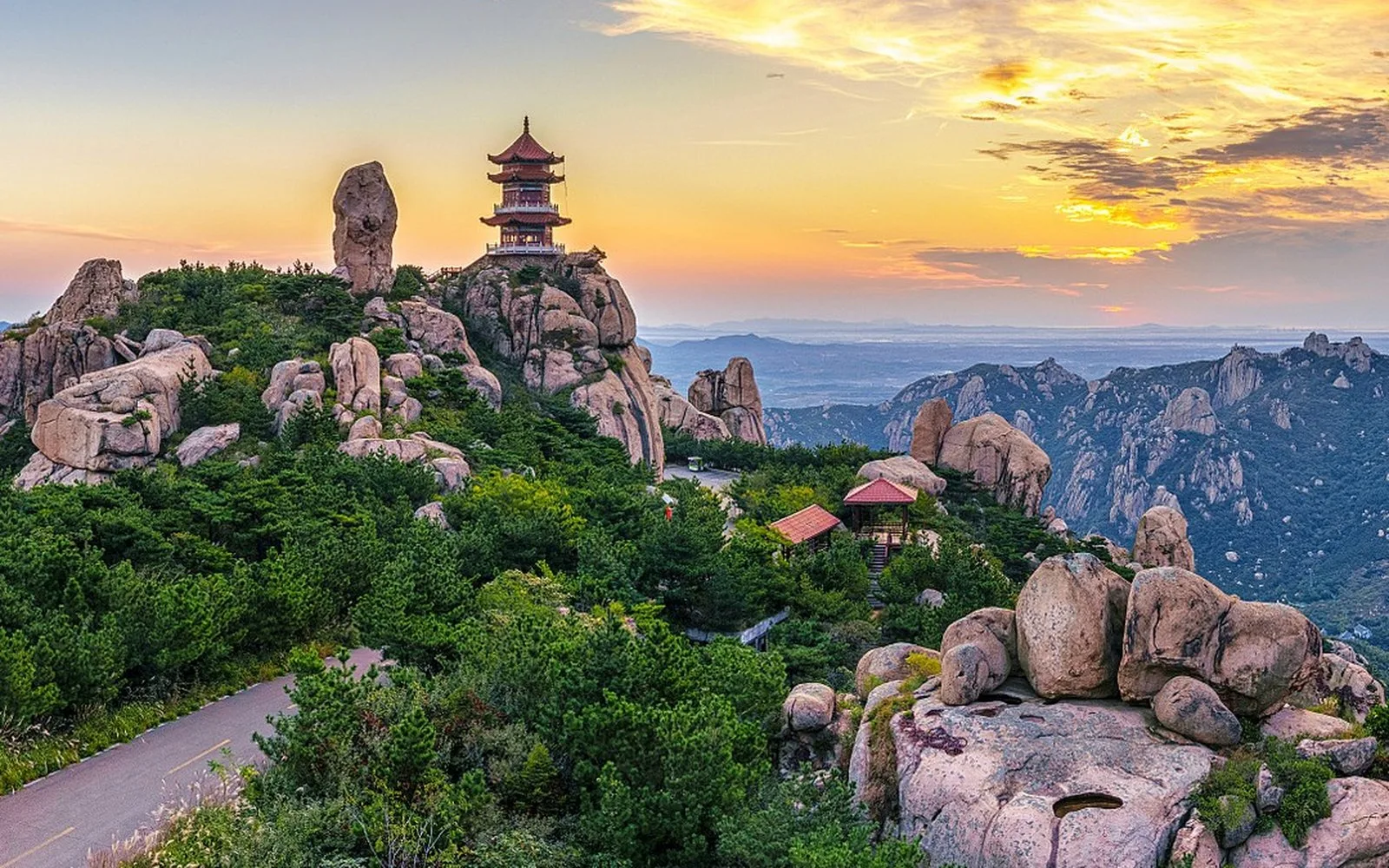
Jiuxian Mountain is a national 4A-level scenic spot in Rizhao, renowned for its dramatic peaks, secluded valleys, cascading waterfalls, and cliffside boardwalks. Its glass skywalk suspended high in the air offers a thrilling experience with a dizzying drop straight below, while the mountain streams and waterfalls add a touch of ethereal beauty.
1. Location Overview: The Jiuxian Mountain Scenic Area is located in Songbai Town, Wulian County, Rizhao City, stretching along National Highway 342. It is a national 4A-level tourist attraction that faces Wulian Mountain across a deep gorge; together, they form the Wulian Mountain—Jiuxian Mountain Scenic Area. Situated amidst the mountains in the center of Wulian County, it is approximately 14 kilometers from the county seat, bordering Weifang to the north and the Rizhao coastline to the south, featuring the typical low mountain and hilly terrain of southeastern Shandong. In the local tourism landscape, Jiuxian Mountain and Wulian Mountain complement each other: one is praised for its dramatic peaks and ancient temples, while the other is celebrated for its mysterious caves and seas of flowers, together forming the dual cores of mountain tourism in Rizhao. The area is vast with deep valleys, and the Longtan Grand Canyon, Heiniuchang, and Xueshi Village each form distinct zones. Mountain villages like Maojiahe and Xueshi still retain their rustic charm with traditional stone houses; sightseeing shuttles are required to connect these points. It is one of the few coastal mountains in the Qi-Lu region that combines mythological allure with ecological value, offering travelers a place to explore hidden depths, climb heights, and admire blooms between the mountains and the sea.
2. Cultural Heritage: The name “Jiuxian” (Nine Immortals) evokes an air of mysticism. Legend has it that nine immortals once gathered here to cultivate and meet, giving the mountain its name. Local folklore recorded in travel guides mentions wonders such as “mosquitoes that do not bite, thorns without hooks, and toads that do not croak,” veiling the mountain in a shroud of myth. During the Northern Song Dynasty, the poet Su Shi, while serving as the governor of Mizhou, praised the landscapes of Wulian and Jiuxian, stating they were “no less magnificent than Yandang Mountain,” leaving a cultural legacy that has lasted a millennium. It is also said that the Warring States military strategist Sun Bin lived in seclusion here, teaching students and writing the “Sun Bin’s Art of War”; the Sun Bin Academy in the mountains preserves this intellectual legacy. The mountain is dotted with strange peaks, odd rocks, caves, and springs. Places like the Water Curtain Cave are hidden beneath the Misty Rain Ravine, echoing the mythological narratives. Known as the “Wild Pharmacy of Qi-Lu,” the area boasts dense vegetation and crisscrossing streams. As part of the Wulian Mountain—Jiuxian Mountain Provincial Geological Park, its typical granite peaks and canyon landforms make it a living laboratory for nature science and outdoor exploration; hiking here is not just about the scenery, but like stepping into a wilderness legend.
3. Highlights & Attractions: The essence of Jiuxian Mountain lies in the harmony of dramatic peaks, secluded caves, and seas of flowers. Longtan Grand Canyon, dubbed the “Little Three Gorges of Qi-Lu,” features wooden boardwalks built along the stream. Hiking here, you will see suspension bridges spanning the water, connected waterfalls and pools, and red maples decorating the cliffs. In summer, the valley is filled with mist and a refreshing chill, while the rainy season brings the most powerful water displays. Couple’s Peak is the landmark of the area, where two peaks lean toward each other like partners; it is an ideal spot for sunrise and overlooking Longtan Lake below. The glass skywalk clinging to the cliffside offers a thrilling view of the canyon, though cautious visitors can use the adjacent wooden boardwalk to reach the observation deck. The Sun Bin Academy is tucked deep in the forest, offering peace and quiet—if you are lucky, you might spot wild macaques. The most famous attraction is the wild azaleas in April and May: the Heiniuchang Azalea Garden is one of the largest wild azalea bases north of the Yangtze River, covering about 10,000 mu. On misty days, the sea of flowers appears and disappears, resembling a fairyland. Outside the flowering season, the red maples and clear streams of the canyon are equally moving. For summer visitors, there is a canyon rafting experience approximately 3 kilometers long with a total drop of nearly 100 meters, adding a splash of excitement to the mountain tour.
4. Visitor Information: Opening Hours: Approximately 8:00 AM to 5:00 PM. Seasonal activities like canyon rafting have different schedules; please refer to the daily announcements at the scenic area. Ticket Prices: Adult tickets are approximately 65 RMB; discounted tickets are available for students, and young children are often free (subject to official rates). Sightseeing shuttles, the glass skywalk, and cable cars are charged separately. Contact: 0633-5666111, 4000156519. Due to the large area and distance between sights, it is highly recommended to purchase a sightseeing shuttle ticket for hop-on-hop-off convenience to save energy. Transportation: Driving is most convenient; navigate to “Jiuxian Mountain Scenic Area.” It is about 1.5 hours from downtown Rizhao and 30 minutes from Wulian County. Parking is available at all entrances. For public transport, take the “Chengyuan Public Bus Line” from Wulian Railway Station or Bus Station (approx. 25km away) to the Wulian Mountain Visitor Center, then transfer to the dedicated shuttle to the scenic area (approx. 7km). Note: Mobile signals can be unstable in the mountains, which may affect navigation and digital payments; carrying some cash is recommended. The glass skywalk may close during rain, snow, or strong winds, and rafting depends on water levels; call ahead to confirm. Please strictly observe forest fire prevention rules; no open flames are allowed.
5. Suggested Itineraries: Easy Tour (approx. 3 hours): Take the shuttle into the mountain, visit the Sun Bin Academy, head to Couple’s Peak for the glass skywalk, then traverse Longtan Grand Canyon to see the suspension bridges and waterfalls before returning by shuttle. Deep Exploration (approx. 6 hours): Enter through the West Gate, take the shuttle to Sun Bin Academy, proceed via Cang’ao Ridge to Couple’s Peak, then double back through Maojiahe to explore Longtan Grand Canyon and the glass skywalk. Continue to Xueshi Village and Heiniuchang Azalea Garden to see the caves and flowers. During the flowering season, it is worth spending an extra half-day here. Best photo spots: Top-down shots of streams and red maples from the Longtan Grand Canyon suspension bridge, portraits against the cliffs at the glass skywalk corners, and light-colored silhouettes amidst the azaleas. Key points for guides: The legends of the Nine Immortals, the history of Sun Bin Academy, and the formation of the canyon landforms. This destination is ideal for family outdoor trips, geological study tours, couples, and photography enthusiasts. To capture the sea of clouds, consider staying at a farmhouse (nongjiale) at the foot of the mountain and climbing Couple’s Peak early in the morning before the tour groups arrive. Arrive early to avoid crowds, wear non-slip shoes, and bring a jacket. Bring insect repellent for the canyon in summer. The temperature is several degrees lower in the mountains than below; please follow all safety warnings during the rainy season.
6. Best Time to Visit: April and May, when the azaleas bloom, is the most stunning time of year, especially on misty days. Summer is cool and perfect for canyon exploration and rafting. In autumn, the red maples and yellow waxwings paint the mountain like a vivid oil painting, and mountain fruits like hawthorn and persimmon ripen; you can taste these seasonal delicacies at local farmhouses. Winter is quiet, occasionally featuring ice curtains and rime. Since Jiuxian Mountain and Wulian Mountain face each other, you can purchase a joint ticket to visit both—one for caves and flowers, the other for ancient temples and peaks. It is recommended to arrange this as a two-day trip for a complete mountain culture experience. Local specialties include Wulian farmhouse feasts, acacia flower cakes, and Rizhao green tea; villages like Doujiataizi at the foot of the mountain offer authentic rural meals. The West Gate is a good entry point for visiting Xueshi Village, while the East Gate provides more convenient access. End your journey by savoring the tranquility of the mountains and the freshness of the tea.