Weifang · Ancient Towns & Old Streets
Qingzhou Ancient City
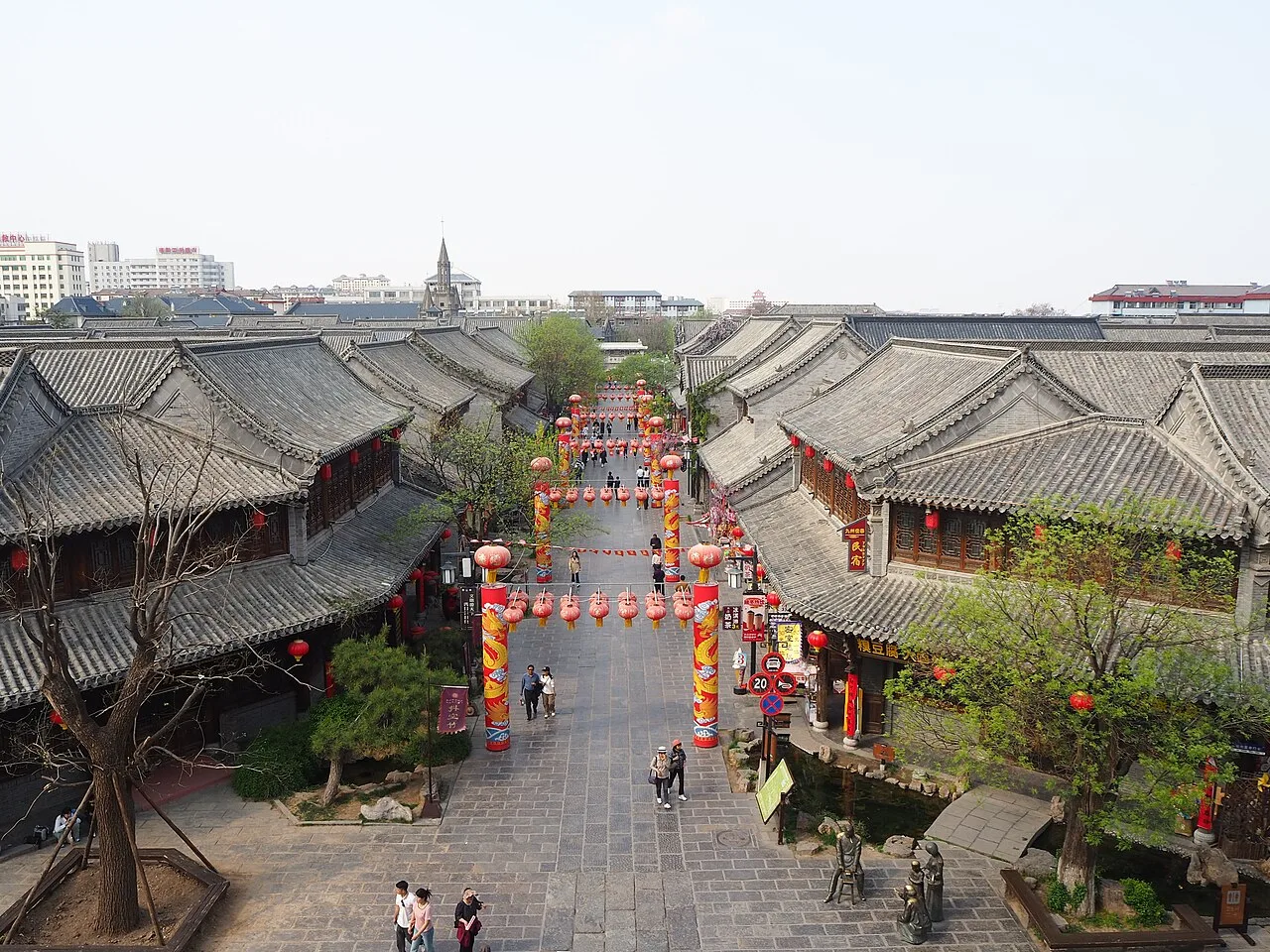
The true charm of Qingzhou Ancient City lies in the word “living.” It is not a walled movie set selling tickets, but an old city where nearly 30,000 locals truly live and breathe. Entering through Fucai Gate and strolling north along Ouyuan Street, you’ll find a succession of traditional archways, the intricate rockeries of Ouyuan Garden, and the savory aromas of Halal delicacies drifting from Zhaode Street. When tired, grab a freshly fried beef pancake from a roadside vendor and let the authentic atmosphere of daily life wash over you. This unguarded sense of normalcy is something many replicated “ancient-style” districts simply cannot offer.
1. Location Overview: Qingzhou Ancient City is located in the center of Qingzhou, Weifang, and serves as the heart of the Qingzhou Ancient City Tourism Area (a National 5A-level tourist attraction). As one of the ancient “Nine Provinces” of China, its name first appeared in the *Classic of History (Shujing)*. With a city-building history spanning over 2,000 years, it has long served as a regional administrative center. The currently open area covers about 1.4 square kilometers, preserving over 120 Ming and Qing dynasty streets and alleys, including Beimen Street, Ouyuan Street, and Dongmen Street. Many names, such as Ouyuan Street, Wei Street, and Canjiangfu Street, have remained unchanged for centuries, maintaining a clear urban fabric and layout. Bordered by the Nanyang River to the north and overlooking Yunmen Mountain to the south, it forms a deep cultural tour route across the Qi region alongside the Qingzhou Museum, Yunmen Mountain, and Tuoshan Grottoes. The main district centers on Ouyuan Street, with Fucai Gate at the southern end (navigate to “Qingzhou Ancient City Fucai Gate” for driving). The Ancient City, Qingzhou Museum, and the southern sites of Yunmen Mountain and Tuoshan are all close to one another and can be comfortably visited in a single day. It is the most historically profound and atmospheric destination in western Weifang and one of the few 5A attractions in Shandong that is seamlessly integrated into the daily lives of its residents.
2. Cultural Context: Since the establishment of the Qingzhou Inspectorate in the Western Han Dynasty, the city has long been the political, military, and cultural hub of inland Shandong. Throughout the Northern and Southern Dynasties, Sui, Tang, Song, Yuan, Ming, and Qing dynasties, the city site has remained continuous. From a provincial capital in the Han and Tang to a prefectural seat in the Song and Yuan, and a princely residence in the Ming and Qing, its administrative status has fluctuated, but the city itself has never moved from the banks of the Nanyang River. Renowned ministers such as Fan Zhongyan, Fu Bi, and Ouyang Xiu once served as governors here, leaving behind a legacy of governance and poetry. The famous poet Li Qingzhao lived here for over a decade with her husband Zhao Mingcheng, writing many of her lyrics during this period. Zhao Bingzhong, the top scholar (Zhuangyuan) of the Wanli era in the Ming Dynasty, was also a native of Qingzhou. During the Ming Dynasty, the Prince of Heng was stationed here; Ouyuan was the East Garden of the Prince of Heng’s Mansion, and the stone archway of the mansion still stands in the middle of Ouyuan Street today. Fucai Gate, the south gate of the ancient Nanyang City, has been reconstructed to its original historical appearance and stands 19.1 meters high. Most precious of all is that nearly 30,000 residents still live within these alleys—buying groceries, chatting, and going to school as usual. This 5A ancient city is not a hollow backdrop, but a living city.
3. Highlights: First, the Ming and Qing Ancient Streets and Archways. A continuous stretch of ancient roads, including Beimen Street, Ouyuan Street, and Zhaode Street, is dotted with landmarks like the Haidai Metropolis Archway and Kuixing Tower. The mixture of archways, traditional residences, and shops, with brick-carved gateways reflecting old locust trees, serves as a living specimen of Northern Chinese traditional architecture. Second, Ouyuan Garden. The East Garden of the Prince of Heng’s Mansion and a provincial cultural relic protection unit, it is famous for its stacked rockeries and exquisite pavilions, making it the most refined garden in the city. Third, Fucai Gate Tower. Perched atop a massive city platform, the tower offers a panoramic view of the city’s undulating rooftops, the Nanyang River, and Yunmen Mountain to the south, making it the best vantage point for photography and nostalgia, especially during the soft light of dawn and dusk. Fourth, Humanistic Sites. The Qingzhou Prefecture Examination Hall (Gongyuan), the Ouyang Xiu Memorial Hall, and the Li Cheng Memorial Hall are scattered throughout the alleys, weaving together the city’s cultural thread. Fifth, the Halal Atmosphere of Zhaode Street. This old street, primarily inhabited by the Hui ethnic group, preserves its mosque and authentic cuisine; the aroma of braised beef represents another living dimension of the ancient city.
4. Travel Tips: Opening Hours: The main street areas of the Ancient City are open 24/7 year-round for free. Smaller attractions like Ouyuan, Fucai Gate, and the Examination Hall are open during the day, typically closing between 17:30 and 18:00. Ouyuan offers special night openings (currently Fridays and Saturdays; entry ends at 20:30, closes at 21:00, subject to weather). Please check official notices for details. Ticket Prices: The main street area is free. Smaller attractions are ticketed separately: Ouyuan is approx. 20 RMB, Fucai Gate Tower approx. 5 RMB, and the Qingzhou Prefecture Examination Hall approx. 5 RMB. Other memorial halls follow official pricing; discounts are available for children and eligible groups. Ticket and opening status may vary by season or event; during major holidays, please check official channels in advance. Transportation: Take the high-speed rail to Qingzhou Station, followed by a 20-minute taxi or bus ride. For drivers, navigate to “Qingzhou Ancient City Fucai Gate.” Parking is available around the perimeter, as the city interior is a pedestrian zone (motor vehicles are prohibited). Within the city, you can walk or use shared bicycles. Parking is limited during holidays; early arrival or public transport is recommended. We suggest spending half a day to a full day here. Many alleys have cobblestone roads, so please wear comfortable, non-slip shoes.
5. Itinerary Suggestions: For a half-day trip, enter through Fucai Gate, climb the tower for a panoramic view, then head north along Ouyuan Street to explore Ouyuan’s rockeries and photograph the Prince of Heng’s stone archway, before turning into Zhaode Street for Halal delicacies. For a full-day trip, visit the Qingzhou Prefecture Examination Hall, the Ouyang Xiu Memorial Hall, and the Li Cheng Memorial Hall. In the afternoon, head out of the city to the Qingzhou Museum, and return to the Ancient City in the evening to see the streets illuminated. On weekends and holidays, intangible cultural heritage performances are often held in the streets for interactive experiences. On Fridays and Saturdays, don’t miss the night tour of Ouyuan. Best Photo Spots: The rooftops viewed from Fucai Gate Tower, the rockery courtyards of Ouyuan, and the long lanes of Zhaode Street—especially under the night lights. Families can enjoy snacks and handmade craft shops, while study groups should focus on the city’s layout and the footprints of famous figures. Senior travelers are encouraged to stroll the cobblestone paths at their own pace. To avoid crowds, visit on weekdays or during early morning/late evening. There are boutique guesthouses within the city; staying overnight allows you to experience the stark contrast between the quiet morning alleys and the glowing night shadows—the best investment for a “slow travel” experience in Qingzhou.
6. Best Time to Visit: All seasons are suitable, though spring and autumn offer the most comfortable weather. Summer is ideal for night tours, with vibrant light displays and night markets. Winter sees fewer tourists, and snow falling on the archways creates a unique, poetic atmosphere. For a complementary visit, the Qingzhou Museum is a must—it is the only county-level comprehensive museum among the first batch of National First-Class Museums in China. Its Buddhist sculptures from Longxing Temple are world-famous; visiting both the museum and the ancient city provides a perfect dialogue between the past and present. Yunmen Mountain’s giant cliff-carved “Longevity” character and the Tuoshan Grottoes can be scheduled for the following day. Regarding local food, snacks are concentrated around Ouyuan and Zhaode Streets: don’t miss the pastries from Longsheng, Halal braised beef, Qiugao (steamed cakes), and hot beef pancakes. Prices in the city are fair and rarely inflated. Overall, Qingzhou Ancient City is the most rewarding “living” ancient city for a slow walk in the Qi-Lu region. Allot at least half a day to soak in the alleys, gardens, and cuisine. Located between Weifang and Zibo, it is only about an hour’s drive from either city, making it a perfect, affordable, and spontaneous weekend getaway.