Zaozhuang · Ancient Towns & Old Streets
Taierzhuang Ancient Town
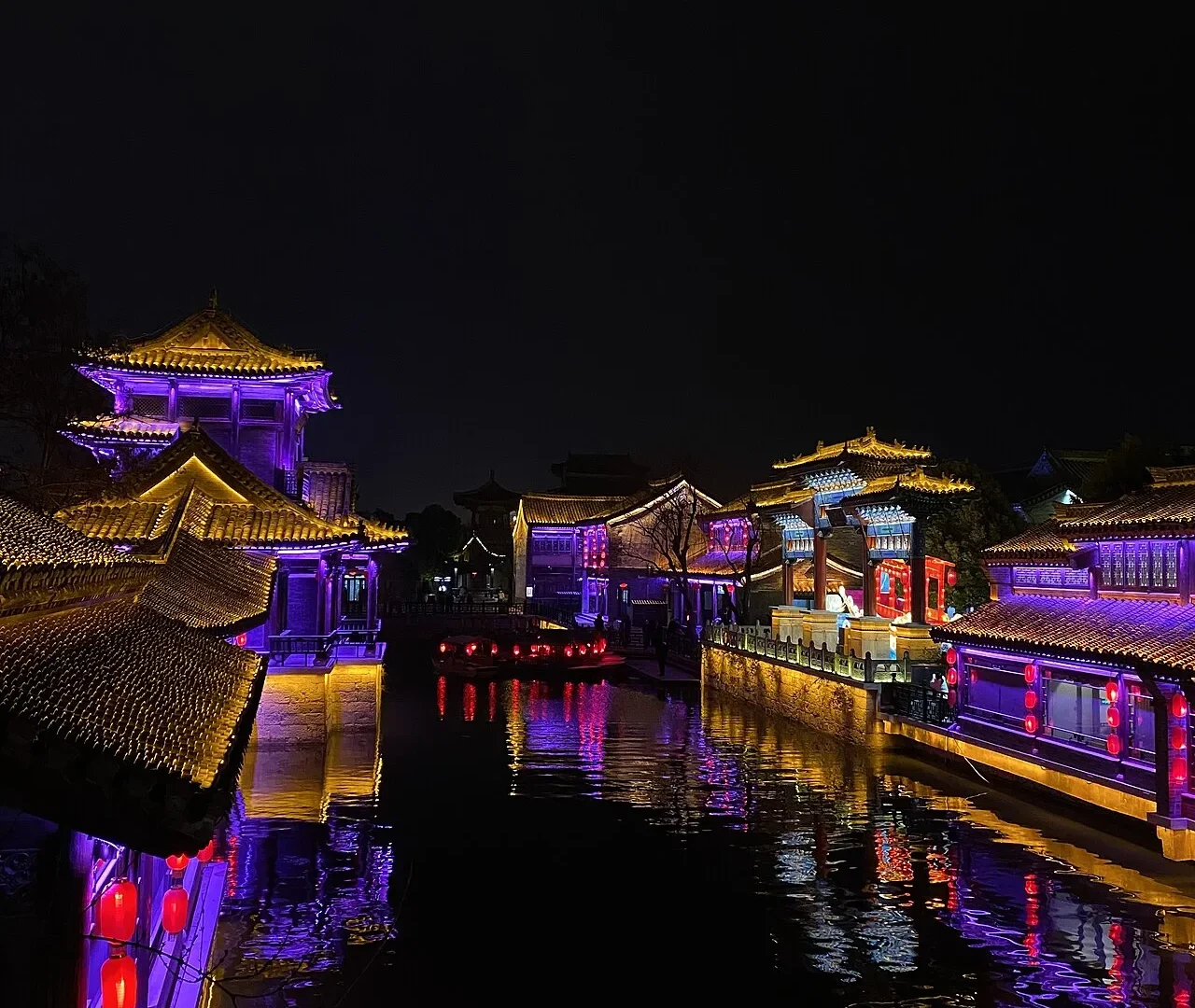
The night in Taierzhuang Ancient Town begins as the lanterns light up one by one. I glide through the water streets on a sculling boat, the oars breaking the reflection of countless lights on the river as the horse-head walls and stone bridges recede behind me. The histories of war and the tales of the trading port I read about by day dissolve into the rhythm of the oars and the play of shadows by night. This water town, reborn from the flames of war, only reveals its most moving visage once darkness falls.
1. Location Overview: Taierzhuang Ancient Town is located in the Taierzhuang District of Zaozhuang City, Shandong Province. Situated at the center of the Beijing-Hangzhou Grand Canal and at the junction of Shandong, Jiangsu, Henan, and Anhui provinces, it has been a vital throat of north-south water transport since ancient times. The reconstructed ancient town covers approximately two square kilometers, featuring a network of ancient riverbeds, docks, water streets, and alleys. It preserves a three-kilometer section of the original Grand Canal, earning it the titles of “Living Canal” and “The Only Surviving Heritage Village of the Beijing-Hangzhou Grand Canal” from the World Tourism Organization. As a National 5A Tourist Attraction and the core cultural landmark of Zaozhuang, it forms part of the city’s canal culture map alongside Weishan Lake and Guanshi Pomegranate Garden. The town is over 60 kilometers from downtown Zaozhuang (about an hour’s drive) and is equally accessible from Xuzhou, having historically served as a shared canal gateway for both cities. The town is divided into several functional zones featuring eight major scenic areas and dozens of sites, including the Battle Site Park, the Official’s Mansion, the Zhaohuang Museum, and Boat-shaped Street; a single day’s visit is merely a glimpse. It is also the site of the Cross-Strait Exchange Base, and the historical archives of Li Zongren, who commanded the Battle of Taierzhuang, are located here.
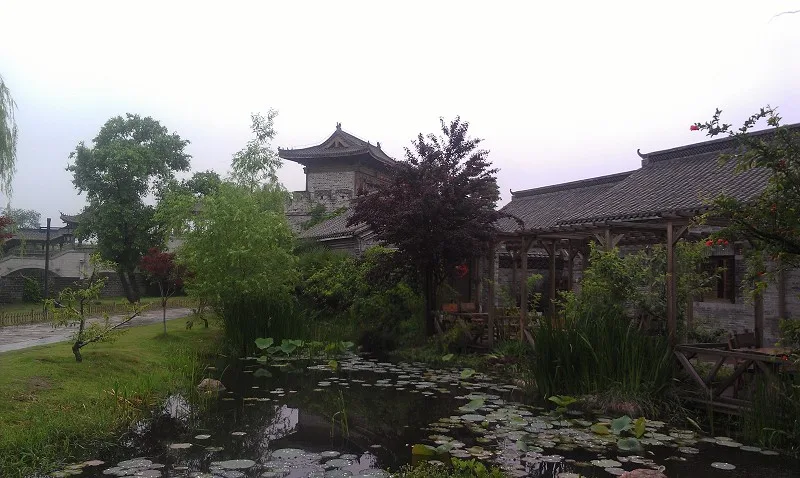
2. Cultural Heritage: Taierzhuang originated during the Qin and Han dynasties, developed during the Tang and Song, and flourished during the Ming and Qing. During the peak of the canal trade in the Ming and Qing dynasties, ships from the south and horses from the north converged, bringing a wealth of goods that led Emperor Qianlong of the Qing Dynasty to bestow upon it the title of “The Number One Village Under Heaven.” Merchants from across the country brought diverse construction techniques, resulting in the coexistence of eight architectural styles—including Northern Courtyards, Southern Shandong residences, Huizhou style, Southern Fujian style, and water-town architecture—turning the town into an open-air museum of Chinese residential architecture. In the spring of 1938, the Battle of Taierzhuang took place here. While the Chinese army of the Fifth War Area achieved a major victory on the frontal battlefield of the War of Resistance, the town was reduced to ruins. Today, over fifty battlefield ruins still bear the scars of bullets, and the Taierzhuang Battle Memorial Hall in the west houses over 2,000 artifacts, photos, and historical documents. Reconstruction began in 2009 on the original site and was completed in 2013, preserving the original layout of streets and waterways. Much like Warsaw in Poland, it is a city rebuilt from the ruins of World War II, allowing the prosperity of the canal port and the memory of the war to coexist within the same waterways.
3. Highlights: The primary attraction of the town is the water. Taking a sculling boat through the water streets, passing ancient docks, embankments, and over a dozen bridges and locks, brings the “Living Canal” to life. There are two ways to experience the cruises: the inner-river sculling boats navigate the narrow alleys to showcase riverside homes and quaint bridges, while the outer-river pleasure boats follow the main channel of the Grand Canal to showcase the grandeur of the river and the surrounding countryside; it is recommended to try both. Secondly, explore the architecture: the Official’s Mansion, Shanxi Guild Hall, General’s Office, and Lanting Study are lined up, offering a different architectural style at every turn. Thirdly, delve into military history: in the Battle Site Park, bullet-riddled walls, wartime photographs, and physical exhibits provide a solemn weight to the delicate water town. Finally, experience the local life and intangible cultural heritage: Boat-shaped Street is home to the China Canal Zhaohuang Museum and the Intangible Cultural Heritage Expo, where Liuqin opera, Canal Drums, and shadow puppetry are performed year-round. The coexistence of diverse religious buildings—such as the Guan Di Temple, Tianhou Temple, Mosque, and Mount Tai Temple—is a rare sight. After dark, the light show on the city gate illuminates the walls, “Steel Flowers” (molten iron sparks) fly like stars at Fuxing Square, and lights reflect across the river—the night view is the soul of Taierzhuang.
4. Visitor Information: Opening Hours: The town is open 24 hours. Night touring is the highlight; guests staying in town can enter and exit freely using their inn room cards. Ticket Prices: Adult tickets are 118 RMB (valid for two days). Minors under 18 and full-time college students are free with valid ID. Seniors over 60, active and retired military personnel, and people with disabilities are free per national policy. Under the “One City” benefit policy, residents of Zaozhuang, Linyi, Jining, Heze, Xuzhou, Lianyungang, and Suzhou can purchase tickets for 40 RMB with their ID. Sculling boats, pleasure boats, sightseeing cars, and guide services are charged separately. For seasonal discounts (e.g., with high-speed rail tickets), please refer to official announcements. Inquiry Hotline: 0632-8116666. Transportation: Take the high-speed rail to Zaozhuang Station, then take BRT B10 directly to the Taierzhuang Visitor Center (approx. 1.5 hours). For those driving, navigate to the East, West, or North Gates of “Taierzhuang Ancient Town,” where parking is available. During holidays, crowds are large; advance booking via official channels is recommended. The streets are mostly bluestone and can be slippery when raining, so please wear comfortable, non-slip shoes. There is significant walking involved; seniors and children may rent sightseeing cars for short trips.
5. Travel Guide: A two-day, one-night trip is recommended to fully appreciate the town. Day 1: Enter through the East Gate in the afternoon. Visit the Battle Site Park and the Official’s Mansion first to understand the history and architecture. In the evening, head to Boat-shaped Street for the Zhaohuang Museum and heritage performances. After dark, take a sculling boat through the water streets and watch the “Steel Flowers” and light show at Fuxing Square. Stay overnight in a riverside inn. Day 2: Wake up early to photograph the empty alleys and the canal in the morning mist before the crowds arrive. Visit the Shanxi Guild Hall and the General’s Office, then leave the town leisurely in the afternoon. Best photo spots include the water street bridges, the night views of Fuxing Pavilion and Anlan Gate, and the fan-shaped intersection of Boat-shaped Street. Upon entry, pick up a map at the Visitor Center and check the performance schedule—most shows run at fixed times, and some are closed on Tuesdays. Families should spend more time at the heritage workshops and on boats; study groups are encouraged to hire guides to dive deep into the battle and canal history; silver-haired travelers are advised to explore slowly during the day and avoid the nighttime peak crowds.
6. Best Time to Visit: Taierzhuang is suitable for all seasons, with spring and autumn being the most comfortable. Summer is best for the evenings, as the river breeze is cool and the scent of lotus fills the air. Winter brings a unique charm when snow falls on the ancient town. During traditional festivals like the Spring Festival and Lantern Festival, the town is most vibrant with lantern fairs and folk activities. For your itinerary, you can combine it with Weishan Lake Wetland, Guanshi Pomegranate Garden, and Baoduge for a 2-3 day Zaozhuang tour. Visitors from Xuzhou can combine it with Yunlong Lake and the Xuzhou Han Culture sites for a “Canal and Han Culture” route; those with limited time can manage a round trip from Xuzhou in one day. For local flavors, do not miss Zaozhuang spicy chicken, vegetable pancakes (caijianbing), Daylily Beef Noodles, and the Canal Fish Feast. For souvenirs, choose Yicheng pomegranates or willow-woven handicrafts. Try to stay in a riverside inn inside the town; waking up to the river view before the crowds arrive is the most rewarding experience. In short, Taierzhuang deserves two days and one night to slowly read its three layers of time: the water, the war, and the daily hustle and bustle.