Zaozhuang · Museums & Academia
Zaozhuang Canal Museum
Standing at the entrance of Chuanying Street, you are greeted by walls adorned with “Zhaohuang”—traditional shop signs. Wine flags, medicine banners, and cloth placards flutter gently in the breeze, as if a bustling market street from the Ming and Qing dynasty Grand Canal has been transported directly before your eyes. When locals refer to the “Canal Museum,” they are most often talking about the collection of exhibition halls tucked away in the Taierzhuang Ancient City, and the Zhaohuang—the traditional signage—is its most vivid chapter.
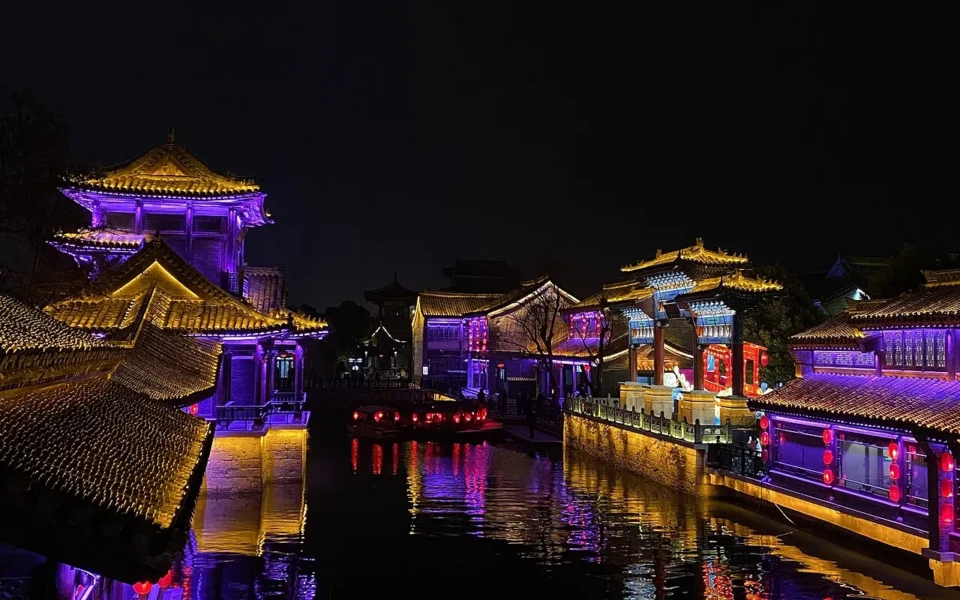
1. Location Overview: Strictly speaking, Zaozhuang’s canal exhibits are not concentrated in a single large building. The “Zaozhuang Canal Museum” that tourists refer to is actually a group of canal-themed exhibition halls within the Taierzhuang Ancient City, represented primarily by the China Grand Canal Zhaohuang Museum. This museum is located at the head of Chuanying Street. Surrounded by water on four sides and shaped like a giant ship anchored on the canal, Chuanying Street is the most recognizable district in the ancient city and a core node that cannot be missed on any tour. Located in the middle section of the Beijing-Hangzhou Grand Canal, Taierzhuang was a transport hub and commercial center during the Ming and Qing dynasties. These exhibition halls are scattered among the city’s historic buildings and can be reached while exploring the town. In Zaozhuang’s cultural tourism landscape, these museums—alongside the water streets and the battle sites—extend the prosperity of the “Number One Village Under Heaven” from the streetscapes into the display cases, providing the best window for understanding canal civilization. The ancient city hosts far more than just the Zhaohuang Museum; the Lieutenant General’s Office, the Museum of Honest Officials, various academies, guild halls, and battle site exhibits are spread throughout. The city itself is, in essence, an open-air canal museum.
2. Cultural Context: The Beijing-Hangzhou Grand Canal is the longest and largest ancient canal in the world and was listed as a UNESCO World Heritage site in 2014, with the Taierzhuang section serving as a vital artery. During the Wanli era of the Ming Dynasty, the opening of the-shun Canal diverted northbound grain ships through Taierzhuang, leading to the town’s rapid ascent. During the Ming and Qing periods, southern ships and northern horses converged here. Grain, salt, cloth, and medicinal herbs were distributed along the river, with shops, guild halls, and docks lining the banks, creating a scene of “endless merchants and markets that never sleep,” earning it the title of the “Number One Village Under Heaven.” Zhaohuang were the commercial advertisements of that era: wine shops flew flags, pharmacies hung banners, and cloth stores displayed placards. Pedestrians recognized the sign before they ever stepped through the door. Traditional Zhaohuang followed strict formats; some used text, while others used physical objects—oversized wine gourds, scissors, or keys—so that even illiterate travelers knew exactly what was being sold. The China Grand Canal Zhaohuang Museum is the first specialized museum of its kind in China, established with the help of national industrial and commercial administration departments. It uses the unique angle of “time-honored brand” signage to systematically present the commercial civilization along the canal. Other halls in the city complement this with grain ship models, documents, and videos, illustrating the transport system and the lives of the boatmen, turning the invisible logistics of the canal into the visible hustle and bustle of the marketplace.
3. Highlights: The core attraction of the Zhaohuang Museum is its collection of over 500 authentic signs from the Ming Dynasty to the Republic of China era. Banners and placards from pharmacies, wine shops, cloth stores, and tea houses are hung in rows with varying colors and calligraphic styles, creating a three-dimensional encyclopedia of ancient industries. The museum also features recordings of sixty traditional street cries—the sounds of scissor-sharpeners, knife-grinders, and tofu sellers. Close your eyes, and the sounds of the canal wharf rush back to you. Leaving the museum, Chuanying Street itself is worth a close look: the wooden doors along the street feature 448 boat-shaped carvings, symbolizing wishes for passing fleets to have a smooth voyage. In the center of the street, the music pavilion behind the opera stage often hosts performances of Liuqin Opera. This street also houses the city’s Intangible Cultural Heritage Expo, where workshops for oil-paper umbrellas, wood carving, and kites are set up for visitors to watch and try. By connecting the Zhaohuang Museum with the battle sites, academies, and guild halls, a simple water street gains three layers of meaning: commerce, history, and art. The exhibits are compact and refined with a light pace, making it a vivid teaching tool for children to learn about ancient commerce and “ancient logistics.”
4. Visitor Information: Ticket Prices: The China Grand Canal Zhaohuang Museum and other halls within the ancient city are included with the Taierzhuang Ancient City entrance ticket; separate tickets are generally not required, though some special exhibitions may vary according to official notices. Opening Hours: The halls operate according to the city’s hours, generally from 9:00 to 18:00. Some halls may have temporary adjustments; please check official announcements. Transportation: First, arrive at Taierzhuang Ancient City. Take a high-speed train to Zaozhuang Station, then take the BRT B10 bus to the Taierzhuang Visitor Center, or drive to the parking lots at the city gates. Once inside, walk to Chuanying Street to find the Zhaohuang Museum; no additional transport is needed. Suggested visit duration is 30 to 90 minutes. Tips: Most exhibits are authentic antiques; please do not use flash photography. Group guides can be booked at the Visitor Center to combine the museum visit with a general city tour for a deeper understanding. Rainy days are actually a great time to visit as the city is less crowded, allowing for a more detailed look at the exhibits.
5. Travel Tips: We recommend integrating the museums into the main city route: enter through the East Gate, visit the Zhaohuang Museum on Chuanying Street first to match the signs with their industries, then stroll along the water street to see how the real shop signs echo what you learned in the museum. Follow this with the battle sites and the Dafu Residence to create a complete “Water—Commerce—History” itinerary. The best photo spots are the arrays of banners inside the museum, the fan-shaped intersection of Chuanying Street with the canal reflections, and the exhibit corners framed by traditional flower-patterned windows. When guiding children, focus on the function of Zhaohuang as ancient advertising and Taierzhuang’s role as a hub. Let them try to “read” the signs and guess the industry for maximum interaction. Families can also play a game: identify a sign in the museum first, then race to find the corresponding shop sign on the street. For timing, visit the museums during the day to see the details clearly—mornings are less crowded and have better light. After dark, focus on the lanterns and boat rides. If time permits, the Taierzhuang Battle Memorial Hall to the west is free and provides a great historical contrast to the commercial focus of the Zhaohuang Museum, allowing you to experience both the prosperity and the hardships of Taierzhuang in one day.
6. Best Time to Visit: As the museum is primarily indoors, it is suitable for all seasons. During rainy days, extreme heat, or bitter cold, it serves as an ideal buffer for your city tour. Do not miss the intangible cultural heritage performances, such as the boatmen’s chants, during festivals. If visiting during the Lantern Festival, you can finish the museum tour during the day and step out just as the city lights up, experiencing a seamless transition between the two sides of Taierzhuang. For your itinerary, this can be combined with the Taierzhuang Ancient City and Weishan Lake Wetlands for a Grand Canal cultural tour. If coming from Xuzhou, you can link the Xuzhou Han Culture Scenic Area and Yunlong Lake to experience a chronological progression from the Han Dynasty to the Canal era. Local flavors to try include Zaozhuang spicy chicken, vegetable pancakes, daylily beef noodles, and the Canal Fish Feast. For souvenirs, besides Yicheng pomegranates and willow weaving, fridge magnets and bookmarks featuring Zhaohuang patterns are the most meaningful mementos. Though the museum is small, it is the key to understanding why Taierzhuang flourished because of the canal—once you have seen the Zhaohuang, every corner of the water street makes sense.