Shanghai · City Landmarks
Nanjing Road Pedestrian Street
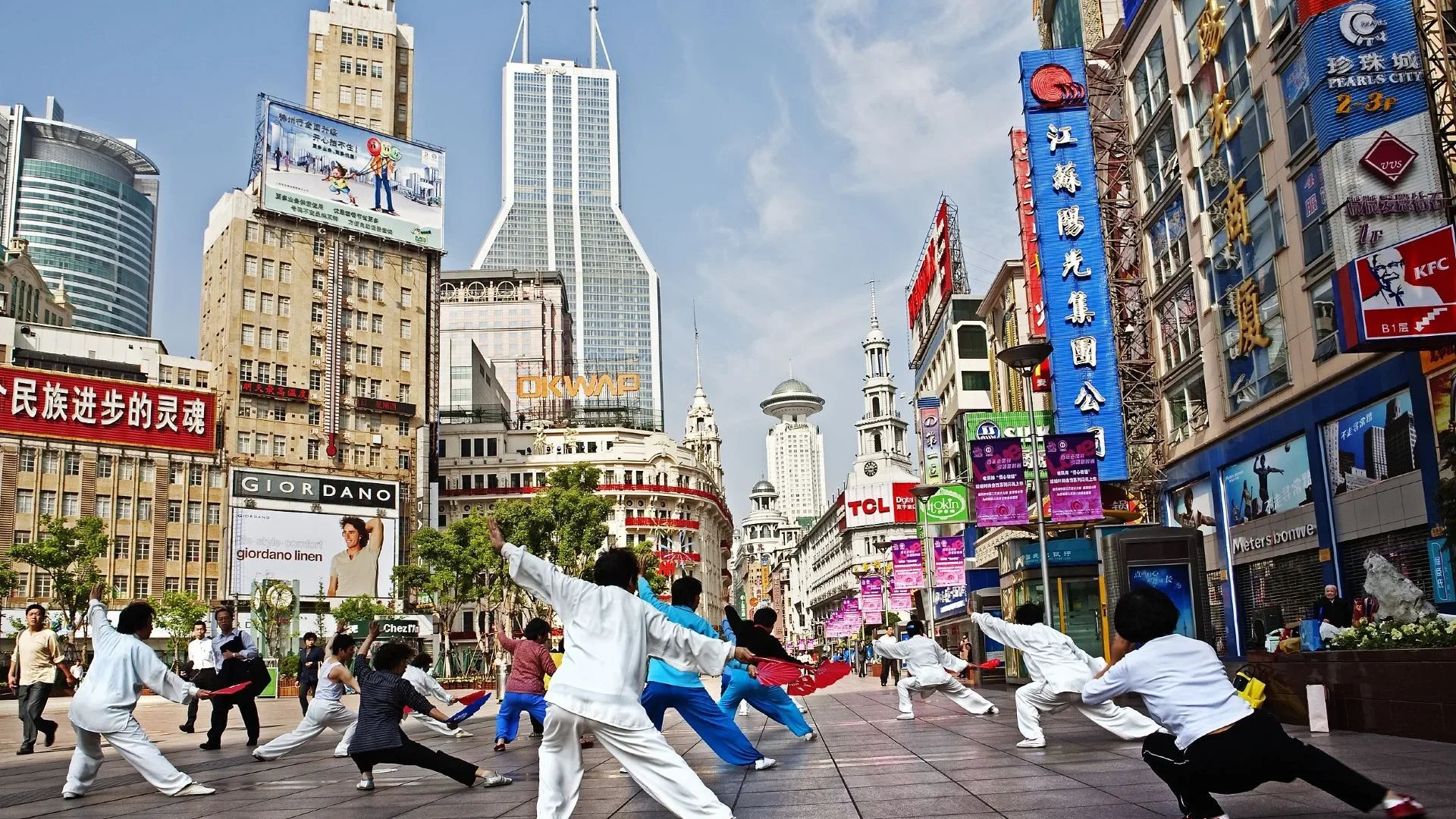
At six in the evening, the neon signs of Nanjing Road light up one by one. Turning off the river breeze of the Bund and into this street, I see the green dome of the Fairmont Peace Hotel to my left and crowds pouring out of the First Food Store to my right, while a “Dang Dang” tram slowly rolls past with its ringing bell. Shanghai has laid over a century of commercial history across this one-kilometer stretch of road; no research is needed—just one walk, and you have the city’s pulse.
1. Location Overview: Nanjing Road Pedestrian Street is located in the Huangpu District of Shanghai. It is the pedestrian section of Nanjing East Road, stretching from Middle Xizang Road in the west to East Zhongshan 1st Road in the east, connecting directly to the Bund. When it first opened in 1999, it spanned from Middle Xizang Road to Middle Henan Road with a total length of 1,033 meters. After extending east to the Bund in 2020, the entire pedestrian street now runs from People’s Square all the way to the banks of the Huangpu River. To the north lies People’s Square, and to the south are the Fuzhou Road Cultural Street and the Yuyuan shopping area. At the eastern end, the Lujiazui skyline sits just across the river. Nanjing East Road Station (Metro Lines 2 and 10) is located in the middle of the street, while People’s Square Station (Lines 1, 2, and 8) guards the western end, making this the most accessible stop in any Shanghai itinerary regardless of where you are coming from.
2. Cultural Context: The commercial DNA of Nanjing Road dates back to the Garden Lane area developed in 1851. After the port opened, foreign firms and shops grew along the street, reaching a golden age in the early 20th century. The “Four Great Department Stores”—Sincere (1917), Wing On (1918), Sun Sun (1926), and The Great World/Da Xin (1936)—opened in succession, elevating the area to the “Number One Commercial Street in China.” The phrase “one basket on Nanjing Road” (meaning one could buy everything in a single basket) is a shared memory for old Shanghainese. These four stores shared a common trait: most of their founders were overseas Chinese from Xiangshan, Guangdong. Ma Yingbiao of Sincere introduced the slogan “Fixed Price from the Start,” replacing the old habit of haggling with clear price tags, marking a turning point for modern retail in China. The Guo brothers of Wing On followed suit, erecting a six-story building on the south side of the street to compete with Sincere, and later adding the 22-story Wing On New Mansion in 1933, whose tower remains a landmark of the Nanjing Road skyline today. Sun Sun attracted customers with rare air conditioning, while Da Xin introduced one of Asia’s first escalators. The twenty-year rivalry between these four giants brought “modern” conveniences—fixed pricing, AC, and escalators—into the daily lives of Chinese people. Following the founding of the People’s Republic of China, the street remained a national commercial bellwether. On September 20, 1999, in celebration of the 50th National Day, the western section was transformed into an all-weather pedestrian street, the first of its kind in Shanghai. On September 12, 2020, the eastern extension opened, seamlessly linking the street with the Bund waterfront. The evolution of this single street is a microcosm of 170 years of Shanghai’s commercial civilization.
3. Highlights: The most enjoyable part of Nanjing Road is the array of “Time-Honored Brands” (Lao Zi Hao): Shen Da Cheng’s rice cakes, Tai Kang Food’s Wannianqing biscuits, Lao Feng Xiang’s jewelry, the ocean of snacks at the First Food Store, Zhen Lao Da Fang’s fresh meat mooncakes, Shao Wan Sheng’s marinated delicacies, and Sanyang’s regional specialties. You can gather all the flavors of old Shanghai within one kilometer. The architecture itself is an exhibition: the Wing On Department Store and the Shanghai No. 1 Department Store stand at the street entrance, their Art Deco facades well worth a closer look, while the Fairmont Peace Hotel at the eastern end is a landmark of the Bund’s “International Architecture Exhibition.” The “Dang Dang” trams weaving through the crowds are a scenic highlight; riding one slowly while observing the signs on either side offers a nostalgic retro vibe. After dark, the street erupts in neon, merging with the light show of the Bund. The Century Square area is a natural spot for street viewing, resting, and watching street performances. While walking, remember to look up: the tower atop the Wing On building is called Qiyun Pavilion, once the highest vantage point overlooking the street. Diagonally opposite, the Sincere building now houses the Shanghai Fashion Store, yet its Baroque facade and corner dome remain exactly as they were in 1917. The two old buildings face each other across the street, marking the original site of the department store wars from a century ago.
4. Visitor Information: The pedestrian street is an open public area, open 24/7 with no admission fee. Most malls and shops operate from 10:00 to 22:00, though hours may vary by merchant. Popular time-honored shops often have long queues during holidays; it is recommended to avoid the midday and evening peaks. Transport Guide: Take Metro Line 2 or 10 to Nanjing East Road Station to arrive in the middle of the street, ideal for shopping and visiting the Bund. Take Line 1, 2, or 8 to People’s Square Station and walk east to reach the western end. Trams operate within the district; please check on-site for current fares. Reminder: Crowds are immense during public holidays and light show hours; please keep a close eye on your belongings. The street is mostly paved with stone, which can be slippery when raining, so wear comfortable shoes.
5. Travel Tips: My usual route is to enter from the Bund at dusk: first enjoy the river view and the Lujiazui skyline, then stroll slowly from east to west. Stop at the First Food Store and Shen Da Cheng for souvenirs, take a tram ride to save your legs, rest at Century Square, and finish at People’s Square. If time permits, you can then visit the Shanghai Museum or a performance at the Shanghai Grand Theatre. If visiting during the day, reverse the order: explore the cultural venues around People’s Square in the morning, shop in the afternoon, and arrive at the Bund in the evening for the night view. If you have specific shopping goals, head straight for the cluster of time-honored brands in the middle section to finish your list within an hour. For those just visiting for the “check-in” experience, I suggest splitting the street, the Bund, and Yuyuan into two half-days: pair Nanjing Road with the Bund, and Yuyuan with the City God Temple. Tailoring for groups: For parents, narrow the shopping list to a few brands like Shen Da Cheng and Zhen Lao Da Fang, then rest at Century Square; the total walk is just over a kilometer and is not taxing for seniors. For children, the trams and the snack counters at the First Food Store are guaranteed hits; walking to the Bund for the lights in the evening completes their first impression of Shanghai. For first-timers with only two hours, enter from People’s Square, hit only the First Food Store for shopping, walk one way to see the street, and take the tram back to see the crowds—two different perspectives for one trip.
6. Best Time to Visit: The street is suitable for all seasons. Spring and autumn offer the most comfortable weather for long strolls. In winter, as the Lunar New Year approaches, the atmosphere of the New Year markets is at its peak, and the crowds at the time-honored shops bring out the authentic “flavor” of an old Shanghai New Year. Summer days are hot, so I suggest planning your visit for after dusk. The night is when Nanjing Road truly shines: neon, the Bund’s lights, and the river breeze combine for a cool, photogenic experience. During major holidays like National Day or New Year’s Eve, there are themed decorations and light shows, but crowds reach their peak. Families with seniors or children should avoid the evening rush hour or find indoor resting spots in the malls lining the street.