Tianjin · Ancient Towns & Old Streets
Five Great Avenues Cultural Tourism District
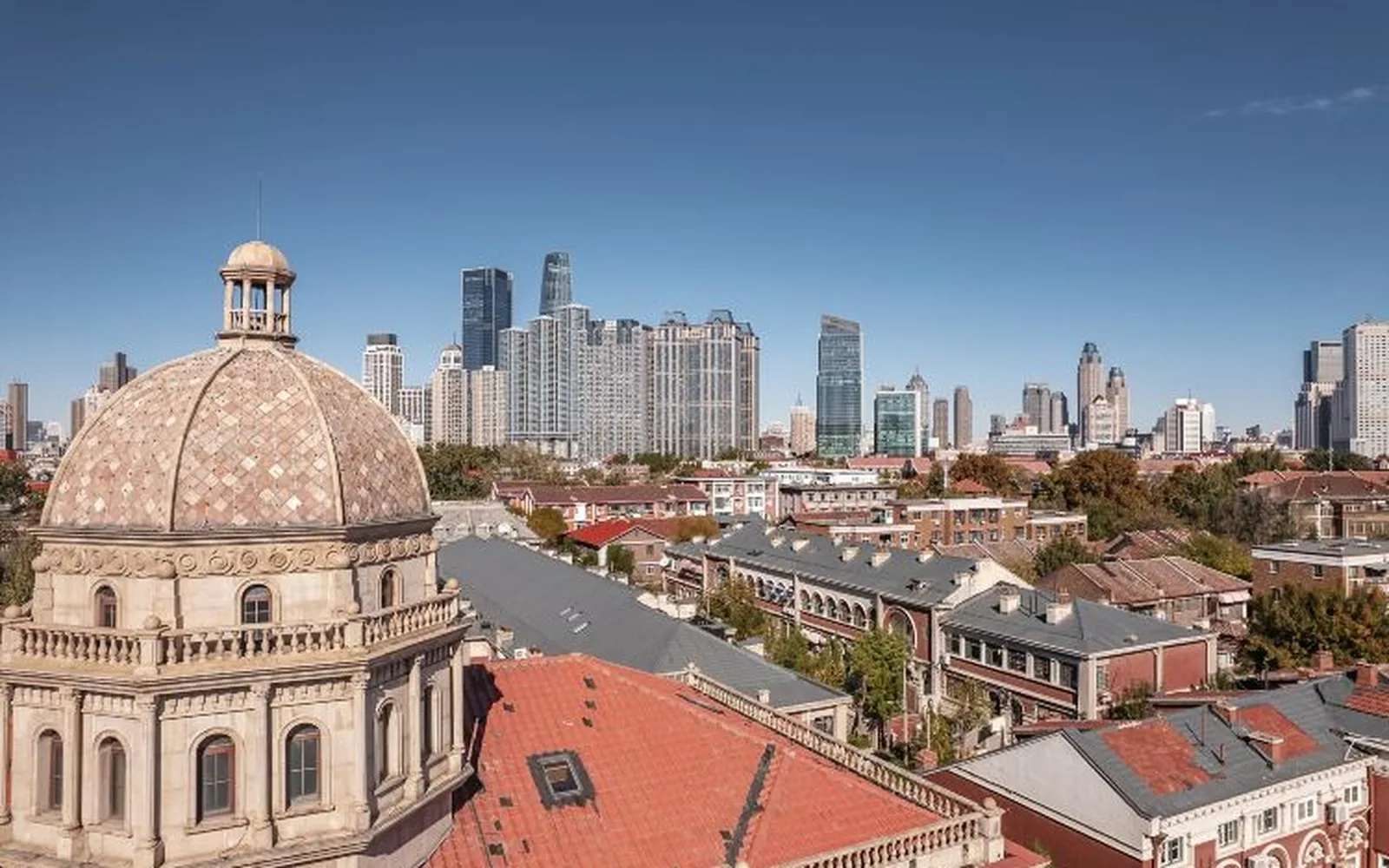
Renting a shared bike and gliding into Munan Road, the street is so quiet that all you can hear is the rustle of plane tree leaves. One by one, Western-style villas emerge from behind ornate wrought-iron fences, like flipping through a beautifully bound photo album of the Republic of China era. The Five Great Avenues has no gates and no mandatory “must-see” checklist; its charm lies entirely in the act of slowing down.
1. Location Overview: The Five Great Avenues Cultural Tourism District is located in the Heping District of Tianjin. Situated in the city center, it comprises five main streets—Machang Road, Munan Road, Dali Road, Changde Road, and Chongqing Road—along with 22 surrounding streets, with Minyuan Plaza serving as the hub and central gathering point. The northern side of the district borders the Xiaobailou commercial area, the west neighbors the Tianjin Concert Hall, and the south connects to the wide green belt of Machang Road. Together with Tianjin Railway Station and the Italian Style Town, it forms part of the urban strolling zone on the west bank of the Haihe River. The district preserves over 2,000 garden-style villas of varying architectures. Architectural vocabularies from the UK, France, Italy, Germany, and Spain coexist within a few blocks, earning the area the nickname “International Architecture Exposition.” As many residents still live here, it remains a living old town rather than a mere movie set.
2. Cultural Context: The Five Great Avenues area was originally a high-end residential district of the British Concession. In the 1920s and 30s, it became a enclave for some of the most influential figures in modern Chinese history: members of the Qing imperial family, presidents and premiers of the Beiyang Government, industrialists, and cultural celebrities all bought land and built homes here. The sequence of completed villas transformed the neighborhood into the most dazzling Western-style community in Northern China. Former residences of famous figures, such as Prince Qing’s Mansion, the former residence of Wellington Koo, and the former residence of Zhang Xueliang, are scattered throughout the alleys; behind every door lies a piece of modern history. Minyuan Plaza on Chongqing Road was formerly the Minyuan Stadium, completed in 1926 and once a vital modern sports venue in Northern China. It has since been converted into a sunken public square, where Roman-style colonnades embrace a lawn, serving as the district’s “living room.” Around 2013, the area began operating as the Five Great Avenues Cultural Tourism District and was rated as a National 4A Tourist Attraction, completing its transition from a concession residential area to an urban cultural landmark. Digging deeper: this area was originally a swampy marshland by the Haihe River. Between 1919 and 1926, the British Concession Municipal Council used silt dredged from the river to fill the hollows and build roads, providing the foundations for these clusters of villas. The street names themselves are a history of the concession—Machang Road was named for the road leading to the British racecourse; Munan Road was originally Hong Kong Road, Dali Road was Singapore Road, Changde Road was Colombo Road, Chongqing Road was divided into Cambridge Road and Edinburgh Road, and Chengdu Road was London Road. These were renamed after southwestern Chinese cities after 1949. In 2013, 39 representative buildings in the district were listed as the seventh batch of Major Historical and Cultural Site Protected at the National Level, giving this “filled-in neighborhood” official national status.
3. Highlights: The primary attraction is always the villas themselves. The “Geda Building” (Lumpy Building) features exterior walls covered in kiln-fired “lumpy” bricks, a rough texture unique to the street. From the blend of Chinese and Western styles at Prince Qing’s Mansion to the British terraced houses of the Xiannong Courtyard and the pointed spires of the former Consulate of Manchukuo, every building tells a story. Prince Qing’s Mansion is worth a longer stop: it was originally a private residence designed and supervised by Xiao Dezhang, the Chief Eunuch of the late Qing Dynasty, and was among the finest Chinese-owned buildings in the British Concession. It was later purchased by Prince Qing (Zai Zhen), who moved his family in. Its well-preserved courtyard, blending Eastern and Western styles, is one of the few former residences in the Five Great Avenues where visitors can enter the inner courtyard for a closer look. Munan Road is widely considered the essence of the area, boasting the highest density of former residences and a fragrance of magnolia and crabapple blossoms in bloom. The colonnades of Minyuan Plaza house a visitor center, cafes, and creative shops, making it the best starting and resting point. For guided insights, take a sightseeing carriage from Minyuan Plaza; the carriage drivers double as guides, bringing the origins of each building to life—one loop is equivalent to reading half a book on Tianjin’s modern history. The Five Great Avenues History Museum is tucked away in the district, displaying antique furniture, old photographs, and daily objects, perfect for those curious about that bygone era.
4. Visitor Information: The district is an open historical neighborhood; it is open 24/7 with no entrance fee, and visitors are free to explore on foot or by bike. Sightseeing carriages depart from Minyuan Plaza, operating approximately from 8:30 to 18:30, costing around 80 RMB per person (please check on-site for current schedules and pricing). The Five Great Avenues History Museum is open from 9:00 to 17:00 with an entrance fee of 25 RMB. Some former residences are open independently and charge a fee; please refer to individual announcements. Transportation: Take Metro Line 1 to Xiaobailou Station or Yingkou Road Station, and it is just a few minutes’ walk to the edge of the district. Transferring at Yingkou Road Station via Line 1 or Line 3 is also convenient. Reminder: This is a residential area. When viewing the exteriors of former residences, please do not enter private courtyards, avoid loud noises, and be mindful of residents when taking photos. Some residences are only open for exterior viewing; do not list them as “must-enter” items in your itinerary.
5. Travel Tips: A classic route starts at Minyuan Plaza: pick up a map at the visitor center, head west along Chongqing Road to see Prince Qing’s Mansion and the Geda Building, then turn into Munan Road to explore the residences one by one. Take a break at a cafe converted from a villa, then loop back to Minyuan Plaza via Dali Road and Changde Road. The entire walk takes about two hours. To save energy, start with the carriage tour to get a general layout and guided overview, then get off at the residences that interest you most for a closer look. Photography enthusiasts are advised to visit in the early morning or late afternoon, when low-angle light brings out the texture of the brick walls; the intersection of Munan Road and Dali Road is a classic vantage point. If time permits, combine the Five Great Avenues with Xiaobailou and the Italian Style Town for a full-day “West Bank of Haihe” itinerary: Five Great Avenues in the morning, Italian Style Town in the afternoon, and the Tianjin Eye at night for the river views. This flow is efficient and avoids backtracking. For different groups: those traveling with seniors should swap biking for walking and the carriage, limiting the trip to 2.5 hours. The benches under the colonnades of Minyuan Plaza and the roadside cafes are natural resting spots. Focus on exterior views on Munan Road so seniors don’t feel rushed. Architecture buffs should do the opposite: visit the Five Great Avenues History Museum first to establish concepts of eras and styles, then use the map to identify and compare examples of Eclecticism, Spanish style, and British terraced housing for a more rewarding experience. One final tip: opening days for some residences are irregular; check official announcements the day before to avoid wasted trips.
6. Best Time to Visit: Spring is the peak of the district’s beauty, with magnolias and crabapples blooming in sequence along Munan Road—the flower shadows against the villas are stunning in photos. Autumn is the most comfortable season for cycling, with plane trees turning yellow and ginkgoes turning gold under Tianjin’s signature crisp, clear skies. In summer, the lush canopy provides shade, keeping the streets relatively cool, though it is recommended to retreat to cafes or museums at noon and save outdoor exploring for mornings and evenings. Winter sees the fewest tourists, and the stone and brick lines of the villas appear sharper in the bleak air; basking in the sun under the colonnades of Minyuan Plaza is also quite pleasant. The atmosphere is liveliest during events like the Crabapple Flower Festival; during these times, it is recommended to arrange accommodation and carriage tours in advance.