Tianjin · Ancient Towns & Old Streets
Xibeijiao Food Street
A morning in Tianjin begins with a bowl of Guobacai at Xibeijiao. Before the sun has fully risen, the roadside of Xima Road is already shrouded in steam. With seasoned masters expertly wielding their ladles, savory braising sauce is poured over golden crisps, and the aroma of sesame paste wafts halfway down the street. Standing in the crowd with a bowl in hand, watching early risers eat until their foreheads bead with sweat—this is the unbreakable ritual of the people of Tianjin.
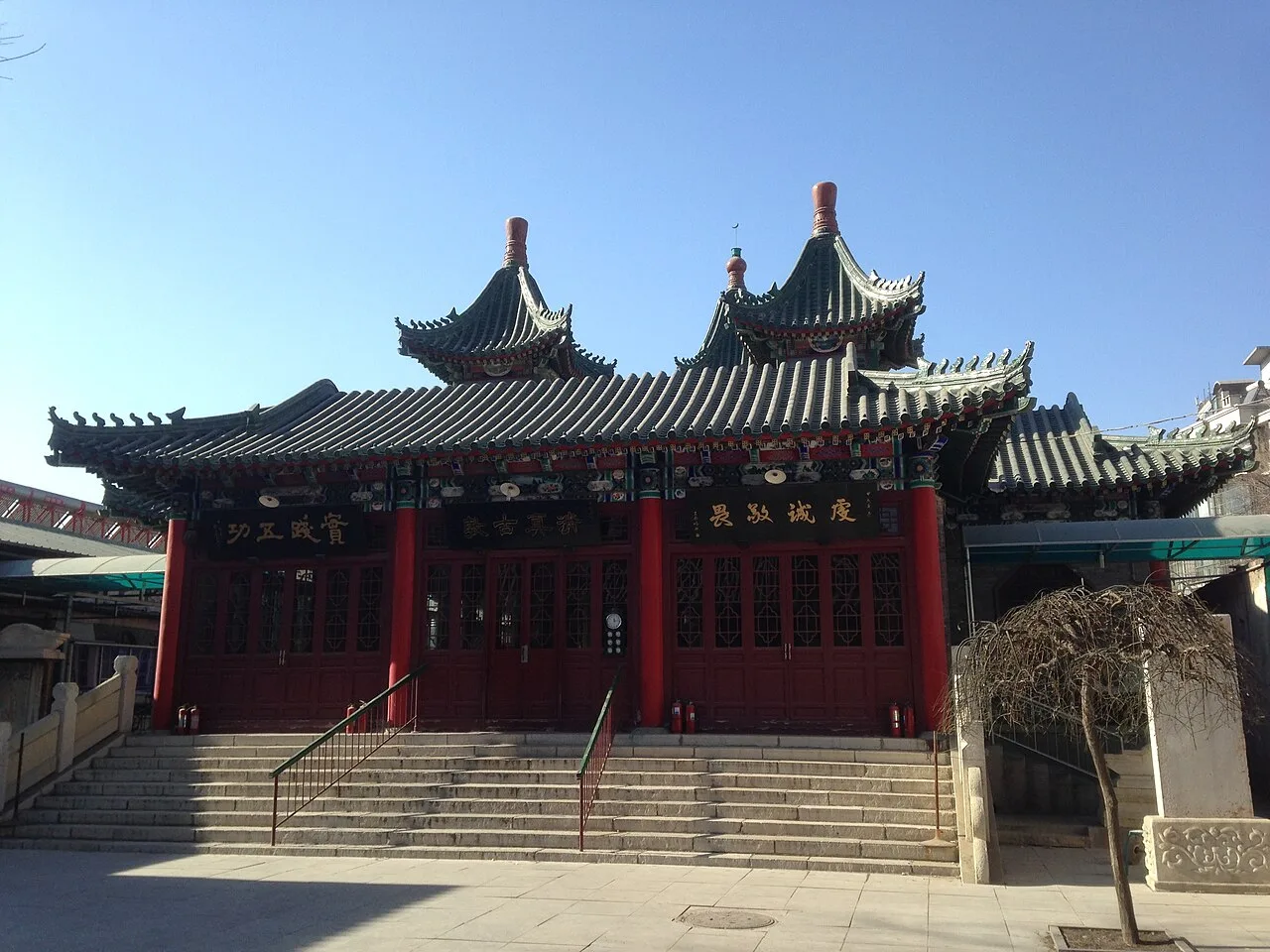
1. Location Overview:Xibeijiao is located in the Lingdangge Subdistrict of Hongqiao District, Tianjin. It derives its name from its position in the northwestern corner of Tianjin’s old city center. Its boundaries roughly extend from Jieyuan Road in the north, Xima Road in the east, Xiguan Avenue in the south, and Fuxing Road in the west, covering an area of approximately 0.35 square kilometers. Centered around the Halal Nan Da Mosque, this is a residential enclave for the Hui people. While the layout of the streets and alleys maintains the scale of the old city, its vibrant “street life” atmosphere is unmatched in the city. It is conveniently located next to the Xibeijiao Metro Station, just one stop from Tianjin West Railway Station. In January 2023, the Xibeijiao Characteristic District officially opened, and it quickly went viral across the internet, transforming from a local breakfast canteen into a “carb paradise” where tourists from across the country queue for a taste. Today, the district sees an average of 10,000 to 20,000 visitors daily, peaking at 80,000 to 100,000 during holidays, with crowds often stretching from dawn until noon. Located close to the Ancient Culture Street and the Drum Tower, it is part of the old city’s cultural circle. The most charming aspect of Xibeijiao is using breakfast as the starting point for a city stroll. A food guide map is available at the entrance marking the locations of famous shops, ensuring first-time visitors don’t miss the most popular stalls.
2. Cultural Heritage:The culinary foundation of Xibeijiao is half rooted in the history of the Hui community and half in the breakfast traditions of the canal wharves. Generations of Hui residents have lived around the Nan Da Mosque, preserving the norms and intricacies of Halal cuisine, which merged with local Tianjin flavors to create a unique gastronomic lineage. A century ago, wharf laborers relied on high-calorie breakfasts to sustain them through the day, leading to the rise of filling and affordable foods like Jianbing Guozi and Guobacai. Many stalls are family-run or passed down from master to apprentice, some operating for decades. Since the district’s official opening and subsequent fame in 2023, these traditional flavors have gained wider recognition. There are now over 200 food vendors in the district, including four “Time-Honored Brands of Tianjin,” as well as two municipal-level and eight district-level intangible cultural heritage projects. Vendors adhere to old crafts and rules: Jianbing is made only with mung bean flour, the sauce for Guobacai must be freshly mixed, and fried goods are cooked with precise temperature control. This insistence on “unchanging flavor” is why Xibeijiao grew from a quiet city corner into a signature landmark of the city.
3. Highlights and Must-Eats:At the top of the must-eat list is Jianbing Guozi—a thin crepe made from pure mung bean flour, topped with an egg, and filled with either a fried dough stick (guozi) or a cruller (guobi), then brushed with bean paste and sprinkled with scallions. Some discerning Tianjin locals even bring their own eggs to the stall, making the interaction part of the folk experience. Guobacai (pronounced “Gabacai” by locals) consists of mung bean and millet flour crisps cut into strips and topped with a sauce of sesame paste and fermented bean curd, garnished with cilantro and chili oil; it is the number one breakfast choice for locals. Juanquan are bean curd skins wrapped around bean sprouts and other fillings, then deep-fried and served in a flatbread for a crispy, filling treat. Renowned names such as Enqingcheng Li’s Guobacai, Zhengweizhai Guobacai (where the famous Mu Sangu is based), Jinfeng Laohuiji Jianbing Guozi, Ding’s Juanquan, Zhimeizhai Braised Beef, and the Nan Da Mosque Cake and Dried Tofu King are all brands worth the wait. Other notables include Erduoyan-style fried cakes (crispy outside, chewy inside), creamy braised tofu, Miancha (flour tea) with a sweet aftertaste, beef shaomai with thin skins and generous filling, and mutton offal soup that is fresh without being gamey, complemented by sweets like cake-dried tofu, steamed pear cake, and tea soup. Eating your way down the street is like flipping through a complete encyclopedia of Tianjin breakfasts. The common thread is “made fresh, eaten fresh”: crepes aren’t kept overnight, crisps are fried and served immediately, and sauces are mixed on the spot. If you leave the stall for ten minutes, the flavor diminishes—which is why Xibeijiao’s breakfast must be enjoyed on-site rather than via takeout.
4. Travel Tips:Xibeijiao is an open district with no entrance fee and is accessible all day, but its soul resides in the early morning. Most breakfast stalls open around 5:00 AM, with the peak bustle from 6:00 AM to 10:00 AM. Many popular shops sell out by mid-morning, so arrive early if you want the full experience. Some shops operate all day, but hours vary widely; please check on-site. An average spend of 10 to 50 RMB is enough to leave you satisfied. Transport: Take Metro Line 1 to Xibeijiao Station and walk a few minutes to the district; alternatively, take bus 12 or 588 to the Xibeijiao Metro Station (Xima Road) stop. The surrounding alleys are narrow with many one-way streets, making parking extremely difficult; public transport is strongly recommended. Practical tips: Expect queues at popular stalls; early weekday mornings are relatively quieter. Most vendors use QR code payments, though carrying a small amount of cash is safer. As this is a Halal food area, please respect Halal norms and do not bring non-Halal food into the shops. Dining is mostly standing or sharing tables, as the focus is on heat and atmosphere. Many shops selling braised beef and cake-dried tofu offer vacuum packaging, making them popular souvenirs for tourists.
5. Exploration Strategy:The best way to experience the street is to arrive between 6:00 AM and 9:00 AM before the lines become overwhelming, ordering small portions from multiple stalls. Recommended sequence: start with a bowl of Guobacai to line the stomach, then queue for Jianbing Guozi to watch the master spread the batter, apply the sauce, and add the cruller. Follow this with a shared portion of Juanquan and fried cakes, and finish with Miancha or steamed pear cake. Sharing among two or three people allows you to try five or six different varieties. The queuing itself is part of the scenery: listening to locals chat with vendors and watching tourists film the steaming stalls. For the best photos, head to Xima Road for the early morning queues and steam, or capture the moment Juanquan hits the hot oil or sauce is poured over the crisps. To avoid crowds, visit on a weekday morning; if visiting on a weekend, arrive before 7:00 AM. If you have extra energy, you can connect your trip to the Ancient Culture Street; it is a short walk south along Xima Road, where you will find the Erduoyan Fried Cake flagship store, Ningbo Clay Figures (Niren Zhang), and Yangliuqing Woodblock Prints, extending your breakfast into a half-day tour of the old city.
6. Best Time to Visit:It is suitable for all seasons, though each has its own charm. Spring and autumn offer pleasant weather, perfect for strolling through Ancient Culture Street or listening to a crosstalk (Xiangsheng) performance at the Drum Tower tea house after breakfast. Summer in Tianjin is hot, so early starts at 6:00 or 7:00 AM are advised, followed by a tour of the old city before returning to the hotel to avoid the midday heat. Winter is Xibeijiao’s “prime season”; hot braised dishes, fried cakes, and mutton offal soup warm the body, while the white breath of vendors and diners mixing with the steam creates the most vivid winter scene of old Tianjin. In terms of itinerary, Xibeijiao connects south to Ancient Culture Street and the Drum Tower, west to the Tianjin West Railway Station area, and north to Beining Park; Metro Line 1 links the eating and sightseeing of the old city. To compare breakfast styles, you can add Liaoning Road Snack Street or Xihu Road Food Street to your next morning’s itinerary. For locals, Xibeijiao isn’t a tourist attraction—it is daily life. For visitors, understanding the flavors of this street is the true way to enter the heart of Tianjin. Around the Lunar New Year, the festive atmosphere is strongest, with long lines for traditional braised meats and pastry gift boxes, where locals shopping for the holiday meet tourists, creating an atmosphere far more authentic than any shopping mall.