Tianjin · Gardens & Ancient Architecture
The Porcelain House
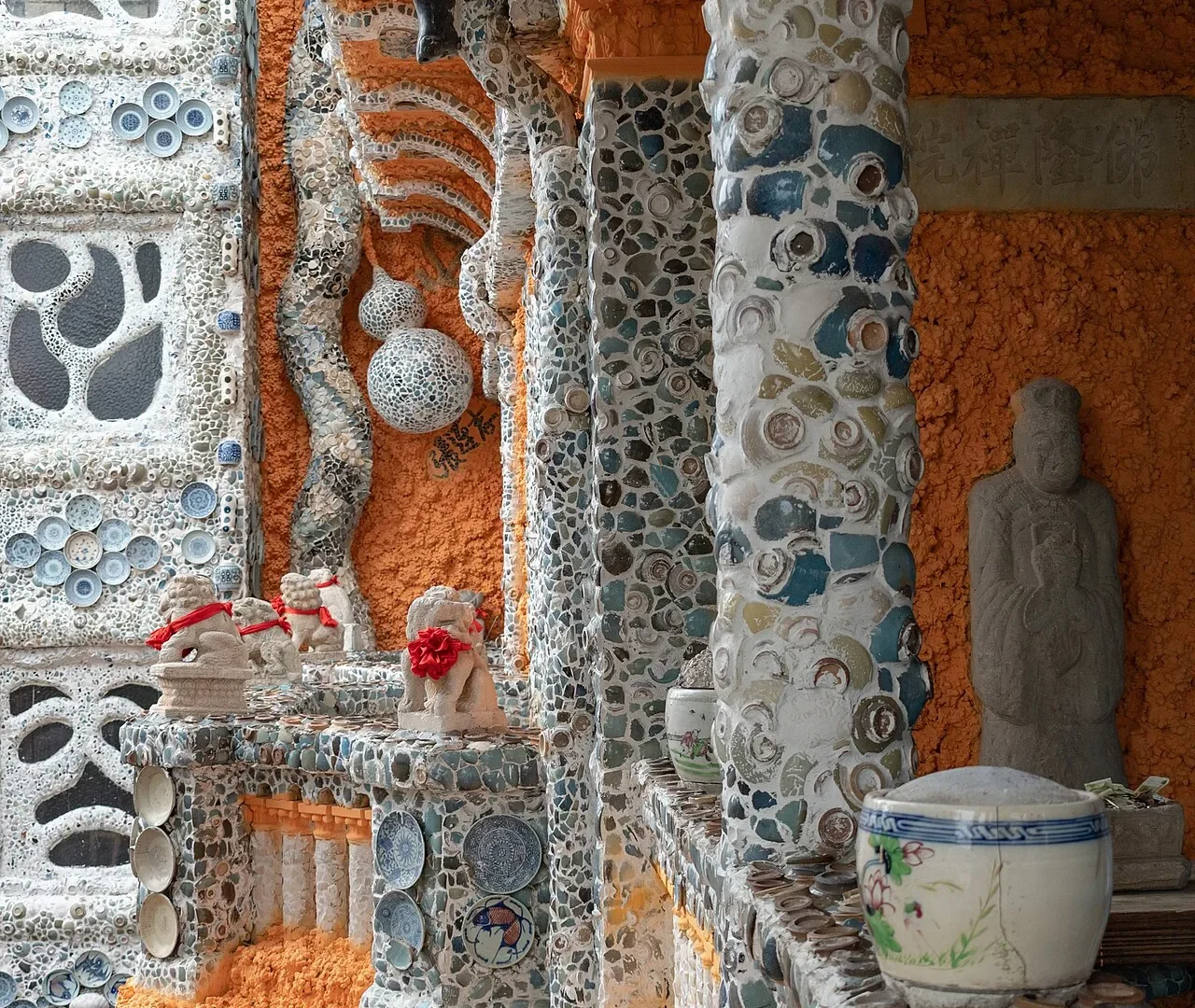
The first time I stepped onto Chifeng Road, I almost missed the Porcelain House—until the sunlight hit the exterior walls, and over 700 million porcelain shards shimmered simultaneously, making the entire Western-style building look as if it were draped in a flowing cloak of ceramic light. Locals describe it in four words: “covered in treasures.” After exploring the interior, I was completely convinced: every single inch of this building’s surface tells a thousand-year story of Chinese ceramics.
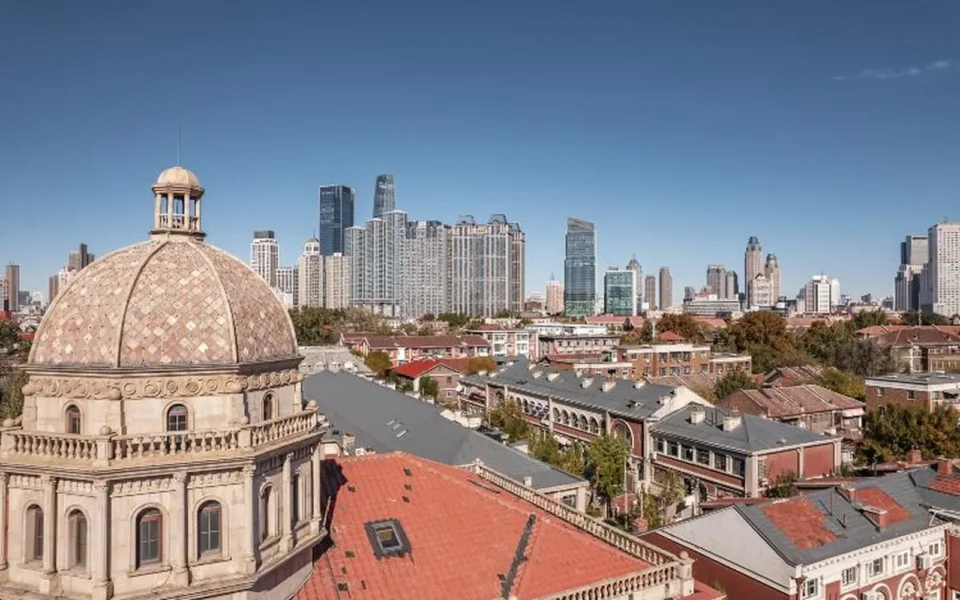
1. Location Overview: The Porcelain House is located at No. 72 Chifeng Road, Heping District, Tianjin. It is adjacent to the Heping Road shopping street and Binjiang Road Pedestrian Street, and is within walking distance of the Quanye Market and the edges of the Five Great Avenues (Wudadao) historic district. This small street was once part of the French Concession, characterized by a density of Western-style villas. Amidst them, the Porcelain House stands out vividly—your eyes are first caught by the porcelain dragon on the roof, and as you draw closer, the walls reveal a mosaic of porcelain shards, vases, and stone lions. Known as the “China Ancient Ceramics Museum,” it is a private museum where the collection is literally built into the architecture. For those on a city walk, it is a highlight of the classic Wudadao—Xiaobailou—Binjiang Road route: spend the morning exploring the villas, the afternoon admiring the patterns in this porcelain house, and then head to Heping Road for some time-honored local eateries for a compact and layered half-day itinerary. Tourists typically take photos with the “Peace Wall” at the entrance, and queues often form during holidays, cementing its status as one of Tianjin’s most photogenic landmarks. Chifeng Road was originally a high-end residential area of the French Concession, dotted with former residences of famous figures, making the entire street an open-air gallery of modern history, with the Porcelain House being its most whimsical piece.
2. Cultural Context: The Porcelain House was originally the residence of Huang Rongliang, a modern diplomat, built in the late 1920s. It is a four-story French Eclectic style brick-and-wood building covering approximately 4,200 square meters. After the liberation, it served as the office for the Heping District Industry and Commerce Bureau before remaining vacant for over a decade. In 2002, collector Zhang Lianzhi spent 30 million yuan to purchase the old building and spent roughly five years personally renovating it, officially opening it to the public in September 2007. He covered the entire building with his lifelong collection of ancient porcelain: statistics show it utilized over 700 million shards of ancient porcelain, more than 13,000 pieces of ancient ceramics, over 300 stone sculptures from various dynasties, over 300 white marble lions, more than 300 porcelain cat pillows, and over 20 tons of crystal and agate. The porcelain shards date back from the Han and Tang dynasties to the Ming and Qing. In 2010, it was named one of the fifteen most uniquely designed museums in the world by the US-based *Huffington Post*; in April 2011, it was rated as a National 3A Tourist Attraction. A dilapidated villa was thus transformed into a “livable history of porcelain,” a feat unique in the lineage of Tianjin’s modern architecture. According to the owner, only authentic old porcelain shards were used on the walls; he preferred the weathered patina of broken pieces over new porcelain—a stubbornness that reflects the passion of a collector who spent five years wrestling with an old building.
3. Highlights: The exterior walls provide the first shock—shards from different dynasties and different kilns are collaged into a fluid texture; under the sun, blue-and-white, famille rose, and monochrome glazes flicker in turn. The most famous feature is the “Peace Wall,” constructed from over 600 porcelain vases. The vases are interlocking, symbolizing “peace” (Ping’an), making it a must-photograph spot for every visitor. A massive porcelain dragon sprawls across the roof, measuring approximately 768 meters in length. The dragon’s body winds across the rooftop to spell out “CHINA,” which can be seen by looking up from across the street. The pair of white marble lions at the entrance and the porcelain cat pillows decorating the walls add further charm. Inside, the ceilings and walls are covered in porcelain shards, vases serve as stair handrails, and even the restroom signs are made of porcelain. The exhibition halls display the owner’s collection of Ming and Qing furniture, Buddhist statues, calligraphy, paintings, and exquisite ceramics, with the porcelain complementing the antique furniture. The top-floor terrace offers a panoramic view of the Western-style rooftops of Chifeng Road. Not a single spot in the building is “plain”; wherever your eyes wander, a story follows. A close look at the 300+ porcelain cat pillows reveals that each has a unique shape; cat pillows were used by ancients to keep cool in summer, and embedding them in the wall serves as both decoration and a miniature lesson in folklore. The white marble lions at the door, sourced from various old courtyards, seem to be standing guard over the porcelain-clad building.
4. Visitor Information: Opening hours vary by season: from January 1 to March 31, it is open 9:00–18:30 (last entry at 18:00); from April 1 to December 31, it is open 9:00–19:00 (last entry at 18:30). Please refer to the official signage on the day of your visit. Ticket prices: Adults 50 RMB; students and seniors aged 60–69 with valid ID can purchase discounted tickets for 30 RMB; seniors aged 70+ and children under 1.2 meters are free. Final pricing is subject to the ticket office. Paid guides are available inside; for first-time visitors, it is recommended to join a tour to learn how to distinguish the kilns and eras of the porcelain shards. Transportation: Take Metro Line 3 or Line 4 to Heping Road Station; the building is a few minutes’ walk from the exit. Multiple bus lines serve the Heping Road and Chifeng Road areas. The Porcelain House does not have its own parking lot, and parking in the old Chifeng Road neighborhood is very limited. Driving is highly inconvenient; public transport or bike-sharing is strongly recommended. Please keep a close eye on your belongings during holidays when crowds are dense.
5. Travel Tips: Reserve one and a half to two hours for a relaxed visit. Recommended route: Start by taking panoramic photos of the building and the porcelain dragon from across the street, then view the Peace Wall and stone lions up close. Enter and explore floor by floor—the 1st and 2nd floors for the porcelain collages and themed halls, the 3rd and 4th floors for the interior of the Peace Wall and ceramic masterpieces, and finally finish at the top-floor terrace. The secret to appreciating it is focusing on the details: a piece of Song Dynasty Qingbai, a fragment of Ming Dynasty blue-and-white, or the crackle patterns of Qing Dynasty famille rose—the era and kiln are hidden in the glaze. If you encounter a guided tour, join in, as the anecdotes about the kilns are far richer than the placards. Beyond the main facade on Chifeng Road, great photo spots include close-ups of the roof dragon, the textures of the Peace Wall, and the porcelain ceilings inside; the glazes look smoother and more lustrous under the soft light of a cloudy day. Combined itinerary: Chifeng Road is adjacent to the Former Residence of Zhang Xueliang (the Young Marshal’s Mansion), and Jingyuan Garden and the Five Great Avenues are just a street away. You can pair “Porcelain House + Young Marshal’s Mansion + Wudadao Villas” into a half-day trip. Crowds peak after 10:00 AM on weekends and holidays; arrive early for more peace. Please do not touch the porcelain shards or exhibits, and turn off your flash when taking indoor photos. Do not be discouraged by rainy days; the wet porcelain surfaces reflect light in a way that makes the glazes appear deeper and more atmospheric.
6. Best Time to Visit: Spring and autumn are the best seasons to include the Porcelain House in a city walk: the begonia and ginkgo trees of the Five Great Avenues are in full bloom, and the temperature and light are ideal for visiting the villas before entering the porcelain house. In summer, focus on the indoor visit to avoid the midday sun, and cool off with a meal in the Heping Road commercial area. In winter, the indoor exhibitions are unaffected by weather, and Chifeng Road is filled with festive atmosphere during holidays. In terms of itinerary planning, it belongs to the same “historic villa circle” as the Young Marshal’s Mansion, Jingyuan Garden, Prince Qing’s Mansion, and Minyuan Xili, and is within a one-kilometer radius of Binjiang Road, Quanye Market, and the Western Church, making them all accessible by foot. At night, you can see the lights along the Haihe River or stop at a cafe or bistro on Chifeng Road. For dining, the surrounding area offers both time-honored Tianjin brands and modern bistros; finishing your visit with a meal of authentic Tianjin cuisine is the most traditional way to end the day. If time permits, take a slow stroll along Chifeng Road at dusk; the Western-style villas glow warmly in the sunset, and the scent of coffee from street corners mixes with the aroma of old houses, making it one of the most beautiful sunsets in Tianjin. Whether you are a porcelain enthusiast, an architecture buff, or simply looking for a photogenic spot, this building is well worth a half-day visit.