Yangzhou · Gardens & Ancient Architecture
Ge Garden
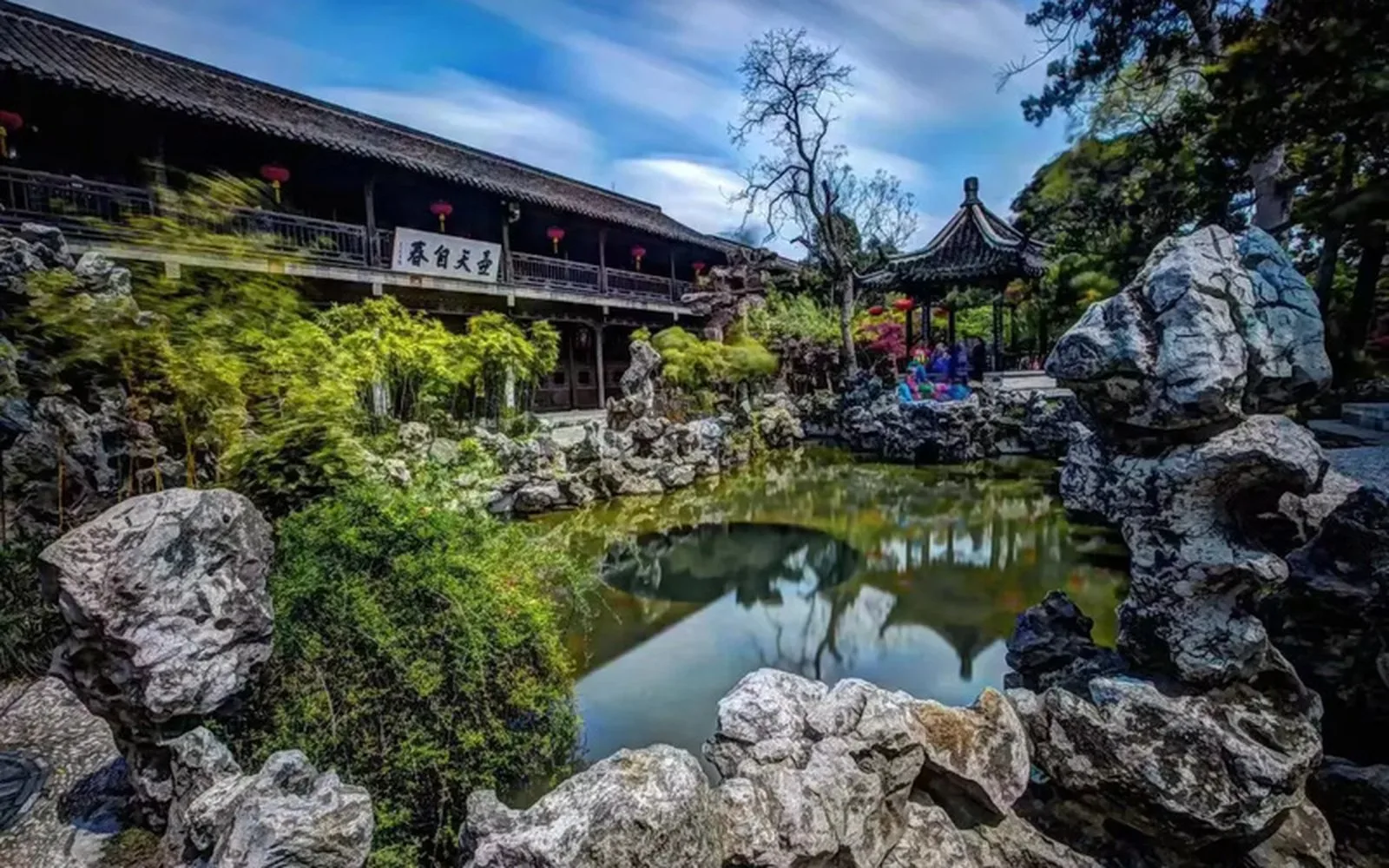
Ge Garden is the most masterful at “hiding the four seasons” in Yangzhou. Through four distinct rockeries—Spring, Summer, Autumn, and Winter—each crafted from a different type of stone, the garden encapsulates an entire year within its walls. The garden was created by Huang Zhijun, a salt merchant of the Qing Dynasty who had a lifelong passion for bamboo. Since the character for “bamboo” (竹) is composed of two parts, one of which is the character “ge” (个), the garden took its name from here. Stepping into the Garden of Ten Thousand Bamboos, sunlight filters through the leaves, casting a carpet of “ge” characters upon the ground. A stroll through the grounds takes barely an hour, yet it feels as though you have lived through all four seasons—such is the magic of Yangzhou’s garden artistry.
1. Location Overview:Ge Garden is located at No. 10 Yanfu East Road, Guangling District, Yangzhou, in the Dongguan area of the ancient city, with its south gate facing Dongguan Street. Built in 1818 (the 23rd year of the Jiaqing reign of the Qing Dynasty) on the site of the Ming Dynasty’s Shouzhi Garden, it was the private retreat of Huang Zhijun, a prominent salt merchant of the Lianghuai region. The layout follows a “residence in front, garden in back” design: the north features bamboo groves for appreciation, the center contains the flower gardens, and the south houses the residence. Alongside He Garden, it is recognized as one of the two great classical gardens of Yangzhou. Today, it is a National 4A-level tourist attraction and a Major Historical and Cultural Site Protected at the National Level. Though compact, the garden’s core consists of the residence, the Garden of Ten Thousand Bamboos, and the Four Seasons Rockeries, featuring a clear layout that is easy to navigate. It is within walking distance of Dongguan Street, Dongquan Gate, and the Wang Family Mansion, and sits within the same sightseeing circuit as He Garden and Slender West Lake, making it ideal for a half-day to full-day garden tour. It serves as a perfect starting point for a slow-paced exploration of the ancient city; once you enter, your rhythm naturally slows down. Located about three kilometers from Slender West Lake, it is a short taxi ride away. The contrast between the tranquility of the garden and the vibrancy of the lake makes them a complementary pair often visited on the same day.
2. Cultural Context:Ge Garden is defined by “bamboo.” Huang Zhijun’s obsession with the plant led him to plant ten thousand stalks of emerald bamboo throughout the grounds. Because the character for “bamboo” (竹) is split into two parts, one of which is “ge” (个), the garden was named accordingly. As Liu Fenggao of the Qing Dynasty noted in *Records of Ge Garden*: “Ten thousand stalks of bamboo were planted, hence it is called Ge Garden.” The garden excels in the art of “bamboo reflecting stone, and scenery changing with every step,” but its crowning achievement is the Four Seasons Rockery. Using stone as a brush, the designer painted the four seasons into a single garden. The sophisticated technique of stone stacking is said to be the work of a master, making it a unique example in Chinese classical gardens. This reflects the immense wealth and refined taste of the Qing Dynasty Yangzhou salt merchants—the wealthiest people in the world at the time, who sought cultural prestige by blending luxury with scholarly aesthetics. Huang Zhijun himself rose to the rank of Salt Transport Commissioner, and the scale of the Baoshan Tower and Yiyu Pavilion reflects this status. Unlike the East-meets-West fusion of He Garden, Ge Garden is a pure expression of Jiangnan literati taste. Two centuries later, while the salt trade has vanished, the garden preserves the most sophisticated side of that era. The merchant residence in the south is equally noteworthy: with its main hall, side rooms, and living quarters, its grey bricks and modest tiles serve as a textbook example of Yangzhou residential architecture, providing a balanced restraint to the whimsy of the gardens. The rockeries are attributed to the Qing Dynasty master Ge Yuliang; while historians debate the authenticity, the artistry of the Four Seasons Rockery remains unsurpassed among Yangzhou’s gardens.
3. Highlights & Features:The Four Seasons Rockery is the soul of the garden. The Spring Rockery uses “shoot stones” paired with young bamboo; the stones resemble bamboo shoots breaking through the earth after rain, and the area is dotted with Taihu stones carved into the twelve zodiac animals—hunting for these is a highlight of the visit. The Summer Rockery, built from Taihu stones, features deep caverns and cool grottoes, with lotus leaves floating in the adjacent pond; sitting at the cave entrance, one can feel a refreshing breeze. The Autumn Rockery utilizes yellow stones with sharp, towering peaks for high vantage points, paired with red maples to create the most vivid colors of the year. The Winter Rockery uses Xuan stones, which are white as fallen snow, and features a row of circular “wind-sound holes” in the wall. There are twenty-four holes, corresponding to the solar terms, which whistle when the wind passes through, mimicking a winter gale. In the Garden of Ten Thousand Bamboos, various species including hardy, gentle, and purple bamboo create a dense canopy that weaves “ge” characters in shadow on the ground. Yiyu Pavilion serves as the garden’s viewing center, while the seven-bay Baoshan Tower uses winding corridors to link the four rockeries, serving as the key to understanding the garden’s design logic. Deep within the bamboo forest is a narrow path where the canopy above and shadows below wipe away the summer heat. A small pavilion atop the Autumn Rockery offers a panoramic view, allowing the visitor to see the four seasons unfold in a single glance.
4. Visitor Information:Tickets vary by season: 45 RMB per person during peak season and 30 RMB during off-peak. Half-price and free admissions are subject to official regulations. Please check the official Ge Garden WeChat account for specific peak/off-peak dates and to book tickets. The garden opens daily at 7:15 AM and closes around 5:30 PM (closing times may be slightly extended during peak season). Night tours (such as summer evening sessions) are announced separately via official channels. A visit typically takes 1 to 2 hours; arriving early in the morning is recommended for a quieter experience and the most beautiful morning light through the bamboo. Human guides (additional fee) and audio guides are available; the intricacies of the rockeries are much more rewarding when explained by a professional. Transport: Buses 1, You1, You2, 8, 27, and 61 stop at the “Ge Garden” station, followed by a 200-meter walk. The North Gate is on Yanfu East Road, and the South Gate leads to Dongguan Street. Those driving can park near the North Gate, though public transport is advised during peak season due to limited parking. Visitors may climb the rockeries, but paths can be steep; please exercise caution when accompanying elderly guests or children. Combo tickets covering Slender West Lake, Ge Garden, and He Garden are often available and are valid for two days—worth considering for those visiting multiple sites. Be careful on stone paths during rainy days as they can be slippery.
5. Travel Tips:The recommended route is to enter through the North Gate, visit the Garden of Ten Thousand Bamboos and the Spring Rockery, circle through Yiyu Pavilion to the Summer Rockery (and explore its grottoes), then walk through Baoshan Tower to the Autumn Rockery for the panoramic view, and finish at the Winter Rockery. Exiting via the South Gate leads directly onto Dongguan Street for food and shopping. Alternatively, entering from the South Gate allows you to see the salt merchant residence first before entering the garden, providing a more complete picture of the merchant’s lifestyle. Seasonal highlights are distinct: Spring for the new bamboo and magnolias; Summer for the cool grottoes and lotus ponds; Autumn for the red maples and yellow stones; and Winter for the snow-white Xuan stones and fragrant winter plum blossoms. The best photo spots are the bamboo shadows of the Spring Rockery, the lotus pond at the Summer grotto, the peak of the Autumn Rockery, and the white stone walls of the Winter Rockery. Afternoon light on the Autumn Rockery provides the most depth. The garden is ideal for garden enthusiasts, photographers, and families; children will enjoy the scavenger hunt for the twelve zodiac stones. While small, the garden is rewarding; enthusiasts often spend twenty minutes before a single rockery studying the arrangement and the play of light. If time permits, visit Dongquan Gate and the Wang Family Mansion to complete your exploration of Yangzhou’s salt merchant architecture. Morning light in the Summer Rockery and evening light in the Autumn Rockery are the softest, making them prime times for photography.
6. Best Time to Visit:The optimal months are March to May and September to November. Spring brings new bamboo and magnolias, while Autumn brings red maples and yellow stones. These are the peak seasons for Yangzhou’s “Mist-shrouded March” and autumn tours; arriving early is highly recommended to beat the crowds. Summer offers cool caves and blooming lotuses, often featuring night tours that combine coolness with light displays. Winter is the quietest time, perfect for appreciating the snow-like Xuan stones and the scent of winter plum. The price difference between peak (45 RMB) and off-peak (30 RMB) can be a useful guide for planning; those with flexible schedules will find the garden almost entirely to themselves on off-peak weekdays. You can combine this with He Garden and Dongguan Street into a one-day itinerary: Ge Garden in the morning, He Garden in the afternoon, and Dongguan Street in the evening for Huaiyang snacks. If a night tour is available, you can return to the garden for a display of lights. For Yangzhou locals, Ge Garden in spring is a “required course”; for visitors, any season is a rewarding experience. Note that hotel prices in Yangzhou spike in March; boutique guesthouses in the ancient city near Ge Garden are the most sought-after, so early booking is advised.