Chengdu · Museums & Academia
Sanxingdui
Sanxingdui is the kind of place that stays with you long after you’ve left. From the protruding-eye masks and the Bronze Sacred Tree to the golden staff, its grotesque yet mysterious artifacts completely shatter any preconceived notions of “Ancient China.” It stands as proof that over 3,000 years ago, the ancient Shu people possessed a brilliant civilization that we have yet to fully decipher.
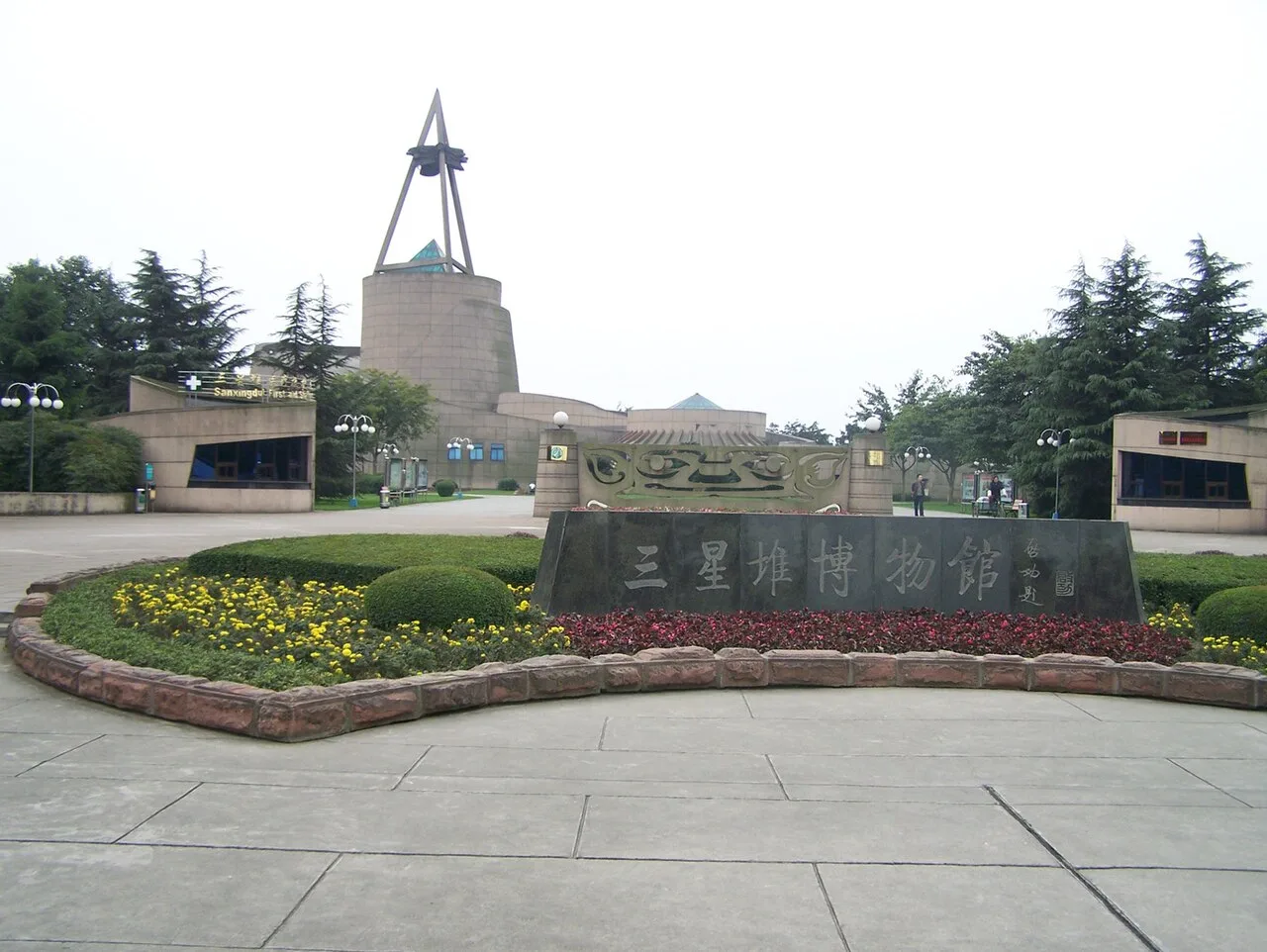
1. Location Overview:The Sanxingdui ruins are located on the south bank of the Yazihe River in the west of Guanghan City, Deyang, Sichuan Province. The museum is located at No. 133 Xiangxin Road, Guanghan. Situated on the northeastern edge of the Chengdu Plain beside the Yazihe, a tributary of the Tuojiang River, it is approximately 40 kilometers from downtown Chengdu. Covering an area of about 12 square kilometers, it is the largest, longest-lasting, and most culturally rich ancient Shu site discovered in Southwest China to date. Hailed as the “Source of Yangtze River Civilization,” it is regarded by scholars as one of the greatest archaeological discoveries of the 20th century. The site takes its name from three undulating loess mounds, said to be the land of “three stars accompanying the moon.” The flat terrain and dense network of waterways perfectly align with the settlement patterns of the ancient Shu ancestors, who lived near water. The ruins were listed as a Major Historical and Cultural Site Protected at the National Level in 1988, and the museum is a national 4A-level tourist attraction. In Sichuan’s cultural landscape, Sanxingdui—alongside Jinsha and Baodun—forms the evidence chain of the ancient Shu civilization. Together with the later Jinsha site, it outlines the long evolution of the Shu civilization from the peak of theocracy to the maturity of ritual systems, making it a key stop for understanding the diverse yet unified nature of Chinese civilization.
2. Cultural Context:The discovery of Sanxingdui was quite dramatic: in 1929, a local farmer named Yan Daocheng accidentally unearthed a pit of jade artifacts while digging a ditch near his home. In 1934, the West China Union University Museum conducted the first scientific excavation. However, it was the 1986 excavation of Sacrificial Pits 1 and 2 that truly shocked the world, bringing to light the Standing Bronze Figure, the Bronze Sacred Tree, the Golden Staff, and the protruding-eye masks, fundamentally rewriting our understanding of the ancient Shu. Since 2019, archaeologists have discovered six more sacrificial pits, unearthing a wealth of treasures including gold masks, bronze altars, and figures of people kneeling atop vessels. Traces of silk, numerous ivory tusks, and cinnabar marks on wooden boxes in Pit 6 suggest this was a sacred space where the ancient Shu communicated with heaven and earth and performed rituals for the gods. Carbon-14 dating places the site between 4,800 and 2,800 years ago, roughly from the late Neolithic period to the Shang and Zhou dynasties, marking it as the political and religious center of the Shu Kingdom during the Xia and Shang eras. The discovery of the Shu civilization proves the diversity of Chinese civilization, showing that the Yangtze River basin nurtured a highly developed early civilization that paralleled the Yellow River civilization, thereby reshaping the narrative map of ancient Chinese history.
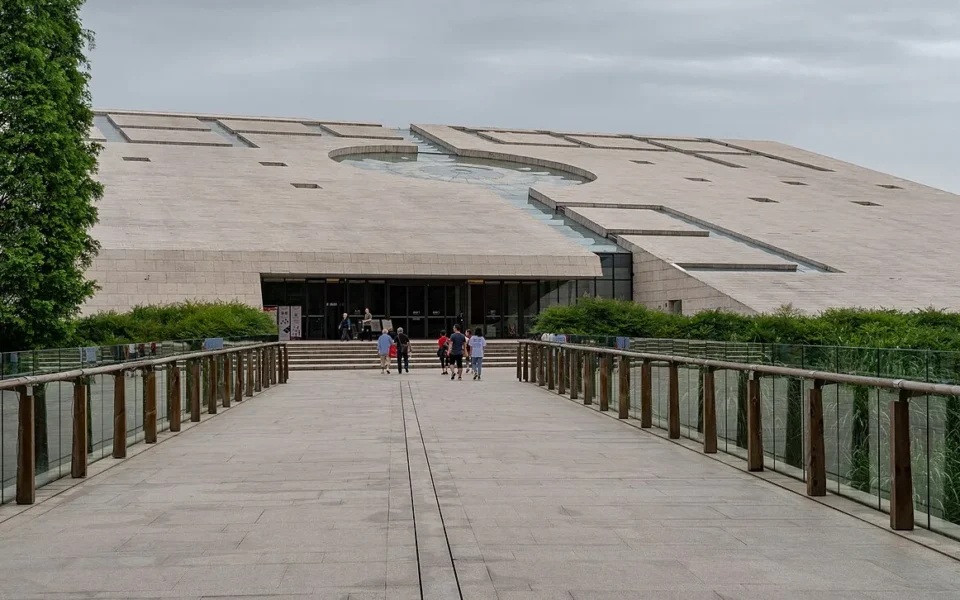
3. Highlights and Features:The new Sanxingdui Museum (Exhibition Hall), completed in July 2023, spans approximately 54,000 square meters with an exhibition area of 22,000 square meters. It systematically displays over 1,500 pieces (sets) of bronzes, gold objects, jade, pottery, and ivory across three main zones: “Century of Dreams,” “Majestic Royal Capital,” and “Heaven, Earth, Humans, and Gods.” The crown jewel is the Standing Bronze Figure, 2.62 meters tall, dressed in magnificent robes with hands clasped; it is hailed as the “King of World Bronze Statues.” The Bronze Sacred Tree, nearly 4 meters tall with nine branches featuring perched birds and coiled dragons, echoes the Fusang mythology. The 1.42-meter Golden Staff, engraved with fish, birds, and human heads, symbolizes royal power. The protruding-eye masks, with their bulging eyeballs and flared ears, possess a surreal tension, while the gold masks unearthed in 2021 are as thin as cicada wings and radiantly bright. Additionally, bronze heads with gold masks, crowned masks, jade scepters, jade halberds, and piles of ivory paint a material picture of a theocratic kingdom, while daily items like pottery *he* and *dou* vessels reveal the breath of ancient life. A unique experience is the Conservation Center, where visitors can observe the artifact restoration process in real-time. The museum also features digital multimedia installations that use animation to recreate sacrificial scenes, making a 3,000-year-old civilization tangible and felt.
4. Visitor Information:Ticket Prices: General admission is 72 RMB; students (undergraduate and below, 18+) are 36 RMB; veterans are 65 RMB. Active-duty military, disabled veterans, fire and rescue personnel, and people with disabilities are free with valid ID. Special Note: Starting November 4, 2026, free admission for minors under 18 will be permanent (reservations are still required, and those under 14 must be accompanied by a guardian). The museum uses a real-name reservation system. Tickets can be booked up to 5 days in advance, with daily releases at 20:00. Please book via the official Sanxingdui Museum WeChat account or official website; the museum has not authorized any third-party ticket or guide sales. Opening Hours: Exhibition Hall 8:30–18:00 (last entry at 17:00); Conservation Center 9:00–18:00. The museum is closed only on Lunar New Year’s Eve. During Golden Weeks, short holidays, and winter/summer breaks (Jan, Feb, July, Aug), hours are extended to 20:00 (last ticket check at 18:00). Inquiry Hotline: 0838-5533333. Transport Guide: The fastest way is via high-speed rail from Chengdu East Station to Guanghan North Station (approx. 18 mins), followed by a 15-minute bus or taxi ride. Alternatively, take the Sichuan-Qinghai Railway to Sanxingdui Station and use connecting transport. Direct shuttle buses are available from downtown Chengdu. For those driving, taking the Cheng-Mian Expressway and exiting at Guanghan North is most convenient. We recommend reserving 3 to 4 hours to comfortably explore the three exhibition zones and the Conservation Center. The museum provides guides, audio tours, and AR experiences, along with dining areas, nursing rooms, and comprehensive accessibility facilities.
5. Travel Tips:Recommended Route: New Hall Lobby $\rightarrow$ “Century of Dreams” $\rightarrow$ “Majestic Royal Capital” $\rightarrow$ “Heaven, Earth, Humans, and Gods” (focus on the Standing Figure, Sacred Tree, protruding-eye masks, and Golden Staff) $\rightarrow$ Conservation Center. The best photo spots are the new hall’s atrium and the Bronze Sacred Tree display cases; low-angle shots enhance the sense of mystery. The streamlined architecture of the new hall itself makes for a great backdrop. When listening to guides, focus on the ancient Shu sacrificial system, bronze casting technology, and the links and differences with the Central Plains civilization. Use the artifacts from the new sacrificial pits to understand how the objects were grouped; renting an audio guide or booking a professional guide is highly recommended. Families and students should spend time at the Conservation Center and visit the excavation site to feel the atmosphere. Seniors are advised to visit in the morning to avoid crowds. Weekday mornings and late afternoons are generally less crowded. During extended hours, visiting the new hall at night offers a serene atmosphere, and the Sacred Tree looks even more fantastical under the lights. For a deeper dive into the Shu civilization, pair this visit with the Jinsha Site Museum, Guanghan Fanghu Park, and the Luocheng Ruins.
6. Best Time to Visit:Sanxingdui is a year-round destination. The climate-controlled interiors make it a great escape from the summer heat or winter cold, though spring and autumn are the most pleasant seasons for travel. Located about an hour from Chengdu, it can be combined with visits to the Jinsha Site, Du Fu Thatched Cottage, and Wuhou Shrine in the city, or paired with a culinary tour of Guanghan for a day trip blending the ancient and the modern. Local specialties like Guanghan “silk-wrapped rabbit” and Lianshan “twice-cooked pork” are must-tries. The museum’s gift shop offers intriguing collectibles like Sanxingdui blind boxes, mask fridge magnets, and gold mask bookmarks; popular items sell out fast, so buy early. For museum enthusiasts, visiting both Sanxingdui and Jinsha provides the most comprehensive view of the evolution from theocratic power to ritual systems, offering a depth of experience far beyond a single venue. With recent improvements in high-speed rail and highways, a “half-day museum, half-day city” itinerary has become the new trend.