Suzhou · Gardens & Ancient Architecture
Panmen Gate
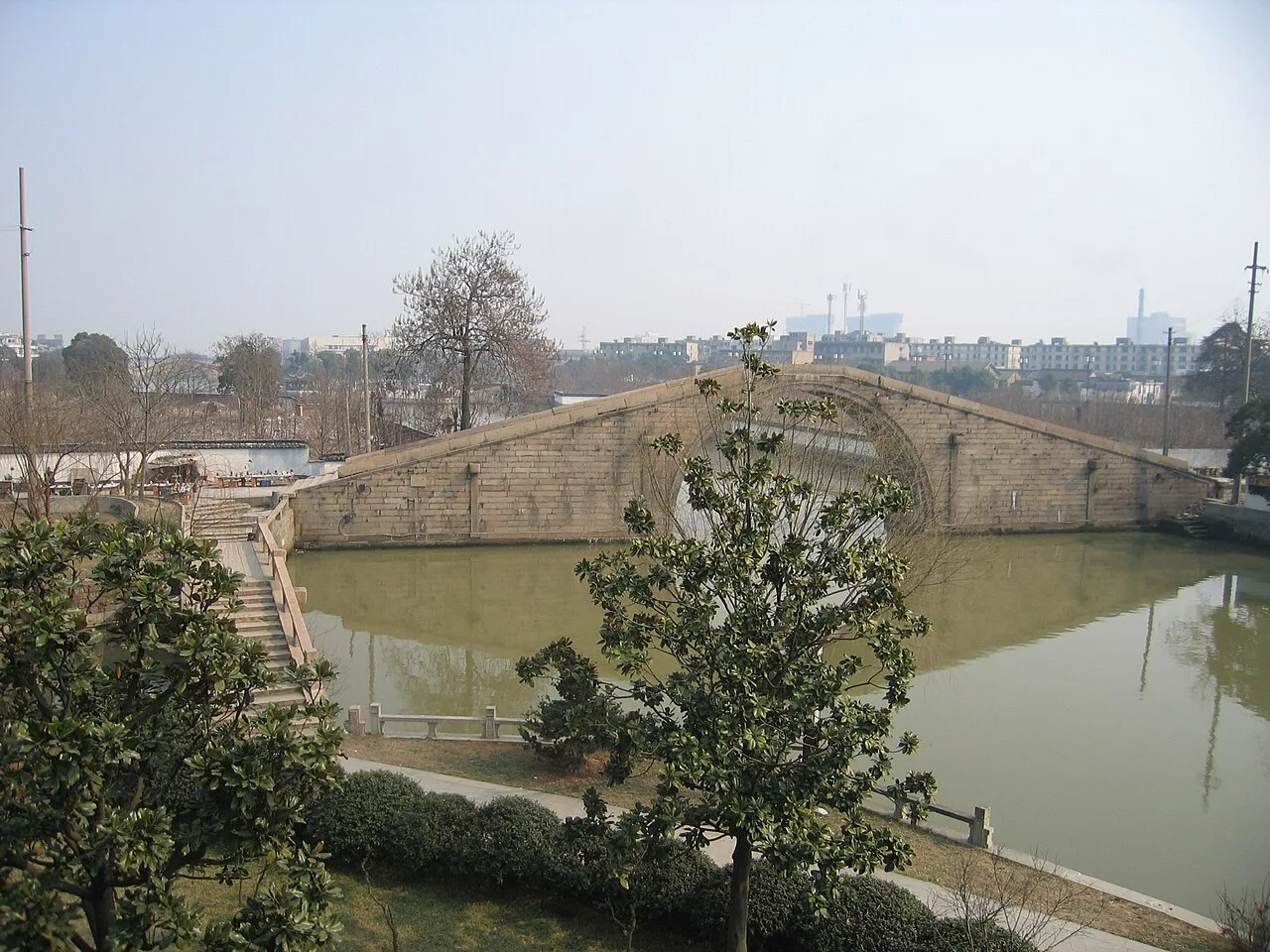
The impact Panmen had on me came from standing beneath the only surviving dual land-and-water gate in China. Looking up, the curve of Wumen Bridge, the depths of the water gate, and the silhouette of Ruiguang Pagoda all merged into a single painting—a perfect synthesis of defense and beauty, pushed to its absolute limit on this two-thousand-year-old gateway.
1. Location Overview: Panmen is located at No. 49 Dongjie Street, Gusu District, Suzhou. It sits at the southwestern corner of the old city where the moat meets the ancient Grand Canal and serves as the heart of the Panmen Scenic Area (a National 4A-level tourist attraction). Together, Panmen, Ruiguang Pagoda, and Wumen Bridge are known as the “Three Views of Panmen,” forming the most complete remaining section of Suzhou’s ancient city walls. Within the local cultural landscape, Panmen forms a southern cultural tour belt alongside the Humble Administrator’s Garden, Canglang Pavilion, and Master-of-the-Nets Garden. It is an exceptional example for understanding Suzhou’s “land-water chessboard” urban layout: when the city was founded 2,500 years ago, all eight city gates were equipped with both land and water entrances, but only Panmen has preserved both side-by-side to this day. With the ancient city walls as its spine, the scenic area links towers, bridges, gates, and rivers. Its walking scale is moderate and can be fully explored in half a day, making it one of the best-preserved areas of Suzhou’s ancient urban character.
2. Cultural Heritage: Panmen was first built during the Spring and Autumn period. In 514 BC, Wu Zixu was ordered by King Helü of Wu to build the Great City of Helü with eight gates, one of which was Panmen. Legend has it that the gate was named “Panmen” (Coiled Dragon Gate) because a wooden coiled dragon was hung there to intimidate the State of Yue; others say the name comes from the winding, coiled layout of the gate. The current structure was rebuilt in 1351 (the 11th year of the Zhizheng era of the Yuan Dynasty) and repaired across subsequent dynasties. During the Northern Song Dynasty, Ruiguang Pagoda was rebuilt as a seven-story pavilion-style brick and wood tower standing beside the gate, creating a layout that combined defense with landscaping. In 1978, precious artifacts, including the Northern Song Dynasty Pearl Reliquary, were discovered inside the pagoda; these are now housed in the Suzhou Museum and are hailed as national treasures. The entire site serves as a direct physical footnote to the history of Suzhou as the capital of the State of Wu, witnessing 2,500 years of urban continuity. As locals often say: “To see the grandeur of the North, look to the Great Wall; to see the elegance of the South, look to Panmen.” Unlike other gates that were destroyed by war or modernized, Panmen is the only one of the original eight to survive as an ancient structure, making it irreplaceable in the narrative of Suzhou’s history.
3. Highlights: The first highlight is the dual-gate layout of the land and water gates: the land gate features two layers of barbicans for defense, and a sluice gate between the land and water entrances to cut off water access. This complete dual-gate system is unique in China. The second highlight is Ruiguang Pagoda; originally built during the Three Kingdoms period of Eastern Wu and rebuilt in the Northern Song, this seven-story tower allows paid climbs to the top, offering an excellent perspective of the old city’s water lanes and moats (hours and fees are subject to on-site notices). Although the Pearl Reliquary has been moved to the museum, one can still imagine the grandeur of the Song Dynasty tradition of hiding treasures within pagodas. The third highlight is Wumen Bridge, which spans the canal as the highest single-arch stone bridge remaining in Suzhou. Its crescent-shaped reflection on the water is beautiful at dawn and dusk, epitomizing Suzhou’s “city of many bridges and waters.” The fourth highlight is the city wall walkway and the Night Garden: walking atop the walls provides a panoramic view of the land and water transport systems. At night, the area opens for night tours, where lighting outlines the gate, the pagoda’s shadow, and the bridge arches, revealing a different face of the ancient architecture. The fifth highlight consists of the Siru Hall and Lize Hall: these two Yuan Dynasty wooden structures are rare among Jiangnan architecture, with their beam frames and bracket sets still retaining an ancient charm, completing an architectural timeline from the Song and Yuan to the Ming and Qing dynasties.
4. Visitor Information: Opening Hours: Day sessions start at 8:30 AM. During the peak season (March to November), it generally closes at 5:30 PM; during the off-season, it closes at 5:00 PM. Entry stops half an hour before closing. Night tours (Night Garden) are approximately from 6:00 PM to 9:00 PM with separate ticketing; specific dates and times are subject to official announcements. Tickets: Day session adult tickets are 40 RMB. Half-price tickets (20 RMB) apply to minors aged 6–18, full-time undergraduate students and below, and seniors aged 60–69 (with valid ID). Free entry for children under 1.2m, seniors over 70, active military personnel, and disabled persons (with proof). Climbing Ruiguang Pagoda requires an additional fee (a few RMB, as posted on-site). Suggested visit time: 2 to 3 hours (day sessions for layout, night sessions for atmosphere). Note: The city wall walkways and pagoda stairs are steep and stone slabs can be slippery when wet; children and seniors should wear non-slip shoes. Transportation: Take Metro Line 4 or 5 to Nanmen Station and walk for about 10 minutes. Alternatively, take buses You 2, You 5, 39, or 47 to the Panmen Scenic Area stop. For those driving, navigate to “Panmen Scenic Area Parking Lot,” though public transport is recommended during holidays due to limited parking. Moat cruise boats operate from piers near Panmen, allowing visitors to see the water gate, water walls, and riverside architecture from the water. Boat schedules are posted at the pier.
5. Travel Tips: Recommended half-day route: Enter through the land-water gates, walk the city walls to view the dual-gate layout, admire the reflection of Wumen Bridge, descend to climb Ruiguang Pagoda, and finish along the moat walkway. If the night tour is available, visit during the day and return after dark for the light-shadow displays and water curtain performances. Best photo spots: Wumen Bridge (to frame the gate and pagoda together), the western section of the city wall (for a bird’s-eye view of the water gate), and the illuminated gate at night. Focus your attention on the history of Wu Zixu’s city construction, the eight-gate layout, the discovery of the Pearl Reliquary, and the logic of the land-water defense system. Ideal for families, students, and photographers: families can learn about ancient defense systems, while students can focus on ancient urban planning and hydraulic wisdom. From a cultural perspective, Panmen is more than a building; it is a “living fossil” for studying ancient Chinese fortifications and urban morphology. Beyond the history, spend a moment on the wall as a “city guard”: observe how the water sluice locked the waterway and how the land barbican slowed enemies with its winding path, turning ancient blueprints into a living reality.
6. Best Time to Visit: Spring, when flowers bloom along the moat, and Autumn, when the pagoda’s shadow is reflected in clear waters, are ideal times for visiting. Summer and early Autumn are the best for night tours, as the lights make the city gate look even more majestic. Today’s Panmen Scenic Area blends ancient architecture with modern experiences like cruises and night shows, offering a “day for layout, night for atmosphere” experience. It is the perfect starting point for understanding Suzhou’s origins as a city of land and water. Nearby, you can link your visit to Canglang Pavilion (the oldest existing garden in Suzhou), Master-of-the-Nets Garden, and the Nanyuan Tea House for a southern cultural stroll. For a local experience, try the moat cruise and enjoy “Su-style” cuisine and the street-life atmosphere of the Nanmen commercial area. Overall, the walls, water gate, pagoda, and bridge form a rare three-dimensional relic: within one gate lies the birth certificate of a city and the secrets of how a Jiangnan water town evolved from a military fortress into a livable paradise. During the Lantern Festival and Mid-Autumn Festival, the area often hosts lantern fairs and folk activities. If you can only pick one time, a sunny morning in Spring or Autumn offers the clearest light for exploring the walls and tower.