Suzhou · Gardens & Ancient Architecture
Humble Administrator’s Garden
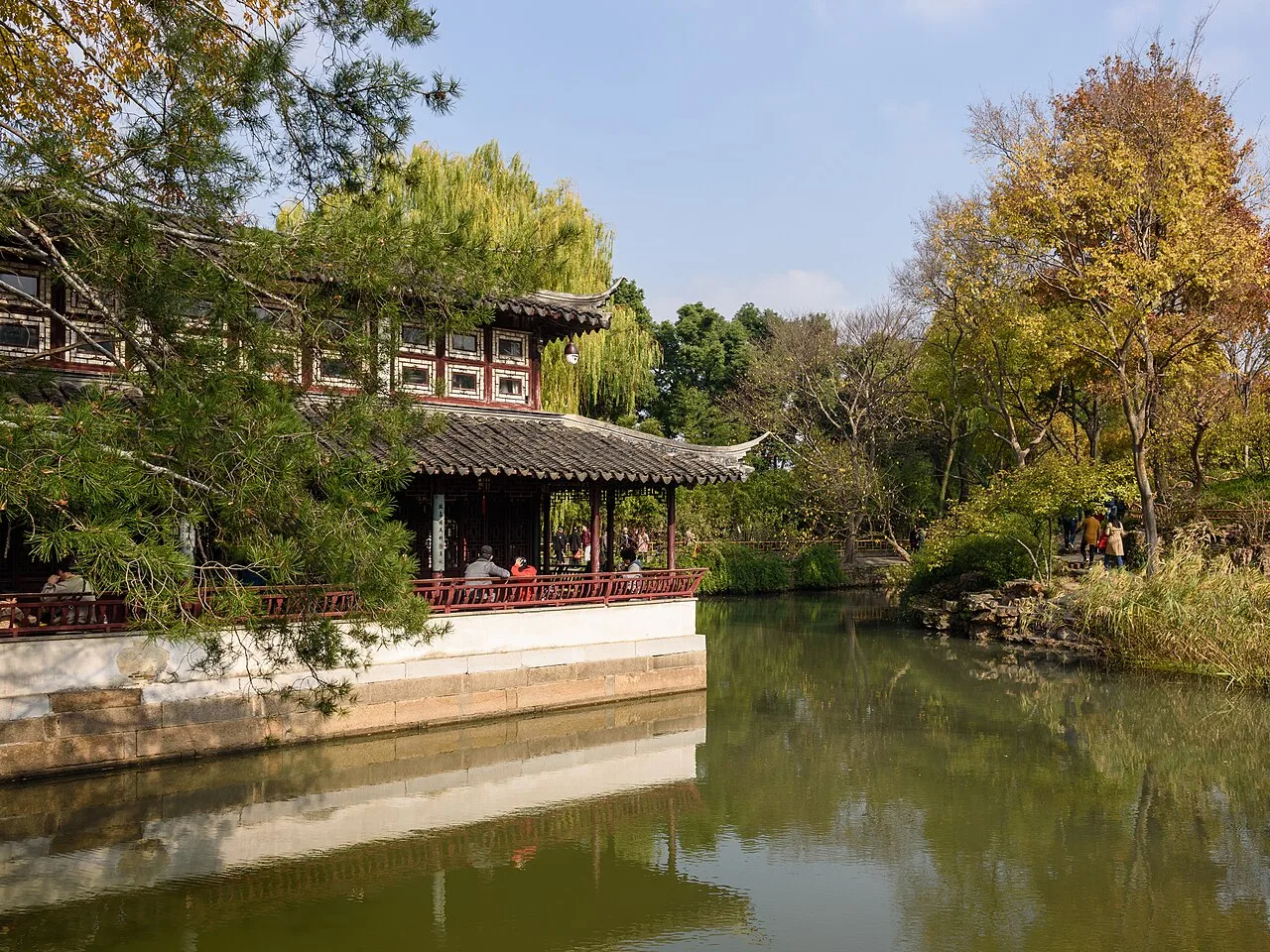
My first impression of the Humble Administrator’s Garden was not one of “size,” but of “concealment”—a moon gate, a lattice window, a leaning ancient tree; everywhere, the garden creates the surprise of “light at the end of the tunnel.” The concept of “mountains and forests within a few feet” allows you to walk through a landscape of the mind within a confined space.
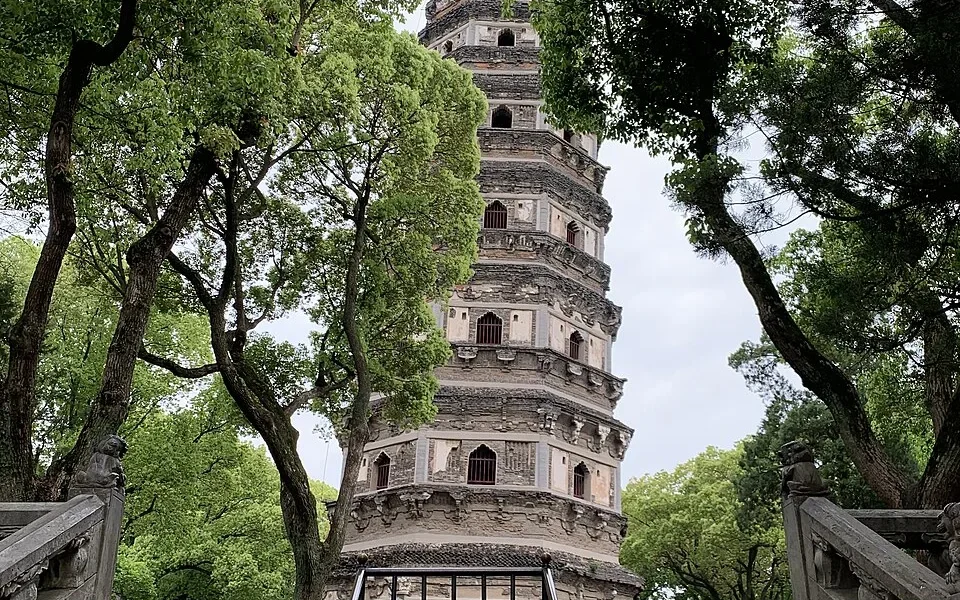
1. Location Overview: The Humble Administrator’s Garden is located at No. 178 Dongbei Street, Gusu District, Suzhou. A masterpiece of classical Jiangnan gardens, it is ranked first among China’s four most famous gardens (alongside the Summer Palace in Beijing, the Chengde Mountain Resort, and the Lingering Garden in Suzhou) and is a national 5A-level tourist attraction. Spanning approximately 5.2 hectares in the northeast corner of Suzhou’s old city, the Beisi Pagoda is visible just across the street to the north. Within the regional cultural tourism layout, it is situated close to the Suzhou Museum, the Garden Museum, the Lion Grove Garden, and Pingjiang Road, together forming the core cultural corridor of northeast Suzhou and serving as the premier destination for visitors to experience the aesthetics of Jiangnan scholar-gardens. Compared to other gardens in the city, the Humble Administrator’s Garden excels in its open water features, whereas the Lion Grove Garden is known for its rockeries and the Lingering Garden for its sophisticated architectural spatial planning; visiting all three provides a perfect comparative study.
2. Cultural Context: Built during the Zhengde era of the Ming Dynasty (around 1509), the garden was expanded by the imperial censor Wang Xianchen upon his retirement to Suzhou. Its name is derived from the phrase “the clumsy are those who govern” in Pan Yue’s “Ode to Leisure” from the Western Jin Dynasty, subtly reflecting Wang’s own self-deprecation in abandoning officialdom for a rural life. Over the following centuries, the garden changed hands and was divided several times, with its name and appearance shifting repeatedly. It wasn’t until the 1950s, when it was nationalized and renovated, that its cohesive layout was restored, layering the original water system framework of Wang Xianchen with the marks of subsequent generations. Wang Xianchen was close friends with Wen Zhengming of the Wu School of painting; Wen once drew maps of the garden’s scenes and wrote the “Poetic Descriptions of the Humble Administrator’s Garden,” ensuring that from the beginning, the garden was inextricably linked with painting and calligraphy. In 1997, the Humble Administrator’s Garden was inscribed on the UNESCO World Heritage List as a typical example of the classical gardens of Suzhou. It is a paradigm of the Chinese scholar’s “freehand” landscape garden, embodying the cultural ideal of finding solace in nature and the philosophy of “helping society when successful, and perfecting oneself in retirement.”
3. Highlights: The first highlight is the Yuanxiang Hall (Hall of Distant Fragrance) in the center. As the garden’s main building, its four halls are built facing the water, providing the best vantage point for viewing lotuses and overlooking the landscape. The name is taken from Zhou Dunyi’s “On the Love of the Lotus”: “the fragrance is distant and the purity increases.” The second highlight is the Xiao Feihong (Small Flying Rainbow), a rare covered bridge in Suzhou gardens; its red railings reflecting in the water create the most poetic scene in the central water courtyard. The third highlight is the area around Xiangzhou and Yiyu Pavilion, where boat-shaped buildings connect to winding corridors, offering a new view with every step. The fourth highlight is the western “supplementary garden,” where the Liuting Pavilion, the Thirty-Six Mandarin Ducks Hall, and the “With Whom Shall I Sit” Pavilion each possess their own charm; the vaulted roof and colored glass of the Thirty-Six Mandarin Ducks Hall are particularly exquisite. “Borrowed scenery” is the most ingenious touch of the entire garden: looking north from the center, the Beisi Pagoda outside the walls is cleverly integrated into the view, appearing as a peak within the garden. Water is the heart of the layout, occupying about three-fifths of the area. Techniques such as borrowed scenery, facing scenery, divided scenery, and framed scenery unfold in layers to create an atmosphere that feels “man-made, yet as if created by nature.” Looking closer at the center: the Hefeng Simian Pavilion sits on a small island in the pond, surrounded by water and hit by lotus breezes in summer; the Xuexiang Yunwei Pavilion is hidden among plum blossoms, and the Daishuang Pavilion guards the orange grove, pairing plants and architecture by season. The Wuzhu Youju Pavilion features open windows on all four sides, framing distant views and the shadow of the pagoda—a textbook example of “framed scenery.” The Thirty-Six Mandarin Ducks Hall in the west, with its vaulted roof and floor-to-ceiling glass, is warm in winter and cool in summer; it was once a place for listening to music and entertaining guests, a level of sophistication rare even among Jiangnan gardens.
4. Visitor Information: Tickets are priced seasonally: 80 RMB during peak season (April, May, July to October) and 70 RMB during off-peak season (January, February, March, June, November, December). Students and seniors aged 60-69 receive half-price tickets with valid ID. Seniors 70 and above, children under 1.4 meters, and active military personnel enter for free. All visitors must book real-name time-slot tickets 1 to 7 days in advance via the “Suzhou Garden Tourism” official WeChat account or the official website. Entry is granted by scanning the ID card used for the reservation; tickets are not sold on-site for the same day. Be sure to book early for popular time slots. Opening hours: From March 1 to October 31, opens at 7:30, last entry at 17:00, closes at 17:30. From November 1 to the end of February, opens at 7:30, last entry at 16:30, closes at 17:00. Hours may be extended on public holidays (summer early-opening arrangements may apply; refer to official announcements). The garden occasionally hosts night tours such as “Zhuozheng Wenya,” which require separate tickets. A visit of 2 to 3 hours is recommended. Guide services and audio guides are available for rent. As the stone paths are uneven, non-slip shoes are recommended. Transportation: Take Metro Line 6 to the Humble Administrator’s Garden/Suzhou Museum Station; the South Gate is a few minutes’ walk from the exit. Alternatively, take bus line You 1 to the Suzhou Museum (Humble Administrator’s Garden) stop. Roads in the old city are prone to congestion and parking is limited; public transport is strongly recommended. Entry Tip: The South Gate on Dongbei Street is the main entrance. During crowded holidays, one-way traffic control may be implemented; please coordinate meeting points with companions in advance. Be mindful of your step when visiting with children, as many paths in the core pond area are right along the water’s edge.
5. Travel Tips: A recommended half-day itinerary: enter through the South Gate, pass through Lanxue Hall and Furong Pavilion to the central Yuanxiang Hall, then cross the Xiao Feihong, visit Xiangzhou and Jianshan Building, enter the western supplementary garden to see the Thirty-Six Mandarin Ducks Hall and Liuting Pavilion, and finally finish in the East Garden. The best photo spots are the lotus pond in front of Yuanxiang Hall, the reflection of the Xiao Feihong, and the framed view from Wuzhu Youju. Focus your guided tour on the water-centric layout, the ingenuity of borrowing the Beisi Pagoda, and the cultural allusions in the plaques and couplets. This garden is suitable for families, students, and seniors: students can focus on landscaping techniques and scholar-interests, while families are encouraged to rent audio guides for added interest. Avoiding crowds is key: enter as soon as the garden opens to explore the central core before the tour groups arrive, or visit on weekdays, during the off-season, or even on rainy or snowy days, when the garden reveals its true, serene nature. Wearing plain, neutral-colored clothing and sitting under a corridor watching rain hit lotus leaves is the best way to approach the mindset of the ancient garden designers. The plaques and couplets are worth savoring; the names of Yuanxiang Hall, Liuting Pavilion, and the “With Whom Shall I Sit” Pavilion all have literary origins. Reading through them all is like reading half of the aesthetic history of Ming and Qing dynasty scholars.
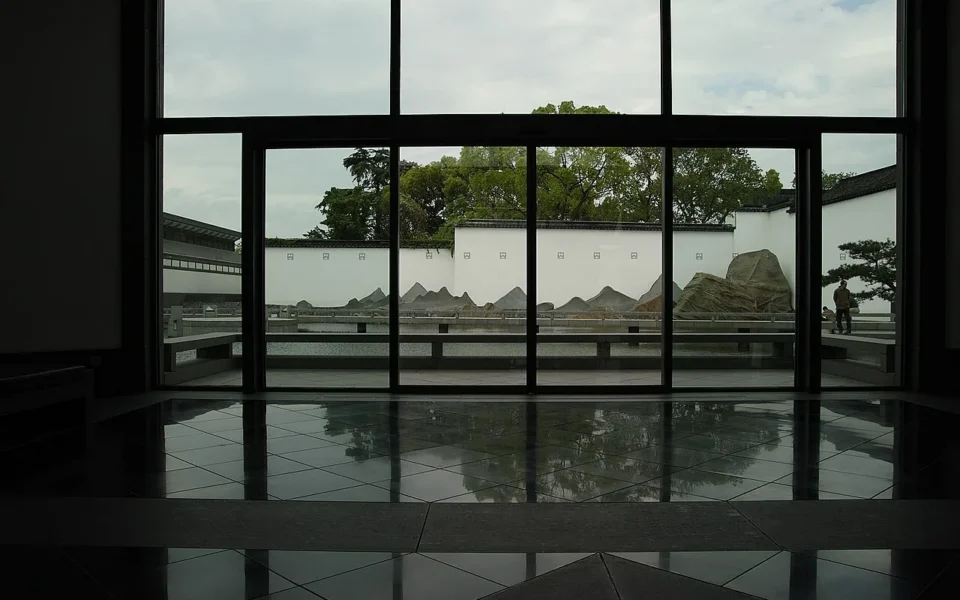
6. Best Time to Visit: Azaleas in spring, lotuses in summer, osmanthus in autumn, and wintersweet in winter—every season offers its own beauty, with summer lotuses and autumn osmanthus being the most famous. The designers used plants to create a sense of seasonal progression; the same spot presents a different face each month, making it worthy of repeated visits. You can easily combine this with a visit to the Suzhou Museum (designed by I.M. Pei, free but requires a separate reservation), the Garden Museum, the Lion Grove Garden (known for its rockery maze), and the Pingjiang Road historic district to create a half-day cultural stroll: gardens in the morning, museums in the afternoon, and Lion Grove or Pingjiang Road in the evening. Regarding floral displays, spring azaleas and summer lotuses are most highly praised; the best spot for lotuses is the water area in front of Yuanxiang Hall—entering at opening time allows you to enjoy the fresh blooms in solitude. For local experiences, try the Suzhou-style pastries, Biluochun tea, and Pingtan storytelling teahouses on Pingjiang Road. The triangle formed by the Humble Administrator’s Garden, the Suzhou Museum, and the Lion Grove Garden is the most concentrated essence of Suzhou, representing the three distinct experiences of famous gardens, museums, and rockeries—switching between three images of Jiangnan in a single afternoon.