Suzhou · Ancient Towns & Old Streets
Zhouzhuang
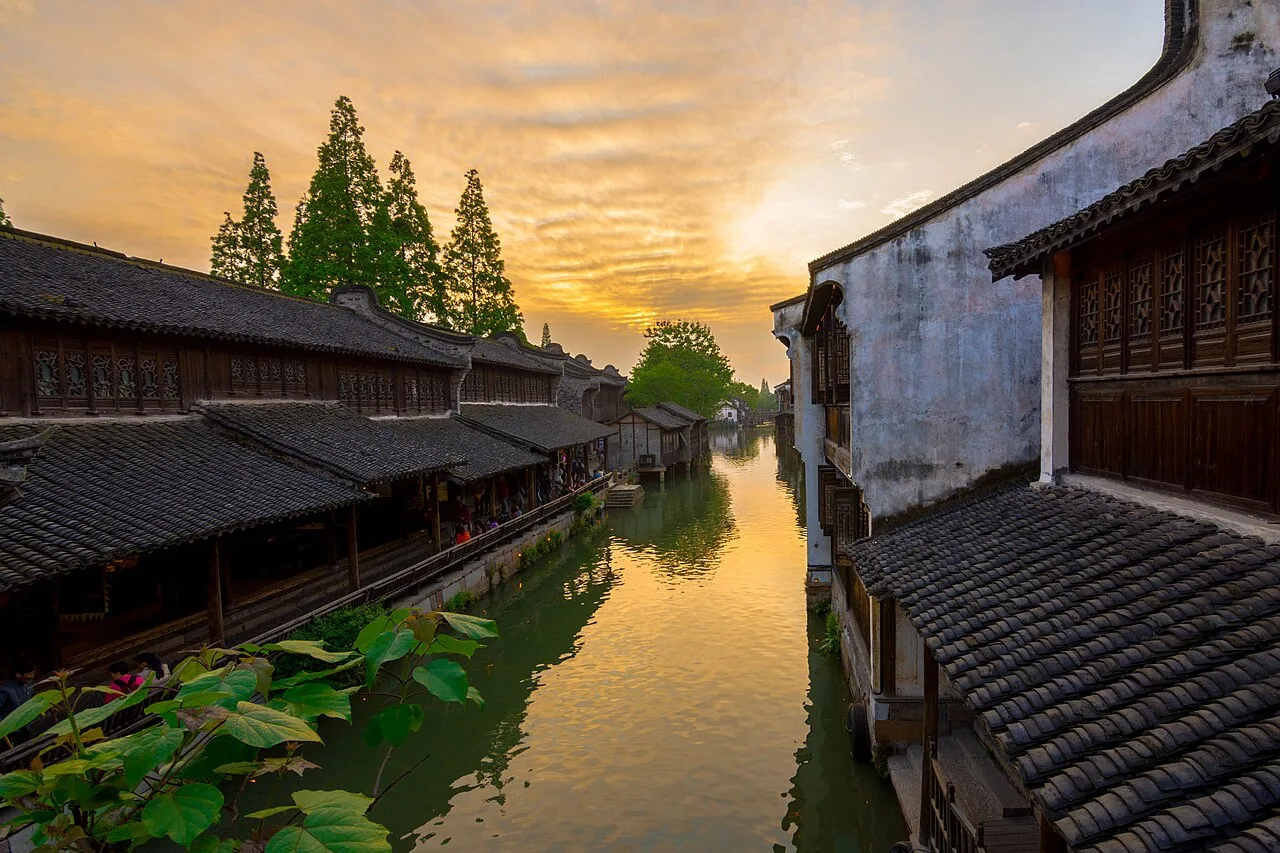
Zhouzhuang is the “crown jewel” of the Jiangnan water towns—a place where the classic imagery of small bridges, flowing water, and riverside homes is brought to life in its most exquisite form. Drifting through stone arch bridges on a hand-rowed boat, watching the white walls and black tiles of the riverbanks slowly recede to the rhythm of the oars, I felt a surreal sensation of truly “wandering inside a painting.”
1. Location Overview: Zhouzhuang is located at the southernmost tip of Kunshan, Suzhou, bordering Wujiang and Qingpu (Shanghai). Nestled between Cheng Lake, Baixian Lake, and South Lake, it is one of the six great ancient towns of Jiangnan and is widely renowned as the “Number One Water Town of China” and a National 5A Tourist Attraction. The ancient town area covers approximately 0.47 square kilometers. The entire town is designed with streets following the curves of the rivers and connected by bridges, with Ming and Qing dynasty residences featuring white walls and black tiles built right along the water, perfectly preserving the typical water town layout. The river channels intersect the town in a “grid” pattern, embraced by fourteen ancient bridges. The spatial relationship between the bridges, rivers, streets, and houses has remained largely undisturbed by modern construction, which is what fundamentally distinguishes Zhouzhuang from many imitation ancient streets. Within the regional tourism landscape, Zhouzhuang forms a cluster of South Suzhou ancient towns along with Tongli, Luzhi, and Jinxi. Located about 38km from downtown Suzhou and 70km from downtown Shanghai, it is a popular destination for short trips in the Yangtze River Delta and serves as a living specimen of the Jiangnan water town.
2. Cultural Heritage: In 1086 (the first year of the Yuanyou era of the Northern Song Dynasty), a local man named Zhou Digong donated his home to be converted into a temple. Touched by his generosity, the locals named the area “Zhouzhuang” after his surname, a name it has held for over 900 years. During the Yuan Dynasty, the wealthy merchant Shen Wansan settled here, leveraging the waterways to build a commercial empire and transforming Zhouzhuang into a major regional hub, leaving behind landmarks like the Shen Residence and Fu’an Bridge. Since the Ming and Qing dynasties, Zhouzhuang has flourished as a center of trade and culture; the painter Wu Guanzhong once praised it for “gathering all the beauty of China’s water towns.” In 1984, the US-based Chinese artist Chen Yifei painted “Memories of Home,” featuring the Double Bridges of Zhouzhuang, which brought the town to international fame and made it a global cultural calling card for Jiangnan. During the Ming and Qing dynasties, Zhouzhuang was a vital rice and cloth market in South Suzhou. Grand estates like the Shen and Zhang Residences, built along the river, served as both homes for wealthy merchants and physical archives of the water town’s merchant guild culture. The overall layout of the town is exceptionally well-preserved, with a high proportion of Ming and Qing architecture still in use. The tradition of living by the water continues to this day, earning Zhouzhuang its reputation as a “living water town.”
3. Highlights: The first highlight is the Double Bridges, consisting of the stone arch Shide Bridge and the stone slab Yong’an Bridge. With one bridge crossing horizontally and the other vertically, and one arch circular and the other square, they resemble an ancient key—hence the name “Key Bridges.” They became world-famous through Chen Yifei’s painting and remain the most iconic image of Zhouzhuang. The second highlight is the Shen Residence (originally Jingye Hall), built in 1742 by Shen Benren, a descendant of Shen Wansan. With seven courtyards, five gated buildings, and over a hundred rooms, it showcases the grandeur of Jiangnan’s wealthy merchants and the intricate artistry of brick and wood carving. The third highlight is the Zhang Residence (originally Yishun Hall), built during the Zhengtong era of the Ming Dynasty by descendants of Xu Kui, the brother of Prince Zhongshan Xu Da. The Ruojing River flows directly through the house, creating a scene where “sedan chairs enter through the door, and boats pass through the home,” vividly illustrating the concept of “homes pillowing the river.” The fourth highlight includes Fu’an Bridge, Quanfu Temple, and the South Lake Autumn Moon Garden. Fu’an Bridge, built in the Yuan Dynasty, is a rare example of combined bridge-and-tower architecture, offering panoramic views of the market river from its tower. Quanfu Temple dates back to the Song Dynasty and remains an active place of worship. Other points of interest include the Ancient Opera Stage, the Maze Building (Mi Lou), the Former Residence of Shen Wansan, and the Zhouzhuang Museum. The fifth highlight is the Maze Building and the Zhengfeng Cultural Street. The Maze Building is famous for the poems written there by Liu Yazi and other poets of the Southern Society. The cultural street by Zhengfeng Bridge is a hub for bamboo weaving, hand-woven cloth, and pork hock workshops, where visitors can listen to a Kunqu opera and sip “Grandma’s Tea.” The sixth highlight is the boat cruise: gliding under the Double Bridges in a hand-rowed boat while listening to the boatwoman sing Wu-dialect folk songs is the most classic way to experience the water town.
4. Visitor Information: The scenic area is open from 8:00 to 21:00. Core attractions such as the Shen Residence, Zhang Residence, Zhouzhuang Museum, and Ancient Opera Stage are also open until 21:00 (please check on-site notices for specific venue times). Tickets are listed at 100 RMB. Starting July 9, 2026, a “All-in-One Pass” policy will be implemented, offering a 20% discount (80 RMB per person, including holidays). Once registered, this pass allows continuous entry for three days and includes access to small theater performances. Discounts for eligible groups (half-price or free) are based on the list price; seniors over 70 and children under 6 or 1.4 meters tall enter for free (refer to the official ticketing page for details). A visit of half a day to one full day is recommended, though staying overnight allows you to experience the town at dawn and dusk. The cobblestone paths are flat but there are many bridges; non-slip shoes are recommended. Hand-rowed boat trips are a separate paid service. Transportation: Zhouzhuang is in Kunshan. Direct buses are available from both Suzhou and Shanghai. From Suzhou North Bus Station, the trip takes about 1 hour. From Shanghai, take Metro Line 11 to Huqiao Station, transfer to Bus 7 to the Zhouzhuang Bus Station, and then walk or take a shuttle into town. From Kunshan South Railway Station, you can take a bus or taxi (approx. 1 hour). For those driving, navigate to “Zhouzhuang Ancient Town” via the Huning or Su-Jia-Hang Expressways and exit at Zhouzhuang (approx. 1 hour from either city). Several parking lots are available around the scenic area, though spaces are limited during holidays.
5. Travel Tips: A recommended one-day itinerary starts at the Double Bridges, then follows the market river to the Shen Residence, Zhang Residence, Fu’an Bridge, Quanfu Temple, and South Lake Autumn Moon Garden. In the afternoon, explore Zhengfeng Cultural Street and the Zhouzhuang Museum, and return to the Fu’an Bridge area in the evening to see the lanterns. After dark, various small theaters and immersive performances begin. The best photo spots are the framing view from the Double Bridges, the brick-carved gateways of the Shen Residence, and the sunset over South Lake. For a deeper experience, focus on the legends of Shen Wansan’s wealth, the architectural ingenuity of the bridge-towers, and the artistic connection to Chen Yifei. The town is ideal for families, seniors, and photography enthusiasts. Families can enjoy boat rides and folk songs, while students can study the water town settlements and merchant guild culture. Due to crowds and occasional flow control during holidays, visiting on weekdays or early in the morning is suggested. The quietest times are around 7:00 AM and after nightfall. If time permits, stay overnight for the real-scene water show and the riverside night market. After the show, try a freshly made “sock-bottom pastry” (wadisū) by the river for a taste of local life.
6. Best Time to Visit: The misty rains of spring, the refreshing lotus breeze of summer, and the fragrance of osmanthus in autumn all make for wonderful visits. Winter has fewer tourists, offering a more authentic atmosphere. Today’s Zhouzhuang is both a living community and a premier destination for night tours; when the lights flicker on and performances fill the alleys, the town takes on a magical glow. You can combine a visit here with other nearby Kunshan towns like Jinxi or Qiandeng, or pair it with a trip to Suzhou or Shanghai. Local delicacies to try include the Wansan Pork Hock, Grandma’s Tea, Sock-bottom Pastry, and Wansan Wine. Seasonally, flowers bloom in the fields outside town in April, and lotus flowers can be viewed by boat in June and July, followed by osmanthus fragrance and lake seafood in autumn and winter. The Lunar New Year markets and Mid-Autumn Festival lantern fairs are long-standing local traditions. The true essence of Zhouzhuang is found at dawn and dusk: when grandmas wash clothes by the riverbank in the morning mist, and warm lights flicker on in riverside homes at twilight. Staying overnight and enjoying a slow, traditional water town meal is the only way to truly complete your journey to China’s number one water town.