Hangzhou · Ancient Towns & Old Streets
Qinghefang
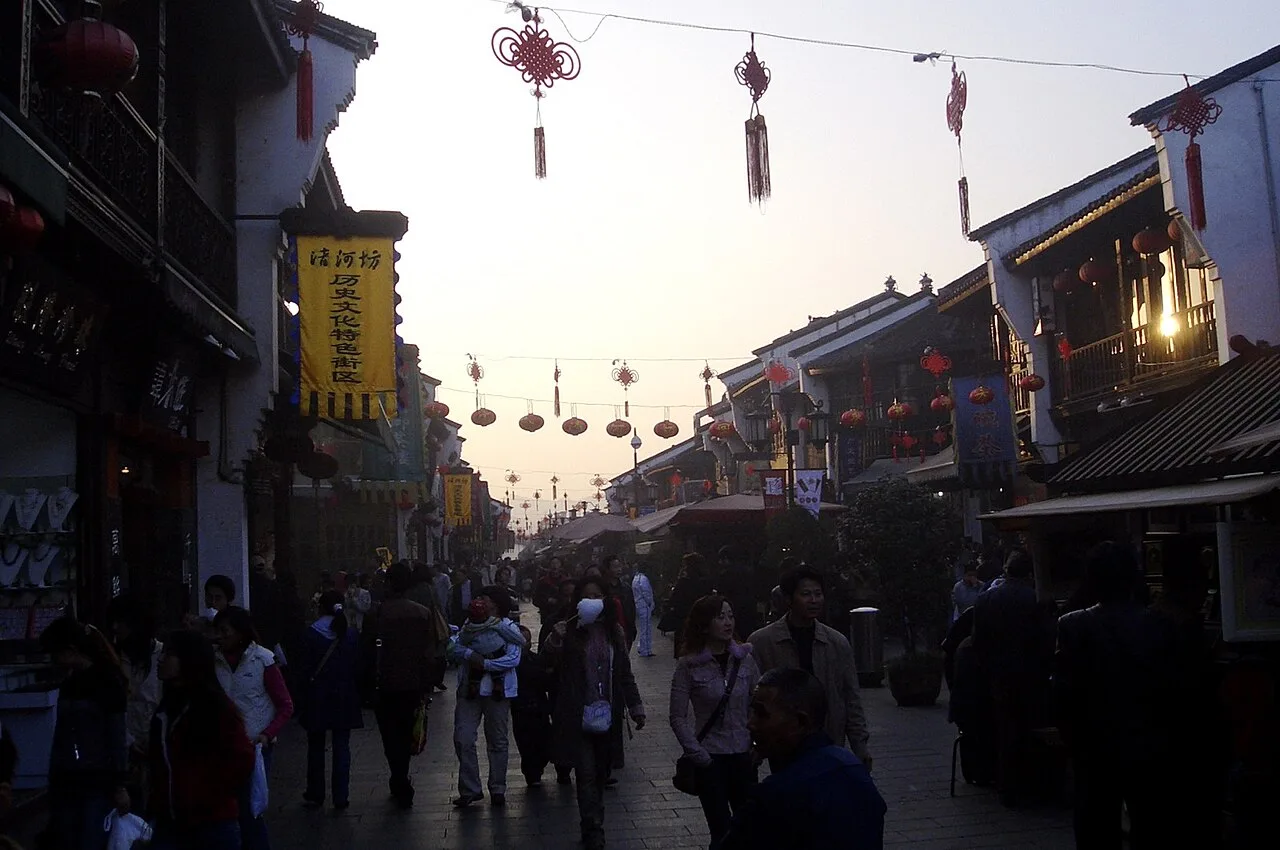
Qinghefang is Hangzhou’s “living old street”—not one of those gated, ticketed faux-antique districts, but a place where people truly live and where heritage brands are passed down through generations. From the aromatic scent of traditional Chinese medicine at Hu Qing Yu Tang to the pastry shops and silk boutiques lining the way, a stroll here immerses you in the authentic, bustling atmosphere of Hangzhou’s street life.
1. Location Overview:The Qinghefang Historic District is located at the northern foot of Wushan in the Shangcheng District of Hangzhou, Zhejiang Province. It is bounded by Xihu Avenue to the north, the Drum Tower to the south, Wushan Square to the west, and Zhonghe Middle Road to the east. Situated in the heart of the former Southern Song Dynasty Lin’an City ruins, it is one of Hangzhou’s best-preserved historic districts and the most vibrant reflection of old-city life. The district is adjacent to the southeast shore of West Lake and the Wushan scenic area, just a ten-minute walk from the Hubin commercial district, and is connected to the City God Pavilion and the Southern Song Imperial Street ruins, forming a “golden triangle” for cultural tourism in old Hangzhou. Historically a thriving hub of commerce, it is now the top choice for tourists seeking antiquity by day and market wandering by night. It serves as a living sample of Hangzhou’s urban pulse extending from the Southern Song Dynasty to the present—one could say that Hefang Street contains half of Hangzhou’s history. Remarkably, original residents still live here; in the depths of the alleys, laundry is hung and meals are cooked as usual. The bustle of the old street is not a performance; it is simply daily life.
2. Cultural Context:The name Qinghefang dates back to the Southern Song Dynasty, named after the residence of Zhang Jun, the Prince of Qinghe. Zhang Jun was a famous general of the Southern Song, and his prestigious estate gave the surrounding streets and alleys their name. During the Southern Song, the Imperial Street (now Zhongshan Middle Road) that intersected with Qinghefang served as the north-south axis of Lin’an City, where merchants converged and industries clustered, making it the most prosperous market of its time. Through the Ming and Qing Dynasties into the Republic of China era, this area remained Hangzhou’s most important commercial center. Architectures from the late Qing to the Republican era—such as Hu Qing Yu Tang, Fang Hui Chun Tang, Wanlong Ham Shop, Wang Runxing, and Ye Zhongde Tang—still line the streets. Beneath the blue bricks, black tiles, and horse-head walls, one can imagine the former glory of the Imperial Street. During the Zhongshan Middle Road comprehensive protection project in 2008, the ruins of the Southern Song Imperial Street were uncovered layer by layer beneath the road surface. The roadbeds of different dynasties overlap like tree rings, and some sections have been turned into exhibition points where pedestrians can look through glass at 800 years of history beneath their feet. Hefang Street reopened after renovation in 2001, and the Southern Song Imperial Street section of Zhongshan Middle Road opened in September 2009, preserving the texture and commercial veins of the old city and allowing the 800-year-old imperial layout to be reborn in the modern era. The revival of Qinghefang is a microcosm of Hangzhou’s old-city preservation: the city chose to “repair the old to look old” and revitalize businesses, ensuring the old street was neither demolished nor turned into a purely fake antique movie set.
3. Highlights & Attractions:The draw of Qinghefang lies in its living concentration of time-honored brands and intangible cultural heritage. Hu Qing Yu Tang was founded in 1874 by the “Red-topped Merchant” Hu Xueyan and is hailed as the “Medicine King of Jiangnan.” Its Traditional Chinese Medicine Museum, opened in 1991, is housed in a precious historic building; the plaque reading “Avoid Deception” speaks to the philosophy of honest business. Hu Qing Yu Tang’s traditional medicine culture was listed among the first batch of national intangible cultural heritage in 2006, and visitors can still see old pharmacists weighing and mixing medicines. Fang Hui Chun Tang and Baohe Tang continue the essence of traditional Chinese medicine, while heritage brands like Xie Fuchun fragrances, Wang Xingji fans, Zhang Xiaoquan scissors, and Zhu Family copper art are spread along the street, all within reach. The neighboring City God Pavilion stands atop Wushan, offering a panoramic view of West Lake and the Qiantang River. The former residence of Hu Xueyan (No. 18 Yuanbao Street) is a late Qing tycoon’s estate, featuring an exquisite garden and meticulous brick, wood, and stone carvings. The Zhu Bingren Copper Art Museum (Jiangnan Copper House) near Dajing Lane is renowned for its all-copper architecture and exhibitions; paired with Hu Qing Yu Tang, they represent the two great traditional crafts of Hangzhou: medicine and copper. Additionally, tea houses, opera stages, Pingtan storytelling, and Wushan snacks weave together a living scroll of urban life, where old crafts and trendy shops coexist harmoniously.
4. Visitor Information:Opening Hours: The Qinghefang district is open 24 hours with free entry. Shops generally operate from 9:00 to 22:00, with extended hours on weekends and holidays. The City God Pavilion is open approx. 8:00–20:00, and the Hu Xueyan Former Residence is open approx. 8:00–17:00 (last entry at 16:30). Ticket Prices: The street district is free. City God Pavilion: Adult tickets approx. 30 RMB, discounted tickets approx. 15 RMB. Hu Xueyan Former Residence: Adult tickets 20 RMB, half-price tickets 10 RMB. All prices are subject to official updates; reservations can be made via the “West Lake Tourism” WeChat official account. Transportation: Take Metro Line 7 to Wushan Square Station and exit via Exit D; it is a few minutes’ walk to the east entrance of the district. Alternatively, take Line 1 to Ding’an Road Station and walk for about 10 minutes. Buses 8, 84, 127, and 195 stop at the Qinghefang station. While there are underground parking lots nearby, spaces are limited and congestion is common; public transport is highly recommended. The terrain is flat with blue flagstone paving, making it ideal for a slow walk. Public toilets, drinking water points, and luggage storage are readily available. We recommend reserving half a day to combine snacking with historical exploration.
5. Travel Strategy:The recommended route is to enter from the Drum Tower, walk west along Hefang Street to Wushan Square, then climb Wushan to the City God Pavilion for a bird’s-eye view of West Lake and the city. On the way back, turn into Dajing Lane to visit Hu Qing Yu Tang, then continue to Yuanbao Street to see the Hu Xueyan Former Residence. The best photo spots are the Drum Tower, the Hefang Street archways, and the night view of the City God Pavilion; the lanterns and flagstones are most atmospheric at night. Focus your exploration on the Southern Song Imperial Street layout, the legacy of time-honored brands, and the rise and fall of Hu Xueyan. Families can try hands-on activities like making Xie Fuchun traditional powder or Wang Xingji fans. Educational trips should integrate Southern Song history and traditional Chinese medicine. For seniors, listening to Pingtan at a Wushan teahouse is the most relaxing experience. Hefang Street has two faces: day and night. At night, the lanterns light up and the sound of Pingtan drifts through the air; the night market and street food are often more vibrant than during the day, making it a must-visit time. To avoid crowds, visit on a weekday morning. To photograph an empty street, the hour around opening on weekday mornings is the “golden window”—the flagstones reflect the lingering light of the lanterns with almost no people around. Turning into side alleys like Dajing Lane or Niuyangsi Lane, where old walls meet modern cafes, is the best way to feel the warmth of the old city’s renewal.
6. Best Time to Visit:Spring and autumn are the best seasons, with pleasant temperatures and lush greenery on Wushan. In summer, avoid the midday heat and opt for the evening and night markets, where the mountain breeze provides relief. In winter, you may encounter snow on Wushan, giving the old street a unique, silver-clad charm. During festivals, the district often hosts intangible cultural heritage markets and lantern festivals, with the Lantern Festival and Mid-Autumn Festival being the most lively. Nearby connections: Walk north to the West Lake lakeside and the musical fountain; go east via Zhongshan Middle Road to the Southern Song Imperial Street ruins; go south up Wushan to visit the City God Pavilion, Wu Gong Temple, the Twelve Zodiac Stones, and old mountain tea stalls, then proceed to Fengshan Gate to explore the Southern Song Imperial City ruins. Local delicacies and specialties are abundant: “Dingsheng” (Victory) cakes symbolize triumph, and “Congbaohui” (Scallion Wrap) contains a subtle satire of Qin Hui—both are snacks with stories. Also try Wushan butter cakes, soy-marinated duck, and Hangzhou-style dim sum. For souvenirs, Xie Fuchun duck egg powder, Wang Xingji fans, and Zhang Xiaoquan scissors are recommended; be sure to buy from official stores to take home a genuine memory of Hangzhou. At the old tea stalls on the mountain, seeing local residents strolling with birdcages sharing a table with tourists is the most candid and charming part of daily life on this street.