Shanghai · Gardens & Ancient Architecture
Shanghai City God Temple
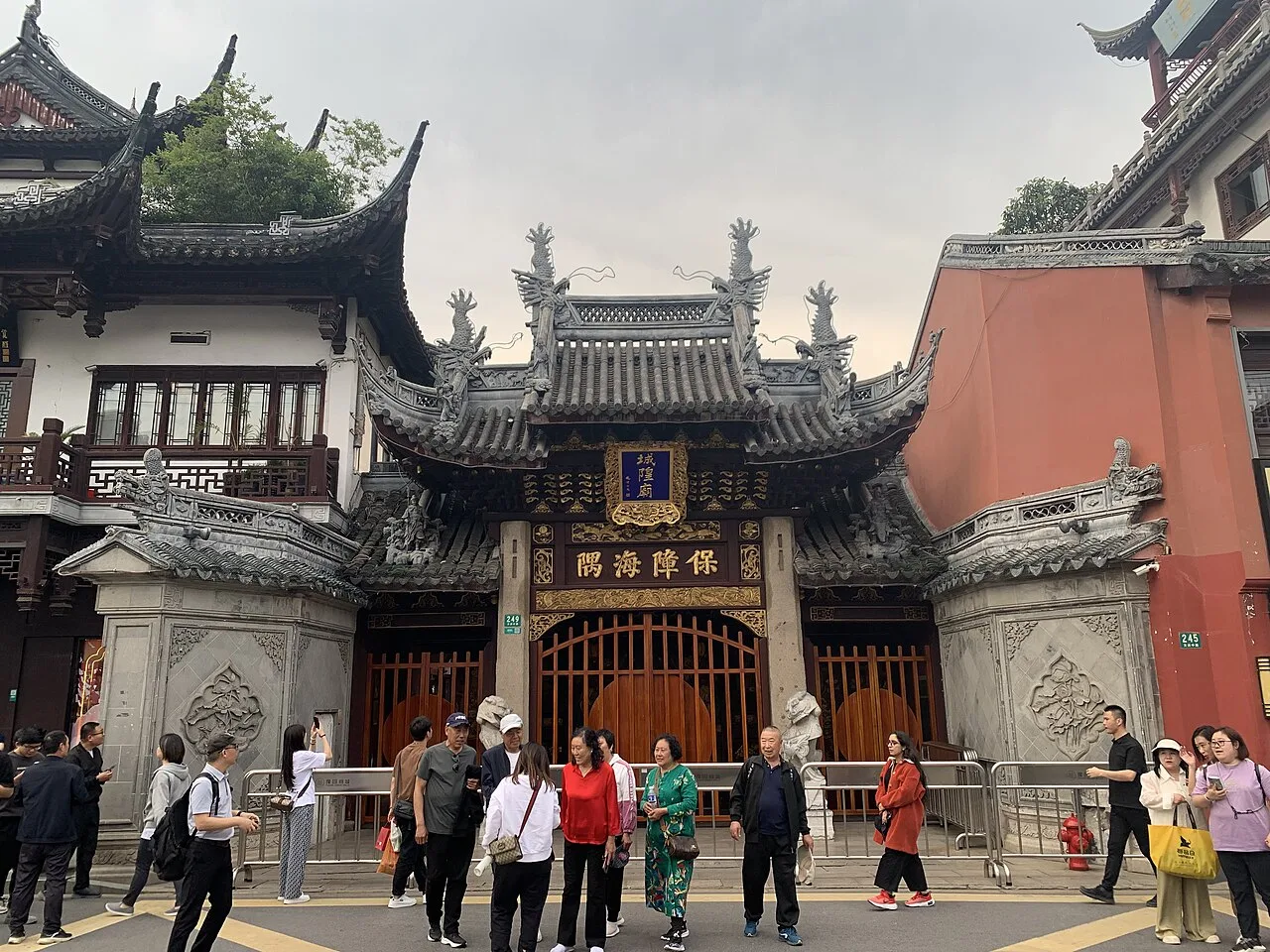
To me, the City God Temple feels like “half incense, half everyday life”—on one side is the solemnity of the City God Temple, and with a quick turn, you are met with the steaming Nanxiang Xiaolongbao and the bustling crowds of the Nine-Turn Bridge. It condenses the “old-school” essence of Shanghai into a single space; a stroll here allows you to both offer incense for blessings and feast on a variety of local Benbang snacks.
1. Location Overview: The Shanghai City God Temple tourism area is located around Fangbang Middle Road in the Huangpu District, situated at the heart of the Old City (Laochengxiang). It is Shanghai’s most prestigious district for folk culture and commerce. The Old City is the urban origin of Shanghai: the city’s county status began in the Yuan Dynasty, with the city walls roughly outlining the area of today’s Renmin Road and Zhonghua Road, placing the City God Temple exactly at the center of this ancient city. Although the walls are gone today, the surrounding street layout still retains the pattern of the Old City. Together with Yu Garden and the Nine-Turn Bridge, it forms the essence of the Old City and serves as the first stop for travelers wanting to experience the authentic “smoke and fire” (lively atmosphere) of local life. Within the city’s cultural tourism layout, the City God Temple, the Bund, and East Nanjing Road are all in Huangpu District; together, they link the different facets of Shanghai, from its opening as a financial port to its grassroots folk customs, making it an indispensable node for feeling the texture of old Shanghai.
2. Cultural Context: Built during the Yongle era of the Ming Dynasty, the Shanghai City God Temple is dedicated to the City God, the guardian deity of the city, serving as a spatial vessel for traditional urban faith. Over time, the temple has enshrined three different City Gods: Huo Guang, Qin Yubo, and Chen Huacheng. Qin Yubo is the local deity most familiar to Shanghai residents, while Chen Huacheng was the defender of Wusong Fort who died for his country during the Opium War, marking a point where faith and city history overlap. The deity’s role in protecting the city made this temple the center of spiritual life for citizens since the Ming Dynasty, with a constant stream of worshippers during new and full moons and divine birthdays. After centuries of rise and fall, the temple—with its sweeping eaves and continuous incense—remains an important site for Taoist activities in Shanghai. The adjacent Yu Garden, built during the Jiajing era of the Ming Dynasty by Pan Yunduan to honor his father (the name “Yu” meaning to please one’s elders), took many years to complete. It is one of Shanghai’s five great classical gardens and a precious remnant of Jiangnan literati gardens within the city center. In the late Qing and early Republican periods, the district flourished based on the temple fair economy, gathering snacks, teahouses, and handicrafts to form a unique Old City street culture, which remains the warmest part of Shanghai’s urban memory.
3. Highlights: The first highlight is the City God Temple itself. With its solemn halls and constant incense, visitors can experience traditional faith and a festive atmosphere—the fact that it operates normally in the heart of a bustling commercial center creates a layering of the sacred and the secular, giving the Old City more vitality than a mere reconstructed antique street. The second highlight is Yu Garden. The garden uses large yellow stone rockeries as its framework, accented by famous stones like “Yu Linglong.” Pavilions such as Sanshui Hall, Yangshan Hall, Wanhua Tower, and Yule Pavilion are arranged around the water, featuring winding corridors and changing views at every step. Dianchun Hall once served as the headquarters for the Small Swords Society, and the Inner Garden is a refined example of a “garden within a garden.” The third highlight is the Nine-Turn Bridge and the Lotus Pond. The bridge’s nine bends are intended to ward off evil and bring good fortune. The Huxinting Teahouse in the center of the pond is one of Shanghai’s oldest teahouses; standing on the bridge and looking back at the eaves of Yu Garden and the surrounding city sounds is the best way to appreciate how Shanghainese people turn daily life into a landscape. The fourth highlight is the surrounding street life. Surrounded by time-honored brands like Nanxiang Xiaolongbao, Green Boat Restaurant (Lü Bo Lang), and Ningbo Tangtuan, you can find xiaolongbao with eighteen pleats—thin yet resilient skin. The “boat-shaped” delicacies at Green Boat Restaurant are as exquisite as artworks and have frequently served foreign dignitaries. Listening to opera, sipping tea, and visiting old shops provide a living presentation of Shanghai folk customs. During the Spring Festival Lantern Fair and Mid-Autumn Temple Fair, dragon and lion dances and traditional operas are performed, making the atmosphere exceptionally vibrant.
4. Visitor Information: The City God Temple tourism district is open all day and free to enter. To enter the Old City God Temple for worship, a “fragrance ticket” (entry fee) of 10 RMB is required; the temple is generally open from 8:30 to 16:30 (opening earlier on the 1st and 15th of the lunar month), subject to on-site announcements. Yu Garden requires a ticket: Peak season (April 1 – June 30, Sept 1 – Nov 30) is 40 RMB for adults; Off-peak (July 1 – Aug 31, Dec 1 – March 31) is 30 RMB for adults. Students and seniors over 60 get half price with valid ID; children under 6 or 1.3 meters are free (must be accompanied by an adult). Combination tickets including the Old City God Temple are also available; please check the ticket office for current pricing. Yu Garden is open from 9:00 to 16:30 (last entry at 16:00) and is closed every Monday (except public holidays). Currently, entry is reserved via morning and afternoon sessions; please note your selected time slot when purchasing. Transportation: Take Metro Line 10 or 14 to Yu Garden Station; it is a short walk from the exit. Many bus lines also stop near the City God Temple and Yu Garden. Roads in the Old City are narrow and parking is limited; if driving, use nearby commercial parking lots, though public transport is highly recommended. A visit of two to three hours is suggested. The streets are flat and suitable for slow walking; official guides and audio tours are available in the garden. During holidays, crowds are dense, so arriving early to avoid the peak is advised.
5. Travel Tips: For a half-day itinerary, it is recommended to enter via Yu Garden, following the classic route through the Great Rockery, Dianchun Hall, Yu Linglong, and the Inner Garden. Then, exit to walk across the Nine-Turn Bridge and explore the City God Temple old streets, finally tasting snacks at Green Boat Restaurant or the Nanxiang Steamed Bun Shop. Most visitors leave with a box of five-spice beans or pear syrup candy; there are always queues at the time-honored brand counters. The best photo spots are on the Nine-Turn Bridge looking back at the eaves of Yu Garden, the Huxinting Teahouse, and the Fangbang Middle Road archway. Focus your attention on the gardening techniques of Yu Garden and the folk significance of the City God faith. This area is suitable for families, seniors, and food lovers. Families can enjoy listening to Pingtan storytelling at Huxinting or feeding the koi; students can focus on the evolution of garden architecture and Haipai (Shanghai-style) folk customs. To truly explore, expand your walk to Fangbang Middle Road, Anren Street, and the Yu Garden old streets, where more old shops and handicrafts are hidden. Intangible cultural heritage stalls selling sugar paintings, dough figurines, and paper-cutting are still in operation. Walking south leads to the Old Market area, where you can feel the daily rhythm of locals. When placed within the broader map of the Old City, the City God Temple is not an isolated attraction but a touchable piece of Shanghai’s living history, deserving of a slow half-day stroll rather than a 30-minute “check-in.” Pets are prohibited in the district, and tripods are banned inside some ancient buildings.
6. Best Time to Visit: It is suitable for all seasons. The Yu Garden Lantern Fair during Spring Festival and the Lantern Festival, as well as the Mid-Autumn Temple Fair, are the most lively. The old streets are decorated with lanterns, and the crowds surge as dragon and lion dances and Hu Opera or Pingtan performances turn the static architecture into a fluid cultural scene. During the Lantern Fair, the Yu Garden and Nine-Turn Bridge areas implement reservation-based crowd control and one-way traffic; please refer to the annual announcement. Visitors wishing to see the lanterns must book in advance and avoid peak hours. Spring and autumn offer the most comfortable weather for strolling. You can easily combine this visit with a trip to the Bund to see the International Architecture Exhibition, shopping on East Nanjing Road, or visiting the Xiaonanmen and Confucian Temple areas. Local delicacies are the heart of the experience: Nanxiang Xiaolongbao, pork chop with rice cakes, Ningbo Tangtuan, five-spice beans, and pear syrup candy are all representative souvenirs. A basket of xiaolongbao, a pot of clear tea, and a box of pear syrup candy as a gift—that is how you fully experience a day in the Old City.