Yangzhou · Gardens & Ancient Architecture
He Garden
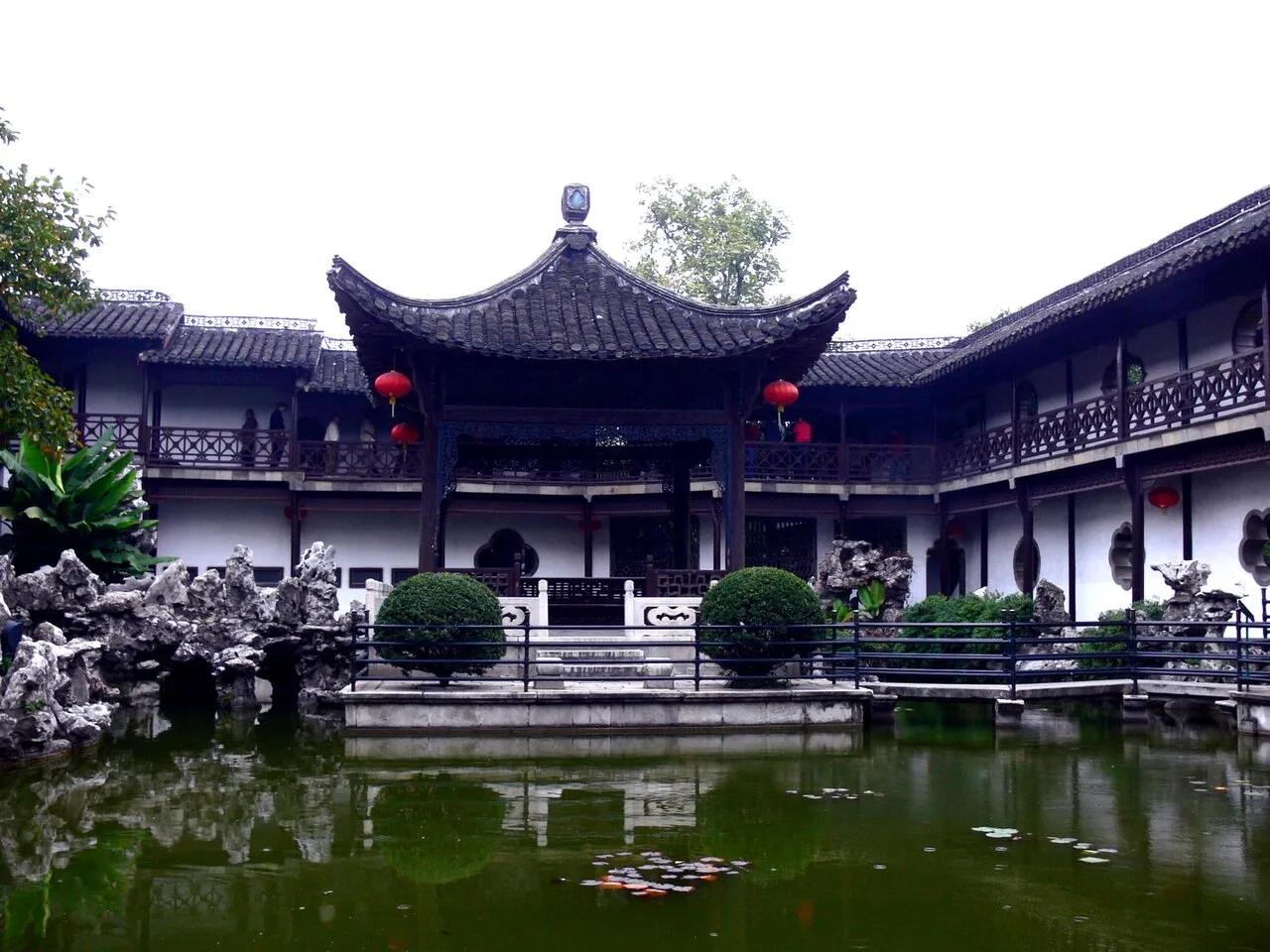
He Garden is hailed as the “Number One Garden of the Late Qing Dynasty.” It is most famous for the “World’s First Corridor”—a double-decked covered walkway stretching 1,500 meters that weaves the entire garden together, offering a new, picturesque view with every step. Strolling slowly along the corridor on a sunny day, one can watch the play of light and shadow through the lattice windows. The ingenious designs of “Moon in the Water” and “Flower in the Mirror” are particularly breathtaking, showcasing the profound wisdom of ancient garden architects.
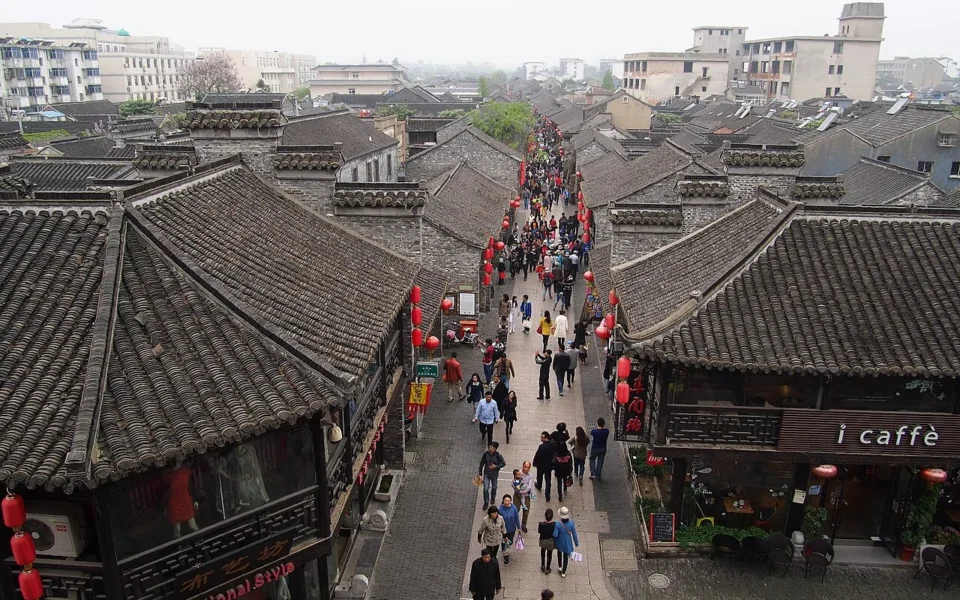
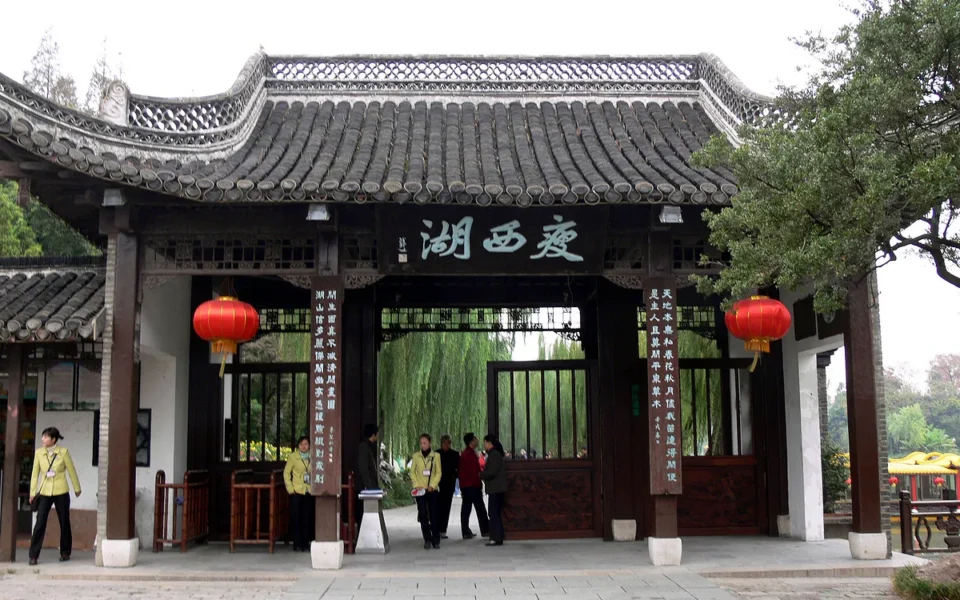
1. Location Overview: He Garden is located at No. 66 Xu Ningmen Avenue, Guangling District, Yangzhou, Jiangsu Province. Originally named Jixiao Mountain Villa, it is situated in the southeast of Yangzhou’s ancient city by the Grand Canal, within walking distance of Dongguan Street and Pishi Street. As a representative work of late Qing Dynasty gardens in Yangzhou, it marks the transition from classical to modern styles among the gardens of salt merchants and officials. Spanning approximately 14,000 square meters with a construction area of about 7,000 square meters, the estate consists of the East Garden, West Garden, residential courtyards, the Pianshi Mountain Studio, and the He Family Ancestral Hall. With residences nestled within the garden and the garden enveloping the homes, it is the largest surviving official residence garden in Yangzhou. Together with Ge Garden, it is known as the “Twin Gems of Yangzhou Gardens.” Both are Major Historical and Cultural Site Protected at the National Level, and He Garden is also a National 4A Tourist Attraction and a National Key Park. Though not vast, it is comprehensive: halls, corridors, rockeries, ponds, and flora are layered intricately, making it a primary specimen for studying private gardens of the late Qing Dynasty. Within this single garden, one can witness the intersection of traditional and modern China.
2. Cultural Heritage: He Garden was built in 1883 (the 9th year of Emperor Guangxu’s reign) after He Zhixiao resigned from office and returned home. Born He Weijian in Wangjiang, Anhui, He Zhixiao held several high-ranking positions, including Langzhong of the Ministry of Revenue and Salt Commissioner of Wuchang, Hubei, eventually serving as the Governor of Handan, Huanggang, and De’an and Supervisor of the Jianghan Customs. He was a capable high official of the late Qing. During his tenure in Hankou, he was deeply influenced by Western culture; however, his refusal to yield to foreigners often put him at odds with his superiors. Eventually, he retired to Yangzhou, where he purchased the site of the early Qing dynasty Wu family’s Pianshi Mountain Studio and expanded it into a garden over a decade. The name “Jixiao Mountain Villa” is derived from Tao Yuanming’s *Return to My Homeland*, echoing the sentiment of “leaning against the south window to express pride and climbing the eastern bank to whistle,” reflecting a desire to find solace in nature and distance oneself from the turmoil of officialdom. The He family produced generations of talent, including Hanlin scholars, professors, painters, and academicians. The historical exhibits in the Yuxiu Pavilion continue to tell the story of this scholarly family tradition, giving He Garden both aesthetic beauty and intellectual depth. In 1988, He Garden was listed as a Major Historical and Cultural Site Protected at the National Level.
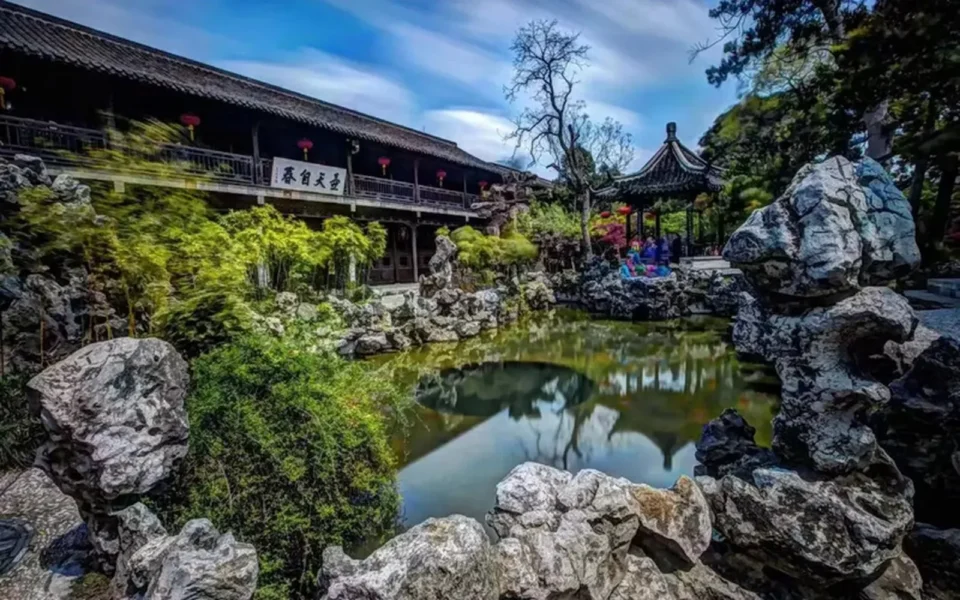
3. Highlights: The most distinctive feature of He Garden is the double-decked corridor. This intricate network of walkways, totaling about 1,500 meters, connects every attraction in the garden and is praised as the “World’s First Corridor.” Industry experts even call it the prototype of the Chinese overpass: the upper level was for the owner and guests to enjoy the scenery, while the lower level was for servants. It kept clothes dry in the rain and provided shade in the sun—a pinnacle of garden design. Another treasure is the Pianshi Mountain Studio, whose rockery is said to be a unique masterpiece created by the great Qing painter Shi Tao. The reflection of the rocks in the pond creates a captivating interplay of reality and illusion, known as “Moon in the Water” and “Flower in the Mirror,” which has drawn praise from scholars like Yu Qiuyu. The garden also blends traditional aesthetics with Western elements: the Yuxiu Pavilion, the residence for the He family women, is a two-story brick-and-wood building combining Chinese decorative screens with Western louvers, fireplaces, and imported floor tiles. The Shuixin Pavilion, built in the center of the pond, was where the owner once listened to music and watched operas. The Boat Hall, Peony Hall, and Osmanthus Hall are each uniquely crafted. He Garden has also served as a filming location for various TV series, such as *Green Grass by the River*. Walking through its changing vistas evokes the lifestyle of the scholar-merchants of the late Qing. The family ancestral hall and the study room further blur the line between a “garden” and a “home”—this is what distinguishes He Garden from purely ornamental gardens: it was first a lived-in residence, and second, a work of art.
4. Visitor Information: Opening Hours: Approximately 7:30 AM – 5:30 PM (Last entry at 5:00 PM). Hours may be extended in summer; please refer to official announcements. Ticket Prices: Vary by season. Peak season: 45 RMB; Off-peak: 30 RMB. Half-price for minors (6–18), full-time students, and seniors (60–69). Free entry for seniors 70+ and children under 6 or under 1.4m with valid ID. Transportation: Take bus lines 6, 19, 66, or You 1 and get off at the 723 Institute stop. Cycling or walking between Dongguan Street and Pishi Street is also convenient. Parking is available in nearby lots (fees apply). Guided tours and audio guides are available; tickets can be booked in advance via the official WeChat account. Night tours are held periodically; please check the official announcement for schedules and pricing. It is recommended to allow 1 to 3 hours to fully appreciate the ingenuity of the corridors.
5. Travel Tips: The recommended route begins at the East Gate. Start with the Boat Hall and Peony Hall in the East Garden, then visit the Pianshi Mountain Studio to see Shi Tao’s rockery. Climb the double-decked corridors to experience the “overpass” design, then pass through the Shuixin Pavilion and Butterfly Hall toward the West Garden, ending at the Yuxiu Pavilion and the He Family Ancestral Hall. The best photo spots are the geometric framing of the corridors, the reflections in the Pianshi Mountain Studio, and the East-meets-West facade of the Yuxiu Pavilion. Light and shadow shift throughout the day, with early morning and evening being the most photogenic. Focus your tour on the architectural wisdom of the corridors and the He family’s scholarly tradition. Families can play a “corridor treasure hunt” by counting the different patterns of the lattice windows. For academic visitors, combine the tour with a study of garden architecture and Shi Tao’s art. Seniors should stick to the flat main paths and rest at Shuixin Pavilion to enjoy the garden’s essence without too many stairs. Visiting He Garden and Ge Garden on the same day is highly rewarding: while Ge Garden excels in its “Four Seasons” rockeries, He Garden excels in its spatial corridors. Comparing the two reveals the two peak styles of Qing dynasty gardening in Yangzhou. If a night tour is available, the lights reflecting on the corridors and Shuixin Pavilion beautifully recreate the atmosphere of the original Jixiao Mountain Villa.
6. Best Time to Visit: Spring and autumn are ideal, with pleasant temperatures and lush foliage. In early spring, the magnolias in front of the Yuxiu Pavilion signal the arrival of spring in Yangzhou. In summer, the water features and shaded corridors provide relief from the heat, especially during night tours. Winter is quiet and serene, perfect for observing light patterns through the lattice windows, and especially elegant after a snowfall. You can easily combine this with a visit to Dongguan Street (traditional market), Ge Garden (Four Seasons rockery), Pishi Street (trendy boutiques), and the Grand Canal Museum of China for a quintessential one-day tour of the ancient city. From the garden, a short walk leads to Pishi Street, where cafes, bookstores, and snacks cluster—a modern contrast to the classical He Garden. The He Garden–Pishi Street–Dongguan Street route is the best for a slow-paced stroll. Local delicacies to try include Yangzhou morning tea, Lion’s Head meatballs, and Braised Shredded Tofu (Da Zhu Gan Si), with many snacks available around the Xu Ningmen area. Before leaving, consider buying local specialties like Xie Fuchun duck egg noodles or Yangzhou lacquerware. He Garden is meant to be savored slowly; the further you walk the corridors, the more ingenuity you find. Spend half a day here to encounter the final moments of composure in Yangzhou’s garden history amidst the light and shadow of the late Qing.