Xuzhou · Ancient Towns & Old Streets
Fengchu Street
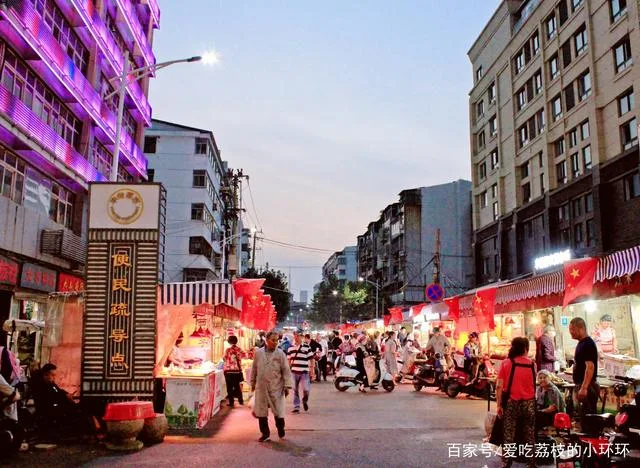
Fengchu Street is one of Xuzhou’s most vibrant food streets, where the aromas of laomo rolls, bazi meat, earthen pot chicken, and mutton soup waft through the air from dawn till dusk. This isn’t a “performance” for tourists; it is the authentic daily dining of Xuzhou locals. If you want a genuine taste of Xuzhou, this is the place to be.
1. Location Overview:Fengchu Street is located in the Yunlong District of Xuzhou, stretching from Minzhu South Road in the east to Jiefang Road in the west. Though only a few hundred meters long, this old street is situated in the bustling heart of the city, adjacent to historic cultural areas such as Hubushan and Huilongwo. The name “Fengchu” (meaning “abundant storage”) originates from its historical function as a grain depot, reflecting the city’s legacy as a major canal hub and commercial center. In Xuzhou’s modern tourism landscape, Fengchu Street is the quintessential spot for experiencing local street life and culinary memories. Together with the Hubushan Ancient Residences and Ximatai, it forms the South City Old Town cultural and leisure cluster. It serves as the perfect transition for visitors moving from famous monuments to the “human fireworks” of daily life, and remains the lifelong taste coordinate for many locals. A single short street encapsulates the appetite of an entire city. A ten-minute walk north leads to the Pengcheng Square commercial district, while Hubushan lies to the south, placing the street at the very center of the old town’s vibrancy.
2. Cultural Context:Since ancient times, Xuzhou has been a crossroads for north-south travel and a vital point for canal transport, leading to a highly developed grain storage industry. The area around Fengchu Street became a hub for grain shops and warehouses due to its proximity to the city center and convenient water and land access. As the city evolved, its storage functions faded, and the street-facing buildings gradually became residences and shops, evolving over recent decades into a snack street famous for its street food. It may lack the grand records of palaces or temples, but it preserves the city’s taste genes and neighborhood social patterns in the simplest way. Amidst the commercial hustle, the layout of old alleys and historical place names are still visible, intertwining with the nearby Huilongwo Historic and Cultural District and the Ming and Qing architecture of Hubushan. This allows visitors to taste the city’s urban lineage in a single bowl of snacks. This transformation from a granary to a food street is a vivid footnote to the natural evolution of urban functions, making Fengchu Street a living specimen of Xuzhou’s commoner life. Xuzhou cuisine combines the salty, fresh, and rich flavors of Lu cuisine with the flour-based traditions of the Central Plains, and the stalls of Fengchu Street are the ultimate showcase of this fusion: the spicy aroma of pepper in a bowl of “Ta Tang” and a laomo roll that can wrap half of Northern China’s dining table.
3. Highlights:The core attraction of Fengchu Street is its collection of around one hundred authentic snack shops and stalls, boasting a wide array of signature flavors. Among them, the braised pork trotters—with their bright red glaze and melt-in-the-mouth texture—are a must-order for foodies. Stir-fried snails (locally known as “Wulu Niu”) are famous for their spicy and numbing flavor, representing Xuzhou’s preference for bold tastes. Fried steak, crispy on the outside and tender inside, is a street classic loved by all ages. Additionally, Xuzhou specialties such as rice noodles, Ta Tang, laomo rolls with cuanzi, frog and fish, bagu youtiao, and Mi Sandao can all be found here. The street is short but the density is high; shops sit side-by-side, stoves face each other, and the sounds of vendors calling out mingle with the fragrances. It is a living laboratory for observing the daily dietary preferences of Xuzhou people. You won’t find the reserve of a fine-dining restaurant here, but you will find the most authentic warmth of the marketplace. It is also a natural set for photographers and vloggers documenting “Market China”—just lift your camera and you’ll capture life itself in its steamy reality. Every evening, vendors set up their stoves, diners huddle around plastic stools, and children weave through the crowds with candied haws—this bustle is, in itself, the signature “scenery” of Fengchu Street.
4. Visitor Information:Fengchu Street is an open neighborhood accessible all day with no entrance fee. Most shops operate between 10:00 and 22:00, though some breakfast stalls open at dawn and late-night snacks extend into the early hours; please check individual shop times. Payment is handled per shop, with average spending ranging from ten to several dozen yuan—it’s very affordable, and a few dozen yuan can leave you feeling quite full. Transportation Guide: Take Metro Line 2 to Hubushan Station and walk for about 10 minutes; or take Metro Line 1 to Pengcheng Square Station and walk or transfer to a bus. Bus passengers can get off at stops near Xuanwu Market or Hubushan. For those driving, navigate to “Fengchu Street”; there are commercial parking lots nearby, but they are crowded during peak hours, so public transport is recommended. A typical visit lasts 1.5 to 2.5 hours. The street is flat and suitable for families. Most stalls support mobile payments, though carrying some small change is safer. Popular stalls can be slow, so don’t wander too far after ordering. In summer, please be mindful of food hygiene; in winter, hot soups are best for warming up; on rainy days, the alleys are narrow, so watch your step. Keep a close eye on children and belongings in crowds.
5. Travel Tips:Visiting in the evening is recommended. Enter from Minzhu South Road at the east end, stroll west while snacking, and finish near Hubushan, where you can climb Ximatai or relax in Huilongwo. For a comprehensive yet manageable eating plan, follow this “foodie route”: start with Ta Tang and laomo as a base, then try braised pork trotters, stir-fried snails, and fried steak, cleanse your palate with rice noodles or frog and fish, and finish with Mi Sandao—alternating sweet and savory is the most pleasant way to eat. On your first visit, don’t try too many shops; picking three or four highly-rated old stalls is enough. Avoid peak meal times; 3:00 PM to 5:00 PM is quieter, and vendors have more time to chat about their recipes. The best photo spots are the close-ups of stalls with neon lights and rising steam, human-interest shots of the queues, and the street scene under warm yellow lights at night; a shot of the steam rising from a bowl of snacks is particularly evocative. To capture empty alleys, arrive early; the bluestone paths and the silence before opening have a different charm. This street is suitable for all: families can explore local snacks together, young travelers can take photos and enjoy midnight snacks, and visitors from other cities can quickly build a kinship with Xuzhou through their taste buds.
6. Best Time to Visit:Fengchu Street is great year-round. Summer nights are the most lively, winter is perfect for warming up with hot soups (Ta Tang, rice noodles), and spring and autumn offer pleasant weather for a slow stroll. During the “Fu” period (the hottest days of summer), Xuzhou has a custom of eating “Fu mutton,” and the mutton shops and soup stalls on and around the street become particularly bustling—a unique local ritual for cooling down and nourishing the body. You can combine this street with the Hubushan Ancient Residences, Ximatai, and Huilongwo Historic and Cultural District for a half-day tour of the South City Old Town—ancient architecture by day, street food by evening, all connected by a short walk. While street snacks are the highlight, you can find specialized shops for bazi meat, earthen pot chicken, and BBQ nearby for a fuller Xuzhou banquet experience. You can also buy Xuzhou specialties such as Xiaoer Sutang, Mi Sandao, and Pizhou Ginkgo as souvenirs. Though the street is short, it is a key to understanding the character of Xuzhou people—their love for value and bold, rich flavors. It is the most unadorned yet touching side of the city. What you eat at Fengchu Street isn’t “refinement,” but the generous and hearty spirit of Xuzhou. Approach it with this understanding, and the flavor will be just right.