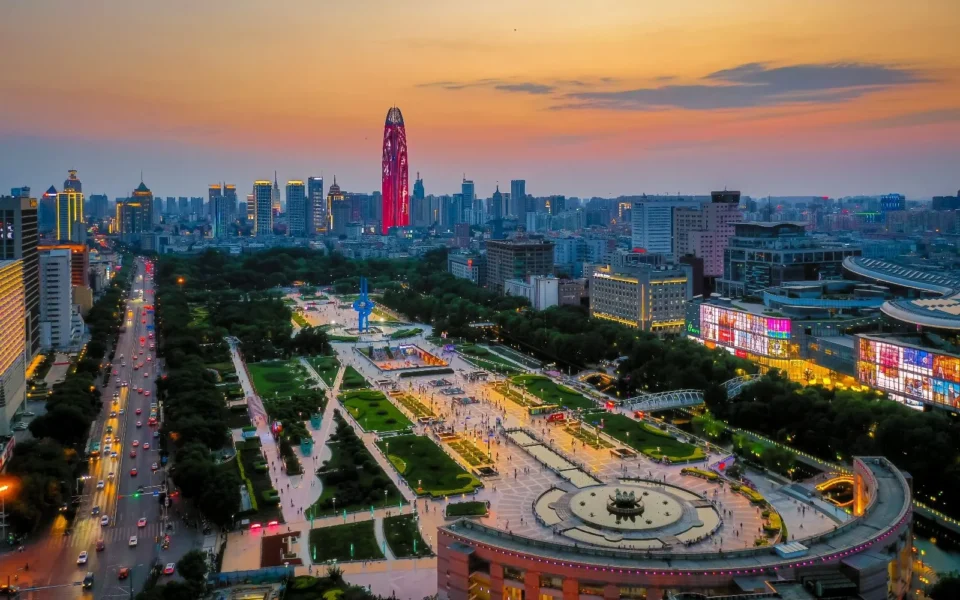
Jinan · Lakes & Waterfront
Black Tiger Spring
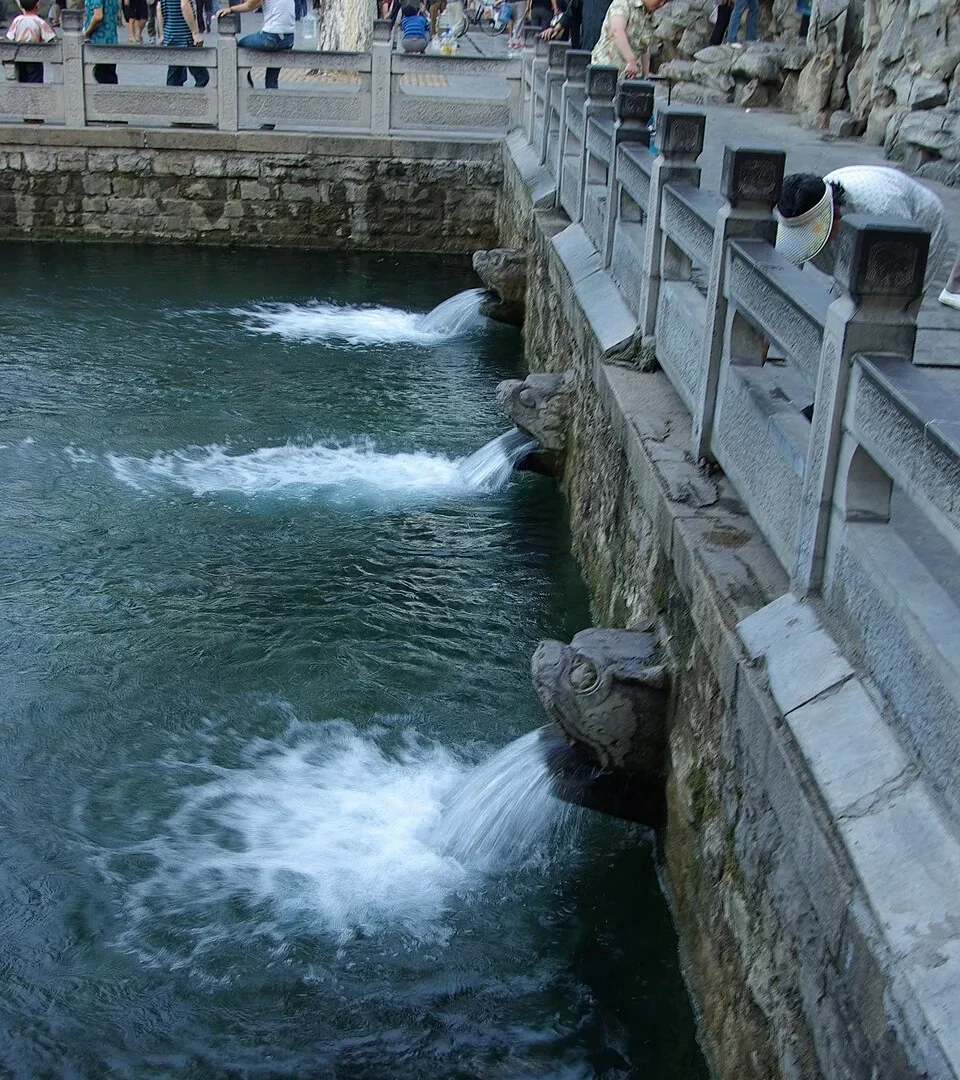
The most enchanting quality of Black Tiger Spring is the fluid vitality of “springs flowing through the city”—three tiger heads spout water day and night, which then trickles gently along the moat. Standing by the spring in the early morning, watching Jinan locals carry buckets to collect water or sit and chat over tea, one realizes that life in the “City of Springs” is lived in these simple, everyday moments.
1. Location Overview: Black Tiger Spring is located in the southeastern corner of the Ring City Park, along the South Moat to the south of Jiefang Pavilion in Lixia District, Jinan. It is the main spring of the Black Tiger Spring group, one of Jinan’s four major spring clusters, and one of the 72 famous springs recorded on the “Famous Springs Tablet” from the Jin Dynasty. Situated adjacent to the southeast of the old city, it sits nestled among Jiefang Pavilion, Kuanhouli, and the moat, forming a vital part of the “World’s First Spring” scenic area. Once the water flows into the moat, it winds north and connects to Daming Lake, effectively linking Jinan’s springs, lakes, and city walls via a single waterway. From a cultural tourism perspective, Black Tiger Spring is the most accessible of the city’s famous springs—open along the river and free of charge 24/7. Locals and tourists share the space, making it both a living symbol of spring culture and an authentic stage for the street life of old Jinan. Compared to paid gardens, this spot reveals the city’s true temperament: no tickets, no planning—just a stroll to see, hear, and touch the spring.
2. Cultural Heritage: The name Black Tiger Spring first appeared over 800 years ago on the “Famous Springs Tablet” of the Jin Dynasty and was later documented in the “Poems of the Seventy-Two Springs” by Yan Bi in the Ming Dynasty and the “Records of the Seventy-Two Springs” by Hao Zhigong in the Qing Dynasty. According to popular lore, the spring originates from a deep cavern beneath a cliff; a giant rock inside the cave resembled a crouching black tiger, and as the water surged from beneath the rock, the crashing sound resembled a tiger’s roar. Yan Bi’s poetry captures this intensity: “At midnight, the north wind cracks the stone, a clear roar echoes as the moon fades.” During the Qing Dynasty, stone pools were constructed with carved tiger heads to channel the water, and a Black Tiger Temple once stood above the cavern during the Jiajing era of the Ming Dynasty. In 1931, the pool was expanded and deepened, and the output was increased to three tiger heads, creating the current layout. In 1985, pavilions were added during the renovation of the Ring City Park for visitors to admire the view. In 1991, the dual tiger sculptures designed by artist Han Meilin were completed on the east side—one crafted from black granite and the other from bronze—adding a touch of contemporary art to this ancient spring. Local folklore also tells of “Brother Black” and “Sister Tiger” fighting a vicious dragon and transforming into the spring; though not official history, these stories are passed down by local families, adding human warmth to the cool waters.
3. Highlights: First, the Three Tiger Heads. After exiting the cavern through underground channels, the water surges from three stone-carved tiger heads with a sound like distant thunder and the force of galloping horses, falling into a stone square pool (13m x 9m) before overflowing through a sluice gate into the moat like a water curtain. Among the 72 famous springs, Black Tiger Spring has the second-highest discharge after Baotu Spring; its flow acts as a “barometer” for Jinan’s groundwater levels, with splashing, powerful surges during the rainy season. Second, the Black Tiger Spring Cluster. This is Jinan’s second-largest spring group, with 14 spring pools stretching about 700 meters west along the South Moat. Pipa Spring, Agate Spring, White Stone Spring, and Golden Tiger Spring are distributed sequentially, forming a walkable trail where visitors can touch and collect water. Third, Direct Drinking. There are designated drinking points where locals bring buckets and bottles to collect the crisp spring water—the morning queues themselves are a scenic sight. Nearby tea houses serve “Big Bowl Tea” for just a few yuan; sipping this tea slowly by the spring is a quintessential old Jinan tradition. Fourth, the Dual Tiger Sculptures and Night View. The Han Meilin sculptures, mirrored by the lights of Jiefang Pavilion, are particularly photogenic after dusk, marking the intersection of the city’s poetic side and its daily bustle.
4. Visitor Information: Opening Hours: The Black Tiger Spring and South Moat walkway are open 24/7, year-round. Ticket Price: Free admission; surrounding activities such as moat cruise boats are charged separately. Transportation: Located south of Jiefang Pavilion in Lixia District. Take a bus to “Heihuquan” or “Jiefangge” stations and walk a short distance. Kuanhouli and Spring City Square are within walking distance, offering convenient dining and shopping. For those driving, navigate to “Heihuquan”; parking is available nearby. Suggested visit duration: 1 to 2 hours. Services: Drinking points, public benches, and a cruise pier are available. You can take a boat along the moat to visit Baotu Spring and Daming Lake. Precautions: Stone slabs by the spring are often slippery and can freeze in winter; please wear non-slip shoes and supervise children and the elderly. While the water is clear, those with sensitive stomachs are advised to boil it before drinking. Please do not throw litter into the pools or river. You may follow the “Tianxia Diyiquan” (World’s First Spring) WeChat official account for boat schedules and lighting times.
5. Travel Tips: For a half-day trip, start at Jiefang Pavilion, follow the South Moat to Black Tiger Spring to see the three tigers, then head west to visit Pipa Spring and Agate Spring. Finish by filling a bottle at the drinking point and resting at a tea house to eavesdrop on local chatter. For a full-day trip, take the moat cruise west to Baotu Spring and north to Daming Lake; combined boat tickets are more economical. Best photo spots: Shoot the three stone tigers from the front stone steps, capture the spring and the city skyline from the platform across Jiefang Pavilion, or photograph reflections at the White Stone Spring bridge to the east. Key points for guides: Mention the Famous Springs Tablet, the origin of the tiger head design, and the constant water temperature (approximately 18°C year-round, warm in winter and cool in summer). Families with children can enjoy collecting water and boat trips; the Ring City Park greenway is flat and ideal for jogging or cycling. To witness the most authentic local life, visit between 6:00 AM and 8:00 AM. Senior travelers should avoid the crowds on weekend evenings. After dark, the lights of Jiefang Pavilion and the river create a stunning, free city night view.
6. Best Time to Visit: Black Tiger Spring is suitable for all seasons. The water flow is strongest during the spring and summer rainy seasons, while autumn and winter offer a moody atmosphere with thin mists. After a snowfall, the rising steam from the water creates a unique aesthetic; early winter mornings, where the steam merges with the river mist, are the favorite hours for photographers. For a casual visit, a walk along the South Moat, a bottle of spring water, and a bowl of Big Bowl Tea are sufficient. For a deep dive, combine the moat cruise with Baotu Spring and Daming Lake on the same day. You can also link your visit to Jiefang Pavilion and Kuanhouli Food Street. Walking west along the river for about 15 minutes leads to Baotu Spring, and north to Daming Lake, forming the classic old city spring route. Local delicacies nearby include beef shaobing, Youxuan (oil swirl pastry), and spring water tofu pudding; Kuanhouli is an excellent spot for night walks and late-night snacks. Overall, Black Tiger Spring is the best example for understanding the simplest and most touching side of Jinan—it charges no admission, yet tells the story of the city’s waters and its people. We suggest wearing non-slip shoes, bringing an empty bottle, and spending half a day soaking in this urban serenity. You will find that the “City of Springs” is meant to be experienced in the rhythms of daily life.