Jinan · Gardens & Ancient Architecture
Chaoran Pavilion
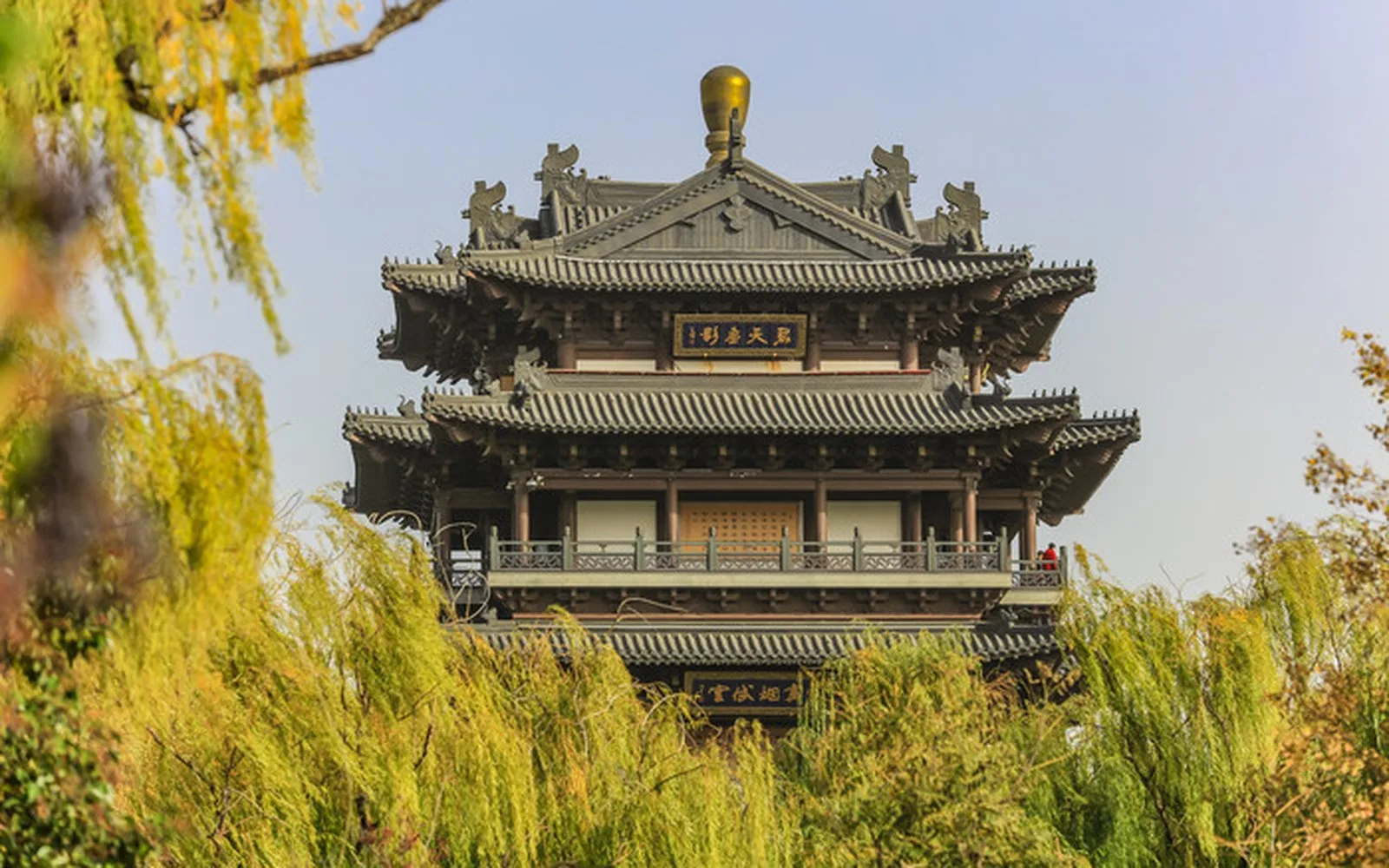
I entered Daming Lake on a summer evening. Strolling slowly toward the northeast shore, I found the Chaoran Pavilion standing by the water, its eaves curving elegantly in layers, its reflection shimmering amidst the lotus leaves, while the faint fragrance of lotus tea drifted from nearby stalls. Suddenly, the crowd fell silent—it was time for the lights. In a single instant, the entire pavilion was ignited in a golden glow, like a giant lantern rising from the depths of the lake, staining the water, the lotus flowers, and the faces of the crowd in a warm gold. In that moment, I understood why this building could go viral across the country overnight just for its lights.
1. Location Overview: Chaoran Pavilion is located on the northeast shore of the Daming Lake Scenic Area in Jinan, near the Beishui Gate area, facing the historic sites of Lixia Pavilion and Tiegong Temple across the water. Fed by numerous springs within the city, Daming Lake is known as the “Pearl of the Spring City.” After its expansion in 2009, the lake became more expansive, and Chaoran Pavilion stands as the most striking landmark on its eastern side. Built upon a wide stone platform by the water’s edge, the pavilion offers a panoramic view of the entire lake; the lakeside promenade and cruise piers are all within walking distance. Starting from any spring in the old city center and walking along the moat or Minghu Road, you can spot its glittering copper roof in just ten minutes. For visitors entering through the North Gate, the view is most breathtaking: passing through the Beishui Gate archway, the pavilion looms ahead, perfectly framed against the lake. The waterfront plaza in front of the building is a key hub of the lakeside path, where morning exercisers, sketching students, and tourists waiting for boats converge, and stalls selling Tanghulu and lotus tea line the shore, filling the air with a vibrant, local atmosphere.
2. Cultural Context: Chaoran Pavilion was originally built during the Yuan Dynasty. According to the “Licheng County Annals,” Li Jiong, a native of Jinan and a compiler for the Hanlin Academy, retired to his hometown in his later years and built a villa by Daming Lake. He first constructed the Shuixin Pavilion and later the Chaoran Pavilion, intending for the name “Chaoran” to signify being “transcendent” or “detached” from worldly affairs—a place to climb high and gaze far. It quickly became a gathering spot for literati. Unfortunately, the original structure was destroyed by war at the end of the Ming Dynasty, leaving only its name in the travelogues and poetry of subsequent generations. The current Chaoran Pavilion is a reinforced concrete structure in the traditional timber-frame style, rebuilt near the original site during the 2009 Daming Lake expansion project. In 2021, it was named one of China’s Historic and Cultural Famous Pavilions, and “Transcendent Reach” became one of the “New Eight Sights of Daming Lake.” In the last two years, it has unexpectedly surged in popularity on social media due to its evening lighting ceremony, evolving from an old friend of Jinan locals into a “must-visit” check-in spot for tourists nationwide. A pavilion that had vanished for nearly four hundred years has been reborn by the springs. Because of this, when locals talk about Chaoran Pavilion, they often say “it has returned” rather than “a new building was built”—in the collective memory of the Spring City, it never truly left.
3. Highlights: The reconstructed Chaoran Pavilion stands 51.7 meters tall with seven floors and a total area of 5,673 square meters. Copper materials are used extensively for the roof tiles, railings, and doors, while the plaques and columns are decorated with cloisonné copper craftsmanship, giving the building a steady, bronze luster under the sun—earning it the title “The First Pavilion of the North of the Yangtze River.” Each floor serves as an exhibition space featuring wood carvings, murals, and root carvings that tell the story of Jinan’s spring culture, garden architecture, and local folk customs. Exhibits include large-scale wood carvings themed after the “Eight Sights of Jinan” and rubbings of Li Jiong’s poetry steles, making the ascent a cultural pilgrimage of the city. Taking the elevator or climbing the stairs to the top observation deck provides a 360-degree view: the lake resembles a mirror with red lotuses and green willows nearby, while the lush greenery of Thousand Buddha Mountain stretches into the distance. On clear days, you can even catch the misty, poetic atmosphere of the “Quehua Rain.” The evening lighting ceremony is the pavilion’s signature moment; the structure transforms from dark to bright in an instant, mirroring itself in the lake. The copper tiles, deep brown by day, turn a brilliant gold under the lights, a contrast that photographers often call the “One Building, Two Colors” shot. Elevators are available, but wait times can be long on holiday evenings; if physically able, walking the stairs to explore the exhibitions floor by floor is a more relaxed experience.
4. Travel Tips: Entry to the Daming Lake Scenic Area is free, but a separate ticket is required to enter Chaoran Pavilion (40 RMB for adults, 20 RMB for students). Seniors over 60 and children are free per policy; discounts are available for holders of the Jinan Parks Annual Pass. Exhibition hours are generally 08:00 to 22:00, with tickets sold until 21:30 (subject to seasonal adjustments). The lighting time varies with the sunset: approximately 19:00 to 19:30 in summer, moving up to around 18:00 in autumn. Lights are turned off at 22:00. Please check daily announcements for exact times. For transport, take a bus to the Daming Lake Station or Daming Lake South Gate Station, or take Metro Line 2 to Daming Lake Station and walk north along the east shore promenade. For those driving, parking is available near the Southwest and North Gates, though roads can be congested during lighting hours; public transport is recommended. Lake cruises and sightseeing cars are separate paid services; most piers are concentrated near the Southwest Gate, so it is best to schedule your cruise either before or after visiting the pavilion to avoid backtracking.
5. Suggested Itinerary: The recommended way to experience it is “Enter in the afternoon, climb at dusk, and wait for the lights at night.” Enter through the Southwest Gate around 3:00 or 4:00 PM, visit Tiegong Temple and Lixia Pavilion, and spend some time at a lakeside tea house sipping tea brewed with spring water. Around 5:00 PM, walk to the east shore to climb the pavilion, taking in the panoramic lake view before the sunset turns the water gold. After descending, stay nearby—the plaza and the north shore path are the best spots for the lighting ceremony. Secure your position 20 minutes early; the moment the lights flash on is best captured on video. For a shot of the building and its reflection together, step back to the lakeside stone railings for a low-angle shot. Afterward, take a night cruise around the lake to see the illuminated pavilion from the water. If you have time, return the next morning; the pavilion in the morning mist is quiet and cool, a stark contrast to the nighttime brilliance. Taking one photo for each period—day, dusk, and night—is the best souvenir of the trip. Frequent visitors should consider the Parks Annual Pass for better value.
6. Best Time to Visit: Chaoran Pavilion is suitable for all seasons, each with a different charm. Mid-summer is the most vibrant time, with lotuses in full bloom; climbing the pavilion to see “lotuses on four sides and willows on three,” followed by the lighting ceremony, is the quintessential Jinan summer experience. Spring and autumn offer the crispest air and best visibility, making them ideal for gazing at Thousand Buddha Mountain and the Quehua peaks, as well as enjoying the lakeside willows and chrysanthemum exhibitions. Winter sees fewer tourists and occasional thin ice on the lake, making the warm glow of the lights feel even more inviting; the lighting ceremonies during New Year’s Eve and the Spring Festival are particularly grand. Note that lighting times shift throughout the year based on the sunset—there can be a difference of over an hour between summer and winter. If you are visiting specifically for the lights, be sure to check the sunset time and official announcements for that week. While rain may hinder the long-distance views, the evening after a rain often provides the clearest, most transparent night skies. Additionally, the scenic area often introduces themed night tours during traditional festivals, which may include extra lighting sessions; keep an eye on official announcements for more surprises.