Wuxi · Ancient Towns & Old Streets
Nanchang Street Historical and Cultural District
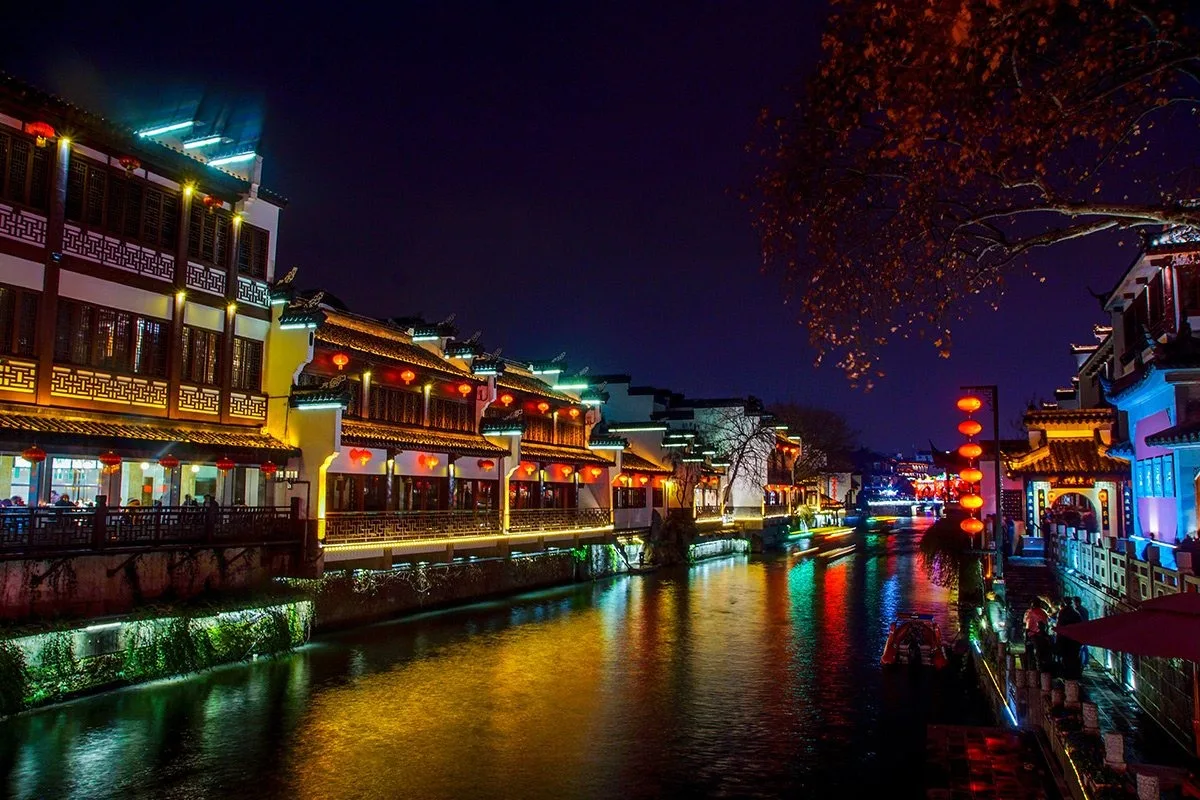
Standing on Qingming Bridge at dusk, watching the canal flow by, is the experience I recommend most to friends visiting Wuxi: painted pleasure boats glide slowly beneath the bridge, the lights of the arcade buildings flicker on one by one, and the reflections of red lanterns shatter across the water’s surface, while the aroma of xiaolongbao and braised pork ribs wafts through Nanchang Street. Located in the Liangxi District of Wuxi along the city’s section of the Beijing-Hangzhou Grand Canal, the Nanchang Street Historical and Cultural District is the most vibrant and “lived-in” historic area of the old city. By day, it is a place of ancient residences and museums; by night, a spectacle of lights and waterways. A single street encapsulates the past and present of this city.
1. Location Overview:The Nanchang Street Historical and Cultural District is situated at the southern end of the old city in Liangxi District, Wuxi, where the Grand Canal meets the Bode Gang. Using Nanchang Street as its backbone and Qingming Bridge as its core, the central section stretches approximately 1.6 kilometers from Kuatang Bridge to Qingming Bridge, while the entire old Nanchang Street extends about 5.5 kilometers to the south. The northern end of the district connects to Nanchan Temple and Miaoguang Pagoda. The Qingming Bridge Grand Canal Scenic Area, to which this district belongs, is a national 4A-level tourist attraction. It preserves the most typical layout of a Jiangnan canal town: the river in the center with streets on both banks, where water and land run parallel. The window frames of the riverside houses almost touch the water, and laundry hanging to dry often shares the frame with passing tour boats. Geographically, this is the most exquisite section of the Beijing-Hangzhou Grand Canal passing through Wuxi; ships traveling north and south once passed through locks, docked, and unloaded cargo here. It is the starting point for understanding Wuxi’s identity as a “Canal City.” The district is not a closed-off tourist site; many old Wuxi locals still live in the riverside houses. The daily rhythms of hanging laundry, buying groceries, and taking strolls coexist with the lenses of tourists, making this street a living community rather than a mere movie set.
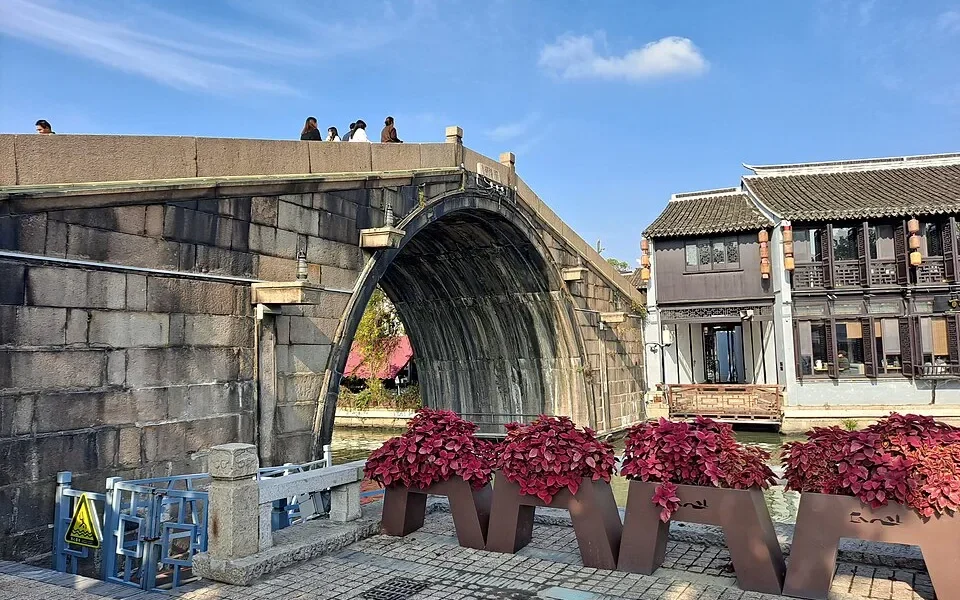
2. Cultural Heritage:Wuxi flourished because of the canal, and the Nanchang Street area is the living proof of that statement. During the Ming and Qing Dynasties, this was a vital hub for grain transport. Rice markets, cloth wharves, silk mills, and banks lined the river. Wuxi became one of the four largest rice markets in China, with grain shops and cloth stores burning the midnight oil, and the fame of its “rice wharves” and “cloth wharves” spreading throughout the Jiangnan region. Built during the Ming Dynasty, Qingming Bridge is a single-arch stone bridge that has served as the landmark of Wuxi’s canal section for centuries; the steps of its bridgehead have been polished bright by generations of footsteps. In modern times, the area became a birthplace of Wuxi’s national industry and commerce. Industrial relics such as the Yongtai Silk Mill stand along the river, where the rhythmic chants of silk reelers once echoed across the water, and the silk warehouses near Beicangmen witnessed the golden age of Wuxi’s silk industry. In 2010, the district was named a “Chinese Historical and Cultural Famous Street,” and in 2014, the Beijing-Hangzhou Grand Canal was inscribed on the UNESCO World Heritage List, with the Qingming Bridge district serving as a key component of the Wuxi section. Today, old factories have been transformed into museums and creative spaces, allowing the canal’s cultural lineage to grow within urban life. It can be said that many of Wuxi’s modern industrial giants started here; the canal was not only a freight route but also the city’s first “business school.” Across the river from Nanchang Street, the Miaoguang Pagoda near Nanchan Temple stands as one of the oldest surviving Buddhist pagodas in Wuxi, complementing the district’s scenery from across the water.
3. Highlights & Attractions:Qingming Bridge is the visual center of the entire district. Looking out from the bridge, the arcade corridors of Nanchang Street and the old houses of Nanxiatang unfold along the river, creating the famous “Jiangnan Water Alley” imagery. The old courtyards in the He Nong area are well-preserved and perfect for slow exploration. There are several highlights along the river: Dagong Bridge is ideal for photographing the depth of the canal and old houses; the China Silk Museum, located on the site of the former Yongtai Silk Mill, tells the story of how Wuxi’s silk industry went from the canal to the world; and the Kiln Ruins Museum, converted from an old brick kiln factory, displays the history of Wuxi’s kiln and tile industry, with the massive kilns serving as exhibits themselves. On the streets, daily life is vivid: the melodic tones of Wu dialect drift from Pingtan storytelling houses, and riverside teahouses and creative boutiques stand side-by-side. The scents of Wuxi xiaolongbao, magnolia cakes, and braised pork ribs are constant, and shops selling traditional crafts like Huishan clay figurines are worth a stop. After dark, a different scene emerges: lights trace the silhouettes of bridge arches and eaves, and reflections blanket the river. As night cruise boats pass, the lights are stirred by the oars and then settle again. There is no need to rush: try local snacks like tofu pudding, plum blossom cakes, and candied taro. Eating and strolling is the correct way to experience Nanchang Street.
4. Travel Tips:The district is an open area and is free to visit 24/7, year-round. Some museums along the route are free, while others charge a fee or require a reservation; please check the daily announcements at each venue. The Grand Canal cruise is a highlight of the district, with the main pier located near Kuatang Bridge. Regular cruises run from afternoon to evening, with increased frequency on holidays. Day cruises start at approximately 70 RMB and night cruises at 100 RMB; prices vary by route and session (standard sightseeing vs. light shows), so please refer to the site’s daily pricing. Transportation: The district is walkable from Qingming Bridge Station or Nanchan Temple Station on Metro Line 1. Various bus lines stop at Nanchang Street and Nanchan Temple. If driving, parking is available at nearby malls and district parking lots, though spaces are limited on holidays; the metro is highly recommended. The average visit takes 2 to 3 hours, but if you include museums and a night cruise, reserve half a day for a more relaxed pace. While the riverside promenade is beautifully lit at night, be mindful of slippery stone paths after rain, and keep a close eye on children near the water. There are many riverside teahouses and guesthouses for those wishing to spend an afternoon or a night here, but be sure to book in advance during holidays. After the night cruises end, please check the last metro times or take a taxi.
5. Suggested Itinerary:I recommend a “one afternoon and one evening” pace: Start in the afternoon around Nanchan Temple and Miaoguang Pagoda, then walk south from the Nanchang Street archway, passing Kuatang Bridge and Qingming Bridge toward Nanxiatang. Stop by the China Silk Museum to cool off and learn, or wander through the old houses of He Nong. In the early evening, enjoy a meal of Wuxi-style cuisine at a riverside restaurant—the sweet braised pork ribs and xiaolongbao are must-tries. Before dark, return to the Kuatang Bridge pier to board a night cruise and look back at the streets you just walked, admiring the lights and reflections. After disembarking, explore the bustling night market with a tea drink in hand. The best time for photography is the “Blue Hour” just after sunset, when the sky isn’t fully dark and the lights have just come on; Qingming Bridge is perfect for capturing the arch and red lantern reflections, while Dagong Bridge offers a great perspective of the canal’s depth. Families with children can add the silkworm experience at the Silk Museum to their afternoon, while couples may prefer to focus on the night cruise and riverside dinner. If you only have two hours, the streamlined route is Qingming Bridge and a night cruise, leaving the museums and alleys for your next visit.
6. Best Time to Visit:The district is suitable for all four seasons, each with its own charm: Spring is ideal for long daytime walks as the riverbanks bloom and the weather is mild, making it a great time to visit both museums and the old street. Summer days are hot, so an evening visit is recommended; the breeze on the night cruise is the coolest, and the district’s cold drinks and desserts are in season. Autumn offers crisp air, and the ginkgo trees along the canal pair beautifully with the lights, making it the most comfortable walking season. Winter brings a festive atmosphere as the district is decorated with lanterns and crowds gather at old-brand shops for New Year shopping; lantern festivals and markets typically appear around the Lunar New Year. Overall, spring and autumn provide the most complete experience, while summer and winter nights offer the bonus of stunning illumination. During holidays, crowds increase significantly; I suggest booking museums and cruises in advance, avoiding peak dinner hours, and touring in one direction starting from Nanchan Temple for a more relaxed experience. During traditional festivals like the Lunar New Year and Mid-Autumn Festival, the district often hosts lantern fairs and folk markets, where the festive spirit blends perfectly with the canal’s night scenery—it is also when locals bring their families back to the district to celebrate.