Beijing · Museums & Academia
Tsinghua University
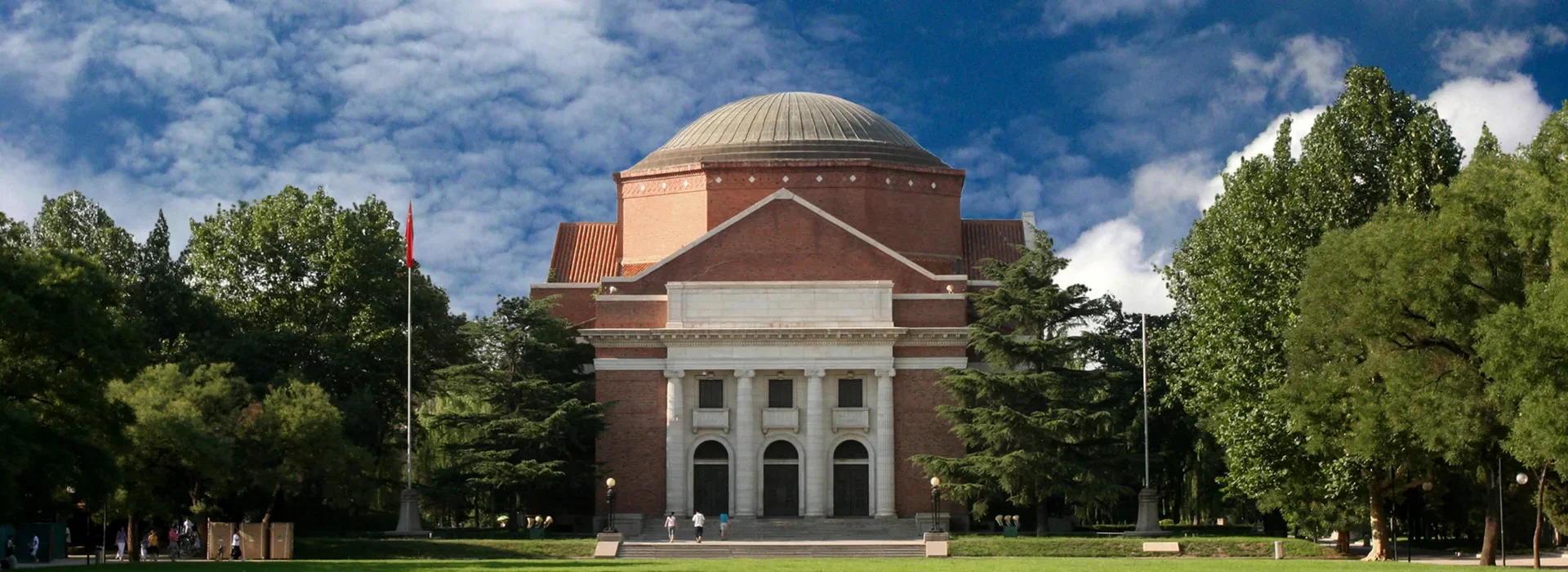
Many people stop to take photos in front of the Second Gate, but I prefer to wander a few steps further inside. The mist rising from the lotus ponds, the red bricks of the Old Library, the students running across the lawns with books in their arms—Tsinghua’s beauty isn’t pretentious; it is hidden within these rushing figures, a blend of rigor and vitality. Later, every time I pass through Wudaokou, I remember the breeze by the lotus pond that day—it was the first time a sentence from a textbook became a real-life scene.
1. Location Overview: Tsinghua University is located in Tsinghua Garden in the Haidian District of Beijing, situated north of Zhongguancun. Its West Gate faces Zhongguancun North Street, and it is adjacent to the Old Summer Palace and Peking University. The campus is vast with high greenery coverage; it was formerly the site of the Tsinghua Garden, a royal garden from the Qing Dynasty. The area around the Gong-shaped Hall and “Water and Wood Tsinghua” still retains the garden’s original framework and water systems. Today, the campus is roughly divided into East and West zones. The classic visiting route for the general public is concentrated in the West Zone: from the West Gate and Second Gate to Tsinghua Hall, the Grand Auditorium, the Library, and the lotus ponds, all easily connected by foot. For visitors, this is not only the facade of a top-tier university but also a living history of modern Chinese architecture. The East Zone primarily consists of teaching and research buildings, with the Central Main Building as its landmark, while the West Zone preserves the garden atmosphere of Old Tsinghua. The two zones are connected by roads; riding a shared bike across campus is a favorite experience for many visitors—the flow of cyclists on the plane-tree-shaded main roads is a scenic sight in itself. With interconnected lakes, streams, and towering ancient trees, the campus is filled with flowers in spring and colorful leaves in autumn, making it hard to imagine that the hustle and bustle of Zhongguancun is just a wall away.
2. Cultural Heritage: In 1911, using a portion of the Boxer Indemnity refunds, the Qing government established Tsinghua College in Tsinghua Garden, initially as a preparatory school for students heading to the United States; it was renamed National Tsinghua University in 1928. In 1914, Liang Qichao gave a speech at Tsinghua, quoting the I Ching: “Self-discipline and constant self-improvement; great virtue sustains all things,” which later became the university motto. After the outbreak of the Anti-Japanese War, Tsinghua moved south, first joining Peking University and Nankai University to form a National Southwestern Associated University in Changsha, and later moving to Kunming. Despite the gunfire, academic pursuits continued, producing a generation of great scholars. From the blue-brick arch of the Second Gate to the dome of the Grand Auditorium, the university has written over a century of national memory into its architectural timeline and the school spirit of “Actions speak louder than words.” Former President Mei Yiqi once said, “A university is not defined by its grand buildings, but by its great masters,” a sentiment that perfectly encapsulates Tsinghua. The school has also always valued sports, and the slogan “No sports, no Tsinghua” is visible everywhere near the tracks; fortitude and scholarly elegance have always been two sides of the same coin here. Following the 1952 restructuring of academic departments, Tsinghua became renowned for engineering, and subsequently restored its science, humanities, and life sciences programs to develop into the comprehensive research university it is today.
3. Highlights: The Second Gate is the symbol of Tsinghua. This three-arch gateway with blue bricks and white pillars is the most representative early building on campus, and people take photos here every day. To the east are Tsinghua Hall and the Grand Auditorium, built in the 1910s; their red bricks, domes, and colonnades exude the aura of a century-old institution. The red-brick arches of the Old Library are the most photogenic, while the West and North Libraries continue the same architectural language. The lotus ponds of “Water and Wood Tsinghua,” connected to the Gong-shaped Hall, are the coolest spots in summer. Nearby, the lotus pond of Jinchun Garden is where Zhu Ziqing wrote “Moonlight over the Lotus Pond,” and statues of Wen Yiduo and Zhu Ziqing stand close by. Sitting for a while on the lawn in front of the Grand Auditorium and watching students hurry past with their laptops is the only way to truly feel the daily rhythm of Tsinghua. Every April, the Bauhinia flowers along the campus river and in Jinchun Garden bloom most brilliantly—the Bauhinia is the school flower, and the campus is full of students taking photos during the blooming season. The lawn before the Grand Auditorium becomes the center of graduation season, where academic gowns and the dome in one frame form a shared youth memory for Tsinghua graduates. Not far from the West Gate, there is also a stone archway inscribed with “Tsinghua Garden,” which, along with the Second Gate, is a popular spot for photos.
4. Visitor Information: Opening Hours: For holidays, visits are open on weekends, statutory holidays, and winter/summer vacations (Mondays are campus maintenance days during vacations). For workdays, visits are open Tuesday through Friday. Each open day is divided into multiple time slots (morning and afternoon). Please refer to official announcements for specific dates and times; visits may be suspended for important campus events. Ticket Price: Free. Any paid booking or escort services are unofficial and unauthorized. Reservations and Entry: Individual visitors must make a real-name reservation via the “Tsinghua University” WeChat official account (“Visit Tsinghua” menu) or the “Visit Tsinghua” mini-program, which is the only official platform. Instant reservations are available daily from 8:00 to 17:00; lottery applications are available from 17:00 to 21:45. Each person can only successfully reserve once every 180 days, and slots are highly competitive. After a successful reservation, visitors must bring their original second-generation ID card during the reserved time slot, verify their identity and pass security at the dedicated individual visitor channel on the south side of the West Gate, and exit through the West Gate upon completion. Group visits are only open to primary/secondary schools and education authorities and must be booked via the “Campus Visit” section of the official university website. Transportation: Reachable by walking from Wudaokou Station (Metro Line 13) or Yuanmingyuan Station (Line 4). Many bus lines stop at the “Tsinghua University West Gate” stop, which is adjacent to the entry channel. Outside vehicles are not allowed on campus.
5. Travel Tips: It is recommended to reserve 2–3 hours. The smoothest route starts from the West Gate: first, take a photo at the Second Gate, then head east to see Tsinghua Hall, the Grand Auditorium, and the Old Library, then turn toward the “Water and Wood Tsinghua” and Jinchun Garden lotus ponds to find the statues of Wen Yiduo and Zhu Ziqing, before returning to the West Gate. Families with children can include the Tsinghua University Art Museum in their itinerary; please check the museum’s announcements for ticket details for external visitors. The best times for photos are early morning at the Second Gate and evening at the lotus ponds when the light is soft and crowds are thinner. The campus is large, so please wear comfortable shoes or use a shared bike. However, please dismount and walk your bike in core areas like the Second Gate and lotus ponds, give way to students and faculty, and do not enter teaching or office areas. If time permits, you can walk east to the Central Main Building to see the modern architecture of the East Zone before returning. Many visitors end their trip by picking up a few souvenirs at the Tsinghua cultural and creative store outside the West Gate. Mosquitoes are common around the lotus ponds in summer; please bring repellent if visiting in the evening. Most campus canteens require a campus card for payment, so visitors are advised to find meals in the nearby Wudaokou area, where options are plentiful.
6. Best Time to Visit: Spring and autumn are best. In spring, when magnolias and crabapples bloom around the Old Library, it is the gentlest time of the year. In summer, the “moonlight over the lotus pond” is a reality, and early mornings or evenings are coolest, though summer reservations are the most competitive. In autumn, the ginkgo leaves turn yellow, making it perfect for a slow bike ride. Winter is less crowded, and the red bricks against the snow have a unique charm. Regardless of the season, slots are limited; it is recommended to set an alarm and book as soon as the slots are released. Generally, workdays are easier to book than weekends and holidays; if your schedule is flexible, prioritize workdays. Around the start of the semester in February, the campus is buzzing with new arrivals. In the dead of winter, the lotus pond in Jinchun Garden freezes over and snow covers the red-brick buildings, providing a great opportunity for architectural photography—just remember to dress warmly as it can be very windy. One practical tip: Tsinghua and Peking University are adjacent, and many tourists plan to visit both on the same day. However, both require separate reservations and have independent quotas; do not assume a booking for one grants entry to the other. The Wudaokou area between the two universities is full of dining options, making it a perfect mid-trip refueling station.