Beijing · Museums & Academia
National Museum of China
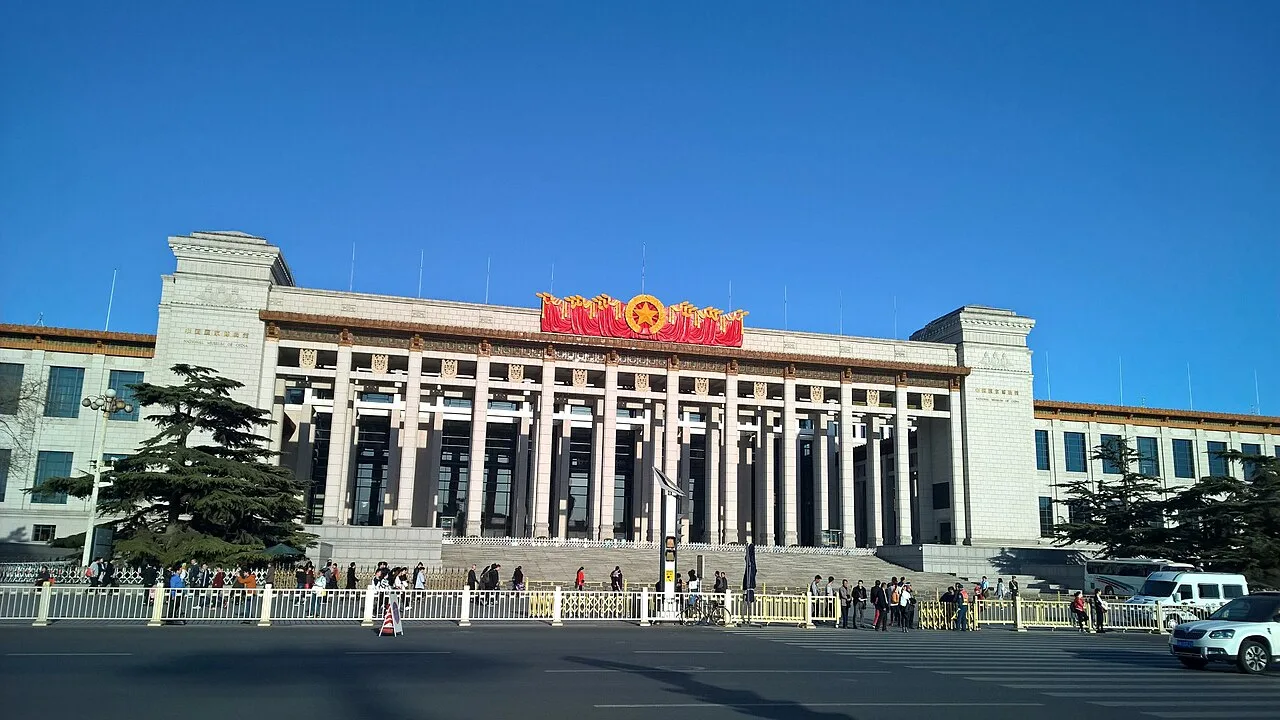
Standing for the first time in the West Hall of the National Museum of China, looking up at the massive granite relief “The Foolish Old Man Removes the Mountains,” I truly understood what it means to be the “National Cultural Living Room.” With over 1.4 million artifacts, any single piece has the potential to rewrite your understanding of a period of history. This is not a place for a cursory glance; it requires you to slow down and dedicate an entire day to 5,000 years of Chinese civilization.
1. Location Overview:The National Museum of China (NMC) is located at No. 16 East Chang’an Avenue, Dongcheng District, Beijing, on the east side of Tiananmen Square. One of the largest single-building museums in the world, it is China’s most comprehensive national museum with the richest collection. It borders Tiananmen Square to the west and East Chang’an Avenue to the north. Its western facade faces the square, standing opposite the Great Hall of the People. This “National Cultural Living Room” features a solemn and magnificent architectural style. In terms of the city’s cultural layout, the NMC, Tiananmen Square, the Great Hall of the People, and the Forbidden City form a core cultural triangle. It is the premier venue for understanding the continuity of Chinese civilization and the modern national revival, welcoming nearly 7 million visitors annually and serving as a cultural highlight for many trips to Beijing.
2. Cultural Context:The NMC evolved from two lineages: the Museum of Chinese History and the Museum of the Chinese Revolution. The former focuses on ancient history and general history, while the latter centers on modern revolutionary history. In 2003, the two merged to form the National Museum of China, followed by a large-scale expansion and renovation to create today’s grand exhibition scale and modern facilities. As a national-level museum, it serves the central functions of national collection, research, exhibition, and education. Its collection of over 1.4 million artifacts spans from antiquity to modern times, including many “national treasures” that are prohibited from being exhibited abroad. Culturally, the NMC is a temple displaying Chinese civilization and a witness to the narrative of national revival. The “Ancient China” general history exhibit and the “Road to Rejuvenation” modern history exhibit form the two pillars of the national narrative—one telling the story of civilization and the other of modernity. Together, they demonstrate how artifacts carry history and inspire the future, allowing visitors to understand a vivid China beyond the textbooks.
3. Highlights:The museum’s crown jewels are mostly concentrated in the “Ancient China” basic exhibition. Bronze treasures such as the Houmuwu Ding, the Four-Ram Square Zun, the Da Yu Ding, and the Guo Ji Zibo Pan, along with the human-face fish-pattern painted pottery bowl, the Jade Burial Suit, and the Drum-beating Singing and Dancing Pottery Figure, bear witness to the heights of civilization across different eras. Each piece is a microcosm of ritual systems, craftsmanship, and society. The general history exhibit is arranged chronologically: Ancient Times, Xia-Shang-Zhou, Qin-Han, Three Kingdoms-Jin-Northern and Southern Dynasties, Sui-Tang, Song-Yuan, and Ming-Qing, threading together 5,000 years of civilization from stone tools and painted pottery to Ming and Qing court objects. Additionally, there are several thematic exhibitions for bronzes, ceramics, calligraphy and painting, costumes, coins, and Buddhist sculptures. The combination of precious artifacts and multimedia tools allows visitors to grasp the continuity, innovation, and brilliance of Chinese civilization. Temporary special exhibitions are often the most sought-after highlights, covering dialogues between Chinese and foreign civilizations, major archaeological discoveries, and art themes, often featuring rare pieces seldom seen elsewhere. For researchers and enthusiasts, the ability to survey Chinese history through artifacts in a single day is a rare experience; many visitors come specifically for a special exhibition and find themselves lingering long after.
4. Visitor Information:Opening Hours: 9:00—17:00 (last entry at 16:00), closed on Mondays (except statutory holidays). From June 1 to October 31, hours are extended to 17:30 (last entry at 16:30). Ticket Prices: Basic exhibitions are free; some special exhibitions require separate tickets or reservations, subject to official announcements. Reservations: Real-name reservation is required. Book up to 7 days in advance via the official website, the official mini-program, or the WeChat public account. Tickets are released daily at 17:00 for time-slotted entry (Weekdays: 9:00—11:00, 11:00—13:30, 13:30—16:00; June to October, the third slot is extended to 13:30—16:30). On peak days, tickets sell out quickly. Cancellations must be made by 15:00 on the day of the visit; repeated no-shows may affect future reservation eligibility. Entry: Please enter through the North Gate visitor entrance with your original ID card during your reserved time slot. If coming from Tiananmen Square, you must pass square security first and then museum security; entering via the North Gate usually only requires museum security. Selfie sticks, tripods, and large luggage are prohibited. The museum provides self-guided tours (via free official APP and mini-program) and official guide services. Rest areas and light snacks are available on the B1 level and between floors. Transportation: Exit D of Tiananmen East Station (Metro Line 1) leads directly to the North Gate; several bus lines, including Bus 1, stop at Tiananmen East. Parking nearby is difficult and strictly controlled; public transport is highly recommended, and visitors should allow extra time for queuing.
5. Travel Tips:Half-Day Essential Route: Enter via the North Gate, head straight to B1 for “Ancient China” (focusing on the Houmuwu Ding, Four-Ram Square Zun, and Jade Burial Suit), then go to the 2nd floor for “Road to Rejuvenation.” This takes about three hours to cover the main points. Full-Day Deep Dive: Add thematic and special exhibitions and include time for dining and resting; this takes about six hours for comprehensive coverage. Due to its massive scale, it’s hard to see everything at once. We suggest splitting your visits by theme—such as one trip for bronzes, one for ceramics, or one for a specific special exhibition—to gain deeper insight and avoid “museum fatigue.” For first-timers, the safest strategy is to treat “Ancient China” as a must-see and special exhibitions as bonuses. Best Photo Spots: The exterior of the museum at the North Gate, the red walls of Tiananmen East, and the lighting in the treasure halls on B1. Focus your learning on the historical timeline and the ritual and social context behind the treasures. Using a guide or the free official audio tour significantly enhances the experience. The museum has a creative gift shop and several stamp stations; artifacts turned into ice cream, bookmarks, and blind boxes are popular souvenirs for young people. Rest areas on B1 and other floors are useful for recharging. The museum is suitable for all ages; families and students should identify key display cases in “Ancient China” in advance, and seniors should avoid peak days and wear comfortable walking shoes.
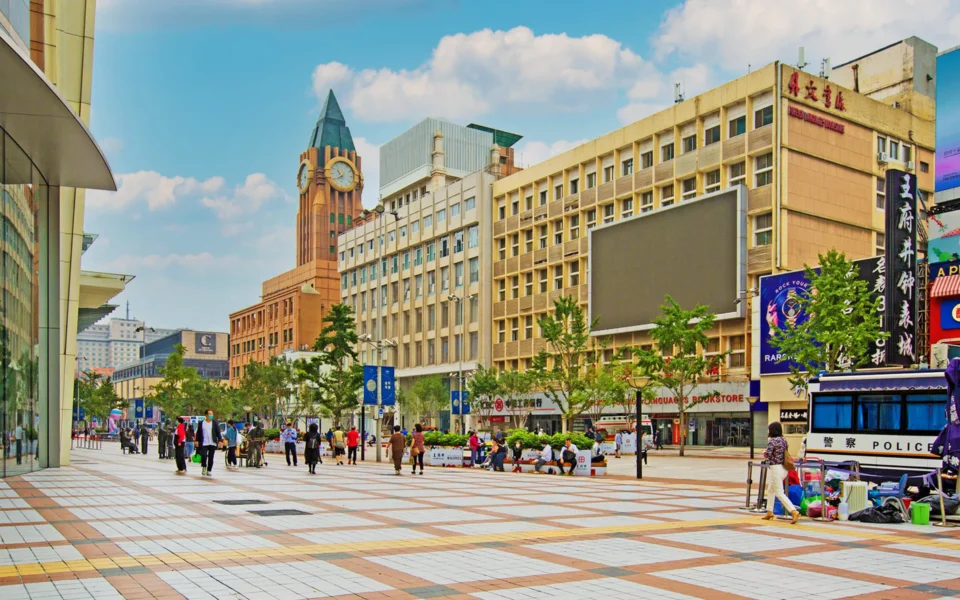
6. Best Time to Visit:The NMC is suitable year-round with climate-controlled interiors, making it especially comfortable in summer and winter. Spring and autumn are ideal for combining the museum with outdoor walks and photos in the square. It can be easily linked with Tiananmen Square, the exterior of the Great Hall of the People, the Forbidden City, and Qianmen Street for a core Central Axis one-day tour. A classic combination is watching the flag-raising ceremony early morning, visiting the NMC in the morning, and exploring the Forbidden City in the afternoon. For local experiences, Qianmen and Wangfujing are home to many time-honored restaurants serving authentic Beijing cuisine and snacks. Zhongshan Park and the Workers’ Cultural Palace are nearby for those wishing to admire ancient architecture and gardens. After leaving the museum, walking west along Chang’an Avenue leads to Zhongshan Park and the Temple of Heaven, while walking east leads to Dongdan and Wangfujing; the Qianmen commercial area is south of the square. For deep travelers, combining the NMC with the Chinese Archaeological Museum, the Capital Museum, and the Tsinghua University Art Museum creates a comprehensive museum circuit. Please confirm opening hours and reservation rules via official announcements before traveling. During major events, security controls at the square may affect entry routes; please allow ample time and bring all necessary identification.