Beijing · City Landmarks
Wangfujing Pedestrian Street
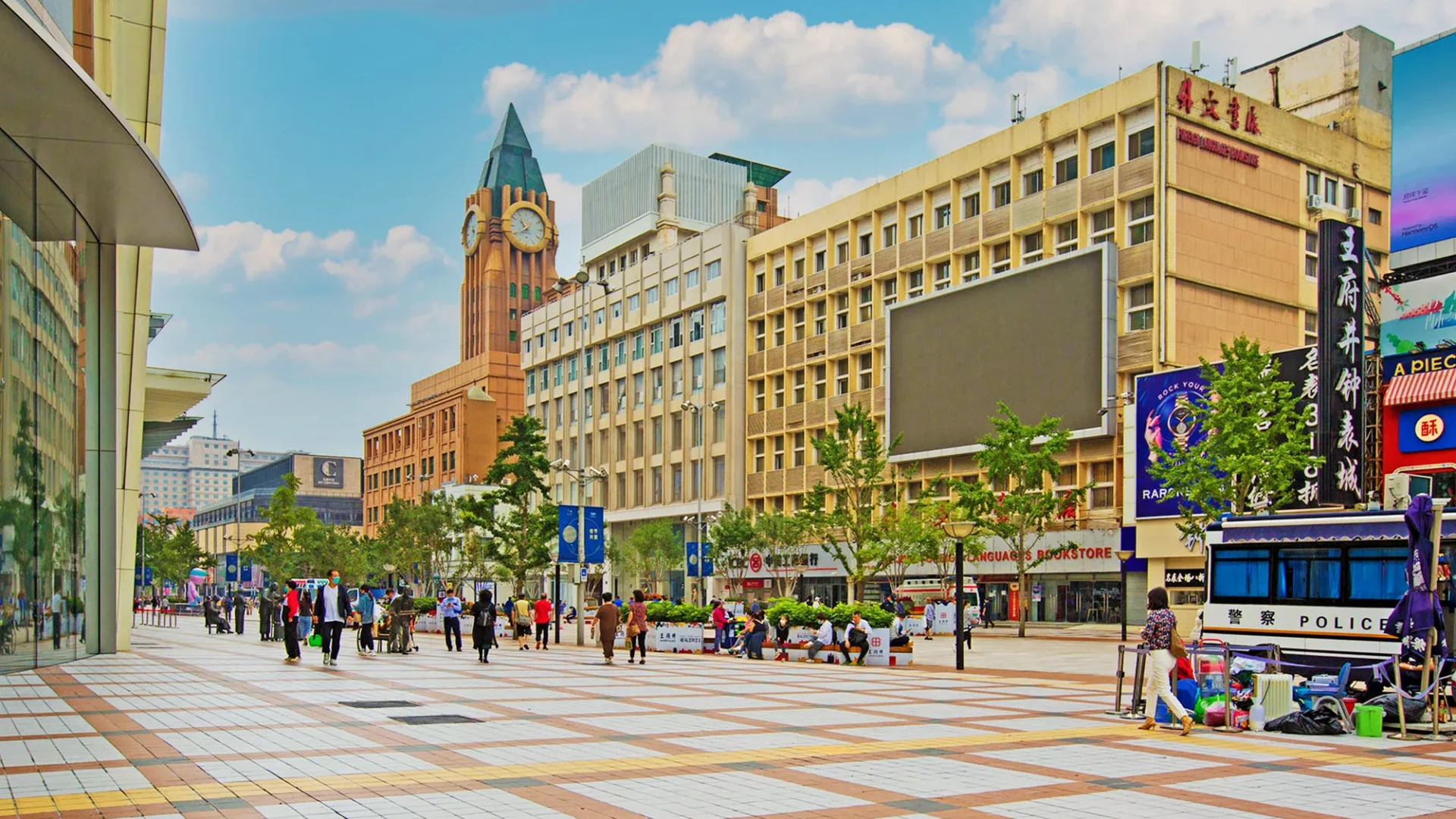
I always love stepping into Wangfujing around six in the evening. The lights of the Department Store flicker on one by one, the spires of the Catholic Church are outlined in gold by the sunset, and the calls of candied hawthorn vendors clash with the music drifting from shopping center entrances. This street has been bustling for over a century, and it wears its vibrancy with a natural, unapologetic confidence.
1. Location Overview: Wangfujing Pedestrian Street is located in the Dongcheng District of Beijing, comprising the southern section of Wangfujing Street. Wangfujing Street runs from East Chang’an Avenue in the south to Wusi Street and the National Art Museum of China in the north, spanning a total length of 1,818 meters; the pedestrian zone specifically runs from Dongdan San Tiao to Dengshikou Street, covering 892 meters. Lined with department stores, time-honored brands, bookstores, hotels, and cultural venues, it borders Tiananmen Square and the Forbidden City to the west and the Dongdan commercial area to the east. As Beijing’s most central commercial district, it is famously known as the “Golden Street.” In 2025, the Wangfujing commercial area was added to the list of national-level tourism and leisure districts, adding another official prestigious title to this historic street. For first-time visitors to Beijing, it serves as the closest “introductory course” to authentic Beijing flavor near Tiananmen. With wide, clean pavements and plenty of benches and landscape features, you can sit and watch the crowds pass by whenever you tire—it is, first and foremost, a public space for everyone, and only secondly a cluster of malls. This positioning is precisely why the “Golden Street” has remained timeless for a hundred years. Looking south from the center of the street, you can see the flow of traffic on Chang’an Avenue; looking north, you face the National Art Museum of China. Every horizon ends with a landmark.
2. Cultural Heritage: The history of Wangfujing dates back to a small village during the Liao and Jin dynasties and became a marketplace during the Yuan dynasty, known as “Dingzi Street.” During the Ming dynasty, ten royal mansions were built here, and the street was renamed “Wangfu Street” (Prince’s Mansion Street). Due to a nearby well with sweet water, it was officially named Wangfujing Street in 1915; that ancient well was rediscovered and preserved during the 2006 renovation. With the formation of the Dong’an Market in 1903, Wangfujing solidified its position as the capital’s commercial center. On September 25, 1955, the Beijing Department Store opened its doors, dubbed “the first store of New China,” from where the legendary “fiery” service spirit of salesperson Zhang Binggui spread across the country. On September 11, 1999, the 548-meter pedestrian street officially opened, and in 2019, it was extended north to Dengshikou Street. A single street encapsulates over 700 years of Beijing’s urban evolution. Old Beijingers have a traditional routine: visit Dong’an, stop by the Department Store, and get a portrait at the China Photo Studio. After the founding of the People’s Republic, cultural institutions like the Wangfujing Bookstore and the Foreign Languages Bookstore were established, adding a scholarly atmosphere to the commerce and defining the street’s character—simultaneously gritty and sophisticated. Ultimately, the well is the footnote to the name: first came the mansions, then the well; within one name lies half imperial city and half common folk.
3. Highlights: The attractions can be viewed in three layers. First, the time-honored brands: the Beijing Department Store, Shengxifu hats, Tongshenghe cloth shoes, and the storefront of the China Photo Studio—each is a signboard with a story to tell. Second, the architecture: the grey-brick Wangfujing Catholic Church stands quietly by the roadside, a rare pocket of tranquility in the bustle, while the facades of the Department Store and Dong’an Market have served as the backdrop for photos across generations of Beijingers. Third, the new experiences: “Heping Guoju” (Peace Fruit Bureau) beneath the Department Store moves half of old Beijing underground; the northern section features the Capital Theatre and the Gard Art Center; the Wangfujing Bookstore and Foreign Languages Bookstore are perfect for slow browsing, and the Wangfujing Snack Street ensures you leave full. The snack street offers authentic Beijing treats like Baodu (boiled tripe), Guanchang (stuffed intestine), and Bingtang Hulu (candied hawthorns), as well as flavors from across China, always teeming with people during mealtimes. If you seek quiet, slip into the Foreign Languages Bookstore to flip through imported books or visit an exhibition at the Gard Art Center—the noise and the silence are separated by only a single road. Walking down this street, you can shop, visit galleries, eat snacks, and photograph architecture all in one trip. The flowerbeds and resting areas change with the seasons—red lanterns for Spring Festival and chrysanthemums in autumn—ensuring a sense of ritual is never missing from the stroll.
4. Visitor Information: Opening Hours: The pedestrian street is an open area and is free to access 24/7. Most malls and bookstores operate from around 10:00 AM to 10:00 PM, though specific hours vary by merchant; time-honored shops and restaurants are busiest in the evening. Ticket Prices: There is no entrance fee for the street itself; charges for malls, exhibitions, and performances are separate and based on venue announcements. Transportation: Exit via Wangfujing Station on Subway Line 1 to reach the southern end, Jinyuhutong Station on Line 8 for the middle section, or Dengshikou Station on Line 5 for the northern end. Numerous bus routes stop at Wangfujing. Parking is very limited nearby; public transport is strongly recommended. Crowds are immense on holidays and weekend afternoons; please keep an eye on your belongings, and families with elderly members or children are advised to avoid peak hours. Surrounding malls have paid parking, but spaces are rare on holidays—prepare for traffic and detours if driving. As it is a pedestrian street, motor vehicles are prohibited; riding a shared bike to a nearby parking point and walking in is the most hassle-free way. Travelers with luggage can use the storage services provided by malls. The area is equipped with accessible paths, making it convenient for strollers and wheelchairs.
5. Travel Tips: A half-day itinerary is the most relaxed: exit from Wangfujing Subway Station, explore the Beijing Department Store and the underground Heping Guoju, then head north to sample snacks, stop for photos in front of the Catholic Church, take a break at the Wangfujing Bookstore, and conclude your trip around the Dengshikou area. Shopping-oriented visitors can add Dong’an Shopping Center and Beijing apm to their route to compare prices and browse. The best time for photography is at dusk when the lights come on; the night views of the Department Store’s main entrance and the Catholic Church are the most photogenic. For those traveling with elders, mornings are best—fewer crowds, all shops open, and a slower pace. For younger crowds, evening to night is recommended for the best atmosphere of lights, snacks, and street performances. If you have extra time, you can walk west to Tiananmen Square for the night views, connecting the two landmarks. Taking a photo with the statue of Zhang Binggui in front of the Department Store is a classic move for locals hosting out-of-town guests. If it’s performance season at the Capital Theatre, adding a play to your evening itinerary—shopping by day, theater by night—is the most artistic way to experience the street. For souvenirs, gift boxes from time-honored pastry shops or magnets from cultural creative stores are the safest bets—sophisticated, distinctly Beijing, and compact for your suitcase.
6. Best Time to Visit: It is suitable year-round, with spring and autumn being the most comfortable. During the Spring Festival, the New Year markets and decorations provide the most authentic festive atmosphere. Summer nights are great for eating and cooling off. In autumn, under clear skies, you can combine Wangfujing with the Forbidden City and Jingshan Park in one long walk. In winter, the lights come on early and New Year decorations are most vivid, making it an excellent time for night photography. Regardless of the season, it is recommended to avoid the midday and holiday afternoon peaks; shifting your visit by just one hour can greatly improve the experience. If your primary goal is shopping, weekday mornings are the quietest, and the master craftsmen of the time-honored shops will have more time to share the stories behind their brands. On midsummer nights, the cold drink stalls and open-air seats are most popular, and staying until 10:00 PM doesn’t feel late. On rainy or snowy days, you can move your itinerary underground or inside the malls—the connection between Heping Guoju and Dong’an Shopping Center is seamless, allowing you to enjoy the day regardless of weather. In short, Wangfujing is a street that rewards repeated visits; every season is worth experiencing. On early mornings in late autumn and early winter, the crowds are thin and the light is clean, making the outlines of the century-old buildings exceptionally sharp—a secret window of time cherished by local photography enthusiasts.