Jinan · City Landmarks
Quancheng Square
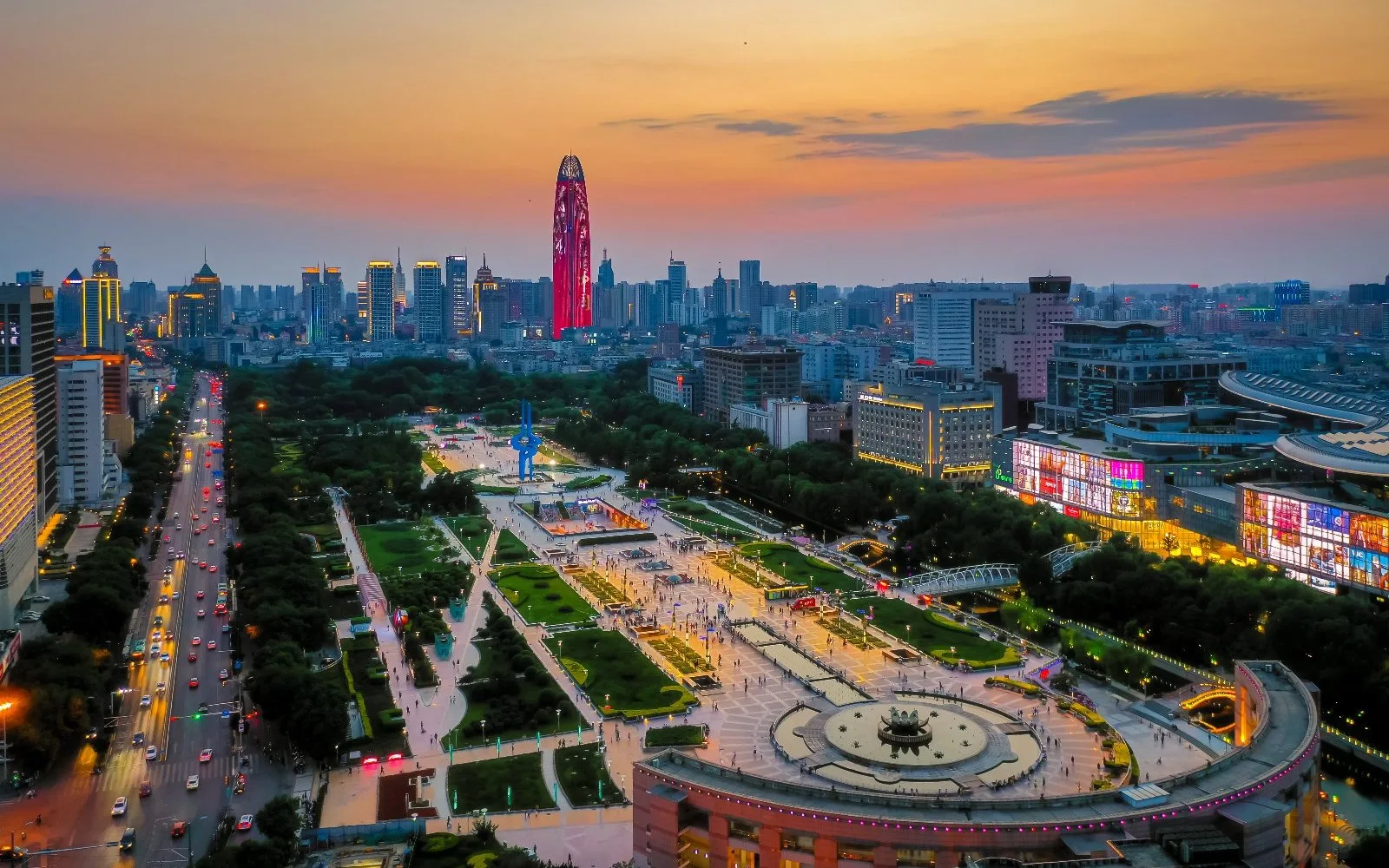
The first time I visited Jinan, I entered Quancheng Square in the early morning. Elderly residents were practicing Tai Chi around the Spring Monument, pigeons strolled across the lawns, and the first rays of sunlight hit the massive blue sculpture. On the steps of the sunken plaza, someone was enjoying a piping hot Youxuan (spiral pastry). By 8:00 PM, the Lotus Musical Fountain awakened on cue, with thousands of nozzles dancing to the music, transforming the entire square into an open-air theater. In a single day, the same square feels like two different worlds—this is likely why locals call it the city’s “Living Room.”
1. Location Overview:Quancheng Square is located at No. 69 Luoyuan Avenue, Lixia District, in the heart of the old city. It is bordered by Thousand Buddha Mountain to the south, Daming Lake to the north, Baotu Spring to the west, and the Jiefangge Pavilion to the east. The city moat flows gently along the east side of the square, where cruise boats take visitors directly to Daming Lake. The rectangular square measures approximately 780 meters east-west and 230 meters north-south, covering about 16.7 hectares. Construction began in July 1998 and was completed in September 1999, making it the largest urban construction project in Jinan’s history at the time. From west to east, the square consists of over ten sections, including Baotu Spring Square, the Forest of Famous Figures, Spring Monument Square, the Sunken Plaza, Yitian Garden and the Children’s Playground, Riverside Square, Ginza Shopping Plaza, the Lotus Musical Fountain, the Four Seasons Garden, and the Cultural Corridor, with greenery, paving, and water features interspersed throughout. To the north are commercial complexes like Hang Lung and Shimao, and to the south is the Shandong Science and Technology Museum. This single square integrates sightseeing, shopping, leisure, and culture. In the twenty-plus years since its completion, it has become a staple of city life—a place for seniors to exercise, young couples to date, and tourists to check in.
2. Cultural Context:Jinan was built upon its springs, with hundreds of them bubbling up throughout the city, earning it the nickname “Spring City” since the Song Dynasty. Stories of the 72 famous springs have been passed down for generations. While locals grew up living by and drinking from these springs, the city lacked a central public “living room” to represent its identity. At the turn of the century, the city center needed a modern space to carry this memory of water, leading to the creation of Quancheng Square. Its design is tightly integrated with the city’s “Mountain, Spring, Lake, River, and City” layout, translating the traditional landscape order into a modern urban space. The square connects Baotu Spring to the west, overlooks Jiefangge to the east, faces the misty waters of Daming Lake to the north, and the green silhouette of Thousand Buddha Mountain to the south. Since its completion, it has been designated as an “International Art Square” by the United Nations and has become the premier venue for major celebrations, public welfare activities, and welcoming distinguished guests. When Baotu Spring resumed its vigorous flow after many years, the dancing waters echoed the Spring Monument on the square, elevating the spring culture from a daily local routine to a symbol of the entire city.
3. Highlights:The Spring Monument in the center of the square is a must-see landmark. This 38-meter-high, 170-ton steel sculpture is shaped like the Chinese character for “Spring” (泉) in seal script. Three streamlined curves, resembling clear spring water, rise and spiral upward to support a pearl about 4 meters in diameter at the top, symbolizing the surging springs and the “pearl” of the city. Its blue hue complements the clarity of the water. The Lotus Musical Fountain in the east is equally impressive: a circular pool 50 meters in diameter with a stainless steel lotus at the center. Over a thousand nozzles, paired with lights and music, create layered water curtains, with the main jet reaching dozens of meters high. During performances, crowds gather around the pool as children chase the mist and couples record the spectacle on their phones. At the west end, the Cultural Corridor uses reliefs and stone inscriptions to tell the history of the Qi and Lu regions, featuring figures from Great Shun and Bian Que to Li Qingzhao and Xin Qiji—walking along this wall is like reading a directory of Jinan’s most famous people. The Forest of Famous Figures offers ample shade, while people often sit on the steps of the Sunken Plaza to soak up the sun and listen to traditional opera. The Four Seasons Garden changes its floral colors with the seasons, serving as the most vibrant corner of the square and a favorite backdrop for photos.
4. Visitor Information:Quancheng Square is an open urban space; it is open 24 hours a day and is free to visit. The Lotus Musical Fountain has scheduled performances: usually at 10:00, 15:00, and 20:00 on weekdays, with additional shows at 9:30, 11:00, and 16:30 on weekends and holidays. Winter evening shows start earlier at 19:30, with each show lasting about 25 minutes. Fountains may be temporarily suspended due to bad weather or maintenance; please check official announcements. For transportation, the square is adjacent to the East Gate of Baotu Spring. Multiple bus lines stop at the Quancheng Square and Baotu Spring South Gate stations. A 10-minute walk north from the square leads to the Southwest Gate of Daming Lake. For those driving, parking is available at the nearby Hang Lung Plaza and Ginza, though spaces are limited during holidays; public transport is recommended. The square is large with limited shade, so please bring water and sun protection in summer. Drinking fountains and restrooms are available, primarily around the Sunken Plaza. Please keep a close eye on children during fountain shows and do not climb over railings. Volunteer service booths are common during holidays; feel free to ask staff for help with schedule changes or lost-and-found items.
5. Suggested Itinerary:Quancheng Square is best visited as part of a one-day “Spring Water Route” through the old city: Start your morning at Baotu Spring to see the three surging streams, then walk a few minutes from the East Gate to the square just in time for the 10:00 fountain show. Have lunch and rest at the Sunken Plaza or nearby malls. In the afternoon, read the reliefs along the Cultural Corridor, visit the Forest of Famous Figures, then walk to Black Tiger Spring to watch locals collect spring water in buckets, followed by a stroll and snack at Kuanhou Li. Return to the square in the evening and position yourself on the east side of the Lotus Fountain before the 20:00 show—this is the best vantage point to frame both the Spring Monument and the fountain in one shot. For a panoramic view of the monument, step back to the stairs at the west end of the square and use a wide-angle lens. Families with children can spend more time at Yitian Garden and the Children’s Playground, or visit the Provincial Science and Technology Museum on the east side; the lawn area is also great for flying kites. The walking intensity is moderate; allocating half a day is ideal. If you arrive in the early morning, take a moment to experience the local morning exercise routines before starting your day.
6. Best Time to Visit:Spring and autumn are the most pleasant seasons to visit, with clear skies perfect for daytime sightseeing and nighttime fountain shows. Summer highlights are all about the water: Jinan’s rainy season usually falls in July and August; after rain, the water level at Baotu Spring rises and flows most vigorously, complementing the square’s fountains. During the Jinan International Spring Festival in autumn, there are many activities in the old city, with the square serving as a primary hub. However, the midday summer sun can be oppressive, so it is recommended to plan your visit for the evening. In winter, the square is open and windy; while there are fewer tourists, the night views are crisp and clear, and themed light displays often appear during New Year’s and the Spring Festival. If you are visiting specifically for the musical fountain, weekends and holidays offer more frequent and elaborate shows. Check the weather before departing, as strong winds can disperse the water curtains or lead to cancellations. An evening after a rain shower is the best time of year for a show. Additionally, the square serves as the start and finish line for many city marathons and walking events; the square is exceptionally energetic on race mornings, offering visitors a chance to see another side of this urban “living room.”