Wuxi · Lakes & Waterfront
Taihu Lake
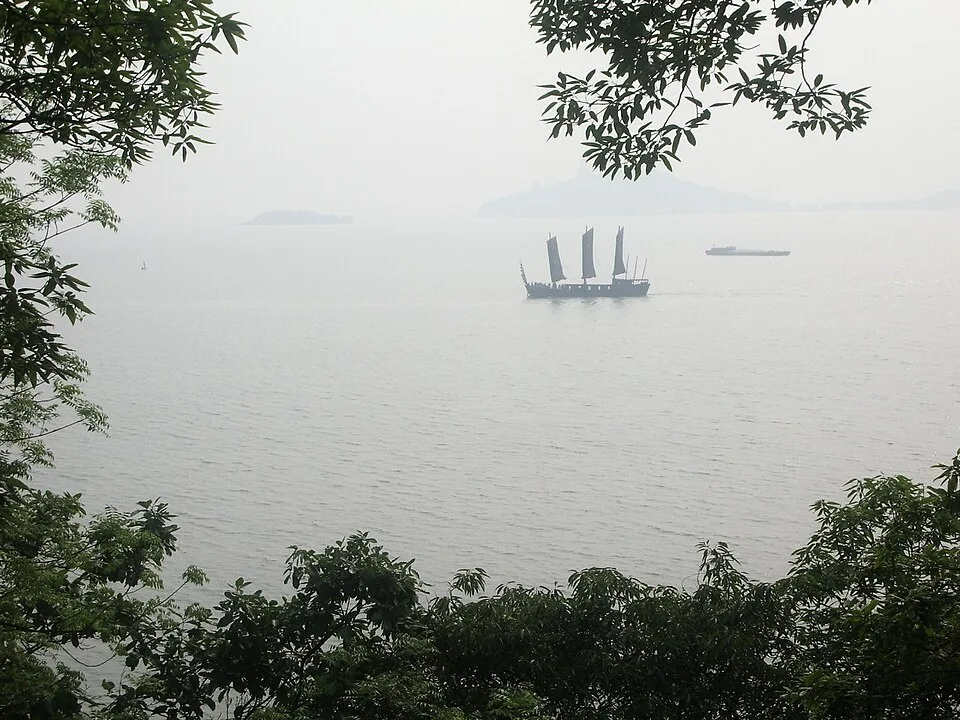
Yuantouzhu in Taihu Lake is one of the world’s top three cherry blossom viewing destinations, but its beauty extends far beyond the blossom season. Taking a boat to the Taihu Fairy Isle, surrounded by shimmering waters, emerald mountains, and distant fishing sails, one truly feels the essence of the phrase, “The most exquisite spot of Taihu Lake is, after all, at Yuantouzhu.” With cherry blossoms in spring, lotuses in summer, and reeds in autumn, every season possesses its own unique charm. Personally, I believe that visiting Yuantouzhu for the lake itself outside of the flowering season allows one to experience the landscape in its purest, most authentic form.
1. Location Overview: Taihu Lake is China’s third-largest freshwater lake, covering approximately 2,400 square kilometers across Jiangsu and Zhejiang provinces, with Wuxi occupying its most beautiful bay. Wuxi’s lakeshore is dotted with scenic spots such as Yuantouzhu, Li Garden, Mei Garden, and Ma Shan. Among these, Yuantouzhu is hailed as the “premier scenic spot of Taihu Lake.” A National 5A-rated tourist attraction, it serves as the core gateway to experiencing the lake. Situated on the Chongshan Peninsula on the northwest shore of Taihu, Yuantouzhu takes its name from a massive rock jutting into the water, resembling a divine turtle raising its head (“Yuan” refers to a giant soft-shelled turtle or divine tortoise, and “Zhu” means a small island). This mythological name elevates a simple reef into a personified landmark, reflecting the site’s blend of strength and grace: the ruggedness of giant rocks facing the crashing waves, and the delicate beauty of cherry blossoms and weeping willows. Within the regional tourism landscape, it forms a “Golden Water-and-Mountain Line” alongside Lingshan, Mei Garden, and Li Lake, making it a classic destination for lake viewing, cherry blossom spotting, and vacationing in the Yangtze River Delta. As a vital body of water in the lower reaches of the Yangtze, Taihu has nurtured abundant resources and a rich tradition of fishing, sericulture, and hydraulic engineering. While you come to see the lake, what you truly experience is the millennial wisdom of humans living in harmony with water.
2. Cultural Context: Yuantouzhu has been a prime vantage point for viewing Taihu since ancient times. Its garden architecture began as private villas during the late Qing Dynasty and early Republic of China, when Wuxi’s industrial tycoons and cultural elites purchased land in the Chongshan area to build gardens, plant exotic flora, and add pavilions, transforming a corner of the lake into a livable landscape. Landmarks within the park today, such as Changchun Bridge, the “Depth of Lotus Blossoms,” and Songfen Hall, are legacies of that era. In the early 20th century, Wuxi residents introduced cherry blossoms from Japan to Chongshan, which, after a century of cultivation, grew into the scale seen today. In 1961, the poet Guo Moruo visited Yuantouzhu and wrote, “The most exquisite spot of Taihu Lake is, after all, at Yuantouzhu,” cementing the site’s prestige and providing Wuxi with its most famous poetic descriptor. The scenic area includes the Taihu Fairy Isle (Sanshan Island), where visitors can take a ferry to visit Taoist temples and lakeside pavilions, continuing the traditional romanticism of the “misty waves and immortal mountains.” Because of this foundation of carefully designed landscapes, Yuantouzhu is more than just a natural site; it is a prime example of the mutual enhancement of nature and human artistry, adding a layer of historical depth to the scenery.
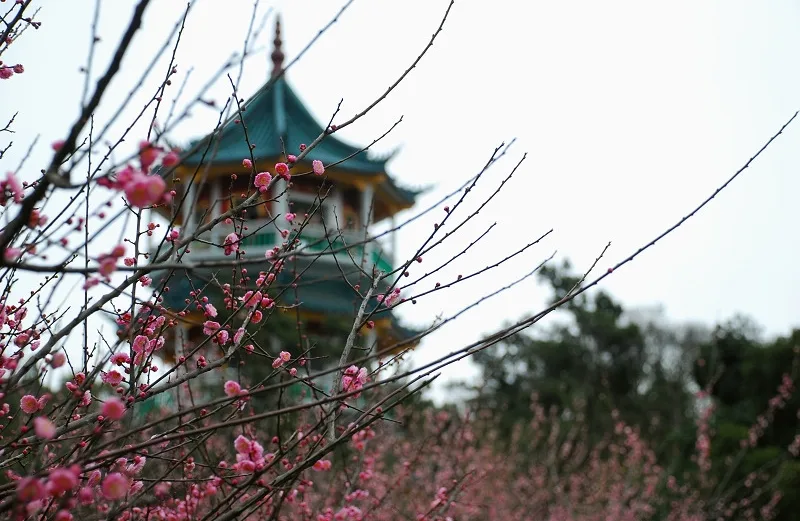
3. Highlights: The first highlight is the Yuantouzhu mainland itself. The Chongshan Peninsula is embraced by water and lush greenery; ascending the Shutian Pavilion on Luding Mountain offers a panoramic view of the vast lake. The “Spring Waves of Yuantouzhu” area, where massive rocks meet the lake and waves crash against the reefs, perfectly captures the grandeur of Taihu. The second highlight is the cherry blossom wonderland. With over 30,000 trees, the Cherry Blossom Valley alone covers 200,000 square meters and features 68 varieties, with over 100 varieties across the entire park. Ranked alongside Hirosaki in Japan and Washington D.C. in the USA as one of the world’s top three cherry blossom spots, the park becomes a sea of pink clouds every spring, creating a striking contrast between the delicate blooms and the vastness of the lake. The third highlight is the Taihu Fairy Isle. A 20-minute ferry ride from the Yuantouzhu pier leads to Sanshan Island. During the voyage, the lake breeze hits your face and the horizon expands, leaving the city’s hustle and bustle behind. Visitors can explore Lingxiao Palace and the grotto carvings of Dajue Bay, or climb to the summit for a distant view of the islands—many consider this the climax of the trip, as only by being on the water can one truly grasp the scale of Taihu. The fourth highlight is the seasonal transition: lotus breezes in spring and summer, red leaves in autumn and winter, and black-headed gulls circling the lake in winter, adding vitality to the static landscape. The Jiangnan Orchid Garden and Guangfu Temple are also ideal for a slow-paced stroll.
4. Visitor Information: Day tickets for Yuantouzhu are 90 RMB, which includes the round-trip ferry to Taihu Fairy Isle and internal shuttle buses (discounts are often available on online platforms). Half-price tickets (45 RMB) are available for minors aged 6-18, full-time undergraduate students and below, and seniors aged 60-69. Free entry (with valid ID) is granted to children under 6 or under 1.4m, Jiangsu residents aged 60+, non-residents aged 70+, active military personnel, and people with disabilities. Opening hours: Day entry is approximately 8:00 AM to 4:30 PM. During the cherry blossom season (approx. mid-March to early April), a Night Cherry Blossom Festival is held from 17:00 to 21:00, with lights turning on after 18:00. Night tickets are approx. 90 RMB (excluding ferry); please refer to official announcements. Transportation: The most convenient way is by city bus Line 1 or Leyou Line 1 to the Yuantouzhu Chongshan Gate. During cherry blossom season, there are shuttle buses from Xiajiabian Station on Metro Line 4. For those driving, navigate to “Yuantouzhu Chongshan Gate Parking Lot,” though parking is limited during peak times; public transport is highly recommended. A half-day visit is suggested, though 5-6 hours should be reserved during the blossom season. The Jiangnan Orchid Garden requires on-site reservations, and ferry schedules are subject to daily announcements.
5. Travel Strategy: Recommended one-day itinerary: Enter through the Chongshan Gate, visit Cherry Blossom Valley, the Cherry Blossom Pavilion, and Changchun Bridge first, then take the ferry to Taihu Fairy Isle. In the afternoon, return to explore the Spring Waves of Yuantouzhu and Guangfu Temple, then climb Luding Mountain for a panoramic view. In the evening, depending on the season, enjoy the night blossoms or the sunset. The best photo spots are the Cherry Blossom Pavilion, the banks of Changchun Bridge, and the Luding Mountain viewing platform; the sunset painting the lake gold and red is the most unforgettable moment of the day. Focus your attention on the poetry of Guo Moruo, the history of the cherry blossoms, and the ecological management of the lake. Families can feed the black-headed gulls (in winter) or explore the valley with children. Due to extreme crowds during blossom season and holidays, flow control and traffic restrictions may be implemented; visiting early on a weekday is highly recommended. When visiting the island, don’t just rush for photos: the platform in front of Lingxiao Palace offers a vast view of the horizon, and the grottoes of Dajue Bay are tucked into the cliffs. The forest paths are quiet and serene; treat the island visit as a time to daydream rather than just “checking in,” and you will receive the most generous gifts of Taihu.
6. Best Time to Visit: Spring is the highlight of the year, with the peak bloom from mid-March to early April, when the night blossoms create a dreamlike atmosphere. Summer is great for lotuses despite the heat, while autumn red leaves and winter gulls are also wonderful. In truth, Yuantouzhu is best enjoyed when you allow yourself to “slow down.” Many visitors rush through the cherry blossoms and leave, missing the sunset on Luding Mountain, the bells of Guangfu Temple, and the serenity of the Fairy Isle. Choosing a weekday outside the flowering season allows you to see the water and sky merge into one color with distant sails, letting the vastness of the lake open up your heart. The management pressure during peak season is a reminder to be strategic: arrive early, avoid peak hours, or choose a non-peak weekday to enjoy the quiet lake. Shift your expectation from “sightseeing” to “daydreaming,” and the lake will reward you with a more relaxed experience. You can combine this with Li Garden, Mei Garden, and Lingshan for a one- or two-day “Wuxi West Line” tour, or add Huishan Ancient Town. For local cuisine, try the “Three Whites of Taihu”—silver fish, white shrimp, and white fish—which are the soul of Wuxi cuisine; Hengyun Restaurant is a classic choice. Limited-edition snacks are available during the blossom season, and you shouldn’t miss the Sanfengqiao braised pork ribs and Wuxi Xiaolongbao in the city center. Whether it is the spring blossoms or the winter gulls, the most moving thing about Yuantouzhu is its ability to make you forget time.