Yangzhou · Museums & Academia
The Grand Canal Museum of Yangzhou
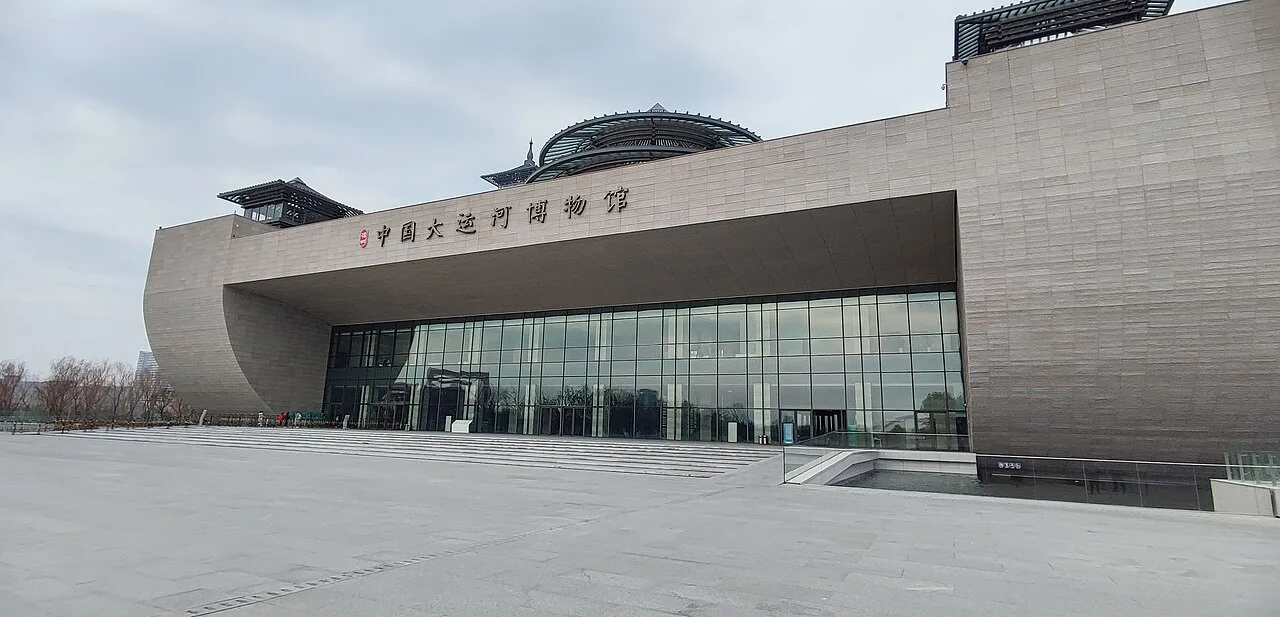
The Grand Canal Museum of Yangzhou is China’s first national-level museum themed around the Grand Canal. From the excavation of the canal and the history of grain transport to the unique customs of the cities along its banks, the museum uses modern exhibition techniques to tell a vivid and three-dimensional story. Standing before the panoramic digital scroll watching the seasons change along the canal, and then stepping into the reconstructed ancient street markets to hear the bustle of the crowds, I felt as though I had journeyed through a millennium of waterborne history.
1. Location Overview: The Grand Canal Museum of Yangzhou is located at No. 1 Yunbo Road, Tangwang Subdistrict, Guangling District, Yangzhou, Jiangsu Province, within the Sanwan Scenic Area. Built by Yangzhou and operated by the Nanjing Museum, it is the first national-level thematic museum in China covering the entire basin and full timeline of the Grand Canal. Situated in the south of Yangzhou city by the Sanwan section of the ancient canal, it looks toward the old city to the north and connects to the Yangtze River to the south, marking the vital throat through which the canal connects the Jianghuai region to Jiangnan. The museum has a total construction area of approximately 80,000 square meters. The main building, consisting of the museum and the Dayun Tower, is shaped like a giant ship anchored by the shore, integrating seamlessly with the Sanwan Wetlands and Jinyue Bridge. As a landmark cultural facility of the Grand Canal Cultural Belt, it is a modern cultural and tourism icon of Yangzhou and the premier stop for understanding the thousand-year history of the canal. Since its opening, it has consistently ranked among the most popular museums in China, with reservation slots for weekends and holidays often filling up instantly. Consequently, many travelers have extended their Yangzhou itineraries from simply visiting gardens to exploring the river.
2. Cultural Context: The Grand Canal of China consists of the Sui-Tang Grand Canal, the Beijing-Hangzhou Grand Canal, and the Zhejiang-East Canal, spanning nearly 2,500 years of history. It was inscribed on the UNESCO World Heritage List in 2014 and serves as a “flowing memory” of the nation. To systematically present this grand heritage, Yangzhou established this thematic museum at Sanwan, designed by the team of Academician Zhang Jinqiu. The “New Tang Style” architecture blends the aesthetics of canal water towns; the museum opened on June 16, 2021, and became an instant cultural hotspot. Sanwan itself is a “living heritage” of the Grand Canal: during the Ming Dynasty, to slow the current and facilitate navigation, the Prefect of Yangzhou, Guo Guangfu, led the dredging of the river, choosing a winding path over a straight one to extend the river course—a feat of water management wisdom known as “Three Bends replacing one dam.” The museum’s location creates a dialogue with the engineering history of the canal: inside, the museum explains how the canal was artificially reshaped, while outside, the result of that reshaping is the landscape itself.
3. Highlights: The museum uses physical artifacts, digital immersive experiences, and reconstructed scenes to provide a panoramic history of the canal, housing over 10,000 pieces of collections. The permanent exhibition, “The Grand Canal—A World Cultural Heritage of China,” is the essential main thread, tracing the spatio-temporal veins of the canal and its heritage sites. The crown jewel of the collection is an entire section of the Kaifeng Bian River channel profile, where a thousand years of a city are layered in strata of silt. “Born of the Canal—Impressions of the Grand Canal Markets” features a full-scale reconstruction of ancient canal-side shops, making visitors feel as if they have traveled back to the golden age of grain transport. “Boats on the Canal” displays various ancient ship artifacts and models, while the digital immersive exhibition “Love of the River” uses naked-eye 3D effects to create a sensation of traveling along the water, often described by visitors as “transporting you in a second.” Additionally, there are special galleries such as “Intangible Cultural Heritage of the Grand Canal,” “The Forbidden City and the Grand Canal,” “Emperor Yang of Sui and the Grand Canal,” and “Fun in the Canal Wetlands.” The architecture is also a highlight: the rooftop garden offers far-reaching views of Sanwan, and the Dayun Tower and Jinyue Bridge extend the exhibition into nature. The museum frequently hosts high-quality temporary exhibitions and educational activities, with interactive installations that make heavy history tangible and engaging.
4. Visitor Information: Opening Hours: Tuesday to Sunday 9:00—17:00 (Last entry at 16:00), closed on Mondays (except statutory holidays); extended hours may apply during summer and holidays—please check the official WeChat public account for announcements. Ticket Prices: Permanent exhibitions are free, but all visitors (including infants) must make a real-name reservation; entry is not permitted without a reservation. Reservations can be made seven days in advance starting at 19:00 daily via the official WeChat public account “The Grand Canal Museum of Yangzhou”. Time slots are divided into Morning (9:00—12:00, must enter by 13:00) and Afternoon (12:00—16:00), with cross-slot visiting permitted. It is recommended to book exactly on time for weekends and holidays. Some temporary exhibitions and experience activities may charge a fee. Electronic audio guides are available for rent (fees apply on-site), and free public guided tours are available daily; please check the schedule. Inquiry Phone: 0514-82773088. Transportation: There is currently no direct subway. You can take bus routes 9, 56, 57, or 82 to the Sanwan Bridge East stop and walk approximately 300 meters to the North Gate. For those driving, underground parking is available within the museum (enter via Daxue South Road, open 9:00—18:00); if full, use the adjacent Sanwan Park parking lot.
5. Travel Tips: It is recommended to reserve three to four hours. Start at the “The Grand Canal—A World Cultural Heritage of China” introductory hall on the first floor to establish a panoramic understanding, then proceed through the main and thematic galleries on the second and third floors. Along the way, immerse yourself in the reconstructed markets of “Born of the Canal” and the “Love of the River” digital exhibit. Finally, climb to the rooftop garden for a view of Sanwan or walk to Jinyue Bridge to see the canal’s colors, completing a loop between the museum and the outdoors. Regarding the sequence, we suggest visiting the crowded digital exhibition either immediately upon entry or just before closing to avoid peak crowds and save queuing time. The best experiences are during the quiet hours after opening or the interplay of light and shadow near closing. Focus your attention on the spatio-temporal layout of the canal, the grain transport system, and the water management wisdom of Sanwan. Families with children can enjoy experiments on canal formation and shipbuilding; the digital exhibits and interactive installations are best for lowering the barrier of understanding for children. For students, the focus should be on World Heritage and hydraulic engineering. Seniors are advised to follow the gentle main exhibition lines and utilize the resting areas. The museum is spacious with a lot of walking; comfortable shoes and a water bottle are recommended. If time permits, spend the morning at the museum, the afternoon wandering through the Sanwan Wetlands, and leave in the evening to catch the sunset over the wetlands for a relaxed yet fulfilling cultural day in Yangzhou.
6. Best Time to Visit: Any season is suitable. Rainy days and extreme heat make the temperature-controlled indoor environment an ideal choice. Spring and autumn are the most beautiful outdoors; the greenways of the Sanwan Wetlands are perfect for walking or cycling, and autumn reeds appear like snow, complementing the museum’s civilizational narrative. You can combine the visit with a stroll through the Sanwan Scenic Area, then head north to Dongguan Street, Ge Garden, He Garden, and Slender West Lake for a classic 2-3 day Yangzhou itinerary. For local delicacies, try Yangzhou Morning Tea, Lion’s Head (meatballs), and Braised Shredded Tofu; snacks are plentiful between Sanwan and the old city. Before leaving, you can pick up specialties like Yangzhou lacquerware or Xie Fuchun perfumes. The curatorial logic of the museum is panoramic: moving from macro-time and space to micro-life, from administrative systems to the bustle of the marketplace. It allows visitors to both bird’s-eye the whole canal and lean in to see a single bowl or boat from antiquity. One museum, half the history of the canal; if you visit Yangzhou and only see the gardens and streets, it would be a pity. Only by visiting here can you truly understand the origins of this famous canal city.