Xuzhou · Gardens & Ancient Architecture
Baolian Temple
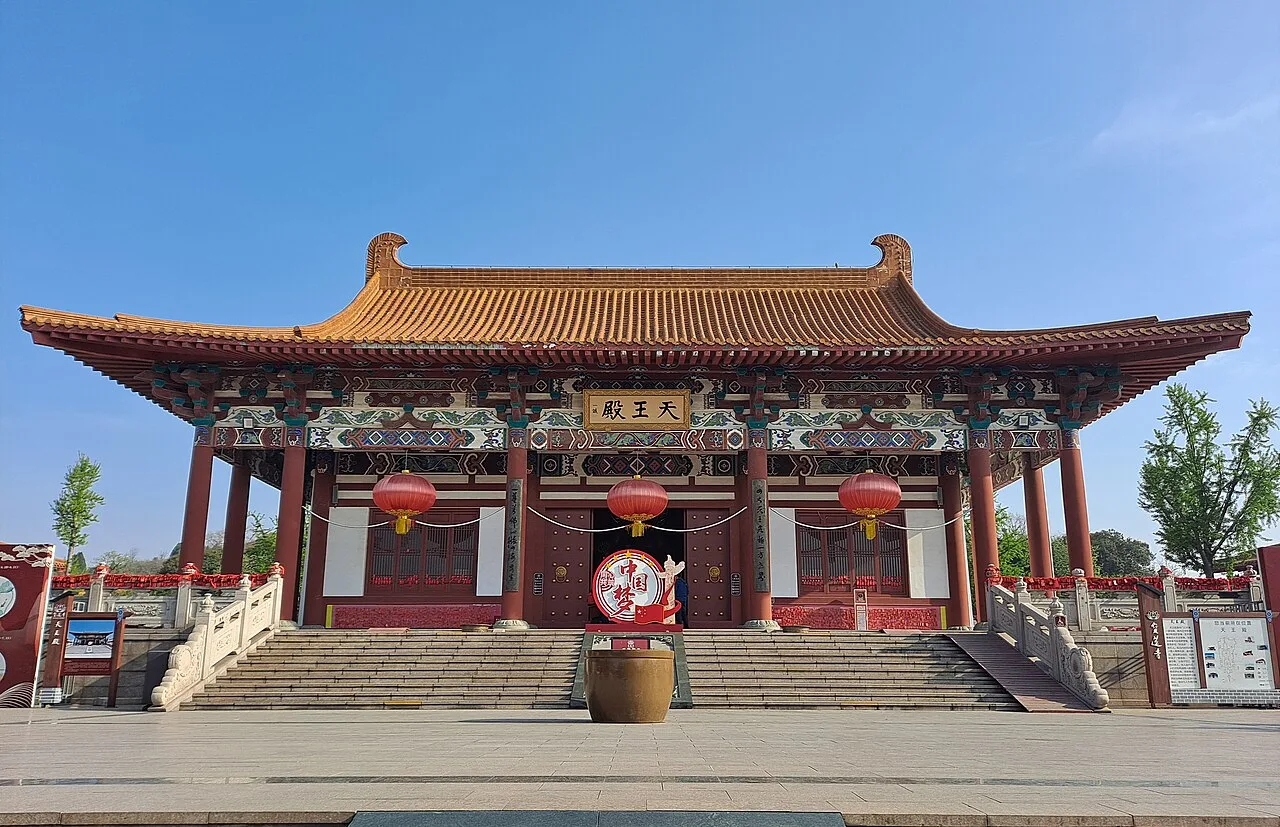
My first impression of Baolian Temple was its sheer scale—the mountain gate is magnificent, and the halls unfold one after another. As you reach the end of the central axis, the towering Tongtian Pavilion suddenly emerges, housing a bronze statue of the Crowned Maitreya so immense that you cannot see the top just by looking up. Open to the public for free on ordinary days and bustling with incense, it is a daily sanctuary for Xuzhou locals to pray for blessings and a wonderful place for travelers to experience the Buddhist heritage of this ancient city of Han culture.
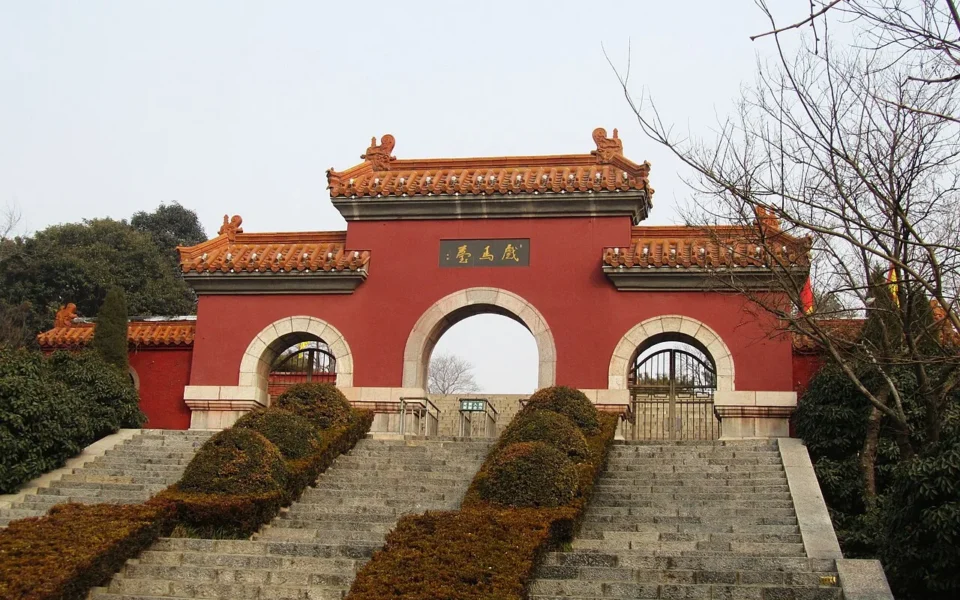
1. Location Overview: Baolian Temple is situated at the foot of Pantao Mountain in the east of Xuzhou, located at No. 5 Baolian Temple Road, Gulou District. It lies within the Xuzhou Economic and Technological Development Zone, bordered by Chang’an Avenue to the east, Tuolan Mountain Road to the north, and Yangshan Road to the south. Pantao Mountain derives its name from its rounded shape and the legendary imagery of the Queen Mother of the West’s “peaches of immortality,” having been a tranquil retreat since ancient times. Baolian Temple is the primary architectural complex of the Pantao Mountain Buddhist Culture Scenic Area, which is a national 4A-level tourist attraction. In Xuzhou’s cultural landscape, it balances the city’s layout against the Yunlong Lake, the Han Culture Scenic Area, and the Xuzhou Museum to the west. While the west showcases the vigor of the Han and Chu dynasties, the east, centered around Baolian Temple, represents the Buddhist cultural sphere. Together, they present a complete narrative of Xuzhou’s diverse heritage, from the homeland of Peng Zu and the capital of Western Chu to a center for the spread of Buddhism. It is both a weekend leisure spot for citizens and a key destination for visitors seeking the Zen spirit of Xuzhou.
2. Cultural Heritage: The history of Baolian Temple dates back to the Northern and Southern Dynasties. Local tradition holds that it was founded in 413 AD (the 9th year of the Yixi era of the Eastern Jin Dynasty) by the eminent monk Faxian, originally named Longhua Temple, making it over 1,600 years old. Faxian was the first great master in Chinese Buddhist history to travel west in search of the Dharma and successfully return to China. Departing from Chang’an in 399 AD, he traversed the Hexi Corridor and the Western Regions to reach India. Over a decade and through more than thirty countries, he returned by sea carrying a vast collection of Sanskrit scriptures and left behind the “A Record of Buddhist Kingdoms,” documenting the customs of Central Asia and India—a feat achieved more than 200 years before the Tang Dynasty’s Xuanzang. Legend says that after returning, Faxian stayed in the Pengcheng area to preach, build temples, and translate scriptures. Though the temple has undergone cycles of decline and restoration, today’s Baolian Temple was largely reconstructed on the original site following ancient styles. However, the spiritual memory of Faxian’s quest gives the temple a dual identity as both a Buddhist sanctuary and a center of folk belief. The Pantao Temple Fair, held annually around the third day of the third lunar month, is a renowned traditional folk event in Xuzhou, attracting crowds of pilgrims and tourists who come to pray for peace and prosperity.
3. Highlights: The most striking landmark of Baolian Temple is the Tongtian Pavilion. Standing approximately 59.88 meters tall, it is the highest point of the temple. Inside is the Crowned Maitreya bronze statue, about 39.88 meters high, which provides a breathtaking sense of scale. From the top of the pavilion, visitors can enjoy a panoramic view of the rolling hills of Pantao Mountain, making it a favorite spot for photographers. The temple’s architecture blends the traditional layout of Chinese Buddhist halls with Indian Buddhist architectural elements; lotus thrones, domes, and tower finials are skillfully integrated with flying eaves and dougong brackets, creating a unique Sino-Indian fusion style. The sequence of structures along the central axis—the Mountain Gate, Heavenly Kings Hall, Mahavira Hall, Seven Buddhas Hall, and Tongtian Pavilion—creates a distinct hierarchy for worship. The mural of the “Boy Paying Homage to Guanyin” in the Seven Buddhas Hall is particularly exquisite. The complex is further accented by the Bell and Drum Tower, Sutra Library, Ten Thousand Buddhas Pagoda, Release Pond, stele gallery, and stone carvings. At the Lotus Plaza before the mountain gate stands a giant golden lotus, serving as the first landmark visitors encounter. The temple grounds are lush with greenery and filled with the scent of incense. On the first and fifteenth of the lunar month and during major Buddhist holidays, the sounds of bells, chimes, and chanting intertwine, creating a serene and solemn atmosphere that offers a rare moment of peace in the city.
4. Visitor Information: Opening Hours: The temple has summer and winter schedules. Summer (May to September): 6:30 to 18:00 daily (last entry at 17:30). Winter (October to April): 7:00 to 17:30 daily (last entry at 17:00). It opens earlier on the first and fifteenth of the lunar month; please check daily announcements. Tickets: Free for general admission; visitors can enter by scanning their ID card or a QR code. Tickets may be required during major festivals, such as the Spring Festival Lantern Fair. Transportation: Take Xuzhou Metro Line 3 to Pantao Station and walk about 10 minutes from Exit 3, or take Bus 613 to the Baolian Temple stop. For those driving, navigate to No. 5 Baolian Temple Road; the scenic area has ample parking. Suggested Visit Time: 1.5 to 2 hours. Temple Etiquette: Please remain quiet, dress modestly, and refrain from using flash photography inside the halls. Vegetarian meals and noodles are available based on the temple’s daily schedule. Large groups are encouraged to contact the scenic area in advance to arrange guide services.
5. Travel Tips: For a half-day trip, we recommend entering through the Mountain Gate, visiting the Heavenly Kings Hall, Mahavira Hall, and Seven Buddhas Hall in sequence, climbing the Tongtian Pavilion, exploring the Guanyin Hall and other side halls, and finally relaxing by the Release Pond and stele gallery. This route is leisurely and avoids backtracking. There are three prime photo spots: the plaza in front of the Tongtian Pavilion for a full-length shot of the tower; the top of the pavilion for vistas of Pantao Mountain and the city skyline; and the halls during the soft light of dawn or dusk to capture silhouettes and the detail of the eaves. In autumn and winter, the ginkgo trees framed against the ancient architecture are particularly charming. Key points of interest include the legends of Faxian’s journey and temple founding, the fusion of Chinese and Indian architectural styles, and the folk origins of the Pantao Temple Fair. The temple appeals to a wide audience: believers can pray, families can introduce children to Buddhist culture, and study groups can explore architectural art and Silk Road exchanges. The temple’s vegetarian noodles are highly regarded; ending the visit with a bowl is a tradition for many pilgrims. Early mornings are the quietest and best for photography; weekday mornings and winter periods (outside of the fair) are the most peaceful. Avoid the first and fifteenth of the lunar month and the Pantao Temple Fair if you wish to avoid massive crowds.
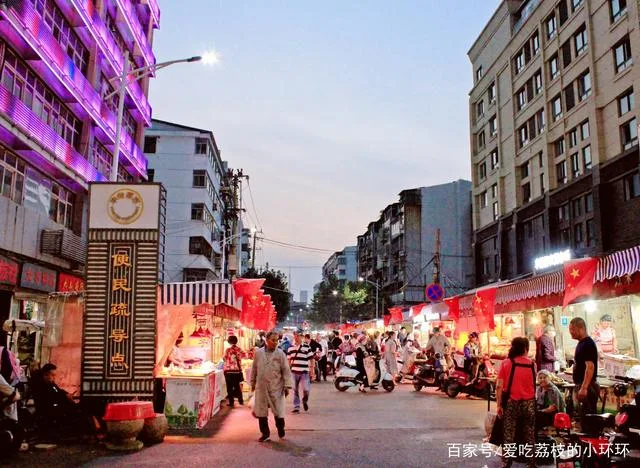
6. Best Time to Visit: Baolian Temple is a year-round destination. Spring is the time for the lively Pantao Temple Fair (3rd day of the 3rd lunar month). During the Spring Festival, Pantao Mountain hosts a Lantern Fair (the first one will be in 2026), making the evenings vibrant and worth a separate visit. The clear skies of autumn and winter are ideal for climbing the pavilion, and the temple covered in snow possesses a profound Zen quality. During Buddhist holidays, Dharma assemblies are often held, intensifying the religious atmosphere. For a comprehensive itinerary, Baolian Temple can be paired with the Xuzhou Han Culture Scenic Area (Han Terracotta Army, King of Chu’s Mausoleum at Lion Mountain), Yunlong Lake, and the Xuzhou Museum to create a one- or two-day tour combining the “Zen of the East” with the “Han Charm of the West.” You can also head further east to visit the Jiawang Pan’an Lake Wetland Park. After your tour, be sure to sample authentic Xuzhou flavors: Bazirou (braised pork), Di Guo Ji (pot chicken), He-ta soup, Laomo rolls with Zao-zi, Bagu youtiao, and frog fish. These dishes reflect the city’s unique blend of northern boldness and southern elegance. Walk softly and clear your mind to truly feel the tranquil power of this Sino-Indian architectural gem.