Tianjin · City Landmarks
The Tianjin Eye
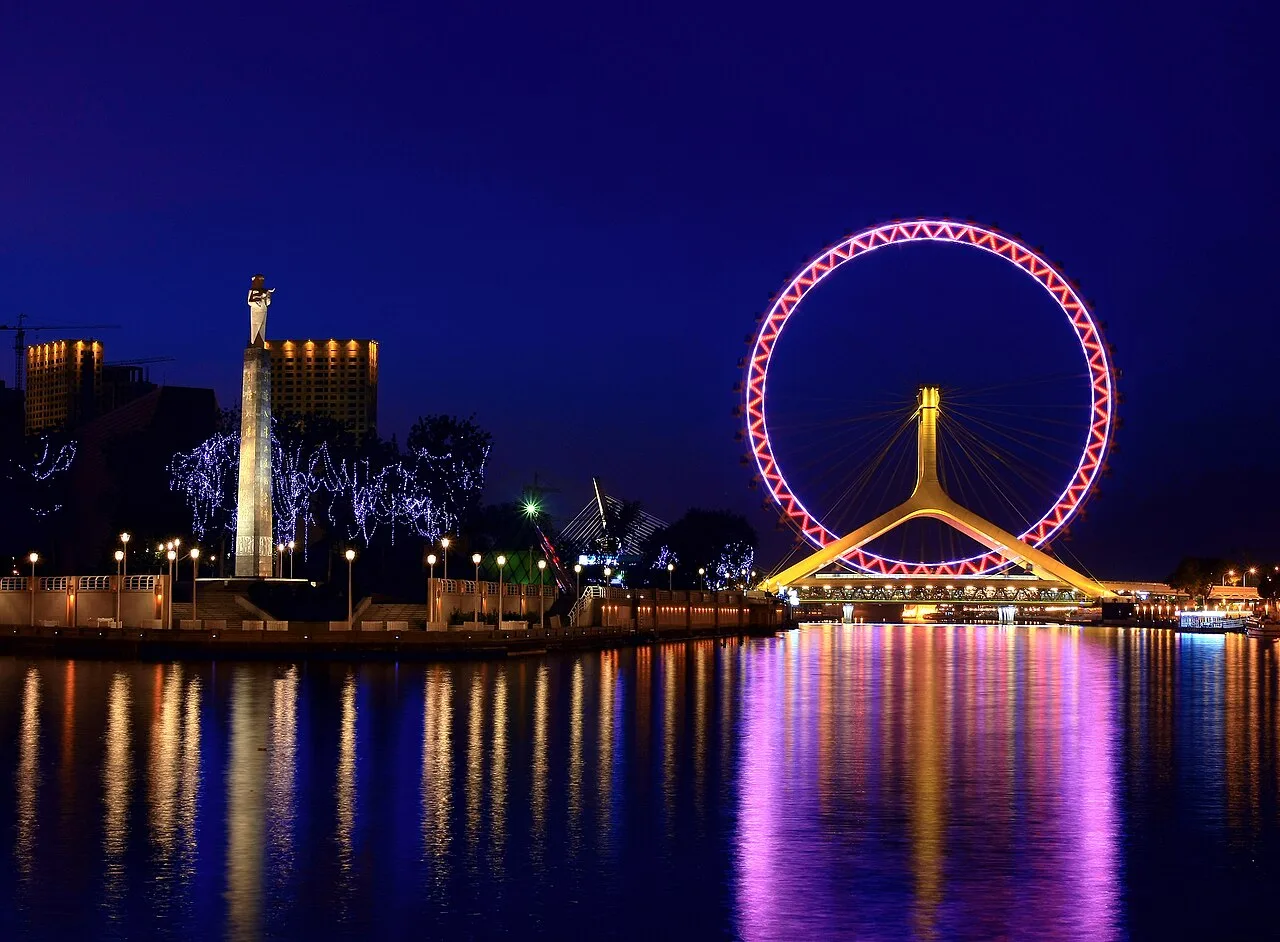
The most extraordinary thing about the Tianjin Eye is its perch atop the Yongle Bridge—a rotating Ferris wheel that uses the entire Haihe River as its pedestal. I opted for a nighttime ticket; the rotation takes about twenty-eight minutes. As you reach the highest point, the city’s lights unfold beneath your feet. That surreal sensation of “being on a bridge while the wheel is in the river” is an experience you won’t find anywhere else.
1. Location Overview: The Tianjin Eye, formally known as the Tianjin Yongle Bridge Ferris Wheel, is situated on the Yongle Bridge at the intersection of Ligongci Avenue and Wuma Road in the Hebei District. Spanning the Haihe River, it connects the Hebei and Hongqiao districts at the “geographic origin” of Tianjin—the Three-Way Junction where the South Canal, North Canal, and Haihe River converge. It is the world’s only Ferris wheel built upon a bridge, serving the dual purpose of vehicular traffic and sightseeing. In November 2010, it was rated as a National 4A-level tourist attraction. In terms of the city’s cultural layout, the Tianjin Eye sits at the northern end of the Haihe tourism axis. Together with Ancient Culture Street, the Italian Style Town, and Jinwan Plaza, it forms the core section of the Haihe night scenery. Haihe river cruises often use it as a backdrop, making it the primary visual symbol for many visitors getting to know Tianjin, the “City of Rivers and Seas.” Ascending the wheel has practically become a rite of passage for visitors. Below the bridge, there are waterfront platforms and cruise piers where locals often stroll and relax; nearby on the Hebei bank, Dabei Temple and the Wanghai Tower Church add a touch of old Tianjin’s religious and street-life atmosphere to the riverbank.
2. Cultural Context: While the design of the Tianjin Eye was inspired by the London Eye, it did not stop at imitation. Instead, it realized the original concept of “integrating the bridge and the wheel” over the Haihe River—the wheel and the Yongle Bridge were constructed as a single entity, where the bridge carries traffic and the wheel provides views. This structure is unique among the world’s Ferris wheels. Completed alongside the Yongle Bridge project in 2008, it officially opened to the public in April 2009. As a landmark of Tianjin’s urban renewal, it has boosted tourism along both banks of the Haihe and serves as a visual footnote to Tianjin’s transformation from an industrial port city into a cultural and tourism destination. Locals often liken it to an eye watching over the Haihe: quietly observing the currents of the Three-Way Junction by day and shimmering with colorful lights by night. From couples on dates and tourists checking it off their lists to residents praying for the New Year by the bridge, this “eye” has become more than just an amusement ride; it is a landmark of the “mother river” where Tianjin people deposit their emotions, carrying the collective memory of a city that flourished because of its river.
3. Highlights and Features: The Ferris wheel has a diameter of 110 meters, equivalent to a 40-story building. Forty-eight 360-degree transparent cabins are attached to the outer rim, each seating eight people, allowing for a total capacity of 384 sightseers. A full rotation takes about twenty-eight minutes, reaching a peak height of approximately 119.8 meters. The cabins are air-conditioned and encased in fully transparent glass; the rotation is slow and steady, with almost no perceptible shaking during ascent or descent, providing a wide-open view in clear weather. As you slowly rise, the Haihe River unfolds beneath you: by day, you can see the pseudo-ancient pavilions of Ancient Culture Street, the red-roofed foreign villas of the Italian Style Town, and the layout of the Three-Way Junction. At night, as the lights come on, the wheel’s own illumination blends with the reflections of the buildings and bridges in the water, making the Ferris wheel the most dazzling protagonist on the river. Traffic on the bridge, sightseeing on the wheel, and boats on the river overlap in a single frame—a three-dimensional perspective that other wheels cannot offer, and the reason photography enthusiasts wait on Jingang Bridge for the moment the lights flicker on. It is also the favorite subject for passengers on night cruises—the boat gliding through the heart of the river while the wheel turns atop the bridge creates a perfect dialogue between motion and stillness.
4. Visitor Information: Opening hours are Tuesday to Sunday, 9:30 AM to 10:00 PM. Every Monday, the wheel undergoes routine maintenance during the day and is only open from 6:00 PM to 10:00 PM (except on public holidays); there are also annual maintenance periods, so please refer to official announcements. Tickets are divided into day and night sessions: adult day tickets are 80 RMB, and night tickets are 100 RMB; children and seniors are half-price (40 RMB for day, 50 RMB for night). The attraction uses a real-name, time-slot reservation system. Tickets are sold via the official WeChat public account three days in advance with daily limits. Night sessions on weekends and holidays often sell out, so be sure to book your slot early. Transportation: Take Metro Line 1 to Xibeijiao Station and walk for about twenty minutes, or transfer to a connecting bus. Alternatively, take bus lines 652, 910, or Sightseeing Line 1 to the Yongle Bridge stop. Visitors coming from Tianjin West Railway Station can transfer to bus 910. Parking near the bridge is limited; those driving are advised to park in outlying commercial areas and walk, or prioritize public transport and river cruise connections.
5. Travel Tips: For a half-day trip, you can ride the wheel during the day to see the full panorama of the Haihe, then walk across the bridge to Ancient Culture Street for snacks and the Italian Style Town for photos, covering both the river and the city in one line. However, a romantic night tour is more recommended: arrive at the Three-Way Junction and Jingang Bridge in the evening to capture wide shots and reflections of the wheel, then take a night session cabin to see the illuminated river, followed by a slow stroll along the bank. To experience both perspectives, ride the wheel by day and take a Haihe river cruise by night. The best photography spot is Jingang Bridge, as it captures both the wheel and the river junction in one frame; the direction of Jiefang Bridge and Jinwan Plaza includes the city skyline. When shooting inside the cabin, press your phone tight against the glass to reduce reflections. For timing, weekday afternoons are the least crowded. If you are coming specifically for the night view, book your weekend slot exactly three days in advance when tickets are released. Children must be accompanied by an adult. Note: Boarding is by session; arriving late may mean missing your turn. The cabins are enclosed and move smoothly, so dizziness is rare, but those with a fear of heights should be prepared. The riverbank can be freezing during winter nights, so dress warmly. Operation may be suspended during strong winds or thunderstorms; please check official status before departing.
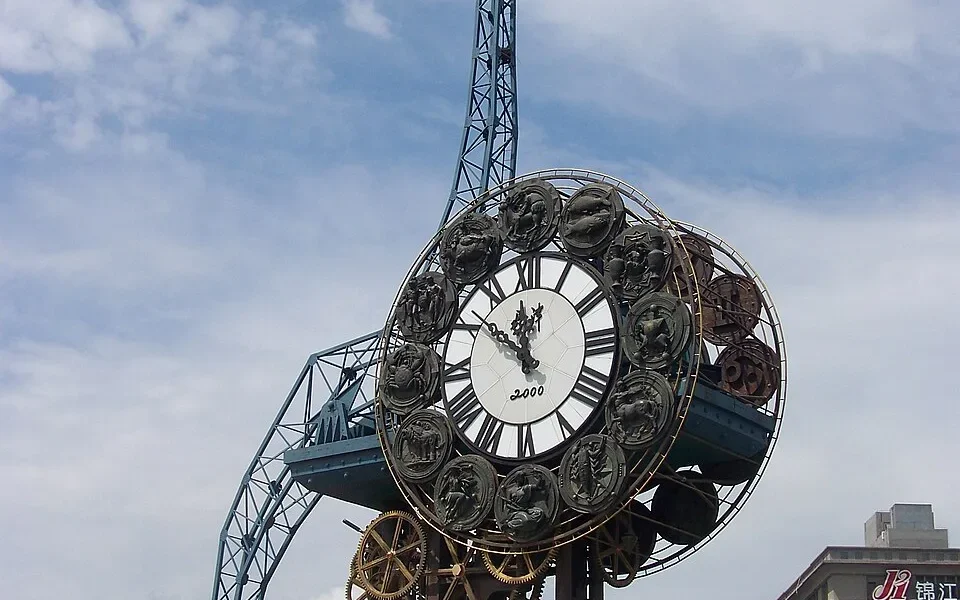
6. Best Time to Visit: Spring and autumn offer pleasant weather and good visibility, making them the golden seasons for viewing, with refreshing river breezes and clear skies. Summer days are hot, so night sessions are preferred for the peak lighting and cooling breezes. Winter river scenes are quiet and serene, with festive lighting adding to the atmosphere. In terms of itinerary, the Tianjin Eye connects south to Ancient Culture Street, the Italian Style Town, Jinwan Plaza, and Jiefang Bridge, forming a perfect half-day or full-day Haihe tour. Continuing toward Tianjin Railway Station to see the century-old clock completes the landmark line. When the Haihe freezes in winter, the ice combined with the Ferris wheel creates a distinct northern landscape that photographers often wait for. Around the Spring Festival, the lights on both banks make the ride feel truly festive. For a local experience, try “Erduoyan” fried cakes and poached pear cakes at Ancient Culture Street, or visit the exotic restaurants in the Italian Style Town. The river cruise narratives often complement the experience by telling the stories of the Haihe bridges. For those who want to truly understand Tianjin, one ride on the wheel and one cruise on the boat will reveal the three-dimensional shape of this city that rose by the river and prospered as a port.