Beijing · Museums & Academia
Peking University
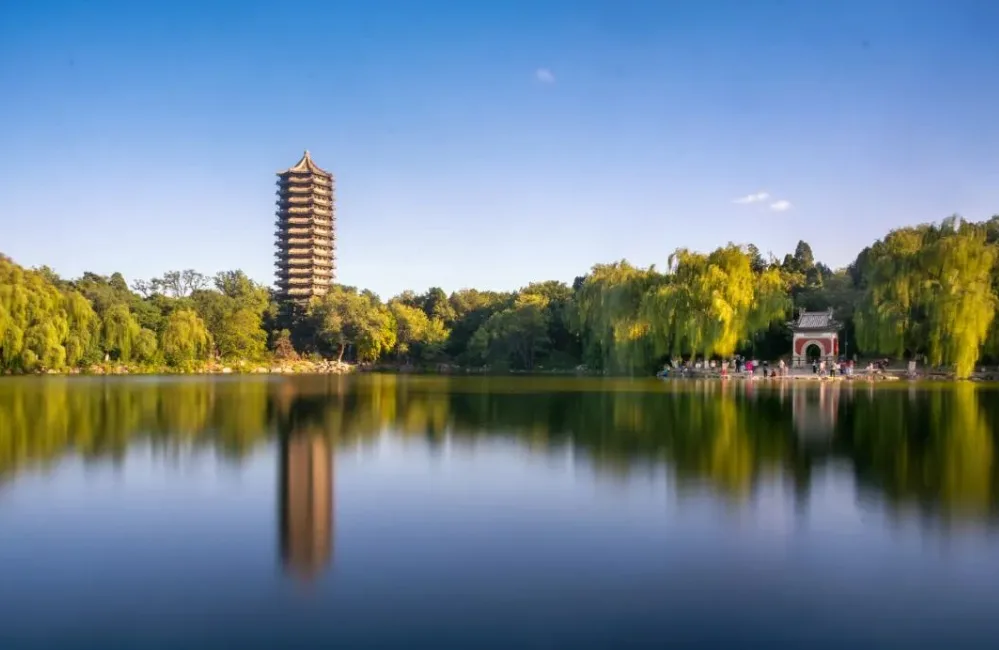
On the day my reservation was confirmed, I made a point of waking up early. Scanning my ID card to enter the East Gate, I found a light mist still floating over the surface of Weiming Lake, with the reflection of Boya Pagoda casting a long silhouette across the water. The sound of students’ bicycle bells rang in my ears, and in that moment, I suddenly realized that the beauty of Yanyuan (the campus) has always come second to its pursuit of knowledge. I treated this visit as a strolling read—reading not the prestige of a world-renowned university, but the scholarly elegance that these waters have nurtured for over a century.
1. Location Overview: The main campus of Peking University (PKU) is located at No. 5 Yiheyuan Road, Haidian District, Beijing, in a place known as Yanyuan. Once a collection of imperial gardens and private estates from the Ming and Qing dynasties—including the ruins of Shuchun Garden, Shao Garden, Langrun Garden, Jingchun Garden, Minghe Garden, Weixiu Garden, Changchun Garden, and Chengze Garden—it became the PKU campus in 1952. The campus is bordered by the Old Summer Palace to the west and the Western Hills to the north. Visitors can exit at the Peking University East Gate Station on Metro Line 4 and head north for a short distance to find the East Gate, the dedicated entrance for the general public. For tourists, PKU is both a university and a functioning classical garden—where lakes, pagodas, ancient architecture, and classrooms share the same land, a unique atmosphere rarely found in other Chinese universities. There is no walled-off “tourist zone”; the libraries, study halls, cafeterias, and dormitories are all in active use, and the paths of visitors intertwine with the daily lives of students. Weiming Lake sits at the center of the campus, with the densest greenery around the Lake Center Island and Linhu Pavilion. The southern and western areas are teaching and administrative zones, where the pace is distinctly “academic.” Viewed from above, most buildings in Yanyuan feature blue bricks, grey tiles, and sweeping sloped roofs, blending seamlessly with the lake and mountain scenery—a design tone established during the original planning.
2. Cultural Context: In 1898, the Imperial University of Peking was founded during the Hundred Days’ Reform, becoming China’s first modern national comprehensive university. It was renamed Peking University in 1912. In 1917, Cai Yuanpei became president and proposed the principles of “freedom of thought and inclusive pluralism,” turning PKU into the center of the New Culture Movement. In 1919, the torch of the May Fourth Movement was lit here. During the 1952 academic reorganization, PKU moved to the former site of Yenching University—a campus planned by American architect Henry Murphy, who seamlessly integrated the landscape layout of classical Chinese gardens with modern university architecture. From the Imperial University of Peking to today’s PKU, it has stood at the forefront of Chinese higher education and intellectual reform for over 120 years; every brick and tile of Yanyuan is steeped in this history. A long list of names, from Yan Fu, Li Dazhao, and Chen Duxiu to Lu Xun and Hu Shih, are linked to this place. The PKU Red Building on May Fourth Street in Dongcheng District is a major landmark of the New Culture and May Fourth Movements; although located outside the main campus, it is an essential stop for understanding the origins of the PKU spirit, and many visitors visit both sites on the same day. During the War of Resistance against Japanese Aggression, PKU relocated to Changsha and later Kunming, joining Tsinghua and Nankai to form the National Southwestern Associated University, preserving the spark of Chinese higher education amidst the flames of war—a history highlighted in the University Museum.
3. Highlights: The “Pagoda, Lake, and Library” are the hallmarks of Yanyuan: Weiming Lake is the largest artificial lake on campus, named by historian Qian Mu; Boya Pagoda was originally a water tower built in the 1930s, modeled after the Burning Lamp Pagoda in Tongzhou, creating a picturesque reflection on the water; the “Library” refers to one of the richest university libraries in China, which visitors can admire from the exterior. Along the lakeside, there are scattered artifacts from the Old Summer Palace, such as the Tail-flipping Stone Fish and the Qianlong Poetry Stele, as well as statues of Cai Yuanpei and Li Dazhao. The West Gate is a symbol of Yanyuan, flanked by a pair of Huabiao (ceremonial columns) originally from the Anyou Palace of the Old Summer Palace. The Sackler Museum of Archaeology and Art is the first archaeology-themed museum in a Chinese university, and its permanent exhibitions are well worth the time. The University Museum is ideal for those seeking a systematic understanding of PKU. The Jingyuan Lawn area is the quietest corner of the campus. In winter, when the lake freezes, Weiming Lake transforms into a natural ice rink—a rare winter sight among Beijing’s universities. The stone boat and pavilions on the Lake Center Island are classic spots for photographing the pagoda and lake in one frame, often occupied by photographers at dawn. The Linhu Pavilion and the Bell Pavilion are charming spots to pause, while the hilly area west of the lake still preserves ancient tombs and stone carvings. A slow walk around the lake is like walking through half the history of garden design.
4. Visitor Information: Opening Hours: Campus visits are generally open on weekends, statutory holidays, and winter/summer vacations. Entry hours are 8:00–11:00 and 13:00–16:00; visitors must leave by 19:00. Access may be suspended during major university events; please refer to official announcements for specific dates. Admission: Free. Any paid services promising “entry into PKU” are not official channels; please do not be deceived. Reservation and Entry: Individual visits must be booked via real-name registration through the “Visit PKU” WeChat mini-program, which is the only official channel. There are two types of reservations: “Instant Reservations” are open daily from 8:00–17:00 (up to 7 days in advance), and “Lottery Reservations” are open daily from 17:00–21:45 (up to 8 days in advance). Upon successful reservation, present your ID card at the dedicated visitor channel at the East Gate for verification and security checks. Re-entry is not permitted after leaving. Children under 8 may enter if registered and accompanied by a successfully reserved adult relative. Transportation: Exit at Exit A of Peking University East Gate Station (Metro Line 4) and head north to reach the East Gate. Outside vehicles are not allowed on campus; please use green transportation. Libraries, teaching buildings, office buildings, dormitories, and gyms are restricted areas; entry is prohibited.
5. Travel Tips: We suggest allocating 2–3 hours. A classic route is: enter through the East Gate, take a photo in front of the Library, head west to the Sackler Museum of Archaeology and Art, then walk slowly along the southern shore of Weiming Lake, circling Boya Pagoda and the Tail-flipping Stone Fish, and spend a moment on a lakeside bench. Afterwards, visit the Jingyuan Lawn and the West Gate Huabiao, and follow the on-site guide signs to exit. If the University Museum is open (usually Tuesday, Thursday, Saturday, and Sunday), you can add it to your itinerary. Visit Jingyuan for the blossoms in spring and the ginkgo trees by Weiming Lake in autumn; early morning is best for photos due to fewer crowds. The campus is large, so you may use a shared bike, but please slow down and push your bike in the lakeside and teaching areas, and avoid loud noise to respect students and faculty. For dining, campus cafeterias usually require campus cards; visitors are better off eating outside. The Chengfu Road area outside the East Gate has a high density of snack shops, and there are many restaurants near the West Gate. If time permits, walk the full loop of Weiming Lake; it is a short distance but the most essence-filled walking route in Yanyuan, where you can discover unexpected corners at every turn.
6. Best Time to Visit: Every season has its charm, but spring and autumn are the best. In spring, the flora in Shao Garden and Jingyuan flourish and the ice on Weiming Lake melts, making the campus wake up the earliest. Summer offers the quintessential Yanyuan experience with lotus breezes and cicadas, though it is the peak visitation period and reservations are most competitive. Autumn is the golden period for photography, as ginkgo and maple leaves turn the lake and pagoda gold. Winter features the lively ice rink on Weiming Lake, and the campus is exceptionally quiet when it snows (access policies for the ice rink for visitors are subject to annual announcements). Reservation slots are relatively abundant during winter and summer breaks but highly competitive on weekends; we recommend planning ahead and reserving as soon as slots open. During the graduation season in June and the start of school in September, the campus is filled with students and parents taking commemorative photos, and slots are the most limited. For a peaceful visit, choose an ordinary weekend morning; the lakeside will be nearly empty, and the pagoda’s reflection and morning light will be all yours. Keep an eye on the weather: Beijing occasionally has sandstorms in spring. On rainy or snowy days, check the mini-program announcements to ensure visits have not been temporarily adjusted to avoid a wasted trip.