Beijing · City Landmarks
Tiananmen Square
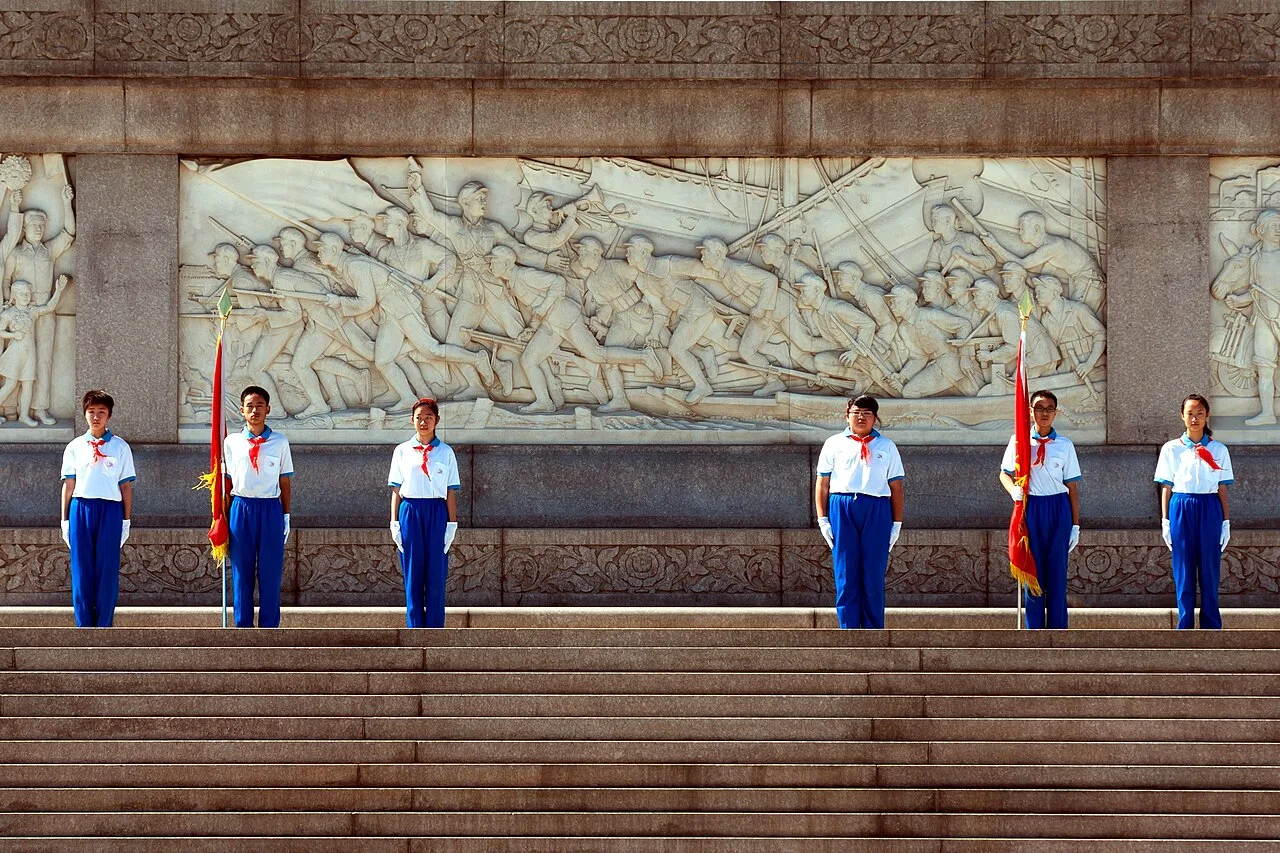
Standing in Tiananmen Square for the first time, the most immediate feeling is one of “solemnity”—the vast open space, the fluttering national flag, and the Monument to the People’s Heroes lined up in succession. The sense of ceremony brought by this national landmark is something photos simply cannot capture. This is especially true during the early morning flag-raising ceremony; the moment the national anthem begins, many people instinctively straighten their backs.
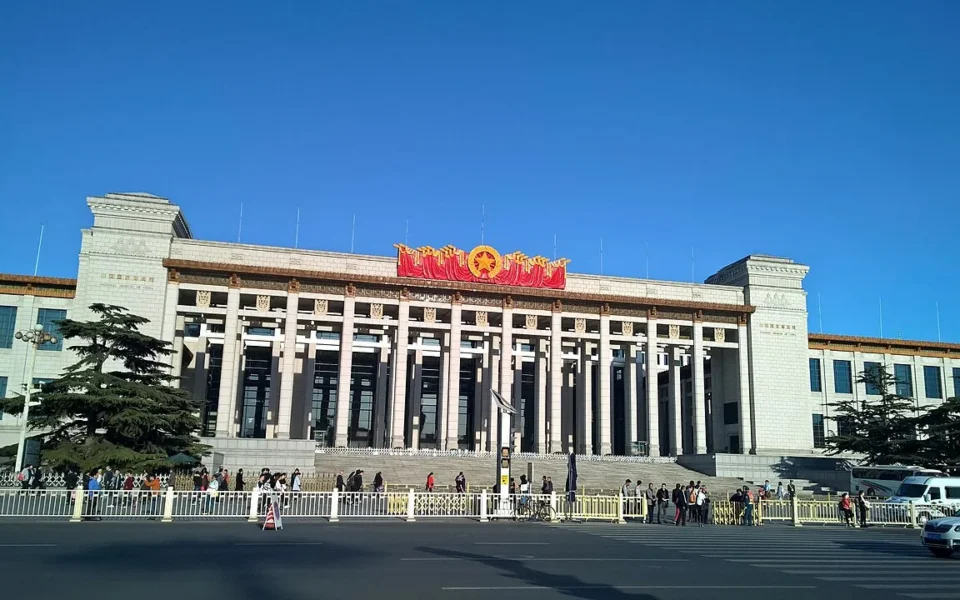
1. Location Overview:Tiananmen Square is located in the center of Beijing, south of Chang’an Street. Measuring approximately 880 meters from north to south and 500 meters from east to west, with a total area of about 440,000 square meters, it is one of the largest city squares in the world and serves as a symbol of New China and a space for national ceremonies. The northern end is the Tiananmen Gate, the main entrance to the Imperial City of the Ming and Qing dynasties. To the south are the Chairman Mao Memorial Hall and Zhengyangmen; to the east is the National Museum of China; and to the west is the Great Hall of the People. Together, they form a solemn and symmetrical architectural layout. This axial symmetry is a modern expression of the traditional order of Chinese capital cities. In terms of the city’s cultural and tourism layout, the square sits at the heart of the Beijing Central Axis, connecting the Forbidden City, Qianmen, Chang’an Street, and the Olympic Axis. It is the primary stop for understanding the capital’s political culture and modern history, and a must-visit destination for domestic and international tourists. Despite the massive daily crowds, the area remains orderly.
2. Cultural Context:Tiananmen was first built during the Yongle era of the Ming Dynasty and was originally named Chengtianmen, meaning “Gate of Receiving the Mandate of Heaven,” signifying the emperor’s duty to stabilize the nation and govern the people. It was rebuilt and renamed Tiananmen during the Shunzhi era of the Qing Dynasty. As the main gate of the Imperial City, the area in front of the gate was once used for proclaiming imperial edicts and holding grand ceremonies. In the 1950s, the square underwent large-scale expansion, including the demolition of original structures like the Zhonghuamen, to create the vast scale seen today as a center for mass gatherings. On October 1, 1949, Mao Zedong proclaimed the founding of the Central People’s Government of the People’s Republic of China here; the artillery fire and flag-raising ceremony of the founding ceremony made this the landmark of New China’s birth. Subsequently, the Monument to the People’s Heroes, the Great Hall of the People, the National Museum of China (formerly the Museum of Chinese History and the Museum of the Chinese Revolution), and the Chairman Mao Memorial Hall were completed, witnessing major national events such as National Day parades and mass rallies. The Monument to the People’s Heroes engraves the memory of the struggle against oppression and the pursuit of independence and freedom, while the Tiananmen Gate carries significant national diplomatic functions. The national emblem and the red flag atop the gate are iconic symbols in countless images.
3. Highlights:The primary appeal of the square lies in its scale and layout; gazing north and south from the centerline evokes an immediate sense of solemnity. The Monument to the People’s Heroes uses bas-reliefs to narrate the history of modern struggles and is a place for mourning and respect, with the solemn inscription “The People’s Heroes Will Live Forever” on its front. The Chairman Mao Memorial Hall, where visitors can pay their respects to his remains, is a place of deep reverence that draws people from thousands of miles away. The National Museum of China and the Great Hall of the People stand to the east and west respectively—the former housing the treasures of Chinese civilization and the latter serving as the hall for national political affairs, with architectural styles that are respectively heavy and magnificent. At the northern end, the Tiananmen Gate is a grand structure with a double-eave hip-and-gable roof, red walls, yellow tiles, and carved beams. Climbing the gate allows visitors to overlook the square and Chang’an Street, imagining the grandeur of the 1949 ceremony. The daily flag-raising at dawn and flag-lowering at dusk are the most moving events. As the honor guard marches in and the national anthem plays, the entire crowd stands in silence—a powerful scene of patriotic education. Many spectators arrive hours in advance just to secure a front-row spot.
4. Visitor Information:Opening Hours: The square opens daily with the flag-raising ceremony and is cleared after the flag-lowering ceremony. Specific times depend on the daily schedule (roughly from 5:00 AM to 10:00 PM). Ticket Prices: The square is free to the public. Tickets for the Tiananmen Gate are 15 RMB for adults and 5 RMB for discounted tickets; minors and seniors over 60 are free (reservation is still required). Reservations: Real-name reservation is required to visit the square. Individuals and tour groups must reserve 1 to 7 days in advance via the “Tiananmen Square Appointment” WeChat mini-program, the “Jingtong” mini-program, or the “Beijing Pass” APP. There are four time slots: Flag-raising, Morning, Afternoon, and Flag-lowering. Entry is granted upon verification of the original ID card at designated security checkpoints during the reserved slot. Those without a reservation or with an incorrect time slot will be denied entry. Reservation slots are updated daily at noon, and flag-raising slots during holidays are particularly competitive. The Chairman Mao Memorial Hall is free with real-name reservation, open Tuesday to Sunday from 8:00 AM to 12:00 PM. Reservations are made 1 to 6 days in advance via the “Chairman Mao Memorial Hall” WeChat official account, with tickets released daily at 12:30 PM; an electronic commemorative ticket is available after the visit. The Tiananmen Gate requires a separate ticket and reservation via the “Tiananmen Gate Visit Reservation” WeChat official account, where tickets for the following 7 days are released daily at 5:00 PM. Opening hours are 8:30 AM – 5:00 PM (last entry 4:30 PM) from April to October, and 8:30 AM – 4:30 PM (last entry 4:00 PM) from November to March, closed on Mondays (except statutory holidays). Transportation: The square’s security checkpoints are within walking distance of Tiananmen East and West stations on Metro Line 1, and Qianmen station on Lines 2 and 8. Driving is discouraged due to extreme parking shortages and frequent traffic controls; public transport is strongly recommended. All visitors must pass through security checks. Prohibited items and large equipment are strictly forbidden. Keep belongings minimal and carry your ID at all times for multiple verifications.
5. Travel Tips:To watch the flag-raising, it is recommended to book the specific time slot and arrive early to secure a spot. In winter, dress warmly and bring hot drinks; in summer, prioritize sun protection and maintain your energy for the early start. The morning slot is ideal for leisurely photography and visiting the Memorial Hall or the Gate, as the light is best for capturing the red walls and the tower. A classic half-day itinerary includes photos in the square, visiting the Chairman Mao Memorial Hall, ascending the Tiananmen Gate for a panoramic view, and then heading east into the National Museum of China. A full-day cultural route would include the square and National Museum in the morning, followed by lunch at Qianmen Street and a stroll through Dashilar and Liulichang in the afternoon, or heading north into the Forbidden City to experience imperial grandeur. The best photo spots include symmetrical compositions along the centerline, the gate with red lanterns, and the flagpole framed with the sunrise. For educational purposes, focus on the founding ceremony, the bas-reliefs of the Monument to the People’s Heroes, and the meaning of national rituals. As a space of national ceremony, order and solemnity are emphasized: stand still during flag ceremonies, follow the guidance of staff, do not cross barriers, avoid large selfie sticks, and note that drones are strictly prohibited. The square is suitable for all ages. Families and students can integrate visits with modern history, while seniors should avoid extreme heat, cold, or peak crowd days. The square is open and windy; when traveling with children or the elderly, plan the duration carefully and ensure warmth and hydration. As restroom and drinking water points are limited, plan ahead. Treat the square as a historical site to be experienced mindfully rather than just a “check-in” spot for photos.
6. Best Time to Visit:Spring and autumn are the golden seasons for visiting the square due to the pleasant weather. Early blooms in April and the crisp air of October are particularly ideal. Winter flag-raisings have a unique, solemn atmosphere but require heavy clothing, while summer visitors are advised to visit in the early morning or evening to avoid the heat and sun. The square is adjacent to the Forbidden City, the National Museum of China, Qianmen Street, Zhongshan Park, and the Workers’ Cultural Palace, making it easy to create a Central Axis one-day tour. This route captures the transition from imperial palaces to the people’s square: entering the city through Zhengyangmen in the south, passing through the square and the Forbidden City to Jingshan Park and finally the Bell and Drum Towers. This is the best way to understand the World Heritage value of the Beijing Central Axis. To the south, the route can be extended to the Temple of Heaven to fully experience the ritual layout of the ancient capital. At dusk, as the flags are lowered and the square’s lights come on against the flow of traffic on Chang’an Street, there is a “golden half-hour” for photography. For local experiences, Qianmen Street and Dashilar feature time-honored brands like Quanjude and Du Yichu; a classic arrangement is to have a traditional Beijing breakfast at Qianmen after the flag-raising, trying Peking duck or local snacks. The Altar of Land and Grain in Zhongshan Park and the Imperial Temple of Heaven and ancient cypresses in the Workers’ Cultural Palace are also worth a slow stroll. For study groups, it is recommended to prepare background materials on the founding ceremony and the monument’s bas-reliefs to turn the visit into a historical learning experience. Please note that during major events, square controls may temporarily adjust opening hours and security routes; always rely on official reservation and announcement information and allow ample time for queuing.